
Five days in New York City is a gift. You will not see everything — nobody does. But with five full days, you feel the rhythm of the place. The rush of Midtown, the calm of Central Park, the creative energy of Brooklyn, and the quiet magic of neighbourhoods most visitors walk straight past. This guide gives you a practical, day-by-day plan for spending 5 days in New York City as a first-timer. Each day has a clear focus. Each suggestion is realistic.
You will not spend half your trip standing in queues or crossing the city unnecessarily. What you will do is eat well, walk a lot, and leave wondering how five days passed so fast.
How to Use This Itinerary
Each day covers one main area of New York. This keeps travel time low and lets you explore on foot. The subway is fast and cheap — a single MetroCard journey costs $2.90. Buy an unlimited 7-day pass if you plan to use it more than twice a day. Comfortable shoes matter more than anything else you pack.
Book the Empire State Building and any museum visits online before you arrive. Queues at the door can be long. Pre-booking saves at least an hour on busy days.
Day 1: Midtown Manhattan — Arrive and Orient Yourself
Start in Midtown. It is noisy, overwhelming, and absolutely electric. Most visitors arrive near Times Square or Penn Station. Use Day 1 to get your bearings before you venture further afield.
Morning: Times Square and the Empire State Building
Arrive at Times Square before 9am. The crowds build fast. In the morning, the neon signs still glow and the pavements are manageable. Take it in, snap your photos, and keep moving. Times Square is an experience, not a destination.
Head to the Empire State Building next. Book your tickets in advance online. The view from the 86th-floor observation deck is exactly what you imagined. Manhattan stretches in every direction. On a clear day, you see the Chrysler Building, Central Park, and the faint green of the Statue of Liberty on the horizon.
Afternoon: 5th Avenue and Central Park
Walk north along 5th Avenue. The flagship shops line both sides. You do not need to buy anything. The architecture alone makes the walk worthwhile. St Patrick’s Cathedral is free to enter and worth five minutes of your time.
Enter Central Park at 59th Street. Walk the Pond loop near the southern entrance, or head straight up to Bethesda Fountain. The park covers 843 acres, so pace yourself. In warm months, the Sheep Meadow fills with New Yorkers lying in the sun. It is one of the most peaceful places in the city.
Evening: The High Line and Chelsea Market
Head downtown to the High Line — an elevated park built on a former railway line above the streets of Chelsea. Walk its full length. The views over the Hudson are excellent at sunset. At the southern end, drop into Chelsea Market for dinner. The market occupies an old biscuit factory and holds dozens of food stalls and restaurants.
Want more New York inspiration delivered every week? Subscribe free to the Love New York newsletter — new stories and lesser-known corners every Friday.
Day 2: Lower Manhattan and Brooklyn
Day 2 takes you south and across the river. Lower Manhattan is where New York began. Brooklyn is where it is currently thriving.
Morning: Wall Street and Battery Park
Start early at Wall Street. The Charging Bull sculpture stands nearby and draws a crowd. Walk to Battery Park and look out across the harbour to Liberty Island. If you have booked ferry tickets in advance, this is the morning to visit the Statue of Liberty and Ellis Island — allow a full half day for both.
If you would rather stay on the island, enjoy the park, watch the ferries leave, and then begin the walk north through the Financial District.
Afternoon: Brooklyn Bridge and DUMBO
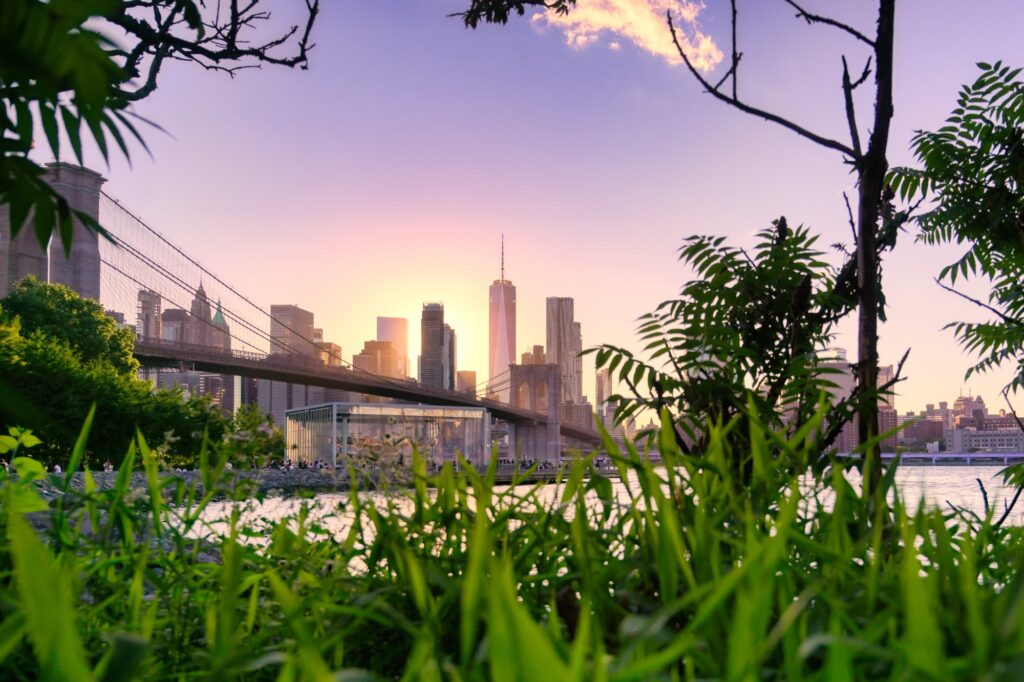
Walk across the Brooklyn Bridge from the Manhattan side. The view improves with every step. The walk takes around 30 minutes. On the far side, you land in DUMBO — Down Under the Manhattan Bridge Overpass. The neighbourhood has converted warehouses, independent galleries, and some of the best pizza in New York. Jane’s Carousel sits beside the waterfront and is worth a look.
Not sure whether to base yourself in Brooklyn or Manhattan? Read our honest guide to Brooklyn vs Manhattan for tourists before you book.
Evening: Brooklyn Heights Promenade
Walk to Brooklyn Heights. The Promenade runs along the edge of the neighbourhood with uninterrupted views back across the water to Lower Manhattan. It is quiet in the evening and beautiful at dusk. This is the view most people associate with New York — the skyline lit up, reflected in the water. Dinner in Brooklyn Heights is easy. The neighbourhood has excellent restaurants at every price point.
Day 3: Art, Culture, and the Museum Mile
New York has more world-class museums than almost any city on earth. Day 3 is for culture. Choose your priorities. Do not try to rush more than two museums in a single day.
Morning: The Metropolitan Museum of Art
The Met sits on 5th Avenue at the edge of Central Park. It holds over two million works. You will not see everything. Pick two or three areas that interest you — Ancient Egypt, European paintings, the American wing — and go deep rather than wide.
The Met opens at 10am. Arrive early. The main hall fills quickly by midday. Book tickets online to skip the queue. The museum is vast, so wear comfortable shoes and bring a bottle of water.
For a full rundown of New York’s top cultural spaces, see our guide to the best museums in New York City.
Afternoon: MoMA or the American Museum of Natural History
If modern art is your interest, take the subway to MoMA in Midtown. The permanent collection includes Picasso, Monet, and Van Gogh. The building itself is worth the visit.
If you prefer science and nature, head to the American Museum of Natural History on the Upper West Side. The dinosaur halls are remarkable. The planetarium runs regular shows and books up quickly.
Evening: Upper West Side Dinner
Have dinner on the Upper West Side. Amsterdam Avenue and Broadway between 72nd and 86th Streets hold excellent neighbourhood restaurants — Italian, Japanese, classic American diners. The area is residential and calm. It gives you a genuine break from tourist-heavy Midtown.
Day 4: Brooklyn — Williamsburg and Park Slope
Brooklyn rewards visitors who spend real time there. Day 4 is entirely for the borough.
Morning: Williamsburg Brunch and Street Art
Take the L train to Williamsburg. Brunch here is a serious local ritual. Restaurants along Bedford Avenue and North 7th Street open from 10am and fill fast. Arrive by 10:30 if you want a table without a wait.
After brunch, walk the streets around the Bushwick border. The outdoor murals cover full building facades. Some are extraordinary works by internationally known artists. This is one of the largest open-air collections of street art in the world.
Afternoon: Prospect Park and Park Slope
Head south to Prospect Park. Frederick Law Olmsted designed it — the same architect behind Central Park. Many New Yorkers prefer it for its quieter atmosphere. The Long Meadow is vast and green. The Boathouse sits at the eastern edge of the park and opens in warm weather.
Walk into Park Slope afterwards. The brownstone-lined streets here are among the most beautiful in New York. Seventh Avenue has independent coffee shops, bookshops, and restaurants that serve the neighbourhood rather than tourists.
For ideas on enjoying New York without spending a fortune, see our guide to free things to do in New York City.
Evening: The Best Pizza in Brooklyn
End Day 4 with pizza. Brooklyn pizza culture is fierce. Lucali in Carroll Gardens is often considered the best slice in the city. It does not take reservations. Arrive before it opens, put your name on the list, and wait with a glass of wine from the bottle shop next door. It is worth every minute.
Day 5: Greenwich Village, SoHo, and Farewell
Your final day brings you back to Manhattan for the neighbourhoods many first-timers overlook.
Morning: Washington Square Park and Greenwich Village
Start at Washington Square Park. The arch at the north entrance dates to the 1890s. The park is a gathering place — musicians, chess players, NYU students, families. Grab coffee from a nearby café and sit for a while. This is New York without performance.
Walk the streets of Greenwich Village west of the park. The neighbourhood is a mix of Federal townhouses, narrow cobbled streets, and independent shops. Bleecker Street in particular is worth a slow walk.
Afternoon: SoHo and Chinatown
Head to SoHo — South of Houston Street. The cast-iron architecture along Broadway and Prince Street is listed and striking. The shopping ranges from global luxury brands to independent designers. The streets are busiest on weekend afternoons. Go on a weekday if you can.
Walk east into Chinatown for lunch. Mott Street and Canal Street are the main arteries. The food is excellent and inexpensive. Roast duck, dumplings, and hand-pulled noodles are the things to order. Chinatown has been one of the most densely populated neighbourhoods in the United States since the 1870s.
For the full picture on where to eat across the city, read our New York City food guide.
Evening: One Final New York Night
Spend your last evening somewhere you genuinely enjoy rather than somewhere you feel you ought to go. New York rewards repeat visits. Leave one or two places on your list for next time.
If time allows, take the subway back to Times Square for one last look. At night, lit up and alive, it is a different experience from the morning you first arrived. The city is moving. You understand now why people come back.
Practical Tips for Your 5 Days in New York City
Getting around: The subway runs 24 hours a day. A 7-day unlimited MetroCard is good value if you use it twice or more per day. Walking is often faster for short trips below 40th Street.
When to go: Spring (April–May) and autumn (September–October) are the best times. Temperatures are mild and the city is beautiful. Summer is hot and crowded. December brings the Christmas markets and decorations to Midtown, which is genuinely spectacular.
Budget: New York is expensive. Budget at least $100 per person per day for food, transport, and one paid attraction. Pre-booking museum and landmark tickets saves both money and time. Many of the best experiences — walking the High Line, crossing the Brooklyn Bridge, sitting in Central Park — are entirely free.
Frequently Asked Questions About 5 Days in New York City
Is 5 days in New York City enough for a first visit?
Five days is a solid amount of time for a first visit to New York City. You can cover the main Manhattan highlights, spend quality time in Brooklyn, visit at least two major museums, and explore several distinct neighbourhoods without feeling rushed. Most visitors leave wanting more — which is exactly as it should be.
What is the best time to visit New York City?
The best time to spend 5 days in New York City is April to May or September to October. Temperatures are comfortable, the parks are beautiful, and the crowds are smaller than in peak summer. Avoid July and August if heat is a concern — New York in summer is genuinely hot and humid.
How do I get from JFK Airport to Manhattan?
The AirTrain connects JFK to the subway network. Take the AirTrain to Jamaica Station and then the E or J train into Midtown. The journey takes around 50–60 minutes and costs under $10. Taxis and rideshare apps (Uber, Lyft) are easier with luggage but cost $50–70 depending on traffic.
Join 1,000+ New York Lovers
Every weekday morning, get New York’s lesser-known corners, local secrets, and travel inspiration.
Subscribe free — enter your email:
Free forever · Unsubscribe anytime

Subscribe Free