
Central Park covers 843 acres in the middle of Manhattan. Most people walk through it on the way to somewhere else. But there is a different way to use it: pick a spot, sit down, and stay a while. Watch who passes. Listen. Think.
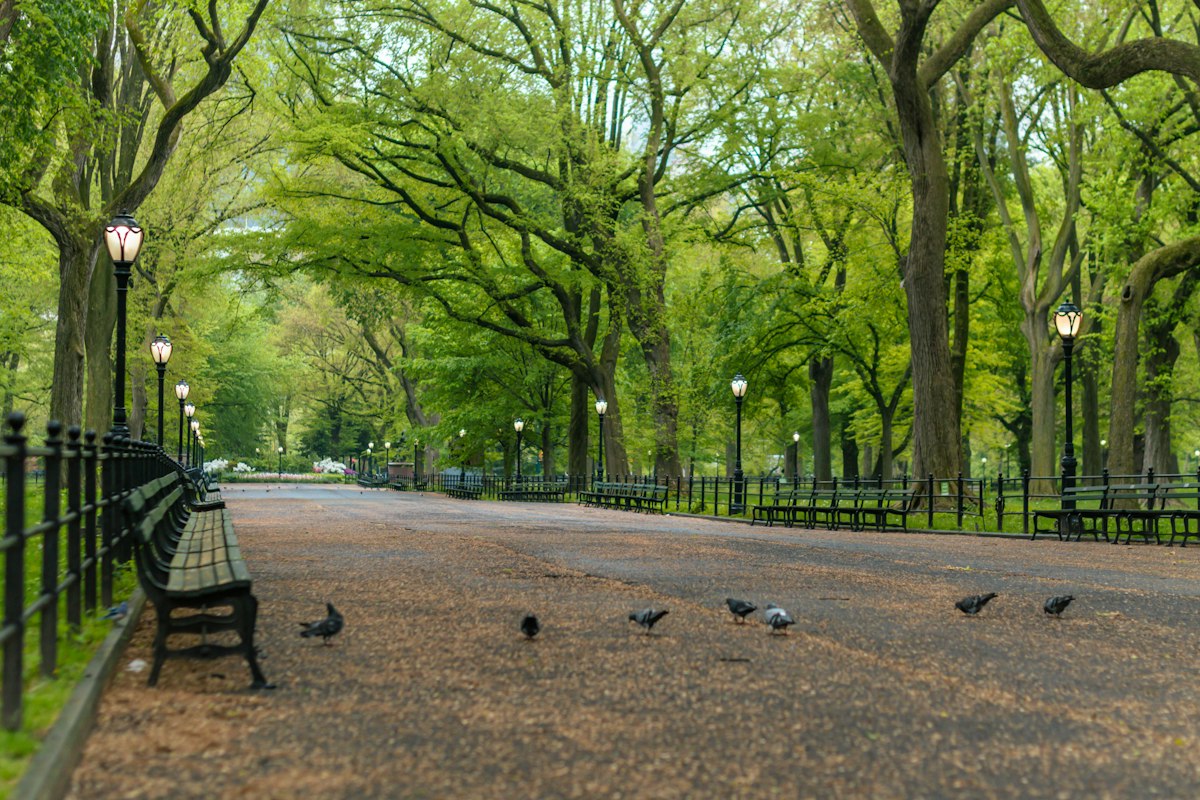
New Yorkers have always known this. The park was designed in the 1850s by Frederick Law Olmsted and Calvert Vaux specifically to give city residents somewhere to slow down. That original purpose still holds. The question is just where you sit.
Here are the best spots in Central Park for doing exactly that — ranked not by beauty alone, but by what each one actually gives you when you stop moving.
Bethesda Terrace
Bethesda Terrace sits at the centre of the park, at 72nd Street. The terrace looks out over the lake and the famous Angel of the Waters fountain, completed in 1873. This is the social heart of Central Park — musicians play here most days, people gather on the stone steps, and there is a steady flow of visitors from morning to evening.
If you want to watch New York in motion, this is the seat. You will see joggers, tourists, couples, chess players, and street performers all in the same half-hour. The acoustics under the Arcade (the vaulted passage beneath the terrace) are remarkable — tiled ceiling, musicians echoing — worth a few minutes on their own.
Best times: late morning on a weekday for space; weekend afternoons for energy and noise. Benches line the upper terrace, or you can sit on the steps leading down to the fountain.
The Reservoir
The Jacqueline Kennedy Onassis Reservoir sits in the upper half of the park, between 85th and 96th Streets. It holds one billion gallons of water and covers about 106 acres. The 1.58-mile running track around it is one of the most used paths in the park.
What most people miss is that the track also has benches. Sitting at the reservoir gives you a long, open view across the water — rare in a city that is almost entirely vertical. On a clear day you can see the skyline to the south and the apartment buildings of the Upper West Side reflected in the water. It is quiet by Central Park standards, partly because most people here are moving rather than stopping.
The eastern side of the reservoir tends to catch the morning sun. Bring a coffee and sit for twenty minutes. The difference in pace from the streets below 86th Street is noticeable within sixty seconds.
Sheep Meadow
Sheep Meadow is a 15-acre open lawn between 66th and 69th Streets on the west side. From May through October it is open to the public as a designated quiet zone — no ball games, no amplified music. People spread blankets, read, sleep, or lie on their backs and look at the sky.
It is one of the few places in Manhattan where you can look in almost any direction without seeing a building. The skyline of the Upper West Side frames the western edge, but the open sky above is genuinely open. On summer weekends it fills quickly; come before 11am if you want to choose your spot. Midweek afternoons in warm weather are the best combination of light, space, and peace.
Sheep Meadow was the site of large public gatherings throughout the 20th century, including a major anti-war rally in 1967 attended by over 100,000 people. The lawn has been there, one way or another, since the park opened.
The Ramble
The Ramble is a 36-acre section of woodland in the middle of the park, between 73rd and 79th Streets. The paths twist and cross without obvious logic — that was deliberate. Olmsted designed it as a wild garden, a contrast to the formal open spaces elsewhere in the park.
It is one of the best birdwatching locations on the East Coast, particularly during spring and autumn migration. Over 200 species have been recorded here. You do not need to be a birder to appreciate it — the sound alone, well away from the paths near the road, is a reasonable approximation of quiet.
There are rocks and informal spots along the small stream (The Gill) where you can sit without a bench. The Ramble requires a bit more effort than other park spots — it is easy to get briefly turned around — but that is part of why fewer people stay. It rewards slow movement.
The Great Lawn
The Great Lawn covers 55 acres in the centre of the park between 79th and 85th Streets. It is mainly known for large concerts and events — Simon and Garfunkel played to half a million people here in 1981 — but on an ordinary afternoon it is simply a large, well-maintained lawn with good sightlines.
The surrounding ring of elm trees provides shade on the perimeter. Benches face inward toward the lawn. It is a good spot for watching the full range of Central Park activity: frisbee, picnics, dogs, children, and the occasional film crew.
The lawn was resurfaced and reopened in 1997 after years of overuse had left it bare. The current surface holds up to about 300,000 visitors per week before restrictions kick in. After heavy rain, sections close temporarily to protect the grass.
Conservatory Garden
The Conservatory Garden is at 105th Street and Fifth Avenue — further north than most tourists go, which is exactly why it is worth the walk. It is the only formal garden in Central Park, covering six acres and divided into three sections: the French garden (north), the Italian garden (centre), and the English garden (south).
It is a locked, gated garden — open daily from 8am to dusk. The quiet is notable. The English garden’s pond and wisteria pergola are particularly good for sitting. In spring the tulips and crabapple trees are at their best; in autumn the asters and roses carry into October.
The Frances Hodgson Burnett Memorial Fountain, in the English garden, depicts the characters from The Secret Garden. If you want a bench in Manhattan where nobody is rushing past you, this is as close as it gets.
Bow Bridge
Bow Bridge crosses the Lake near 74th Street on the west side. It is a cast-iron bridge completed in 1862 — 60 feet long, painted white, with views in both directions across the water. It appears in more photographs of Central Park than almost any other structure.
You cannot really sit on the bridge itself, but the rocks and benches immediately to its west (near the wooden dock) give you the same view from a static position. Early morning is the best time: the light comes from the east across the water, the rowing boats are out, and the crowds have not arrived. By midday it is one of the busier spots in the park.
The Lake covers about 22 acres and you can hire rowing boats from the Loeb Boathouse nearby from spring through autumn.
How to Get the Most from a Sitting Spot
The practical advice is straightforward. Arrive before 10am if you want space and quiet, particularly at weekends. Avoid the main crosstown transverse roads at school pickup times — the car traffic breaks the mood. The western side of the park (near Central Park West) tends to be slightly less crowded than the eastern side (Fifth Avenue), particularly above 72nd Street.
The park has about 9,000 benches. Most have a small bronze plaque — the result of a sponsorship programme that has run since 1986. People have dedicated benches to family members, friends, and occasionally to themselves. Reading the plaques while you sit is a habit that many regular park visitors develop without noticing.
Central Park is open 24 hours but the recommended hours are 6am to 1am. The park is well lit near the main paths but darker in areas like the Ramble after sunset. Most New Yorkers treat it as they would any public space: sensible, not fearful.
One last thing: the best spot in Central Park for sitting and thinking is a personal answer. The park is large enough and varied enough that two people with completely different temperaments will each find a corner that feels made for them. The only mistake is not stopping at all.
