
New York has thousands of places to eat. But only a handful feel like they belong to another era — places where the coffee is strong, the booths are vinyl, and nobody is in a hurry to take your table back. The city’s classic diners and old-school lunch counters have survived real estate booms, pandemic closures, and decades of changing tastes. Some have been feeding New Yorkers for over a century. If you want to understand the city, eating at one of these spots is a better education than most museums.
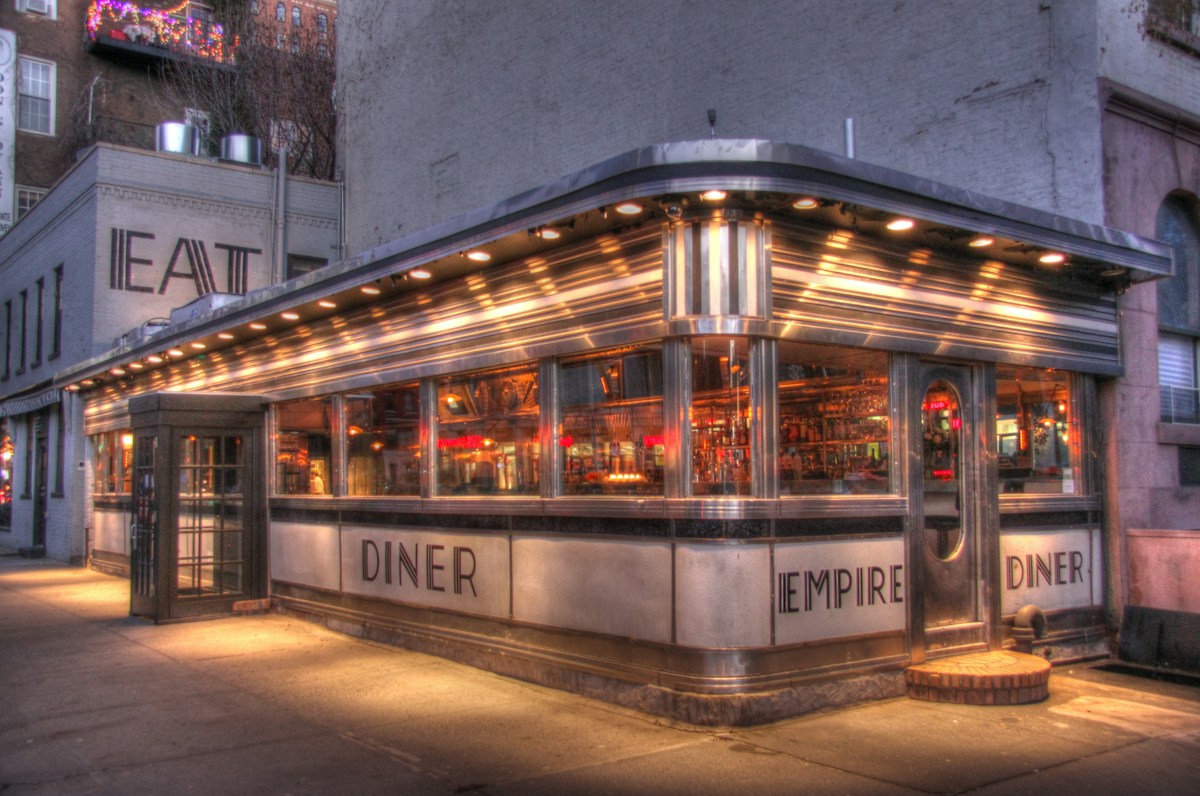
We asked on our Facebook page which diner or lunch counter feels most authentically classic. The responses were strong and opinionated, as New Yorkers tend to be about food. Here is a look at the places that came up most often — and why they have lasted.
Want more New York food guides and travel ideas straight to your inbox? Subscribe to our free newsletter here.
What Makes a Diner Feel Authentically Classic?
The word “classic” gets used loosely. A diner that opened in 2018 with retro decor is not the same as one that has been run by the same family since 1925. Authenticity, at least in this context, comes down to a few things: age, consistency, and a certain refusal to be trend-led.
Classic New York diners typically share a few features. Counter seating with stools is common. The menu runs to several pages and covers breakfast all day, sandwiches, soups, and plates of hot food. Coffee is diner coffee — not a single-origin pour-over. The staff often know the regulars by name. And the prices, while no longer as low as they once were, remain reasonable by Manhattan standards.
Many of the city’s best examples are owned by Greek-American families, a legacy of the large wave of Greek immigration in the early twentieth century. Others are Jewish delicatessens that have evolved into full-service diners. A few are neighbourhood institutions that survived simply because their communities refused to let them close.
Katz’s Delicatessen, Lower East Side
Katz’s opened in 1888 on Houston Street in the Lower East Side, and it has barely changed. The pastrami is hand-sliced, the rye bread is fresh, and the queuing system involves a paper ticket that you must not lose. The room is large, loud, and lit by fluorescent strips. There are no reservations.
Most people know Katz’s from the scene in When Harry Met Sally filmed there in 1989. The table where it was shot is marked with a sign. But the film is a minor footnote to the real story, which is a Jewish deli that survived the near-complete disappearance of its neighbourhood culture and came out the other side as one of the most visited food destinations in New York.
Order the pastrami on rye. The sandwiches are substantial — most people split one. A full drink and sandwich will cost you around $30, which is not cheap, but the portion is generous and the quality is not replicated anywhere nearby.
Lexington Candy Shop, Upper East Side
The Lexington Candy Shop on the corner of 83rd Street and Lexington Avenue has been open since 1925. It is not a sweetshop — the name reflects an older American use of the word “candy” that covered soda fountains and lunch counters. It is a narrow, modest room with a long counter, a handful of booths, and an ice cream soda machine that has been in continuous use for decades.
The shop has been in the same family for three generations. The menu covers eggs and toast in the morning, club sandwiches at lunch, and milkshakes and egg creams throughout the day. An egg cream, for visitors who have not encountered one, contains no egg and no cream — it is a New York invention of soda water, milk, and chocolate or vanilla syrup, mixed in a specific way that produces a light, cold, slightly frothy drink.
Lexington Candy Shop is the kind of place that works best on a quiet weekday morning. The crowds are manageable, the counter staff are unhurried, and the neighbourhood outside is residential rather than touristy.
Tom’s Restaurant, Morningside Heights
Tom’s Restaurant at 112th Street and Broadway has been open since 1940. It became nationally famous as the exterior used in the television series Seinfeld, where it stood in for the fictional Monk’s Diner. The interior of Monk’s was not actually filmed there, but the association has stuck, and the neon sign outside is one of the most photographed in the city.
The restaurant sits at the edge of the Columbia University campus, which gives it a steady trade of students and academics. The menu is standard diner fare: pancakes, eggs, burgers, club sandwiches, Greek salads, and daily specials. The portions are large and the prices are fair. It is open seven days a week and the breakfast crowd starts early.
What makes Tom’s feel genuine rather than a tourist trap is that it functions as a real neighbourhood diner. The Seinfeld association brings visitors in, but the regulars are locals who have been coming for years. Both groups tend to get along fine at the counter.
Enjoying this guide? Our newsletter covers New York food, culture, and travel every week. Sign up free here.
Veselka, East Village
Veselka is a Ukrainian diner on Second Avenue in the East Village that opened in 1954. The name means “rainbow” in Ukrainian. It is open around the clock, and the menu covers both traditional Ukrainian dishes — borscht, pierogies, stuffed cabbage — and standard American diner food. Both sides of the menu are done well.
The East Village has changed enormously since 1954. Rents have risen, many long-running businesses have closed, and the neighbourhood’s character has shifted several times over. Veselka has remained through all of it, partly because it built a loyal customer base across multiple generations of New Yorkers, and partly because the owners maintained the quality without trying to reinvent what the place was.
The borscht is the dish most regulars recommend. The pierogies with onions and sour cream are also a reliable order. Late at night, the diner fills with a mix of people that reflects the neighbourhood’s history: elderly Ukrainian residents, artists, night-shift workers, and people finishing a long evening. It is one of the few diners where you can genuinely feel the layers of a city in a single room.
Junior’s, Downtown Brooklyn
Junior’s opened on Flatbush Avenue in Brooklyn in 1950. It is best known for its cheesecake, which has been described in more newspaper articles and television programmes than any other slice of cake in New York. The cheesecake is good — dense, creamy, with a thin layer of sponge base — but the restaurant is more than a bakery with a dining room attached.
The full menu is extensive: deli sandwiches, burgers, soups, pasta, and a long list of hot plates. The dining room is large and busy, particularly on weekends. Junior’s has expanded over the years, with additional locations in Manhattan, but the Flatbush Avenue original is the one that most people mean when they talk about going to Junior’s.
Brooklyn has seen enormous changes since 1950, and the area around Flatbush has not been exempt. Junior’s presence through those changes — including a serious fire in 1981 that the family rebuilt from — has made it something of a symbol for the borough as well as a restaurant.
Neptune Diner, Astoria, Queens
For visitors willing to travel beyond Manhattan, Neptune Diner in Astoria offers one of the most complete classic diner experiences in the city. Astoria has a long history of Greek-American settlement, and the diner reflects that: a broad menu, generous portions, a dessert case full of pies and cakes near the entrance, and staff who have worked there long enough to know what the regulars want before they order.
Neptune is open around the clock and tends to be busy at almost any hour. The Greek salads are large and made with real feta. The hot open-faced sandwiches with gravy are a comfort-food staple. The coffee is refilled without asking.
Astoria is straightforward to reach from Manhattan on the N or W train, and the neighbourhood around the diner is worth exploring in its own right — Greek bakeries, coffee houses, and a low-rise residential streetscape that feels markedly different from the intensity of Midtown.
Practical Tips for Visiting Classic Diners
A few things are worth knowing before you go.
Cash is still useful. Many classic diners accept cards, but some charge a small fee for card payments, and a few still prefer cash. Bringing a small amount avoids any awkward moments at the counter.
Avoid peak times if you want a quieter experience. Katz’s and Junior’s in particular can have long queues on weekend afternoons. Arriving just before the lunch rush or after 2pm tends to mean shorter waits and more relaxed service.
The counter is often the best seat. Booths are popular, but sitting at the counter gives you a closer view of how the diner operates and tends to generate more conversation with staff. At places like Lexington Candy Shop, the counter is effectively the whole point.
Order what the place is known for. At Katz’s, that is pastrami. At Junior’s, cheesecake. At Veselka, borscht or pierogies. These dishes are consistently good because they have been made in the same way for decades. Ordering off-piste is fine, but the classics are classics for a reason.
Tipping is expected. A standard tip in New York is 20% of the bill before tax. At a diner where a meal costs $15, that is $3 — a small amount that matters considerably to the staff.
Why These Places Still Matter
New York loses classic diners every year to rising rents, changing demographics, and the difficulties of running a high-volume, low-margin business in one of the most expensive cities in the world. The ones that survive tend to have something in common: a community that values them, an ownership group that refuses to sell, and a menu that has not been over-engineered in pursuit of a newer audience.
There is nothing especially complicated about a good diner. Hot food, fair prices, reliable coffee, and a room where anyone can sit for an hour without being made to feel unwelcome. The places listed here have managed that for fifty, seventy, even a hundred years. That is worth something in a city that tends to move quickly.
We want to know which one you think is the most authentically classic — or if there is a diner we have missed that deserves to be on this list. Leave a comment below.
For more New York food guides, neighbourhood walks, and travel ideas, subscribe to our weekly newsletter. Join thousands of New York lovers here — it’s free.
