
Imagine a New York summer in the 1950s. The asphalt shimmers with heat. Someone’s grandmother leans out of a fourth-floor window. And in the middle of 134th Street, a kid winds up with a broomstick in both hands, waiting for the pink rubber ball to bounce off the pavement.
That was stickball. And for generations of New Yorkers, no game has ever meant more.
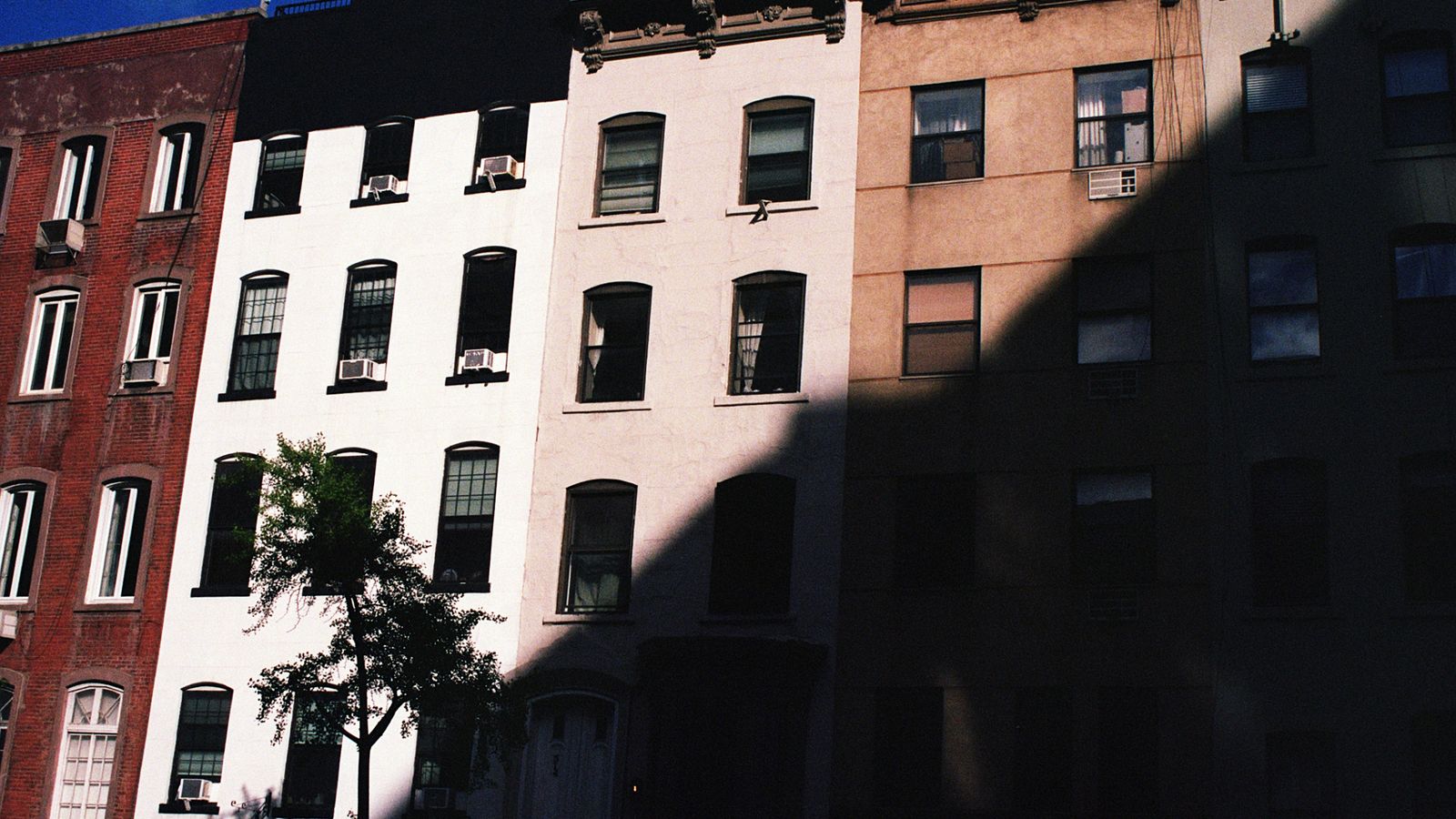
The Game That Needed Nothing But a Street
Stickball asked almost nothing of you. You needed a broomstick — the kind you swiped from a hallway closet, snapping off the broom head and keeping the handle. You needed a Spaldeen. And you needed a block long enough to run.
The rules adapted to whatever the street offered. A manhole cover was first base. A fire hydrant was second. A chalk mark on the sidewalk was home plate. You made do, and making do was the point.
This was New York in its most essential form: you played what you had, where you were, with whoever showed up.
Born on the Tenement Streets
Stickball grew up in the same neighborhoods as its players — the dense, crowded immigrant blocks of East Harlem, the South Bronx, Crown Heights, and the Lower East Side.
These were places where parks didn’t exist and backyards were unimaginable. The street wasn’t just where you played — it was your entire world outside the apartment.
Immigrant families from Italy, Puerto Rico, Ireland, and Poland sent their kids downstairs. The kids invented games that fit the environment. Stickball wasn’t imported from anywhere. It was born from necessity, right there on the pavement.
The Spaldeen and Its Strange Name
The rubber ball at the heart of stickball wasn’t designed for the game. It started as a defective tennis ball — cores that Spalding rejected as too soft for tennis, then sold cheaply in packs.
New York kids snapped them up. The high bounce was perfect for street play, and the soft exterior rarely shattered glass — though it happened.
The name “Spaldeen” came from how kids pronounced “Spalding” — fast, clipped, with the vowels flattened in that unmistakably New York way. The ball became so central to street life that it outlasted stickball itself. Old New Yorkers still get misty-eyed at the sight of one.
Enjoying this? Join New York lovers getting stories like this every week. Subscribe free →
Every Block Had Its Own Rules
Ask a New Yorker who grew up playing stickball to explain the rules, and you’ll get an answer that contradicts every other New Yorker you’ve asked.
In some neighborhoods, hitting the ball past a certain lamppost on the fly was a home run. In others, distance was measured by sewers — one sewer, two sewers, three sewers — each marking how hard you’d hit it. “You hit it three sewers” remains the highest compliment in the language of old-school New York street life.
Disputes were constant and passionate. There was no rulebook. There was no referee. You argued until someone backed down, and the game continued. This was considered completely normal — because it was.
The Neighborhoods That Made It Famous
Stickball wasn’t evenly distributed. It had capitals.
The South Bronx and East Harlem were considered the heartlands. Long, flat streets and dense apartment buildings created ideal playing conditions. Blocks on 116th Street, 149th Street, and Third Avenue became informal arenas.
In Harlem, stickball mirrored the same neighborhood energy that powered the legendary rent parties that turned ordinary apartments into community stages. Both were inventions born from limited resources and a refusal to be bored.
Meanwhile in the Bronx, inter-block rivalries burned with fierce local pride. The Italian enclave around Arthur Avenue had its own stickball traditions — separate in culture but identical in passion.
Where Stickball Went
Two things ended stickball’s golden age: cars and air conditioning.
By the 1960s, rising car ownership meant more vehicles parked on residential streets. The open playing fields of the block slowly filled with bumpers and mirrors. You couldn’t lay out a game the same way anymore.
Then air conditioning arrived in tenement apartments. The culture that had pushed families out onto stoops and streets — the vital, noisy, public life that stickball depended on — slowly retreated indoors.
But stickball never disappeared entirely. Reunion tournaments still bring people back to blocks they haven’t stood on in decades. And every summer, someone picks up a broom handle and explains to a child what a Spaldeen is.
For those who played it, stickball isn’t just nostalgia. It’s a direct line back to the version of New York that built them — a city of tight blocks, open streets, and summers that seemed to last forever.
What is stickball, and how was it played in New York?
Stickball is a NYC street game played with a broomstick handle and a rubber ball called a Spaldeen. Players hit the ball in a version of baseball adapted for city streets, using manholes, fire hydrants, and chalk marks as bases. Every neighborhood had its own variation of the rules.
What is a Spaldeen, and why was it so important to New York street culture?
A Spaldeen is a small, high-bounce rubber ball — originally a defective Spalding tennis ball core sold cheaply. Its perfect bounce made it ideal for street games. The name comes from how New York kids pronounced “Spalding,” and the ball became a symbol of mid-century New York neighborhood life.
Which New York neighborhoods were most famous for stickball?
The South Bronx, East Harlem, Crown Heights in Brooklyn, and the Lower East Side were the heartlands of stickball from the 1930s through the 1960s. Each neighborhood developed its own rules and traditions, and inter-block rivalries were fiercely competitive.
Where can I see stickball played in New York City today?
The Bronx hosts occasional stickball events tied to the game’s heritage. Some community festivals in East Harlem and Queens feature demonstrations in the summer. They’re rare — but deeply moving when you find them.
You Might Also Enjoy
- The Harlem Parties That Saved Families — and Accidentally Invented American Music
- The Bronx Neighborhood That Kept Italian New York Alive When Manhattan Couldn’t
- The New York Accent That Made a City Famous — and Why It’s Slowly Disappearing
Plan Your New York Trip
Ready to explore the neighborhoods that made stickball famous? Our complete New York travel guide covers the best ways to discover the city’s borough neighborhoods, cultural sites, and hidden street history.
Join 1,100+ New York Lovers
Every weekday morning, get New York’s hidden gems, neighbourhood stories, food origins, and city secrets — straight to your inbox.
Subscribe free — enter your email:
📲 Know someone who’d love this? Share on WhatsApp →
Love more? Join 65,000 Ireland lovers → · Join 43,000 Scotland lovers →
Free forever · Unsubscribe anytime
Frequently Asked Questions
What is stickball?
Stickball was a street game where kids used a broomstick handle and a rubber ball, adapting the rules to whatever the street offered—a manhole cover for first base, a fire hydrant for second, a chalk mark for home plate. It became a way for generations of New Yorkers to play with what they had, where they were, with whoever showed up.
What equipment did you need to play stickball?
You needed three things: a broomstick handle (snapped from the kind you'd swipe from a hallway closet), a Spaldeen rubber ball, and a block long enough to run. The game worked because it didn't demand much—it worked with the street itself.
Why did stickball become so popular in New York?
Stickball grew up in dense immigrant neighborhoods like East Harlem and the Lower East Side where parks didn't exist and backyards were impossible. Kids invented the game out of necessity, using the street as their only playground outside their apartments.
What is a Spaldeen?
A Spaldeen was a pink rubber ball that started as a defective tennis ball—cores that Spalding rejected as too soft for tennis and sold cheaply in packs. The high bounce was perfect for street play, and the soft exterior rarely broke windows, making it ideal for a game played on city pavement.

Subscribe Free