
The streets no longer exist. The buildings are gone. But the story of what happened here changed America forever.
Five Points was a slum in Lower Manhattan. It sat in an area near what is now Foley Square and Columbus Park. By the 1840s, it was home to tens of thousands of Irish immigrants who had nowhere else to go.
This is their story.
If you love New York’s hidden stories, you’ll love our free weekly newsletter. Subscribe to Love New York →
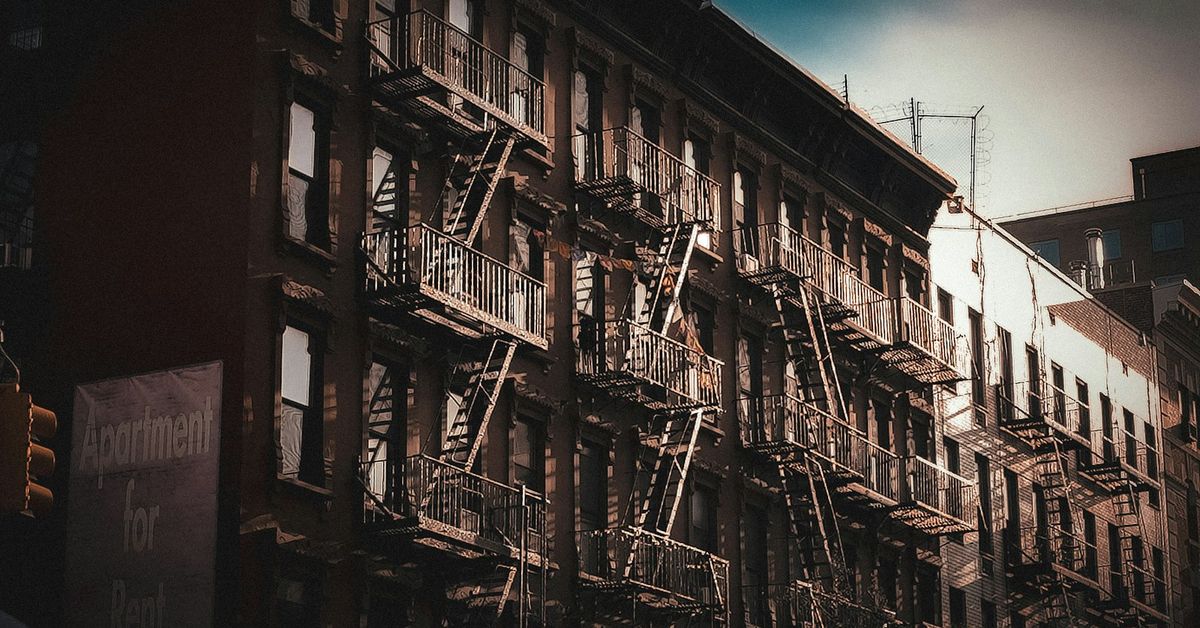
How Five Points Got Its Name
Five Points took its name from a simple street corner. Five roads met at one spot in Lower Manhattan. Those streets were Anthony (now Worth Street), Cross (now Mosco Street), Orange (now Baxter Street), Mulberry Street, and Little Water Street.
The name stuck. So did the neighbourhood’s reputation.
By the 1820s, Five Points was already overcrowded. Former Collect Pond had been drained and filled in 1813. The land was unstable. Wealthier residents moved away. Landlords divided the buildings into cramped lodgings. Poor families moved in.
Then the Irish arrived.
The Famine Ships That Brought Ireland to New York
In 1845, potato blight swept through Ireland. Over the next seven years, one million people died. Another million emigrated. Many of them came to New York.
The ships docked at the East River wharves at the foot of Manhattan. Passengers paid as little as twelve shillings for the crossing. The journey took four to six weeks. Many arrived sick, penniless, and speaking little English.
They walked straight from the docks into Five Points.
By 1850, the Irish made up roughly 30 per cent of New York City’s population. Five Points was the heart of Irish New York. Streets like Mulberry Street, Orange Street, and Anthony Street were packed with families from Cork, Mayo, Clare, and Galway.
The neighbourhood that Manhattan’s wealthy had abandoned became the first home of an entire generation of Irish America.
What Life in Five Points Was Really Like
Space was the first problem. A single room might hold eight to ten people. Entire families shared a single bed. Privacy did not exist.
The Old Brewery was the most notorious address in Five Points. A former Coulter’s Brewery at the corner of Cross and Orange Streets, it was converted to housing in 1837. At its peak, an estimated 1,000 people lived inside. Its dark hallways and basement rooms housed families from Ireland, Germany, and free Black communities side by side.
Wages were low. Irish men took whatever work they could find. They dug the foundations of Manhattan’s expanding buildings. They laid cobblestones on the streets. They worked the docks. Women took in laundry or worked in garment trades.
The rent was due every week. Missing a week meant eviction onto the street.
Food was simple. Potatoes, cabbage, and salt pork were staples. A hot meal from a street vendor cost a few cents. Despite the hardship, Five Points had a life to it. Saloons and dance halls lined the streets. Fiddle music drifted from doorways. Catholic churches anchored the community.
At Saint Patrick’s Old Cathedral on Mulberry Street, just north of Five Points, Irish families baptised their children, married, and buried their dead. That church still stands today.
The Dead Rabbits and Street Gang Life
Five Points had a darker side too. Street gangs formed along national lines.
The Dead Rabbits were the most famous Irish gang of the era. Their territory covered much of Five Points in the 1840s and 1850s. They fought the Bowery Boys, a rival gang with nativist American sympathies, in street battles that sometimes lasted days.
The clashes of July 1857 were the worst. The Dead Rabbits and allied gangs fought Bowery Boys and police across several days. Dozens were killed or injured.
Gang membership offered protection in a neighbourhood where police rarely ventured. For young Irish men with no money and no prospects, it also offered belonging — something desperately needed in a city that did not want them.
Martin Scorsese’s 2002 film Gangs of New York used their name and the Five Points setting. The history was dramatised, but the core truth was not: Irish immigrants fought for the right to exist in this city.
What Famous Visitors Saw When They Came to Five Points
Five Points attracted observers from across the world. Some came to gawp. Others came to understand.
Charles Dickens visited in 1842. He wrote about Five Points in American Notes. He described dark, narrow alleys and buildings that seemed to lean on each other for support. He saw poverty up close.
Abraham Lincoln visited in February 1860, before his presidential campaign began in earnest. He walked through Five Points with a journalist as guide, shortly after delivering his speech at nearby Cooper Union.
Jacob Riis photographed Five Points and its surrounding slums in the late 1880s. His landmark book How the Other Half Lives, published in 1890, used photographs and vivid prose to expose slum conditions to a shocked middle-class public for the first time.
Riis wrote of a Mulberry Street building: “Suppose we look into one. Be a little careful, please. The hall is dark and you might stumble over the children.” His photographs changed public opinion. They laid the groundwork for reform that would eventually demolish Five Points entirely.
Want more stories like this? Our weekly newsletter goes deeper into New York’s heritage every week. It’s free. Subscribe here →
How Five Points Was Erased
By the 1880s, city reformers were pushing to clear the worst of the slums. The Old Brewery had already been demolished in 1852 and replaced by a mission house. The rest followed.
In 1895, the city cleared Mulberry Bend — the dangerous crook in Mulberry Street that formed the worst block in Five Points. A park was built on the cleared land. It was named Mulberry Bend Park. It was later renamed Columbus Park. It still exists today.
The Irish had largely moved on by then. They followed the elevated railway lines north and west. They settled in Hell’s Kitchen and the Upper West Side, in the Bronx, and across Brooklyn. Their story of reinvention continued in every neighbourhood they claimed.
Five Points itself became absorbed into Chinatown and the area around Foley Square. The street grid was rebuilt. The five-way intersection that gave the neighbourhood its name no longer exists. Nothing above ground remains of the original Five Points.
Where to Visit Today: Tracing Irish Roots at Five Points
Columbus Park, Canal Street, Chinatown
This is the site of the former Mulberry Bend slum — the worst block in Five Points. Today it is a quiet park used by the local Chinese-American community. Stand here and you are standing on the ground where Irish immigrant New York was born. The park is open daily and free to enter.
Foley Square and Worth Street
The federal and state courthouses around Foley Square sit directly on former Five Points land. The area around Worth Street, Centre Street, and Baxter Street covers much of the old neighbourhood’s footprint. Walking this area gives you the geography of old Five Points, even though nothing of the original neighbourhood survives.
Saint Patrick’s Old Cathedral, 263 Mulberry Street
Built in 1815, this was the cathedral of the Irish Catholic community in New York for decades. It is now a minor basilica and an active parish. Mass is still celebrated here every Sunday. The old cemetery on Mulberry Street holds the remains of Irish immigrant families from the Five Points era. It is one of the most historically significant Irish sites in the United States.
The Tenement Museum, 97 Orchard Street
Not in Five Points itself, but in the neighbouring Lower East Side, the Tenement Museum offers the best physical experience of immigrant New York. Tours of preserved tenement apartments show conditions very similar to those Irish families endured in Five Points. The museum’s research centre can also help trace immigrant ancestors who lived in this area. Our piece on the Lower East Side Jewish immigrant story covers the same era just streets away.
Ellis Island National Monument
Many Irish immigrants arrived via Ellis Island after 1892. The Ellis Island passenger database at libertyellisfoundation.org is free to search and holds 65 million names. For families whose relatives arrived between 1892 and 1957, this is the first stop in any genealogy search.
New York City Department of Records
For birth, death, and marriage records from the Five Points era (1847 onwards), the NYC Department of Records holds vital records online at a860-openrecords.nyc.gov. These records can link Irish family names to specific Five Points addresses and neighbourhoods.
Frequently Asked Questions
Where exactly was Five Points in New York City?
Five Points was in Lower Manhattan, roughly where Foley Square and Columbus Park are today. The intersection of modern Worth Street, Baxter Street, and Park Street covers the approximate area of the original five-way crossing that gave the neighbourhood its name.
When did Irish immigrants arrive at Five Points?
Irish immigrants began settling in Five Points from the 1820s onwards. Numbers surged during and after the Great Famine (1845–1852), when over one million Irish people emigrated to America. By 1850, the Irish were the largest immigrant group in Five Points and roughly 30 per cent of New York City’s total population.
Does anything from the original Five Points survive today?
No original Five Points buildings survive above ground. The entire area was cleared and redeveloped between the 1880s and early 1900s. Saint Patrick’s Old Cathedral on Mulberry Street (built 1815) is the closest surviving structure associated with the Irish Five Points community. Columbus Park now stands on the site of the former Mulberry Bend slum.
How can I find records of an ancestor who lived in Five Points?
Start with the Ellis Island Foundation database at libertyellisfoundation.org for arrivals after 1892. New York City vital records from 1847 onwards are held at the NYC Department of Records. FamilySearch.org offers free access to New York naturalisation and census records. The Tenement Museum’s research centre can also assist with tracing specific street addresses from the Five Points era.
Ready to explore the New York your ancestors knew? Subscribe to Love New York — free weekly stories, heritage guides, and hidden history. Join us →
