
The name alone stops people mid-sentence. Hell’s Kitchen. Even if you’ve never been to New York, you know it means something. Something raw. Something real.
But most visitors walk straight past it on their way to Times Square or the High Line, never stepping in. That’s a mistake.
Where Did the Name Come From?
Nobody agrees entirely, and that’s part of the story.
The most often repeated version dates to 1881. A rookie police officer was watching a riot break out on 39th Street and turned to his partner — a veteran named Davy Welch — and said, “This place is hell.” Welch shook his head. “Hell’s a mild climate. This is Hell’s Kitchen.”
The other theory is older and simpler: a tenement building on the corner of 39th Street and 10th Avenue was already being called by that name in the 1870s. The neighbourhood adopted it long before the police ever arrived in force.
Either way, the name fit. And it stuck.
The Irish Heart of Manhattan
By the turn of the 20th century, Hell’s Kitchen stretched from 34th Street to 59th Street, between 8th Avenue and the Hudson River waterfront. It was one of the most densely populated Irish-American communities in the world.
Irish immigrants began settling here after the Great Famine of the 1840s. They came with almost nothing and moved into cramped tenements — six families to a floor, shared bathrooms, no running water. The streets were narrow and loud. Summers were brutal. Winters cut through the walls.
But they built something. Catholic parishes. Social clubs. Corner stores. A fierce loyalty to the block you grew up on that outlasted everything else that tried to replace it.
That loyalty, over decades, hardened into something harder.
The Block Nobody Could Control
For much of its history, Hell’s Kitchen was as lawless as any neighbourhood in America. Street gangs divided it like a second map — block by block, avenue by avenue.
The Gophers ruled the early 1900s. They raided railroad freight cars along the Hudson, extorted merchants, and routinely fought off police. The Hudson Dusters held the southern edges. The NYPD’s Hell’s Kitchen precinct was one of the most dangerous assignments in the department.
By the 1960s, a new organization had taken over. The Westies — an Irish-American criminal gang — controlled the waterfront and ran protection rackets along 9th and 10th Avenues for two decades. Federal authorities called them one of the most violent groups they had ever investigated. Detectives who worked the area describe a neighbourhood where business owners paid tribute each week and nobody, not even neighbours, talked to police.
The NYPD called it “the precinct nobody wanted.” The men who worked it called it something else — their neighbourhood, like everyone else did.
Enjoying this? Join New York lovers getting stories like this every week. Subscribe free →
When Did Everything Change?
The shift was gradual. Then suddenly it wasn’t.
In the 1970s, a cluster of restaurants opened along 46th Street between 8th and 9th Avenues. Actors and crew from Broadway shows — which ran just a few blocks east — started filling the tables after curtain calls. Word spread. More restaurants opened. A strip that had been dangerous at night became a destination.
Real estate developers tried renaming the whole neighbourhood “Clinton” in the 1990s to make it more appealing to buyers. The neighbourhood said no. Quietly, persistently, the name Hell’s Kitchen refused to go away.
Federal prosecutions dismantled the Westies by the mid-1980s. With them went the last organised layer of the old order. The waterfront changed. Rents rose. Young professionals, artists, and theatre workers moved in from neighborhoods that had priced them out.
9th Avenue Today — The Transformation You Can Taste
Walk 9th Avenue on a Saturday afternoon and you’ll understand what Hell’s Kitchen has become.
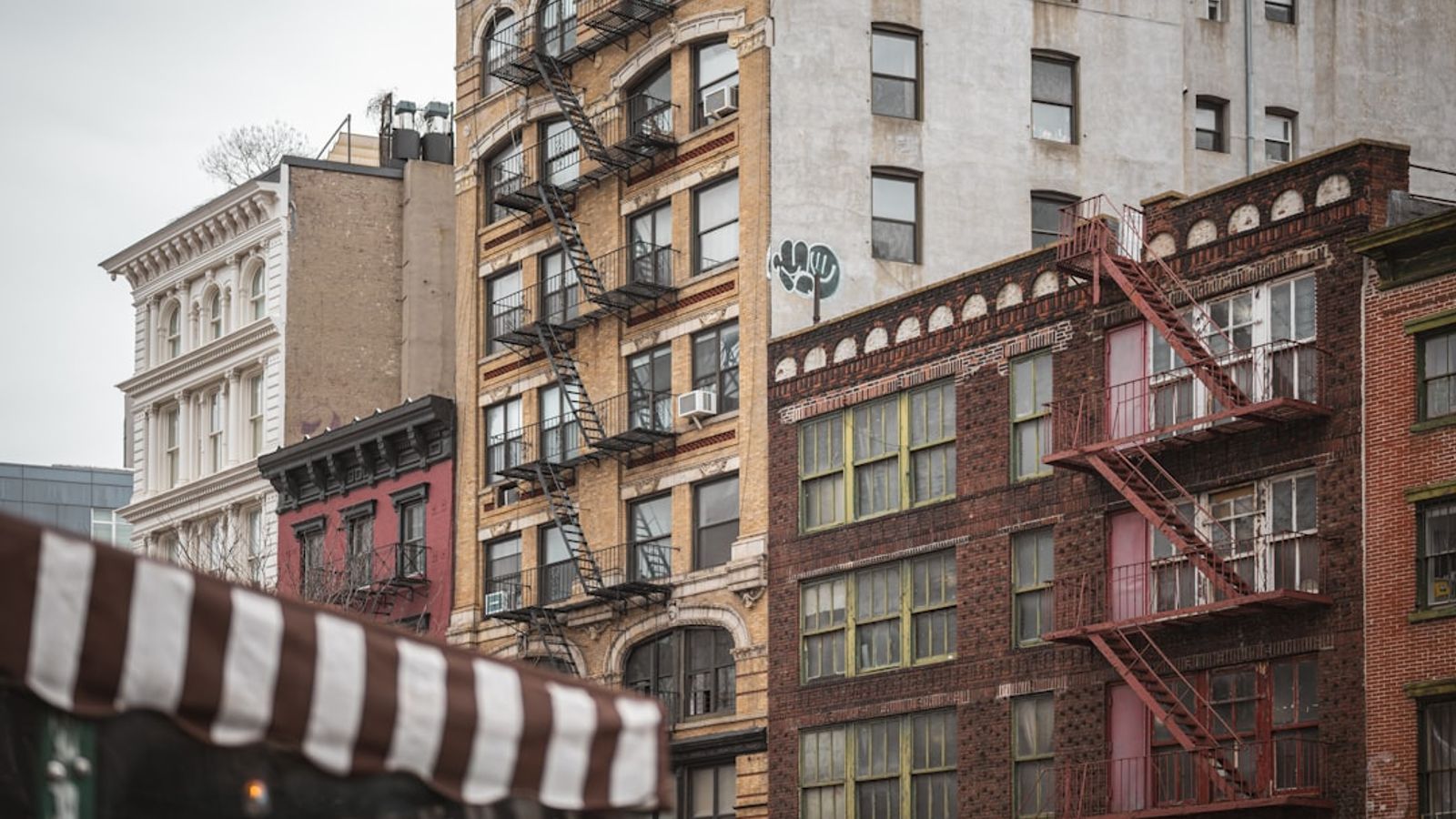
Ethiopian restaurants sit next to French bistros. Mexican taquerias share blocks with Korean noodle shops and old Irish pubs that have barely changed since the 1980s. The buildings still look like Hell’s Kitchen buildings — brick, tight, fire escape-clad — but the ground floors tell a completely different story.
The neighbourhood’s food scene has become one of the most talked-about in the city. 9th Avenue is especially strong for Middle Eastern and Mediterranean cooking, and the side streets around 46th Street — Restaurant Row — still draw pre-theatre crowds every night of the week.
Hell’s Kitchen sits within walking distance of the High Line, Hudson Yards, and Times Square. But locals know it as a place to actually live — not just visit. It retained its grit long enough that gentrification arrived on its own terms, not Manhattan’s.
For more on how Manhattan’s immigrant neighborhoods shaped the city you see today, Chinatown tells a parallel story of community, survival, and transformation. And to understand where many Hell’s Kitchen families first set foot on American soil, the Ellis Island experience is a ferry ride from Lower Manhattan and one of the most moving things you can do in New York.
Frequently Asked Questions
Why is it called Hell’s Kitchen?
The most widely accepted story dates to 1881, when a veteran New York police officer described the neighbourhood as worse than hell itself. The name had already appeared informally by the 1870s, likely from a notorious tenement building, but that remark helped cement it permanently.
Where exactly is Hell’s Kitchen in New York City?
Hell’s Kitchen occupies the west side of Midtown Manhattan, running roughly from 34th Street to 59th Street between 8th Avenue and the Hudson River. It’s walking distance from Times Square, the High Line, and Penn Station.
What is Hell’s Kitchen like today?
Today it’s one of Manhattan’s most livable neighborhoods — a dense, walkable area with a thriving food scene, proximity to Broadway, and a character that’s impossible to mistake for anywhere else in the city. It’s gentrified, but it kept its edge.
What are the best things to do in Hell’s Kitchen?
Walk 9th Avenue for the food — particularly strong for Middle Eastern, French, and international restaurants. Visit Restaurant Row on 46th Street before or after a Broadway show. Browse the neighbourhood on foot: the architecture alone tells the story of 150 years of New York history.
A Neighbourhood That Earned Every Letter of Its Name
There’s something honest about Hell’s Kitchen that you don’t get in the cleaned-up corners of the city. It lived through the worst of what New York threw at it. It never pretended to be something it wasn’t. And when people tried to rename it, it refused.
That stubbornness is exactly what makes it worth visiting. You won’t find polished tourist traps here. You’ll find real New York — the kind where the building next to the French bistro still has the same handwritten sign it’s had for thirty years.
You Might Also Enjoy
- Chinatown, Manhattan: The Story of New York’s Most Resilient Neighbourhood
- Ellis Island: What 12 Million Immigrants Actually Experienced
- The Best Neighborhoods in New York City for First-Time Visitors
Plan Your New York Trip
Ready to explore Hell’s Kitchen? Our complete guide to New York’s best neighborhoods will help you plan your time in the city — from which borough to base yourself in to the hidden spots most tourists never find.
Join 1,100+ New York Lovers
Every weekday morning, get New York’s hidden gems, neighbourhood stories, food origins, and city secrets — straight to your inbox.
Subscribe free — enter your email:
📲 Know someone who’d love this? Share on WhatsApp →
Love more? Join 65,000 Ireland lovers → · Join 43,000 Scotland lovers →
Free forever · Unsubscribe anytime

Subscribe Free