
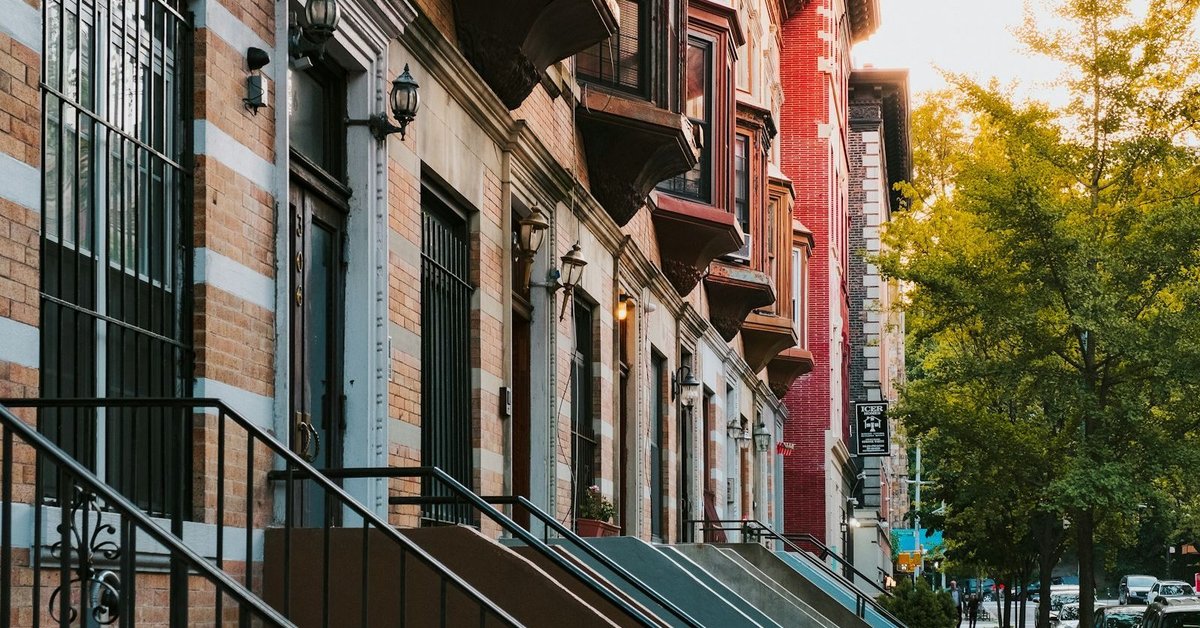
Walk north from 96th Street in Manhattan, and something shifts. The streets widen. The buildings grow older and more weathered. Salsa drifts from an open window. A mural the size of a building wraps around a corner. You have entered El Barrio — the neighbourhood. East Harlem is one of New York’s oldest immigrant communities. It holds more than a century of struggle, music, food, and fierce cultural pride.
If you love New York’s hidden stories, you’ll love our free weekly newsletter. Subscribe to Love New York →
Before El Barrio: The Italian Years
East Harlem was not always Spanish Harlem. In the late 1800s, it was Italian Harlem. Thousands of Southern Italian immigrants crowded into its tenements. They came from Calabria, Sicily, and Campania. They worked the docks and the garment factories. They built churches and social clubs along 116th Street.
Our Lady of Mount Carmel Church stands on 115th Street. It opened in 1884. For decades, it was the spiritual heart of Italian East Harlem. Every July, the neighbourhood held the Feast of Our Lady of Mount Carmel. It was one of the largest Italian festivals in America.
The Italian community thrived for half a century. Then, slowly, it moved on — to the Bronx, to Brooklyn, to the suburbs. The tenements they left behind filled with a new wave of arrivals. These were families from an island 1,600 miles away.
The Puerto Rican Arrival
Puerto Ricans began arriving in New York in the early 1900s. But the great wave came after the Second World War. Cheap airfares from San Juan made the journey possible. By 1950, around 250,000 Puerto Ricans lived in New York City. Many settled in East Harlem.
They found a neighbourhood of old tenements and cold winters. They found a city that was not always welcoming. But they also found each other. East Harlem — El Barrio — became the first true Puerto Rican community in New York.
Families packed into apartments on 103rd and 110th and 116th Streets. They brought their food, their music, their faith. Spanish signs appeared in shop windows. The smell of sofrito and rice cooked on hot plates in small kitchens. A whole culture took root in Manhattan.
The story of how they built their lives here mirrors other immigrant stories in New York. The Irish who came before them faced similar struggles — prejudice, overcrowding, and the hard work of building community from nothing. And just as the Jewish immigrants on the Lower East Side created their own markets and mutual aid societies, the Puerto Rican community in East Harlem built institutions that would last generations.
La Marqueta: The Heart of El Barrio
In 1936, the city built a covered market under the Park Avenue elevated railway viaduct. It ran for five blocks, from 111th to 116th Street. They called it La Marqueta.
For decades, La Marqueta was the economic and social hub of El Barrio. Vendors sold tropical produce, fresh herbs, dried beans, and textiles. The aromas of plantains and yuca and spices filled the air under the iron viaduct. On busy days, thousands of shoppers crowded the stalls.
La Marqueta was more than a market. It was a public square. Neighbours met there. News spread there. The rhythms of community life played out between the stalls. Grandmothers who had grown up in Puerto Rico could find the same ingredients they used at home. For families far from the island, it was a piece of home brought to the Bronx’s doorstep — except it was Manhattan.
The market declined in the 1980s and 1990s. But it never disappeared. In recent years, local organisations have worked to revive it. Today, a smaller version of La Marqueta still operates. It remains a symbol of the neighbourhood’s endurance.
Tito Puente and the Sound of El Barrio
East Harlem gave the world one of the greatest musicians in American history. Ernesto Antonio Puente Jr. was born here in 1923. He grew up on 110th Street. The neighbourhood knew him as a scrappy, energetic kid who could beat out rhythms on anything he could find.
The world came to know him as Tito Puente. El Rey del Timbal. The King of Latin Music.
Puente served in the Second World War, then studied at Juilliard. He went on to record over 100 albums. He brought mambo to ballrooms across New York. He introduced conga and timbale rhythms to a generation of American music lovers. His version of “Oye Como Va” became one of the most recognised Latin songs ever recorded.
Tito Puente died in 2000. But his music still plays in El Barrio. The corner of 110th Street and Lexington Avenue is named Tito Puente Place. His image appears on murals throughout the neighbourhood. He is buried in the Bronx, but his spirit belongs to East Harlem.
Walk around East Harlem today and you hear his influence everywhere — in the clubs, in the windows, in the streets. The neighbourhood produced the sound that defined Latin New York. Just as upper Harlem became the centre of Black American art and music in the 1920s, East Harlem became the capital of Latin music a generation later.
El Museo del Barrio
In 1969, a group of Puerto Rican artists and educators did something radical. They founded a museum. Not in midtown. Not on Fifth Avenue’s Museum Mile. They founded it in El Barrio itself, for the people of El Barrio.
El Museo del Barrio opened to bring Puerto Rican and Latin American art and culture to the community. It was a statement. Our art matters. Our history matters. We are not invisible.
Over the decades, El Museo grew. It moved to a permanent home at 1230 Fifth Avenue, on the northern edge of Museum Mile. Today it houses one of the largest collections of Puerto Rican and Caribbean art in the world. Its permanent collection includes Pre-Columbian artefacts, santos (carved wooden saints), and contemporary works by major Latin American artists.
Walking through El Museo del Barrio is like reading the story of East Harlem in art. The early pieces speak of faith and family. The later works speak of struggle, pride, and the fight for recognition. Every room connects to the neighbourhood outside its walls.
Want more stories like this? Our weekly newsletter goes deeper into New York’s heritage every week. It’s free. Subscribe here →
The Young Lords and the Fight for the Neighbourhood
Not all of East Harlem’s history is celebrations and music. In the late 1960s, the neighbourhood was fighting for its survival.
The city had neglected El Barrio for years. Buildings were falling apart. Rubbish was not collected regularly. Lead paint poisoned children. Health services were scarce. The residents were largely poor and largely ignored.
In 1969, a group of young activists formed the East Harlem branch of the Young Lords. They were inspired by the Black Panthers. They wanted dignity, services, and justice for their community.
The Young Lords took direct action. They swept the streets when the city would not collect rubbish. They occupied a church to create a breakfast programme for children. They seized a hospital to demand better healthcare. Their actions were loud, deliberate, and effective.
They forced the city to pay attention to a neighbourhood it had long preferred to ignore. Many of the services the community fought for in 1969 were eventually delivered. The Young Lords are remembered today as one of the most important grassroots movements in New York City history.
East Harlem Meets Italian Harlem: Where Two Communities Overlapped
As the Puerto Rican community grew, Italian East Harlem did not disappear overnight. For several decades in the mid-20th century, both communities shared the same streets.
There were tensions. There were also connections — shared poverty, shared tenements, shared streets. Italian and Puerto Rican children grew up as neighbours. The bodegas of El Barrio sat beside the pizza parlours of the old Italian blocks.
Today, very little of Italian Harlem remains visible. Our Lady of Mount Carmel Church still stands. A handful of old Italian restaurants survive. But the community itself largely departed by the 1960s. The story of Manhattan’s Italian immigrants continued in other boroughs and suburbs, but East Harlem belongs to El Barrio now.
East Harlem Today
East Harlem is changing again. Property prices have risen sharply across Manhattan. New condominiums have appeared alongside the old tenements. Cafés and restaurants aimed at newer, wealthier arrivals have opened on corners that once held bodegas.
The community is fighting to hold on. Long-term residents campaign against displacement. Cultural organisations work to preserve the neighbourhood’s history and identity. The murals — vast, colourful, defiant — cover building after building. They are a declaration. We are still here.
The question of who gets to stay in East Harlem is one New York has not yet answered. But the heritage is not going anywhere. It is painted on the walls. It is played in the music. It is cooked in the kitchens. El Barrio endures.
How to Visit East Harlem Today
East Harlem is straightforward to reach. Take the 4, 5, or 6 subway train to 110th Street or 116th Street. The walk through the neighbourhood is best done on foot.
Start at the corner of 110th and Lexington — Tito Puente Place. Look for the mural nearby. Walk north along Lexington Avenue. At 116th Street, turn and explore the commercial heart of El Barrio. The street is lined with bodegas, restaurants serving Puerto Rican food, and community organisations.
Head to El Museo del Barrio at 1230 Fifth Avenue. It is open Tuesday through Sunday. Admission is pay-what-you-wish for adults. Budget at least 90 minutes. The permanent collection alone is worth the journey.
Walk by Our Lady of Mount Carmel Church on 115th Street. Notice how the architecture speaks of its Italian origins while serving a predominantly Latino congregation today. History layers on history in East Harlem.
If La Marqueta is operating on your visit, walk through. The stalls give a sense — faded but real — of what the market once was. Talk to the vendors. They know the neighbourhood’s story better than any guidebook.
End your visit with a meal. There are excellent Puerto Rican and Dominican restaurants throughout El Barrio. Order the pernil. Order the tostones. Sit with a café con leche and watch the neighbourhood move around you. You are in one of New York’s most storied communities. It deserves to be savoured slowly.
Frequently Asked Questions
What is the difference between East Harlem and Spanish Harlem?
They refer to the same neighbourhood. East Harlem is the official name for the area in northeastern Manhattan, roughly between 96th and 142nd Streets east of Fifth Avenue. Spanish Harlem and El Barrio are the community names that reflect the area’s Puerto Rican heritage. All three names are in common use today.
When did Puerto Ricans settle in East Harlem?
Puerto Ricans began arriving in East Harlem in small numbers in the early 1900s. The major wave came after the Second World War, when affordable air travel made the journey from Puerto Rico possible. By the 1950s, East Harlem had become the centre of New York’s Puerto Rican community.
What can visitors see in East Harlem today?
The main heritage destinations are El Museo del Barrio (1230 Fifth Avenue), La Marqueta (under the Park Avenue viaduct at 116th Street), Our Lady of Mount Carmel Church (115th Street), and Tito Puente Place at the corner of 110th Street and Lexington Avenue. The neighbourhood’s murals are also a major draw — they cover buildings throughout the area and document the community’s history in vivid colour.
Who was Tito Puente and why is he important to East Harlem?
Tito Puente was born in East Harlem in 1923 and grew up to become one of the most influential musicians in American history. He is credited with popularising mambo, salsa, and Latin jazz for mainstream American audiences. His corner in East Harlem — 110th Street and Lexington Avenue — is named Tito Puente Place in his honour.
Ready to explore the New York your ancestors knew? Subscribe to Love New York — free weekly stories, heritage guides, and hidden history. Join us →

Subscribe Free