
In the 1920s, something extraordinary happened in a few square miles of upper Manhattan. Writers, painters, musicians, and poets poured into a neighbourhood called Harlem, and what they made together changed American culture permanently.
It was called the Harlem Renaissance. And it happened fast.
A Migration That Became a Movement
Between 1910 and 1930, more than a million Black Americans moved north in what became known as the Great Migration. They fled the violence and poverty of the rural South, drawn to northern cities by the promise of work and greater freedom.
Harlem absorbed more of them than anywhere else. The concentration of talent, ambition, and shared history turned a neighbourhood into a creative engine unlike anything America had seen before.
By 1920, Harlem was home to 200,000 people. By 1930, it had produced literature, music, and art that would define the 20th century.
The Sound That Poured Out of 125th Street
You could hear Harlem before you could see it. Jazz and blues filled every club, every corner, every social hall.
Apollo Theatre
The Apollo Theatre on 125th Street became the stage where careers were made or ended in a single night. Ella Fitzgerald won an amateur contest there in 1934. Billie Holiday performed there. Duke Ellington brought his orchestra and the crowd came back every week.
Just a few blocks away, the Cotton Club had its own complicated story — a world-famous venue that presented Black musicians to white audiences while barring Black customers from entering. It was a contradiction that said everything about the era.
The music was unstoppable regardless. By the mid-1920s, Harlem was the jazz capital of the world.
The Words That Wouldn’t Stay Quiet
While the music played, a new literature was being written.
Langston Hughes wrote poetry that spoke directly to Black American experience — not to impress critics, but to be felt. Zora Neale Hurston gathered folklore and wrote novels that the literary world wouldn’t fully recognise for decades. James Weldon Johnson made the case for Black culture’s equal standing with European tradition.
These writers weren’t making art for the academy. They were making it for a people who had been told for centuries that their stories didn’t matter.
Langston Hughes House
You can visit the Langston Hughes House on East 127th Street today. It looks much as it did when he lived there. Stand on the stoop and the scale of what happened in Harlem becomes real.
Enjoying this? Join New York lovers getting stories like this every week. Subscribe free →
The Painters Who Refused to Be Invisible
The visual art of the Harlem Renaissance is less talked about — and just as powerful.
Aaron Douglas painted sweeping murals in a bold, graphic style that drew on African imagery and Art Deco simultaneously. Jacob Lawrence told the story of the Great Migration in a series of 60 panels that became one of the most important American artworks of the 20th century.
Schomburg Centre for Research in Black Culture
Their work is preserved at the Schomburg Centre on Malcolm X Boulevard — the largest collection of African American historical materials in the world. It’s free to visit and genuinely moving.
Walking Harlem’s Golden Mile
Much of Harlem still holds its Renaissance geography.
Strivers’ Row
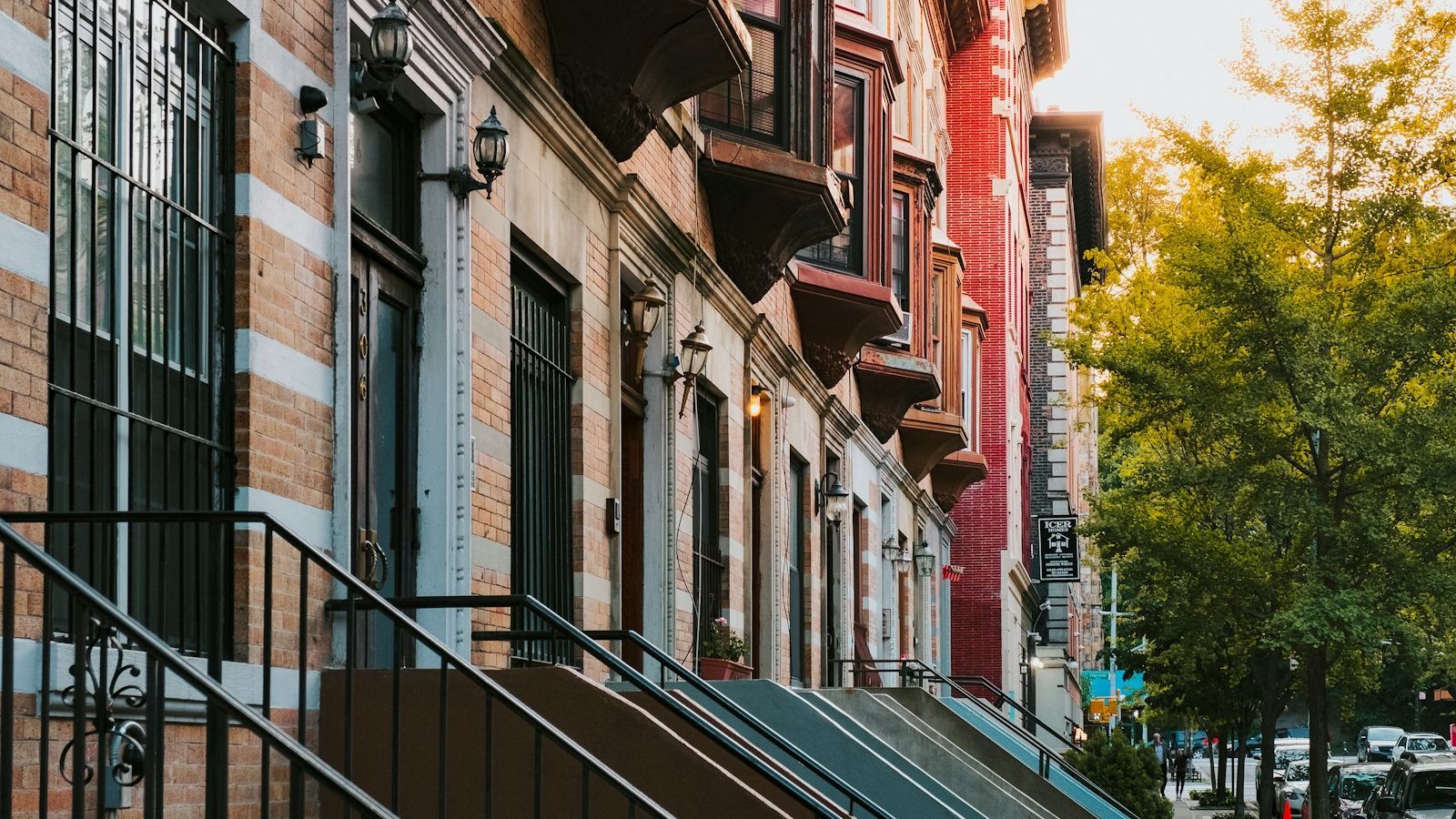
The elegant townhouse blocks of West 138th and 139th Streets were where Harlem’s Black middle class lived. Doctors, lawyers, and musicians shared the same block. The architecture is still immaculate.
Walk south to the Apollo. Walk north to the Schomburg. The scale of Harlem’s ambition still comes through on every block.
One tradition that helped sustain the artists throughout this era was something you might not expect. Working-class families would throw Saturday night parties, charge a small admission, and use the proceeds to make rent. Musicians showed up. Poets read. Great music got made. Read about how Harlem’s rent party tradition shaped the neighbourhood’s sound — it’s a story that’s easy to miss and impossible to forget.
What Harlem Gave to the World
The Harlem Renaissance didn’t end neatly. The Great Depression hit Harlem hard in the 1930s. Clubs closed. Writers moved on.
But what it produced didn’t disappear. It seeded a literary tradition that ran through Ralph Ellison and James Baldwin. It established jazz as an art form the whole world would eventually recognize. It laid the cultural groundwork for everything that followed — including the music that would be born in the Bronx decades later, when another New York neighbourhood changed music forever.
Harlem in the 1920s wasn’t just a neighbourhood making culture. It was a neighbourhood insisting — against everything — that it existed.
What is the Harlem Renaissance and when did it happen?
The Harlem Renaissance was a cultural explosion centered in Harlem, New York, roughly from 1920 to 1935. It produced landmark works in literature, jazz, visual art, and theatre by Black American artists who gathered in the neighbourhood during and after the Great Migration north.
What are the best places to visit in Harlem for history?
Start at the Apollo Theatre on 125th Street, then visit the Schomburg Centre for Research in Black Culture on Malcolm X Boulevard. Walk Strivers’ Row (West 138th–139th Streets) and stop by the Langston Hughes House on East 127th Street for a real sense of the era.
How long should I spend exploring historic Harlem?
A dedicated half-day gives you enough time to walk the key sites and visit the Schomburg Center. If you want to include a meal on 125th Street and take in the neighbourhood properly, set aside a full day.
Is Harlem worth visiting as a tourist in New York City?
Absolutely. Harlem is one of New York’s most historically significant neighborhoods and offers a genuine alternative to the Midtown tourist circuit. The food, architecture, and cultural sites are outstanding — and it’s easily reached by subway from anywhere in Manhattan.
The Harlem Renaissance is sometimes taught as a chapter in a history book. It deserves to be experienced as a place. The brownstones are still there. The Apollo is still there. The streets are still there.
Walk them slowly. The greatness seeps in.
You Might Also Enjoy
- The Harlem Party Tradition That Kept the Rent Paid — and Launched a Music Scene
- The Bronx Block Party That Invented Hip-Hop — and the Address Every Music Fan Should Know
- What Grand Central Terminal Is Really Hiding From Its 750,000 Daily Visitors
Plan Your New York Trip
Ready to explore Harlem and beyond? Our 3 Days in New York City itinerary is the perfect starting point, with plenty of room to add a half-day in Harlem to your plans.
Join 1,100+ New York Lovers
Every weekday morning, get New York’s hidden gems, neighbourhood stories, food origins, and city secrets — straight to your inbox.
Subscribe free — enter your email:
📲 Know someone who’d love this? Share on WhatsApp →
Love more? Join 65,000 Ireland lovers → · Join 43,000 Scotland lovers →
Free forever · · Unsubscribe anytime

Subscribe Free