
Between 1910 and 1970, more than six million African Americans left the American South. They fled violence, poverty, and the crushing weight of Jim Crow laws. Many came to New York. A great number of them came to Harlem. What they built there became one of the most extraordinary chapters in American history.
If you love New York’s hidden stories, you’ll love our free weekly newsletter. Subscribe to Love New York →
Why Harlem? The Unlikely Destination
In the early 1900s, Harlem was a predominantly white neighbourhood in upper Manhattan. Property developers had built too many houses. The market crashed. Landlords needed tenants. A Black real estate agent named Philip Payton saw the opportunity. He negotiated leases with desperate white landlords. Then he rented those flats to African Americans.
Word spread fast. A neighbourhood that had once refused Black residents suddenly had open doors. African American families moved in block by block. By the 1920s, Harlem had become the largest Black urban community in the world.
The pull was powerful. Southern migrants arrived by train at Penn Station. Many had never been to a city. They carried everything they owned in cardboard suitcases. They came for factory work in the First World War boom. They came to escape sharecropping debt. They came because their cousin had written home to say the food was plentiful and no one had lynched anyone on 125th Street.
Life in the Blocks — What It Was Really Like
Life in Harlem in the 1920s and 1930s was crowded. One room might hold a family of six. Landlords charged Black tenants more than white tenants had paid. To cover the rent, families held “rent parties.” They charged admission to neighbours and friends. Someone played piano. Someone made food. The collection at the door paid the landlord on Monday morning.
The famous pianist Fats Waller got his start at rent parties on West 133rd Street. James P. Johnson, the stride piano master, played them too. These weren’t just survival strategies. They were the birthplace of a new American music.
The streets were alive. Lenox Avenue hummed with vendors selling sweet potatoes and sugar cane. The smell of pork ribs came from the basement restaurants. Children played stickball between the brownstone stoops. Men gathered outside the barbershops to argue about Marcus Garvey and Langston Hughes. Women in church hats walked six abreast to Sunday services at the Abyssinian Baptist Church on 138th Street.
Just as Irish immigrants had built their own world in Five Points a century earlier, African Americans built a complete culture within Harlem’s borders. It had its own newspapers, its own theatres, its own philosophy.
The Harlem Renaissance — A Cultural Explosion
No other neighbourhood in American history produced such concentrated genius in such a short time. The Harlem Renaissance lasted roughly from 1920 to 1940. It changed everything.
Langston Hughes wrote his first poems here. Zora Neale Hurston wrote novels that described the Black Southern experience with raw, beautiful precision. Jacob Lawrence painted his Migration Series — sixty small panels depicting the journey north — in a studio on Lenox Avenue.
Duke Ellington played the Cotton Club on 142nd Street. Billie Holiday sang at Café Society. Ella Fitzgerald won the amateur talent show at the Apollo Theatre in 1934. She was seventeen years old and had originally planned to enter as a dancer.
These weren’t isolated events. They happened because thousands of talented people had gathered in one place. They pushed each other. They argued with each other. They inspired each other. The density of Harlem — the overcrowding that made life hard — also made this cultural explosion possible.
Want more stories like this? Our weekly newsletter goes deeper into New York’s heritage every week. It’s free. Subscribe here →
Sugar Hill and the Black Elite
Not everyone in Harlem was poor. Sugar Hill — the neighbourhood on the high ground above 145th Street — was where Harlem’s successful professionals lived. The name came from the “sweet life” its residents enjoyed.
Duke Ellington had an apartment at 935 St Nicholas Avenue. Thurgood Marshall, who would later become the first Black justice of the Supreme Court, lived at 409 Edgecombe Avenue. W.E.B. Du Bois, the civil rights leader and scholar, lived nearby. So did Cab Calloway, the jazz singer known for his white zoot suit and his signature scat phrase, “Hi-de-hi-de-hi.”
409 Edgecombe Avenue was called the “Aristocrat of Harlem.” It had a doorman and a lift. Visitors came to parties that mixed Harlem’s Black elite with white writers and socialites from downtown. It was one of the most socially integrated addresses in 1930s New York — at a time when integration was still illegal in much of the country.
Strivers’ Row — Where Ambition Had an Address
On West 138th and 139th Streets, between Adam Clayton Powell Jr. Boulevard and Frederick Douglass Boulevard, there are four blocks of townhouses built in 1891. They were designed for wealthy white New Yorkers. By the 1920s, Black doctors, lawyers, musicians, and businesspeople had moved in.
The neighbours called it “Strivers’ Row.” The name carried both admiration and irony. These were people who had clawed their way up in a system designed to keep them down. W.C. Handy, the “Father of the Blues,” lived here. So did architect Vertner Tandy, the first African American registered architect in New York State.
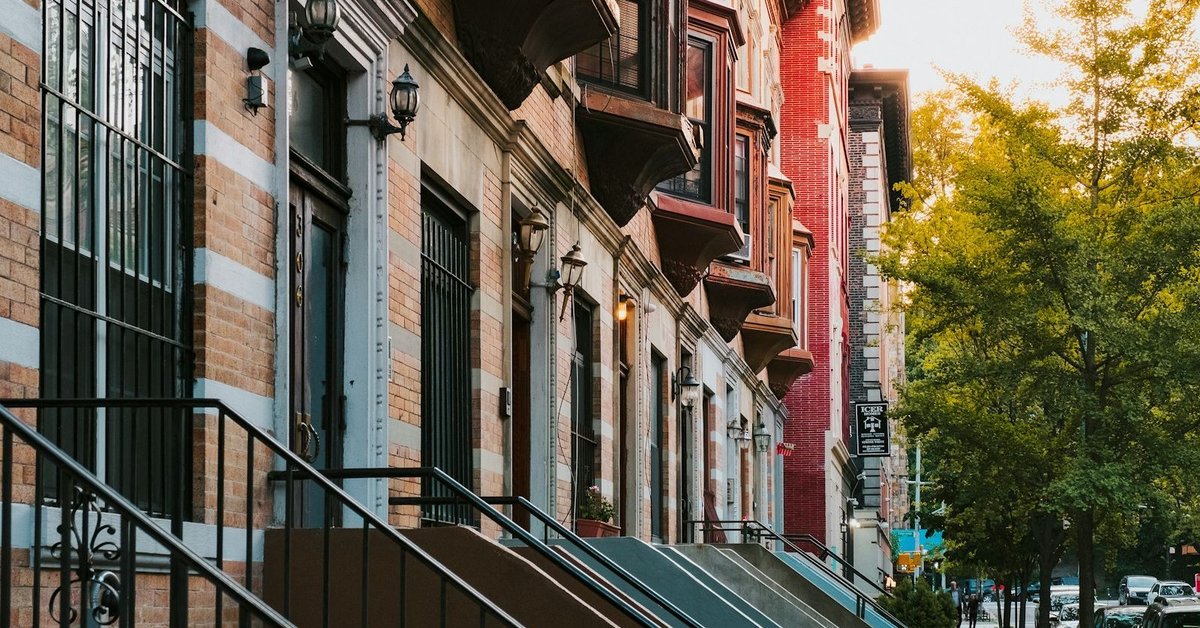
Walk down these streets today and the houses look much as they did in 1930. The brick is the same. The ironwork is the same. The back alley entrances — still marked with signs reading “Private Road — Walk Your Horses” — are a detail that most visitors walk past without noticing. They were installed for carriages. They survived into the age of motor cars. They survive still.
The Apollo Theatre — The Stage That Launched Everything
At 253 West 125th Street, the Apollo Theatre opened to Black audiences in 1934. Before that, the building had refused to admit Black patrons. Under new management, it became the most important Black entertainment venue in America.
The Apollo’s Amateur Night ran every Wednesday. The performers were local. The audience was merciless. If you were bad, the “Sandman” danced you off the stage. If you were good, you might become Ella Fitzgerald. Or James Brown. Or Michael Jackson, who first performed there at age ten with the Jackson 5.
The “Tree of Hope” stood outside the stage door. Performers rubbed it for luck before auditions. When the tree was cut down to widen the street, a piece of it was kept inside the theatre. Performers still touch it today before they go on.
Harlem’s cultural energy shaped the rest of New York too. Just as East Harlem developed its own vibrant Puerto Rican identity to the east, Central Harlem became the undisputed heartland of Black American culture.
Where to Visit Today — A Heritage Guide to Harlem
Harlem is very much a living neighbourhood. But the heritage is all around you if you know where to look.
The Schomburg Center for Research in Black Culture at 515 Malcolm X Boulevard holds one of the world’s finest collections of African American and African diaspora history. It houses the manuscripts of Langston Hughes and photographs from the Harlem Renaissance. Admission is free. The reading rooms are open to anyone who wants to trace family history.
The Apollo Theatre offers guided tours. You’ll see the backstage areas where Ella Fitzgerald paced before her audition. You’ll touch the Tree of Hope. Tours run most days and last about an hour.
Strivers’ Row (West 138th and 139th Streets) is a free walk. Go in the morning when the light hits the brick. Look for the alley signs. The houses are listed on the National Register of Historic Places.
409 Edgecombe Avenue still stands on Sugar Hill. There is a plaque. The building is still residential. You cannot go inside, but standing in front of it and knowing who lived there — who talked on those steps, who climbed those stairs after late nights at the Cotton Club — is enough.
Abyssinian Baptist Church at 132 Odell Clark Place holds its famous Sunday service every week. It was founded in 1808, making it one of the oldest Black churches in America. Its congregation supported Harlem through the Depression and beyond. Visitors are welcome.
The National Jazz Museum in Harlem at 58 West 129th Street traces the music that was born in these blocks. It holds archives, instruments, and recordings. Entrance is donation-based.
If your family roots go deeper into New York’s immigrant history, the Jewish heritage of the Lower East Side and the Italian community of Little Italy offer equally rich stories from the same era.
Frequently Asked Questions
What was the Great Migration?
The Great Migration was the movement of around six million African Americans from the rural American South to cities in the North, Midwest, and West between 1910 and 1970. Many came to New York City, with Harlem becoming the largest Black urban community in the world by the 1920s.
What is the Harlem Renaissance?
The Harlem Renaissance was a flowering of African American art, literature, music, and culture centred in Harlem roughly between 1920 and 1940. It produced writers like Langston Hughes and Zora Neale Hurston, musicians like Duke Ellington and Billie Holiday, and artists like Jacob Lawrence.
Where can visitors trace African American heritage in Harlem?
Key sites include the Schomburg Center for Research in Black Culture (free genealogy resources), the Apollo Theatre (guided tours available), Strivers’ Row (a free walking route), and Abyssinian Baptist Church (visitors welcome at Sunday services). All are within easy walking distance of each other.
Is Harlem safe to visit?
Central Harlem is a busy, well-trafficked neighbourhood that welcomes visitors. 125th Street, the Schomburg Center, the Apollo Theatre, and Sugar Hill are all popular with tourists. Daytime visits and guided tours are recommended for first-time visitors.
What is Strivers’ Row in Harlem?
Strivers’ Row refers to the townhouses on West 138th and 139th Streets that became home to Harlem’s Black professional class in the 1920s. Residents included musician W.C. Handy and architect Vertner Tandy. The houses are listed on the National Register of Historic Places and can be visited on a free self-guided walk.
Ready to explore the New York your ancestors knew? Subscribe to Love New York — free weekly stories, heritage guides, and hidden history. Join us →
Image Credit: Shutterstock

Subscribe Free