
Cross the Williamsburg Bridge today. You step into one of the most extraordinary communities in New York City. South Williamsburg is home to more than 70,000 Satmar Hasidic Jews. It is the largest Hasidic enclave outside Israel. The streets hum with Yiddish. Men in black coats and wide-brimmed hats walk quickly between synagogues and study halls. Women push prams along Lee Avenue, the neighbourhood’s main street. Children pour out of yeshivas. This is not a relic or a museum exhibit. It is a living, breathing community. It chose Brooklyn as its home and never left.
If you love New York’s hidden stories, you’ll love our free weekly newsletter. Subscribe to Love New York →
Before the Bridge: Williamsburg’s Earlier Layers
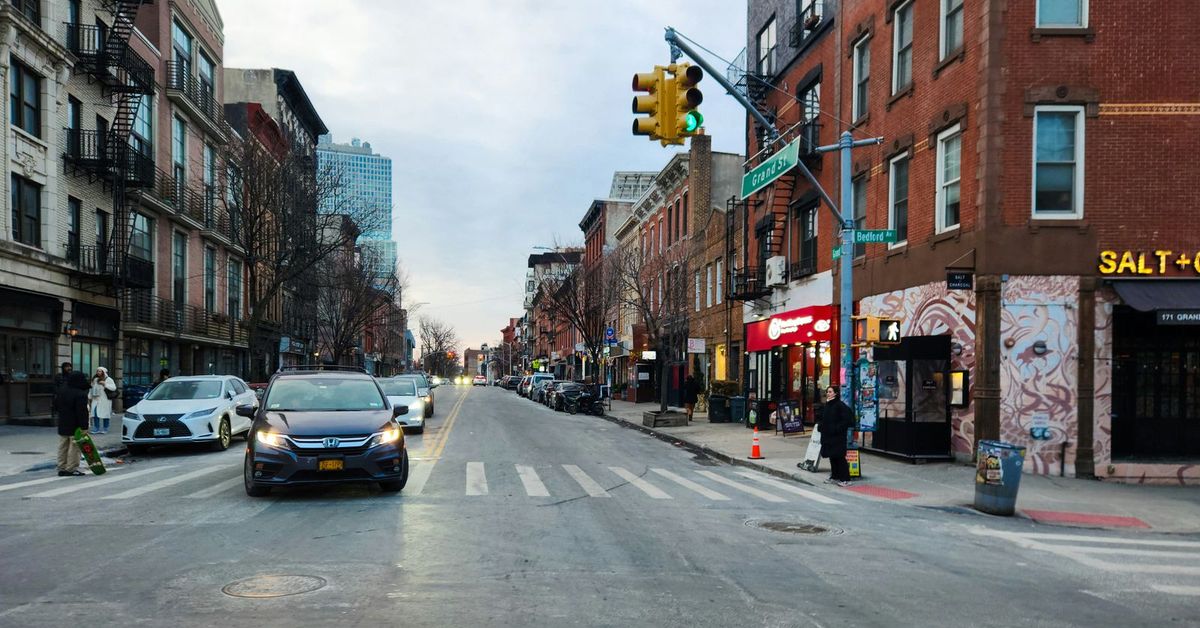
Williamsburg was not always Jewish. In the 1840s and 1850s it was a German neighbourhood. Breweries lined the waterfront. German families settled the blocks around Broadway and Grand Street. They built churches and social clubs. They ran the local economy for a generation. But New York changes fast, and by the 1880s the Germans had begun moving on.
The Eastern European Jewish immigrants who replaced them arrived with almost nothing. They had fled pogroms in Russia, Poland, and Romania. They poured first into the Lower East Side. When that neighbourhood became too crowded, many crossed the Williamsburg Bridge. It had opened in 1903. The bridge quickly became known as “the Jews’ Highway.” It was that popular with families making the move to Brooklyn. Within a decade, south Williamsburg had become an extension of the Lower East Side. The same languages. The same trades. The same food. Just with more space to breathe.
The Lower East Side was one of the most densely settled places in human history. It sent countless families across that bridge. Tenements held entire extended families in two rooms. Williamsburg offered brownstones, slightly wider streets, and the possibility of a yard. For a family from a shtetl in Ukraine or a village in Poland, it must have felt extraordinary.
The Survivors Who Rebuilt Here
The community that exists today in south Williamsburg is not descended from those pre-war immigrants. It was built almost entirely by Holocaust survivors.
In 1946, Rabbi Yoel Teitelbaum arrived in New York. He was the Satmar Rebbe. His dynasty had its roots in Satu Mare in northern Romania, then part of Hungary. He had survived the Holocaust through extraordinary circumstances, escaping on the Kasztner train in 1944. Most of his community had not survived.
He settled in south Williamsburg. His surviving followers came to join him. Hundreds of families arrived in the late 1940s and 1950s. Most had lost nearly everyone they knew. They had a single shared objective. They would rebuild their world exactly as it had been. They would speak Yiddish, not English. They would educate their children entirely within the community. They would create, in Brooklyn, the world that had been destroyed in Europe.
What they built was extraordinary. By the 1960s, Williamsburg had the largest Hasidic concentration outside Israel. South Williamsburg holds that title still. That is still true today. The community has grown to more than 70,000 people. The birth rate is among the highest of any community in New York City. Young families who cannot find space in south Williamsburg move on. Borough Park and Crown Heights absorb the overflow. Some have moved further still. Kiryas Joel is a Satmar village in Orange County, about 60 miles north of the city.
Want more stories like this? Our weekly newsletter goes deeper into New York’s heritage every week. It’s free. Subscribe here →
Life on Lee Avenue
Lee Avenue is the commercial heart of the Satmar community. Walk it on a weekday morning. You will pass kosher butchers, Jewish bookshops, jewellery stores, and bakeries. Wedding supply shops line the side streets. Signs are in Yiddish and Hebrew. English appears as a secondary language, if at all.
The food is extraordinary. Knishes, blintzes, rugelach, and challah bread are baked fresh daily. Every Friday morning, the bakeries on Lee Avenue produce challah for Shabbat. Side streets smell of fresh bread. The smell of fresh bread fills the air for blocks in each direction. On a Friday afternoon, the pace of the street quickens. Everyone is preparing for the Sabbath. By sundown, the neighbourhood quiets entirely.
The study halls, known as beit midrash, are busy at almost any hour. Hasidic learning is continuous. Men return after work. Young students study through the evening. The United Talmudical Academy sits on Bedford Avenue. It is one of the largest yeshivas in the world. It educates more than 6,500 students across multiple buildings in the neighbourhood.
The Satmar community maintains a strong separation from the secular world. They do not own televisions. Internet access is carefully restricted. Children are educated almost entirely in Yiddish. The community runs its own ambulance service (Hatzolah). It has its own bakeries, butchers, and a hospital. This self-sufficiency was not always possible in Europe. In Brooklyn, it became a point of extraordinary pride.
The Other Williamsburg
North Williamsburg tells a very different story. By the early 2000s, artists priced out of Manhattan began crossing the Williamsburg Bridge. They moved in the opposite direction to their grandparents’ generation. Warehouses on Bedford Avenue became studios. Galleries opened. Music venues followed. By 2005, the area had become one of the most written-about neighbourhoods in the country. It was synonymous with a particular kind of New York creative energy.
The gentrification that followed was rapid. Rents rose. The artists moved further into Bushwick and Ridgewood. The coffee shops and boutiques stayed. North Williamsburg today is a neighbourhood of expensive restaurants and weekend brunch queues. Rooftop bars offer views of the Manhattan skyline. It is almost entirely disconnected from the world south of Division Avenue. Those blocks are just a short walk away.
This is one of the great curiosities of New York. Two communities share a single neighbourhood name and barely share a street. The Satmar Hasidim and the Brooklyn brunch crowd occupy adjacent blocks and rarely intersect. This is not unusual for New York. The city has always been assembled from distinct, self-contained worlds. But in Williamsburg the contrast is unusually stark.
The Italian community that once filled the streets between these two worlds has largely dispersed. Italian families settled Williamsburg’s middle ground from the 1920s through to the 1960s. They ran small businesses along Union Avenue and Graham Avenue. The Little Italy in Manhattan began to shrink. Brooklyn versions held on longer. In Williamsburg, the Italian presence has mostly faded. A handful of old family names survive above shuttered storefronts.
What Visitors Can See Today
Walking through south Williamsburg is a quiet, respectful experience. The community welcomes visitors who behave with courtesy. Dress modestly if you intend to walk through the Satmar blocks. Men should avoid shorts. Women should cover their shoulders and knees. Do not photograph people without permission. Do not approach women to ask for directions. In this community, it is more appropriate to speak with men.
Start at the Williamsburg Bridge pedestrian walkway and cross on foot. The bridge itself is a monument to the immigrant journey. When it opened in 1903, it was the longest suspension bridge in the world. It stretches 7,308 feet. The views of the Manhattan skyline from the bridge are among the finest in the city.
Descend into south Williamsburg and walk south along Bedford Avenue, then turn onto Lee Avenue. You are entering a world that has remained largely unchanged for 70 years. The storefronts are modest. The streets are busy. The pace is purposeful.
The Satmar Grand Synagogue at 152 Rodney Street is the spiritual centre of the community. It seats more than 5,000 worshippers. That makes it one of the largest synagogues in the world. On Rosh Hashanah and Yom Kippur, the building cannot hold everyone who comes. People stand in the street outside.
Want more of Brooklyn’s immigrant story? The Polish heritage of nearby Greenpoint makes a fascinating companion piece. It sits just a few blocks from Williamsburg. Cross Meeker Avenue and you shift from Jewish Brooklyn to Polish Brooklyn within a few blocks.
The Language That Survived
Yiddish was the daily language of European Jewish communities for nearly a thousand years. It was nearly destroyed in the Holocaust along with the communities that spoke it. Six million of the world’s Yiddish speakers were killed between 1941 and 1945. After the war, many expected Yiddish to die within a generation. The surviving community seemed too small.
South Williamsburg proved those predictions wrong. The Satmar community made a deliberate decision to maintain Yiddish as its primary language. Children learn to read and write in Yiddish before they learn English. Yiddish is the language of daily life, prayer, commerce, and family. It is the language of the survivors’ world. The community refuses to let it go.
Today, south Williamsburg is home to more daily Yiddish speakers than almost anywhere else on earth. The YIVO Institute for Jewish Research is based in Manhattan. The Satmar community is one of the last major concentrations of native Yiddish speakers. They are right here in New York. You can hear it on every street corner in south Williamsburg.
The Yiddish theatre tradition of Second Avenue in Manhattan lives on here. South Williamsburg is home to its most devoted living audience. Community performances in Yiddish are staged regularly for audiences who still understand every word.
Tracing Jewish Ancestry in Williamsburg
Did your family come from Eastern Europe in the late 19th or early 20th century? They may well have passed through Williamsburg. It was a primary landing point for Jewish families leaving the overcrowded Lower East Side.
The New York Public Library’s Milstein Division of United States History, Local History & Genealogy is an excellent starting point. It is located at the main branch on Fifth Avenue. They hold New York City directories going back to the 1850s. Census records, naturalisation papers, and property records can help trace a family’s move from Manhattan to Brooklyn.
The YIVO Institute for Jewish Research holds the world’s largest archive of Eastern European Jewish history. Their collections include records from communities destroyed in the Holocaust. YIVO may hold records from your family’s specific town or region in Eastern Europe. Many records survived the war. They were brought to New York afterwards. Their archives are available to researchers by appointment.
Ellis Island passenger records, available free at libertyellisfoundation.org, allow you to search by surname, approximate date, and place of origin. Many of the names are spelled phonetically by immigration officers who had never heard the original language. Searching variant spellings often produces results that an exact name search misses.
Frequently Asked Questions
What is the Hasidic community in Williamsburg, Brooklyn?
The Hasidic community in south Williamsburg is primarily Satmar, a Hasidic dynasty founded in Satu Mare, Romania. It was established by Rabbi Yoel Teitelbaum after the Second World War. Most of its founders were Holocaust survivors. Today it numbers more than 70,000 people. It is the largest Hasidic community outside Israel.
Can visitors walk through the Hasidic neighbourhood in Williamsburg?
Yes, visitors are welcome to walk through south Williamsburg, but respectful behaviour is important. Dress modestly, covering shoulders and knees. Do not photograph people without permission. Remember: this is an active community going about its daily life, not a tourist attraction.
When did Jewish immigrants first settle in Williamsburg?
Eastern European Jewish immigrants began moving to Williamsburg in significant numbers after the Williamsburg Bridge opened in 1903. They were relocating from the overcrowded Lower East Side. The post-war Hasidic community arrived from the late 1940s onwards. Rabbi Teitelbaum had established the Satmar presence in 1946.
What can heritage visitors see in Williamsburg today?
Key sites include the Williamsburg Bridge pedestrian walkway. Lee Avenue is the main commercial street of the Satmar community. The Satmar Grand Synagogue at 152 Rodney Street is also well worth visiting. The surrounding blocks of brownstones represent one of the most intact 19th-century streetscapes in Brooklyn.
Where can I trace Jewish ancestry connected to Williamsburg?
Start with the YIVO Institute for Jewish Research in Manhattan. It holds the world’s largest archive of Eastern European Jewish history. The New York Public Library’s Milstein Division holds city directories and census records. Ellis Island passenger records are searchable free at libertyellisfoundation.org.
Ready to explore the New York your ancestors knew? Subscribe to Love New York — free weekly stories, heritage guides, and hidden history. Join us →

Subscribe Free