
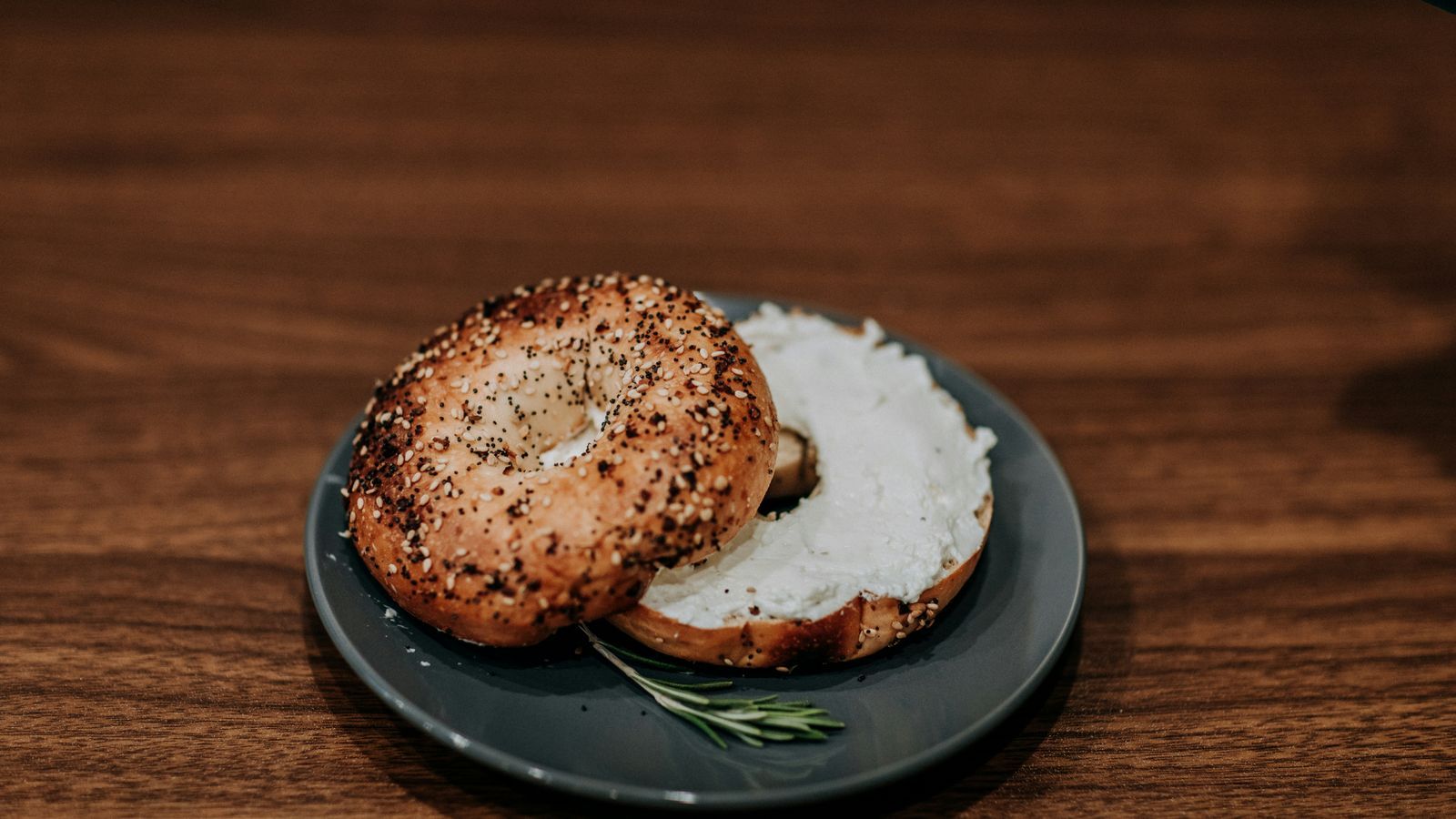
New York City’s bagels are different from every other bagel on earth — chewier on the outside, softer inside, with a depth of flavour that even the most careful copycat can’t quite replicate. The reason isn’t a single secret. It’s a combination of water chemistry, old-world technique, and a century of immigrant craft that fused into something uniquely New York.
The immigrants who brought the bagel downtown
Polish and Russian Jewish immigrants carried the bagel recipe to New York’s Lower East Side in the 1880s. It wasn’t a delicacy — it was working-class bread, sturdy enough to be threaded on a string and hawked on the street for a penny.
By the early 1900s, pushcart vendors along Hester Street were selling hundreds each morning. The bagel wasn’t exotic. It was breakfast for a neighbourhood of some 300,000 people crammed into tenement blocks south of Houston Street.
What those bakers brought wasn’t just a recipe — it was a technique passed down through generations of guild craftsmen, refined over centuries in the Jewish communities of Kraków and Warsaw.
The union that kept the secrets
In 1907, New York’s bagel bakers formed Local 338 of the Bakery and Confectionery Workers International Union — one of the most tightly controlled craft guilds in the city’s history. For the next five decades, no bagel could legally be made in New York without a union card.
The union set wages, hours, and — crucially — who could learn the craft. Apprenticeships passed from father to son. The hand-rolling technique was not written down. It was demonstrated, corrected, and drilled until a baker could shape a bagel in under 30 seconds without thinking.
At its peak in the 1950s, Local 338 represented more than 300 bakers supplying the entire metropolitan area. When machines threatened to replace hand-rolling in the 1960s, the union went on strike. They lost — and the industrial bagel was born. But the hand-rolled version never disappeared entirely.
What the water actually does (and doesn’t do)
The “it’s the water” argument has been New York’s most beloved food myth for decades. And there’s truth in it — just not in the way most people think.
New York City draws its water from the Catskill and Delaware reservoirs upstate, giving it unusually low mineral content. Soft water affects how gluten develops in dough: it stays more elastic, producing a chewier, more extensible crumb.
Bakers in Montreal, London, and Los Angeles have tried filtering their water to match New York’s mineral profile. Results improve — but never all the way. The flour blend, the fermentation time, and the boiling liquid all matter just as much.
Enjoying this? Join New York lovers getting stories like this every weekday morning. Subscribe free →
Why the boil is everything
Before any bagel goes into the oven, it spends between 30 and 90 seconds in boiling water — sometimes spiked with malt barley or baking soda. That bath gelatinises the outer layer of starch, creating the distinctive shiny, chewy crust that no amount of baking alone can produce.
Steam-injected ovens and industrial shortcuts can approximate this. But a kettle-boiled bagel — where each ring floats and flips in a rolling boil — develops differently. The crust sets faster and more evenly. The interior stays soft rather than dry.
The baking temperature matters too. Authentic NYC bagels bake at temperatures above 500°F (260°C), far hotter than most home ovens can reach. That high heat finishes the crust in minutes, locking in the contrast between outside and inside that defines the New York bagel.
Where to find the real thing today
A handful of shops in New York still make bagels the old way — hand-rolled, kettle-boiled, and baked to order.
On the Lower East Side, Russ & Daughters has been an institution since 1914, serving hand-rolled bagels alongside smoked fish and cream cheese in the tradition of the old appetizing shops. The store on East Houston Street hasn’t moved in over a hundred years.
In Midtown, Ess-a-Bagel has built its reputation since 1976 on hand-rolled, kettle-boiled rings the size of a dinner plate — dense, chewy, and deeply flavoured.
In Greenwich Village, Murray’s Bagels refuses to toast its bagels — a principled stand that has made it a neighbourhood legend. On the Upper West Side, Absolute Bagels keeps a loyal morning queue of locals who won’t settle for anything else on a Sunday.
To put each of these neighbourhoods in fuller context, this guide to New York’s best neighbourhoods covers everything from the Lower East Side to the Upper West Side — and gives you a reason to wander each one.
Why New Yorkers take this so personally
In a city where allegiances to pizza slices and hot dog carts run fierce, the bagel occupies different emotional territory. It’s tied to a specific immigrant story — to the Lower East Side in the 1880s, to families who fled Eastern Europe and rebuilt a culture in a new language.
For many New Yorkers, eating a proper bagel isn’t just breakfast. It’s a small act of continuity with people who arrived here with almost nothing and left an indelible mark on the city’s identity.
That’s why the debate about water, flour, and boiling technique has never really been about chemistry. It’s about belonging.
What is the best time to visit NYC bagel shops?
Early morning — between 7 and 9 a.m. — is when bagels come out of the oven freshest. Most top bagel shops in Manhattan sell out of their most popular varieties by 11 a.m. on weekends, so arriving early gives you the best selection and the warmest bagels.
Where can I find the best bagels in New York City?
The most respected traditional bagel shops are Russ & Daughters (Lower East Side, established 1914), Ess-a-Bagel (Midtown East, since 1976), Murray’s Bagels (Greenwich Village), and Absolute Bagels (Upper West Side). Each hand-rolls and kettle-boils, which sets them apart from chain bakeries.
Are New York bagels really different because of the water?
Partly — New York’s soft Catskill watershed water does affect gluten development, producing a more elastic dough. But the difference also comes from the hand-rolling technique, the kettle-boiling process, and baking above 500°F. Water alone doesn’t explain the full picture.
Why do New York bagels have such a chewy crust?
The signature chew comes from boiling each bagel for 30 to 90 seconds before baking. This gelatinises the outer starch layer and creates the firm, shiny crust. Without the boil, you get a bread roll — not a bagel. Authentic NYC shops use a kettle boil, sometimes with malt barley added to the water.
You might also enjoy
- The Harlem that African Americans built — a story of survival and pride
- Things to do in DUMBO, Brooklyn — your complete 2026 visitor’s guide
- Best neighbourhoods in New York City — a visitor’s complete guide 2026
Plan your New York trip
Ready to explore the city in person? Our 4-day New York City itinerary helps you plan your visit around the best neighbourhoods, food experiences, and hidden gems the city has to offer.
Join 1,100+ New York Lovers
Every weekday morning, get New York’s hidden gems, neighbourhood stories, food origins, and city secrets — straight to your inbox.
Subscribe free — enter your email:
📲 Know someone who’d love this? Share on WhatsApp →
Love more? Join 64,000 Ireland lovers → · Join 43,000 Scotland lovers →
Free forever · Unsubscribe anytime
