
In the 1840s, a square mile of Lower Manhattan held more human misery than almost anywhere else on earth. Families of eight slept in single rooms. Children worked from dawn. Gangs ruled the alleyways. Yet from this place, a community built something extraordinary.
This was Five Points. The Irish made it theirs.
If you love New York’s hidden stories, you’ll love our free weekly newsletter. Subscribe to Love New York →
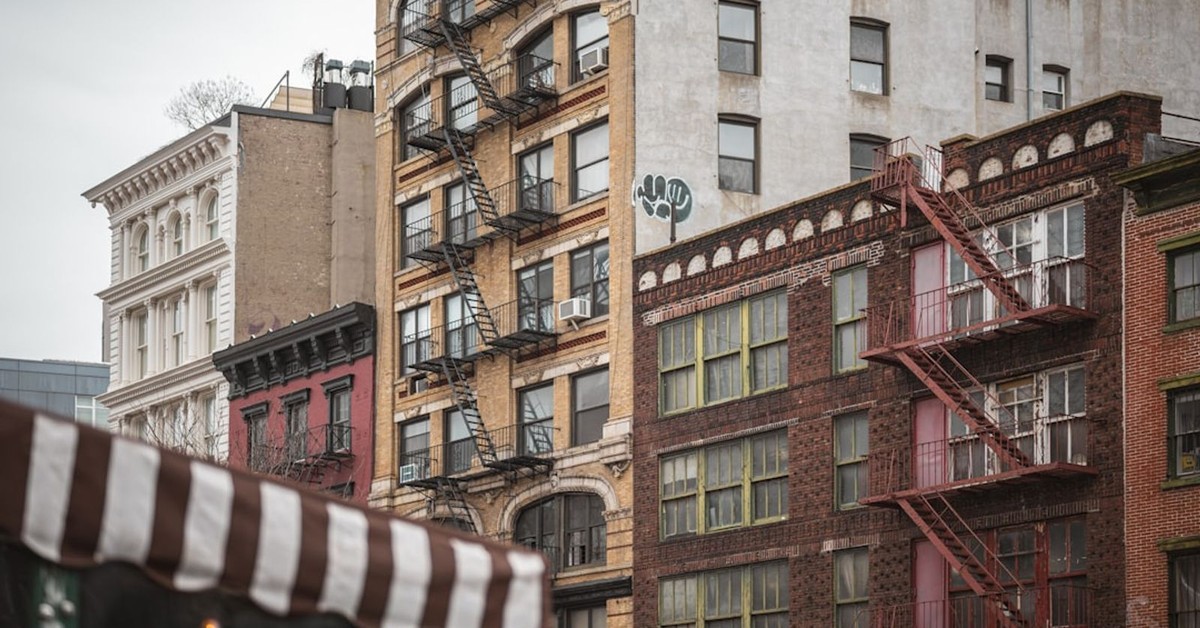
Where Five Points Actually Stood
Five Points took its name from a street intersection. Five roads met at a single point: Anthony Street, Orange Street, Cross Street, Little Water Street, and Mulberry Street. That intersection no longer exists. You’ll find it roughly where Worth Street, Baxter Street, and Park Street meet today — near the base of Foley Square.
Something lay beneath Five Points before the streets ever came. In the early 1800s, city engineers drained a large freshwater lake called the Collect Pond. They filled it with earth, ash, and industrial waste. Then they built on top of it. The ground shifted and sank for decades. Buildings cracked and flooded. Wealthier residents moved elsewhere fast.
By the 1820s, Five Points had become the city’s poorest district. People who arrived in New York with little money had nowhere else to go.
Why the Irish Came to Five Points
Ireland’s Great Famine began in 1845. A potato blight destroyed the primary food source for millions of people. Between 1845 and 1852, approximately one million people died. Another two million fled Ireland. Many of them sailed to New York.
These emigrants left with almost nothing. The clothes on their backs. The memory of a village. The address of a cousin’s neighbour.
The cheapest passage across the Atlantic ended in New York. The cheapest rooms in New York sat in Five Points. Irish immigrants had been arriving in the neighbourhood since the 1820s, but the Famine years turned a trickle into a flood. By the early 1850s, tens of thousands of Irish men, women, and children packed into the blocks around that five-street intersection.
A single building might house 200 people. Families shared rooms with strangers. Disease moved fast through the crowded tenements. But the Irish also built a community — they founded churches, created labour networks, and established the social structures that would eventually transform New York politics entirely.
The Irish community in New York stretched across more than one neighbourhood. Five Points was the first home. Woodlawn in the Bronx became the enduring one.
The Old Brewery: New York’s Most Notorious Building
No building in Five Points had a darker reputation than the Old Brewery.
The structure started life as Coulter’s Brewery, which opened in 1792. By the 1830s, the brewing operation had failed. The owners converted the empty building into housing for the very poorest residents. Hundreds of people — Irish, Italian, and Black New Yorkers — moved in.
Contemporary accounts described the Old Brewery as a place of constant noise and darkness. The building had no proper plumbing and no ventilation. By the 1840s, observers claimed that up to 1,000 people lived inside. The actual numbers were likely lower. But the squalor was real.
In 1852, a Methodist mission bought the Old Brewery and demolished it. They constructed a mission house on the same site. The act marked the beginning of the end for the worst of Five Points.
Charles Dickens Walks Through Five Points
In 1842, Charles Dickens visited New York. He asked to see Five Points.
His guides took him through the neighbourhood at night. Dickens described what he saw in his book American Notes: broken windows, dark rooms, men sleeping on floors. He wrote with a mixture of horror and sympathy — the horror that comes from recognition.
What struck Dickens was not the crime or the squalor alone. It was the sheer density of human life packed into such a small space. He watched dancing in a basement room. He saw children who had never attended school. He met families who knew nothing beyond their own block.
Dickens’ account put Five Points on the international map. It also shaped how outsiders understood Irish immigrants for decades — as a people defined by poverty rather than by what they were building.
Daily Life in Five Points
Life in Five Points was hard. That belongs at the front of any honest account.
But hardship does not define what people did with their time. The Irish in Five Points built institutions. They founded St. Patrick’s Old Cathedral on Mulberry Street in 1815 — decades before Five Points became a byword for poverty. The cathedral still stands today.
Irish women took in laundry and sewing work. Men worked the docks, the construction sites, and the sewers running beneath the city streets. Children sold newspapers and collected rags. Every penny counted.
Other immigrant groups lived alongside the Irish. Italian families arrived in growing numbers from the 1860s onwards. African Americans had lived in parts of Five Points since before the Famine years. The neighbourhood was a genuine mix — though not always a peaceful one. Space was limited. Resources were scarcer still.
Much like the immigrant women who later changed New York through the Triangle Shirtwaist Factory tragedy, the Irish of Five Points found strength in collective action when individual effort alone was not enough.
Tammany Hall and Irish Political Power
The Irish in Five Points built something else alongside their churches and community halls. They built political power.
Tammany Hall — the Democratic Party machine that dominated New York City politics for decades — ran on Irish votes. Tammany bosses needed reliable voters. Irish immigrants needed jobs, housing help, and legal assistance. The exchange suited both sides.
William “Boss” Tweed, who controlled Tammany Hall in the 1860s and 1870s, was not Irish himself. But he understood the Irish vote and built his machine around it. The Irish used Tammany Hall to climb out of Five Points and into city government, the police force, and the fire service. Politicians, priests, and police officers — the first Irish New Yorkers rose through all three.
Want more stories like this? Our weekly newsletter goes deeper into New York’s heritage every week. It’s free. Subscribe here →
How Five Points Disappeared
By the 1870s and 1880s, reformers had set their sights on Five Points. Jacob Riis, a Danish-American journalist, photographed the neighbourhood extensively. His 1890 book How the Other Half Lives brought images of tenement life to middle-class readers for the first time.
Public pressure mounted. The city began acquiring land in the Five Points area. By the 1890s, authorities had cleared most of the old tenements. They created Mulberry Bend Park, later renamed Columbus Park. The courthouse complex that now fills Foley Square replaced the rest of the neighbourhood.
The Irish community that built Five Points had already begun to disperse. They moved to Brooklyn, to the Bronx, to Queens — following the subway lines and the promise of more space. Five Points had served its purpose. It was the first address. Not the final one.
Other immigrant communities followed a similar pattern. The German-Jewish and Dominican communities of Washington Heights also built neighbourhood identities that outlasted the original buildings. The pattern of arrive, build, disperse, and leave a legacy runs through the entire history of immigrant New York.
Five Points Today: What You Can Still See
The five streets that created the original intersection no longer exist. The city redrawn the road layout when it built the courthouses in the 1890s. But you can still stand in the space where Five Points once was.
Columbus Park sits directly on the old Five Points ground. Walk through it today and you walk through the footprint of some of the most overcrowded streets in American history. The park replaced Mulberry Bend, the worst block of the old neighbourhood.
St. Patrick’s Old Cathedral on Mulberry Street connects directly to the Five Points-era Irish community. The current building dates from 1815, though fire damage in 1866 led to a partial rebuilding. Archbishop John Hughes preached here in the 1840s and went on to become the first Archbishop of New York. The brick exterior has barely changed. The church opens for public visits.
Foley Square replaced the northern edge of Five Points. Federal and state courthouses now stand on ground where tenements once crowded the skyline. The names of surrounding streets still point to the old geography.
The Museum of the City of New York holds extensive archives, photographs, and documents from the Five Points era. The museum runs exhibitions on immigration history and 19th-century New York neighbourhoods throughout the year.
Planning Your Heritage Visit to Five Points
A heritage walk through the Five Points area takes about two hours on foot.
Start at Foley Square. Take the 4, 5, or 6 train to Brooklyn Bridge–City Hall, or the J or Z to Chambers Street. Walk south on Baxter Street — this runs close to the original Five Points intersection.
Continue to Columbus Park. Take your time here. You’re walking on the ground where Five Points once stood.
Walk north on Mulberry Street to St. Patrick’s Old Cathedral. The church offers free tours. Check their website for current opening times before you visit.
End your walk at the Tenement Museum on Orchard Street, a 15-minute walk east. The museum runs guided tours of restored tenement apartments from the Five Points era. Booking in advance is essential, especially at weekends.
If time allows, take the ferry to Ellis Island. Many of the Irish immigrants who ended up in Five Points arrived through New York harbour. Before Ellis Island opened in 1892, the earlier immigration station at Castle Garden, at the southern tip of Manhattan, handled arrivals. Both tell the same story from opposite ends.
The Financial District lies just minutes south of Five Points by foot — combine both areas for a full day of Lower Manhattan history.
Frequently Asked Questions
Where was Five Points in New York City?
Five Points stood in Lower Manhattan, at roughly the intersection of today’s Worth Street, Baxter Street, and Park Street — near Foley Square and Columbus Park. The original five streets that gave the area its name no longer exist. The city redesigned the road layout when it built the courthouse complex in the late 19th century.
When did Irish immigrants arrive in Five Points?
Irish immigrants had lived in Five Points since the 1820s. The Great Famine of 1845–1852 brought the largest wave of arrivals. Approximately two million people left Ireland during and after the Famine, and tens of thousands settled in Five Points, which offered the cheapest available housing in New York City.
Can you still visit Five Points today?
You can visit the area where Five Points stood, though the neighbourhood itself no longer exists. Columbus Park on Mulberry Street occupies the site of the old Mulberry Bend tenements. St. Patrick’s Old Cathedral on Mulberry Street survives from the Five Points era and opens to visitors. The Museum of the City of New York also holds extensive archives on Five Points history.
What happened to Five Points?
City reformers and the municipal authorities cleared Five Points in the 1880s and 1890s. Jacob Riis’s documentary photographs in How the Other Half Lives (1890) drove public demand for action. The city demolished the tenements, created Columbus Park on the Mulberry Bend site, and built the courthouse complex that now fills Foley Square.
Who were the most famous Irish immigrants from Five Points?
Five Points itself produced few individually celebrated figures — it was a neighbourhood defined by collective survival rather than individual fame. But the political networks that Irish immigrants built in Five Points powered Tammany Hall for generations. Those networks gave Irish New Yorkers access to the police force, the fire service, city government, and eventually the Democratic Party machine that shaped 20th-century New York politics.
Ready to explore the New York your ancestors knew? Subscribe to Love New York — free weekly stories, heritage guides, and hidden history. Join us →
