
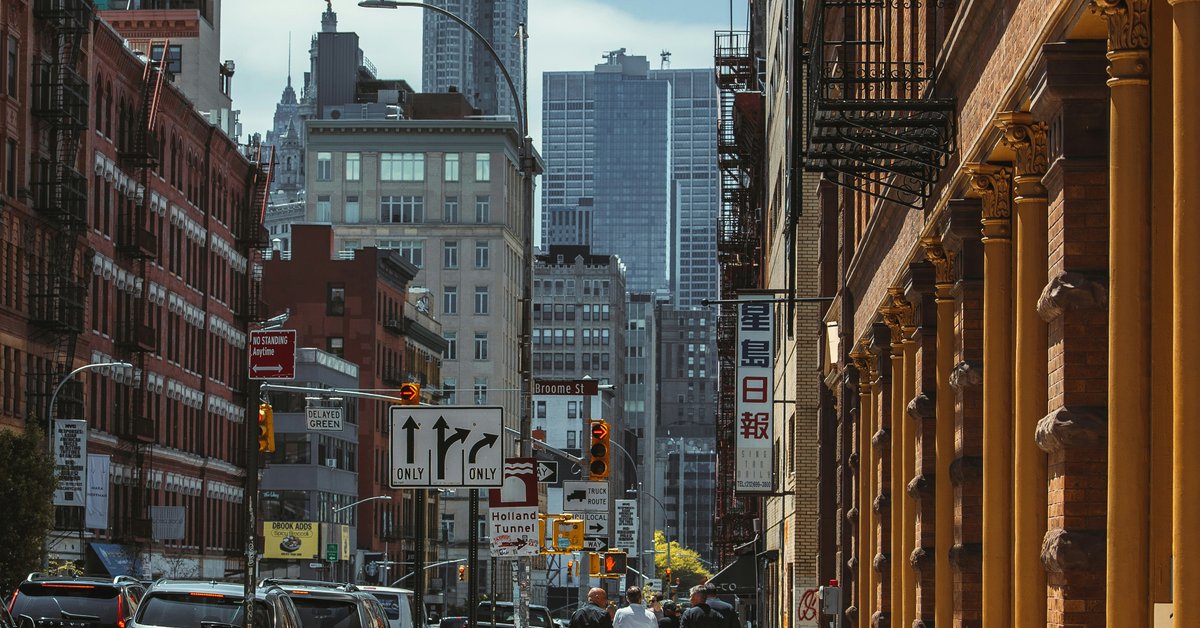
Walk down Mulberry Street on a warm September afternoon. You will smell garlic and espresso. You will hear Italian-American families arguing in a dialect that mixes Neapolitan with Brooklyn English. You will see red, white, and green flags draped from fire escapes. This is Little Italy — the neighbourhood that a million desperate, determined immigrants built from almost nothing.
If you love New York’s hidden stories, you’ll love our free weekly newsletter. Subscribe to Love New York →
Why They Left Italy
Between 1880 and 1914, roughly four million Italians sailed to America. Most came from the south — from Sicily, Calabria, Campania, and Basilicata. Life there had broken them. Absentee landlords owned most of the farmland. Drought killed crops. Taxes crushed small farmers. The Italian government did almost nothing to help the rural poor.
Then word spread. America wanted workers. The factories, railways, and construction sites of New York needed muscle. Labour recruiters — called padrone — travelled to Italian villages and promised wages that sounded almost mythical to people earning pennies a day. Many men went first, planning to send money home and return. Most never did.
They landed at Ellis Island. Inspectors often misspelled their names or shortened them. A family named Calogero might leave as Collins. Then they walked across lower Manhattan, carrying everything they owned, looking for someone who spoke their dialect.
The Neighbourhood That Rose from the Streets
By the 1890s, the blocks around Mulberry, Mott, and Elizabeth streets had transformed. Tenements that once housed Irish families now burst with Italian immigrants. A single two-room apartment might hold a family of eight, plus boarders who paid for a corner of the floor.
The streets were alive from before dawn. Pushcart vendors lined the gutters, selling fish, vegetables, dried beans, and olive oil. Women hung washing from window to window across the narrow streets. Children played stickball in alleys that smelled of coal smoke and boiling tomatoes.
Each block arranged itself around a specific region of Italy. Men from Naples clustered on one street. Sicilians dominated another. Calabrians had their own corner. They did not see themselves as Italians first. They saw themselves as Neapolitans or Sicilians or Calabrese — and the neighbourhood reflected that.
The Padrone System
Finding work in early twentieth-century New York required connections. Most newly arrived Italian immigrants spoke no English. They could not read the signs or negotiate a wage. Into that gap stepped the padrone — the labour boss.
A padrone acted as recruiter, translator, and employer all at once. He secured contracts from construction companies and railways, then supplied Italian workers at a profit. He took a cut of every wage. He charged fees for finding lodgings. He often operated a boarding house and a shop simultaneously.
The system trapped many men in cycles of debt. But it also gave thousands their first foothold in American working life. By 1900, Italian labourers had built much of what New York stands on. They dug the subway tunnels. They laid the water mains. They poured the foundations of skyscrapers.
Faith and the Church
The Catholic Church gave the neighbourhood its structure. Old Saint Patrick’s Cathedral on Mulberry Street had served Irish immigrants for decades. As Italian families moved in, the church adapted — slowly and not always gracefully. Irish-American clergy sometimes resisted the Italian traditions immigrants brought with them.
Italian immigrants solved this tension by building their own churches. The Church of the Most Precious Blood on Mulberry Street became the spiritual centre of the neighbourhood. Priests from Italy celebrated Mass in familiar dialects.
The religious feast days became the neighbourhood’s great celebrations. Brass bands marched through narrow streets. Vendors sold zeppole and sausages from carts. The Feast of San Gennaro began in 1926 on Mulberry Street, marking the feast day of Naples’ patron saint. It continues today — the longest-running outdoor festival in New York City.
Want more stories like this? Our weekly newsletter goes deeper into New York’s heritage every week. It’s free. Subscribe here →
Mutual Aid and Community
Beyond the church, Italian immigrants built an entire infrastructure of mutual aid. Hundreds of mutual aid societies operated across the neighbourhood. Each organised around a specific hometown or region. If a man from Palermo fell ill, his Palermitan society paid his doctor and fed his family.
Newspapers published in Italian kept the community connected. Il Progresso Italo-Americano, founded in 1880, reached Italian families across New York for almost a century. For many immigrants who never fully learned English, it was their window to the world.
The neighbourhood produced remarkable people. Fiorello La Guardia grew up between the Italian and Jewish communities of lower Manhattan. He became the city’s greatest mayor. Enrico Caruso — the great tenor — performed at the Metropolitan Opera while eating supper on Mulberry Street.
When the Neighbourhood Changed
Italian-Americans began leaving Little Italy in the 1930s and 1940s. Prosperity was the reason. A second generation had grown up speaking English and working in professions their parents could not have imagined. They moved to Brooklyn, the Bronx, and eventually New Jersey and Long Island.
Chinatown expanded northward. By the 1970s, what had once been dozens of blocks of Italian New York had contracted to a few streets around Mulberry between Broome and Grand. Today, Little Italy covers only about two blocks of genuine Italian-American commerce.
What You Can Still Find Today
Despite its shrinkage, Little Italy preserves real traces of its immigrant past.
Ferrara Bakery, at 195 Grand Street, has operated since 1892. A Neapolitan immigrant named Antonio Ferrara opened it. Four generations of the same family ran it. You can still sit at a table, order a cannoli, and drink an espresso.
Di Palo’s Fine Foods, at 200 Grand Street, opened in 1910. The Di Palo family arrived from Basilicata in southern Italy. They have sold cheese, cured meats, and olive oil ever since. The current generation — the fifth — still cuts the mozzarella behind the counter.
Alleva Dairy, at 188 Grand Street, calls itself the oldest cheese shop in America. Elvira Alleva opened it in 1892 after emigrating from Italy. The shop still makes its own mozzarella and ricotta.
The Feast of San Gennaro runs for eleven days every September on Mulberry Street. The statue of San Gennaro still processes through the street. Families still come from New Jersey and Long Island to walk the same blocks their grandparents walked.
The Lower East Side Tenement Museum on Orchard Street offers the best window into immigrant life of the period. Several of its preserved apartments belonged to Italian families.
To understand the full sweep of immigrant New York, explore the Five Points neighbourhood where Irish immigrants built their community just blocks away. The Triangle Shirtwaist Factory fire swept up Italian and Jewish immigrant women and reshaped labour laws for every working person in America. The Lower East Side Jewish immigrant community rose on the same streets at the same time.
How to Trace Your Italian New York Roots
Many families with Italian-American heritage can trace a connection to this neighbourhood. Passenger manifests from ships that docked at Ellis Island are fully searchable at libertyellisfoundation.org. Search by surname and place of birth.
New York City vital records — births, marriages, and deaths from 1866 onwards — are available through the New York City Department of Records. Many are digitised and searchable online.
Old Saint Patrick’s Cathedral maintains baptismal and marriage records going back to the nineteenth century. The Church of the Most Precious Blood kept detailed parish records. Both institutions allow genealogical research by appointment.
Frequently Asked Questions
When did Italian immigrants arrive in Little Italy?
The main wave of Italian immigration to Lower Manhattan arrived between 1880 and 1914. Most came from southern Italy and Sicily, settling on Mulberry, Mott, and Elizabeth streets in the area now known as Little Italy.
What is still open in Little Italy today?
Several founding-era businesses survive on Grand Street: Ferrara Bakery (est. 1892), Di Palo’s Fine Foods (est. 1910), and Alleva Dairy (est. 1892). The Feast of San Gennaro runs every September on Mulberry Street and has continued since 1926.
How can I trace my Italian-American family history in New York?
Start with the Ellis Island passenger database at libertyellisfoundation.org. New York City vital records from 1866 onwards are searchable at nyc.gov/records. The Lower East Side Tenement Museum and the New York Public Library genealogy collections are the most useful resources for neighbourhood-level research.
Why did Little Italy shrink so dramatically?
Italian-American families prospered and moved to outer boroughs and suburbs. Chinatown expanded northward into the vacant spaces. Today the neighbourhood covers only a few blocks along Mulberry Street between Broome and Grand.
Where can I best experience what Little Italy felt like?
Walk Mulberry Street between Broome and Grand, then visit Di Palo’s Fine Foods and Alleva Dairy on Grand Street. The Feast of San Gennaro every September is the closest surviving experience to the original neighbourhood celebrations.
Ready to explore the New York your ancestors knew? Subscribe to Love New York — free weekly stories, heritage guides, and hidden history. Join us →
