
Between 1880 and 1924, more than two million Jewish immigrants arrived in New York City. Most of them headed straight to the Lower East Side.
They came from Russia, Poland, Romania, Hungary, and the Pale of Settlement. That was the tsarist empire’s designated Jewish territory — a vast stretch of Eastern Europe where Jews faced constant persecution. They fled pogroms, poverty, and forced military conscription. Many arrived with nothing more than a suitcase and the name of a cousin who had come before.
What they built on a few square miles of lower Manhattan changed American history.
If you love New York’s hidden stories, you’ll love our free weekly newsletter. Subscribe to Love New York →
Why the Lower East Side?
The first Jewish immigrants to the neighbourhood arrived in the 1840s and 1850s. These early settlers were German Jews, largely middle-class, who set up businesses on the East Side. By the 1880s, a second and far larger wave came from Eastern Europe.
These newcomers settled where the rent was cheapest. That meant the blocks south of Houston Street, east of the Bowery, stretching down toward the waterfront.
Streets like Orchard, Delancey, Hester, Essex, and Rivington became the new centres of Jewish life in America. By 1900, the Lower East Side held the highest population density of any place on earth. Some blocks packed over 700 people per acre.
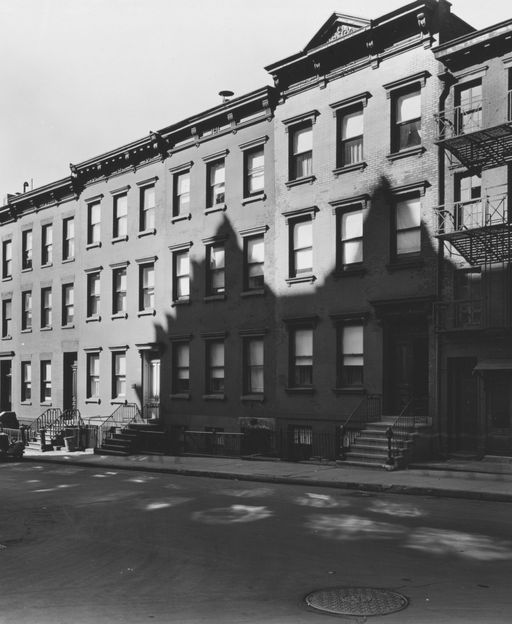
Families of six or seven shared two-room tenement flats without indoor plumbing. Six or more boarders shared a single room. Work came from garment factories, pushcart markets, and piece-work shops that filled every available space.
It was exhausting, crowded, and dangerous. It also built an entire civilisation.
The same forces of mass migration and survival shaped other New York neighbourhoods too. New York in 1910: Inside the Tenement Life That Made Millions of Families explores those conditions across the whole city.
Life on the Streets
On Orchard Street, pushcart vendors sold everything from pickled herring to eyeglasses. Hester Street hosted the Jewish market — a long, chaotic outdoor bazaar where hundreds of traders shouted prices in Yiddish.
The Jewish Daily Forward, printed on East Broadway, reached a circulation of 250,000 at its peak. It was the newspaper of record for the entire Jewish immigrant community. It printed reader letters in Yiddish and helped families navigate their new country.
Synagogues rose on almost every block. By 1917, the Lower East Side held over 500 synagogues. Some occupied converted townhouses. Some used purpose-built halls. Many ran from rooms above shops.
The neighbourhood smelled of pickles, herring, fresh bread, and kerosene. It sounded like Yiddish, the language of home, mixed with English learned at night school, at settlement houses, and from American-born children who translated the world for their parents.
The tenements themselves were dangerous. Fires swept through wooden buildings. Disease moved fast in the crowded conditions. In 1911, the Triangle Shirtwaist Factory fire — just blocks away in Greenwich Village — killed 146 workers. Most of them were young Jewish women from the Lower East Side.
That tragedy helped drive one of the greatest labour reform movements in American history.
Want more stories like this? Our weekly newsletter goes deeper into New York’s heritage every week. It’s free. Subscribe here →
The Institutions That Held the Community Together
The Lower East Side produced institutions that still stand today.
The Educational Alliance, founded in 1889 on East Broadway, offered English classes, vocational training, and cultural programmes. It became the gateway through which thousands of immigrants entered American civic life. The painter Mark Rothko studied art there as a child.
The Henry Street Settlement, founded by Lillian Wald in 1895 on Henry Street, pioneered public health nursing and social services. It is still operating today — more than 130 years later.
The Jewish labour movement found its voice here too. The International Ladies’ Garment Workers’ Union fought for the rights of factory workers who made New York’s clothes. The union’s strikes and campaigns shaped American labour law for generations.
Many celebrated Americans grew up in these streets, or carried parents who did. Irving Berlin arrived from Russia as a child and sang on Lower East Side street corners. George Burns, Eddie Cantor, and the Marx Brothers all drew on the neighbourhood’s rich vein of humour, music, and storytelling.
Jonas Salk — who created the polio vaccine — was the son of Ashkenazi Jewish immigrants who could not read or write. He grew up in the neighbourhood and attended the City College of New York, a free institution that gave the immigrant generation access to higher education. He credited his parents and their community with driving everything he achieved.
The same spirit of immigrant community-building shaped other New York neighbourhoods. Washington Heights tells a parallel story — German Jewish refugees in the 1930s, and later the Dominican community that built its own cultural capital in upper Manhattan.
Where to Go Today
The Lower East Side has changed enormously since its peak immigrant era. But significant traces remain — and several dedicated sites preserve the memory of what it was.
The Tenement Museum at 97 Orchard Street is the essential first stop. The museum runs guided tours of actual restored tenement flats, showing how immigrant families lived. The building housed nearly 7,000 people between 1863 and 1935. Tours sell out regularly — book in advance.
The Museum at Eldridge Street preserves the Eldridge Street Synagogue, built in 1887. It is one of the oldest synagogues built by Eastern European Jewish immigrants in the United States. The interior is extraordinary — a cathedral of Jewish life in the New World.
Katz’s Delicatessen at 205 East Houston Street has operated continuously since 1888. Pastrami sandwiches, Jewish soda fountain drinks, and an atmosphere that has not shifted much in a century. It is living heritage.
Russ & Daughters, founded in 1914 by Joel Russ on Houston Street, is one of the oldest appetising shops in the country. Four generations of the Russ family have run it. Smoked salmon, herring, and babka are all here, exactly as they were a hundred years ago.
For genealogy research, the YIVO Institute for Jewish Research holds the world’s largest archive of Eastern European Jewish history and culture. If your family came from the Pale of Settlement, YIVO is where you begin.
The Museum of Jewish Heritage in Battery Park City holds an extensive collection on Jewish American life and the Holocaust. Its location — facing the Statue of Liberty — is deliberate.
How to Trace Your Lower East Side Roots
If your family came through the Lower East Side, several databases can help you find them.
Ellis Island passenger records are searchable for free at the Statue of Liberty–Ellis Island Foundation website. Most Eastern European Jewish immigrants arrived through Ellis Island between 1892 and 1954.
The 1900, 1910, and 1920 US census records show exactly which tenement building a family occupied, which neighbours surrounded them, and what work they did. FamilySearch.org makes them available for free.
The New York Public Library holds digitised editions of the Jewish Daily Forward going back to its founding in 1897.
YIVO holds community records, photographs, and documents from the towns and villages of the Pale of Settlement. Many of those towns no longer exist. YIVO preserved what survived.
Many family names changed after arrival — sometimes by the families themselves, sometimes by officials who could not spell Yiddish or Russian names. A name that became “Gordon” may have been “Gorenstein”. “Brown” may have been “Braunstein”. Search both versions.
The heritage journeys that brought families from Eastern Europe to New York echo across many communities. Harlem tells a different but equally powerful story of people who came to New York seeking a better life and built something enduring.
Frequently Asked Questions
Where exactly is the Lower East Side in New York City?
The Lower East Side sits in southern Manhattan, east of the Bowery and south of East Houston Street. It extends toward the East River. The closest subway stations are Delancey–Essex Street (F, M, J, Z lines) and East Broadway (F line).
What immigrant groups lived in the Lower East Side?
Jewish immigrants from Eastern Europe dominated the neighbourhood from the 1880s to the 1920s. Earlier residents included German Jews, Irish immigrants, and Italian immigrants. Later in the 20th century, Chinese and Puerto Rican communities also settled in parts of the area.
Can I visit tenements where my ancestors lived?
Yes. The Tenement Museum at 97 Orchard Street runs guided tours of preserved immigrant flats. You can also look up your ancestor’s address in old census records and walk past the building — many still stand along Orchard and Ludlow streets.
How do I find out if my family lived on the Lower East Side?
Start with Ellis Island passenger records at the Statue of Liberty–Ellis Island Foundation website. Then search US census records at FamilySearch.org for your ancestor’s address in 1900, 1910, or 1920. YIVO’s archive can add further detail on Eastern European family origins.
What is the best time to visit the Lower East Side for heritage tourism?
The neighbourhood is accessible year-round. The Tenement Museum runs daily tours. Summer and early autumn bring the most street life to Orchard Street. Weekend mornings are quietest for heritage walks.
Ready to explore the New York your ancestors knew? Subscribe to Love New York — free weekly stories, heritage guides, and hidden history. Join us →
