
There’s a beach at the end of a subway line. It takes less than an hour from Midtown Manhattan. The waves are real, the sand stretches for miles, and on a summer weekend, you’ll share it almost entirely with New Yorkers — people who have no intention of telling anyone else about it.
The beach is Rockaway. And most tourists never find it.
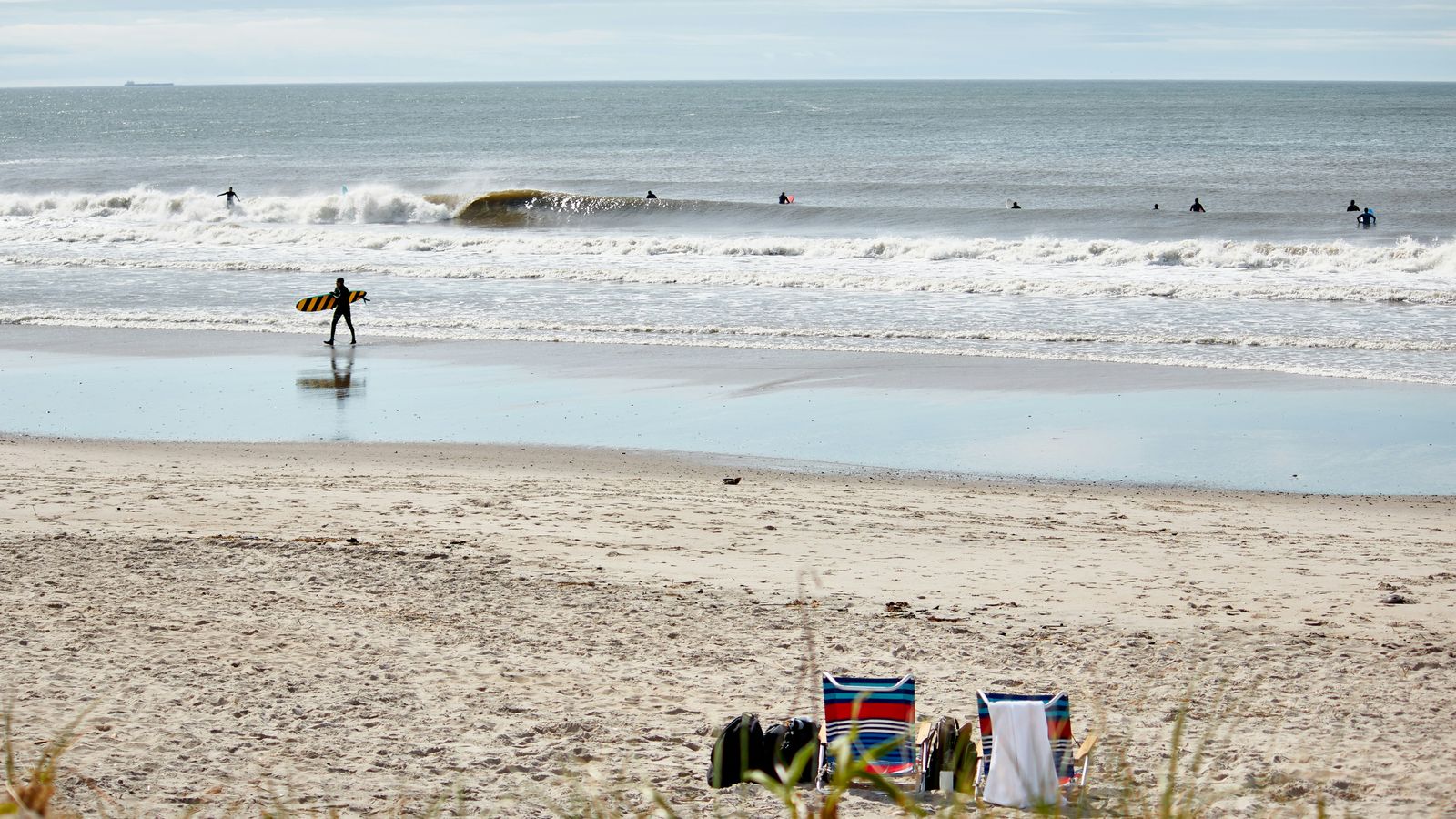
The Longest Subway Ride in New York Ends at the Ocean
The A train is the longest line in the New York City subway system. It starts near the northern tip of Manhattan and runs south through Brooklyn before crossing Jamaica Bay on an elevated track above open water.
Then it stops. At the end of the A train is Rockaway Beach — a narrow strip of barrier island on the southern edge of Queens, with the Atlantic Ocean right in front of you.
The boardwalk stretches 5.5 miles. The sand is wide and open. On clear days, you can turn around and see the Manhattan skyline you just left behind, glittering above the water like something borrowed from another world.
The Ramones Loved It. So Did Everyone Who Grew Up in Queens.
In 1977, a punk band from Forest Hills, Queens recorded a two-minute song called “Rockaway Beach.” It reached number 66 on the Billboard Hot 100 and became one of the most recognizable beach songs in American music.
The Ramones weren’t celebrating some tropical paradise. They were singing about a subway ride.
For generations of New Yorkers — from Brooklyn, Queens, and the outer boroughs — Rockaway was the escape. Close enough to reach after work on a Friday. Affordable in a way the Hamptons never was. And carrying a rough, working-class pride that matched the city it sat beside.
The Hurricane That Changed Everything
On October 29, 2012, Hurricane Sandy sent a catastrophic storm surge across the New York region. Rockaway was devastated. The boardwalk was torn apart. Hundreds of homes were destroyed. Entire blocks were underwater.
What happened next surprised even people who thought they knew New York.
The neighborhood rebuilt. Volunteers came from across the city. Surfers stayed through the winter. A new boardwalk was laid down — wider and stronger than the one before it. New restaurants opened. The surf community that had quietly lived here for years became something the whole city was suddenly talking about.
Rockaway didn’t just come back. It came back with more character than it had before.
Enjoying this? Join New York lovers getting stories like this every week. Subscribe free →
A Surf Culture Most New Yorkers Don’t Know Exists
Rockaway has surf. Real surf. Not world-class every day, but consistent enough that a committed community of surfers has lived here for decades, riding Atlantic swells that roll in from open water.
You won’t see it advertised. There’s no campaign for surfing in New York City. But on an autumn morning, when the water cools and the waves clean up after a passing storm, you’ll find dozens of surfers in the lineup between Beach 87th and Beach 92nd streets.
The surf culture here is quiet and local. It has nothing to prove to anyone.
Jacob Riis Beach — The Wild End of the Peninsula
A mile west of the main beach is Jacob Riis Beach — managed by the National Park Service as part of Gateway National Recreation Area. In the off-season: no concessions, no lifeguards, no music. Just space, dunes, and the feeling of being somewhere wild inside a city of eight million people.
Photographers come here in autumn when the light turns golden and the crowds thin out. Birders walk the dunes looking for shorebirds on migration routes. In summer, it draws some of the most diverse crowds you’ll find on any beach in America.
It’s one of those places that makes you question everything you thought you knew about New York.
If you’re planning a visit and looking for free things to do in NYC, Rockaway Beach is one of the great answers. Entry costs nothing. The subway fare is $2.90. The reward is the Atlantic Ocean.
And if you want to go further off the beaten path, there are dozens of other hidden gems in New York that most visitors never find — places that take a little curiosity and a willingness to go past the obvious sights.
The best things in New York are almost never the famous ones. They’re the things locals guard quietly — the coffee shop with no sign, the bar through the unmarked door, the beach at the end of the A train.
Rockaway is all of those things at once.
You Might Also Enjoy
- Hidden Gems in NYC: The New York Most Tourists Never See
- Free Things to Do in NYC: The Best No-Cost Experiences in New York City
- The Abandoned Railway New Yorkers Refused to Tear Down — and What Grew in Its Place
Plan Your New York Trip
For everything you need to know before your visit — from neighborhoods to getting around — our New York City travel tips guide covers it all.
Join New York Lovers
Every weekday morning, get New York’s hidden gems, neighbourhood stories, food origins, and city secrets — straight to your inbox.
Subscribe free — enter your email:
Love more? Join 65,000 Ireland lovers → · Join 43,000 Scotland lovers →
Free forever · Unsubscribe anytime
