
New York City is one of the most visited cities on earth — and yet, most tourists barely scratch the surface. Beyond the queues for the Empire State Building and the crowds on Times Square lies a city full of secret courtyards, neighbourhood bakeries, riverside walks, and stories that the guidebooks never get around to telling. If you want to experience the real New York, these hidden gems in NYC are where to start. This guide is for the curious traveller who wants more than the obvious, and it spans all five boroughs — from Manhattan to Brooklyn, Queens, The Bronx, and even Staten Island.
Why NYC’s Hidden Gems Are Worth Seeking Out
It’s easy to spend an entire New York trip ticking off the same landmarks every visitor sees. There’s nothing wrong with the Statue of Liberty or a stroll across the Brooklyn Bridge — they’re iconic for good reason. But once you start looking slightly sideways at this city, you find layers upon layers of history, culture, and character that most people never discover. Hidden gems in NYC aren’t tucked away or difficult to reach — they’re simply overlooked. And that’s exactly what makes them special.
Whether you’re planning your first trip to New York or returning for the fifth time, there is always something new to find. This guide will point you in the right direction — neighbourhood by neighbourhood, borough by borough.
Manhattan’s Best-Kept Secrets
The Shakespeare Garden in Central Park
Central Park is far from undiscovered, but within it lies one of the city’s most quietly magical spots: the Shakespeare Garden, tucked into the park’s western side near 79th Street. Every plant growing here is mentioned somewhere in Shakespeare’s plays or sonnets — roses, lavender, columbine, rosemary. It feels nothing like the rest of the park. It feels like a secret.
The garden sits on a gentle hillside and is often empty, even on busy weekend afternoons. Come in spring or early summer and the blooms are extraordinary. It’s one of the best free things to do in New York that almost no one on a standard tourist route ever stumbles upon.
The City Hall Loop — A Subway Station Frozen in Time
Buried beneath the streets of Lower Manhattan is one of the most beautiful architectural spaces in the entire city — and it’s been closed to regular passengers since 1945. The original City Hall subway station, designed in the Beaux-Arts style with arched ceilings, skylights, and graceful tiled curves, can still be glimpsed if you stay on the 6 train past the Brooklyn Bridge stop. As the train loops around to head uptown, it passes through the old station — ghostly, golden, and completely untouched by time.
The New York Transit Museum also runs occasional guided tours of the station. It’s one of those New York experiences that locals themselves barely know about.
The High Line’s Quiet Northern End
The southern sections of the High Line, particularly near the Meatpacking District and Chelsea, can feel like a theme park on a summer Saturday. But walk north through Hell’s Kitchen toward Hudson Yards and the park thins out dramatically. The views of the Hudson River are wider here, the planting is wilder, and you can sit in peace with a coffee and watch the city breathe. It’s the same green corridor — just experienced on your own terms.
Cortlandt Alley — New York’s Most Cinematic Street
If you’ve watched almost any film or television show set in New York, you’ve likely seen Cortlandt Alley without knowing it. This short, cobbled lane in Tribeca has appeared in countless productions as the archetypal New York back alley — rusted fire escapes, cast-iron facades, and decades of grime that looks almost beautiful in the right light. It runs just half a block between Canal and White Streets. It’s free, it’s quiet, and it’s genuinely evocative in a way that most photogenic spots in the city are not.
Hidden Gems in Brooklyn
Harlem Brownstone Stoops and the Spirit of a Neighbourhood
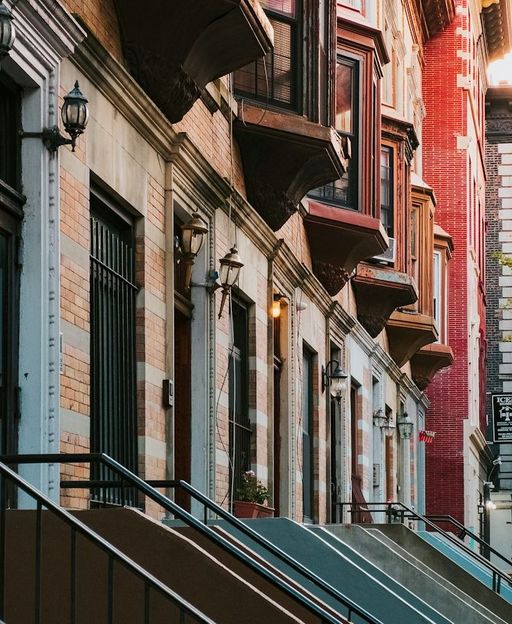
The brownstone stoops of Harlem are amongst the most photogenic streetscapes in New York — and yet whole days can pass without a tourist in sight. The neighbourhood’s history runs extraordinarily deep. The rent parties of the 1920s that shaped American music happened in these very buildings. Walking the streets between 120th and 135th Streets on the Upper West Side of Harlem, particularly around Strivers’ Row, is one of the most quietly moving things you can do in the whole city.
Stop at one of the neighbourhood’s soul food restaurants for lunch — look for places that have been there for decades rather than the new arrivals — and take your time. Harlem is generous to those who approach it with curiosity.
Dumbo’s Archway and the Manhattan Bridge
Dumbo — Down Under the Manhattan Bridge Overpass — is no longer completely undiscovered, but it still delivers one of the most striking urban compositions in New York. Stand on Washington Street looking toward the Manhattan Bridge and the view frames the bridge perfectly between two rows of old industrial buildings. It’s a photograph you’ve probably seen. Standing inside it is something else entirely.
The surrounding streets in Dumbo are full of independent galleries, converted warehouses, and a wonderful Saturday market in Brooklyn Bridge Park. Come on a weekday morning and you’ll have the famous view almost to yourself. Combine it with a walk along the waterfront toward Park Slope for a half-day that feels genuinely New York.
Brighton Beach — Little Odessa on the Atlantic
At the far end of the Q train lies one of the most unexpected neighbourhoods in all of New York. Brighton Beach — sometimes called Little Odessa for its large Russian and Eastern European community — is an entirely different world from Manhattan. Shops sell smoked fish, pickled vegetables, and pastries with Cyrillic signs. The boardwalk stretches along the Atlantic shore with a view of Coney Island’s old rollercoaster to the west. It’s loud, colourful, and absolutely real.
Grab a meal at one of the Russian restaurants on Brighton Beach Avenue — several spill out onto the boardwalk in summer — and spend an afternoon exploring a community that makes its own rules in a city full of rules.
Exploring Queens and The Bronx
Flushing — The City Within the City
Flushing, Queens, is home to one of the largest and most authentic Chinatowns in the United States — many locals argue it surpasses the Manhattan Chinatown in terms of food and cultural depth. The streets around Main Street and Roosevelt Avenue are a full sensory experience: bubble tea shops, hand-pulled noodle restaurants, bakeries with egg tarts and pineapple buns, and Taiwanese beef noodle soup that will change how you think about the dish.
Head underground to the basement of the New World Mall and you’ll find a sprawling food court that is one of the great eating experiences in New York. It costs almost nothing and the quality is extraordinary. This is genuinely one of the best hidden gems in NYC for food lovers.
Astoria — Culture and Coffee by the River
Astoria is Queens’ most celebrated neighbourhood, and while it’s no longer a secret to New Yorkers, it remains largely off the radar for tourists. The area has a strong Greek heritage — the stretch of 30th Avenue near 31st Street is lined with Greek tavernas and cafés — but it’s also home to one of the most eclectic and international food scenes in the city.
Astoria Park, which overlooks the Hell Gate railway bridge and the East River, is a genuine revelation. Vast, green, and quiet, it offers some of the best views of Manhattan’s skyline from an angle that most visitors never see. The Museum of the Moving Image is also here — an underrated institution dedicated to film, television, and digital media that deserves far more attention than it gets.
Woodlawn Cemetery and the Bronx’s Green Edge
New York’s great cemeteries are some of its finest parks, and Woodlawn Cemetery in the northern Bronx is among the most beautiful in the world. Duke Ellington, Miles Davis, and Herman Melville are buried here among ornate mausoleums and rolling lawns. It’s a place for quiet walking, reflection, and an unexpected encounter with the city’s artistic and literary history.
The area around Woodlawn is also close to the New York Botanical Garden — one of the city’s most spectacular but undervisited attractions, particularly in spring when the cherry blossoms are in bloom.
The New York Nobody Talks About: Staten Island
Staten Island is the forgotten borough — and that is precisely what makes it interesting. The Staten Island Ferry is, of course, one of the great free things to do in New York: a thirty-minute crossing from Manhattan with sweeping views of the harbour, the Statue of Liberty, and the lower Manhattan skyline, all at no cost. But most visitors simply ride it and ride it back, never setting foot on the island itself.
Those who do venture ashore find Snug Harbor Cultural Center, a nineteenth-century complex of Greek Revival buildings set in botanical gardens that feels impossibly serene. There’s also the Staten Island Museum, a local brewery scene that punches above its weight, and the Alice Austen House — a small museum dedicated to one of America’s first professional female photographers, set in a Victorian cottage on the waterfront with extraordinary views of the harbour.
Planning Your Hidden Gems NYC Adventure
Getting Around
All of the neighbourhoods mentioned in this guide are accessible by subway or ferry. A 7-day unlimited MetroCard is the most practical option for visitors staying a week or more, and it covers the subway as well as local buses. The Staten Island Ferry is entirely free. Google Maps and Citymapper are both excellent for navigation on the subway system, which runs around the clock.
When to Visit
Neighbourhood exploration in New York is best in spring (April to June) and early autumn (September to October), when the weather is mild and comfortable for walking. Summer brings heat and humidity but also a sense of energy that is uniquely New York — outdoor cinemas, rooftop bars, and spontaneous street festivals that make the city feel even more alive. Winter, while cold, has its own rewards: quieter streets, moody light, and hot food that tastes twice as good in the cold.
For a full overview of how to structure your time in the city, including which highlights to prioritise on a first visit, the New York in 3 Days itinerary is an excellent starting point before you start adding hidden gems to your plans.
Combining the Boroughs
The best way to experience hidden gems in NYC is to commit to one borough per day. Manhattan for the first day, Brooklyn for the second, Queens on the third — with a Staten Island ferry crossing woven in whenever you happen to be near Whitehall Terminal. This approach prevents the tyranny of the to-do list and allows real serendipity to happen. The best discoveries in New York are often the ones you weren’t looking for.
Join 1,000+ New York Lovers
Every weekday morning, get New York’s hidden gems, local secrets, and travel inspiration — the kind you won’t find in any guidebook.
Subscribe free — enter your email:
Free forever · Unsubscribe anytime
The New York That Stays With You
The hidden gems in NYC are not really hidden at all. They’re the city itself — the parts that haven’t been polished up for Instagram or smoothed into tourist infrastructure. The Shakespeare Garden, the ghost station under City Hall, the brownstone stoops of Harlem, the noodle shops of Flushing, the harbour views from the Staten Island ferry — these are New York in its truest form.
The city rewards the visitor who is willing to take one more subway stop than planned, turn down an unfamiliar street, and follow their nose toward whatever smells interesting. That instinct — more than any guide, including this one — is what makes a New York trip unforgettable.
