
In 2018, a vendor paid $289,500 to the City of New York for a one-year permit. Not for a storefront. Not for a restaurant. For the right to park a hot dog cart at the entrance to Central Park on Fifth Avenue.
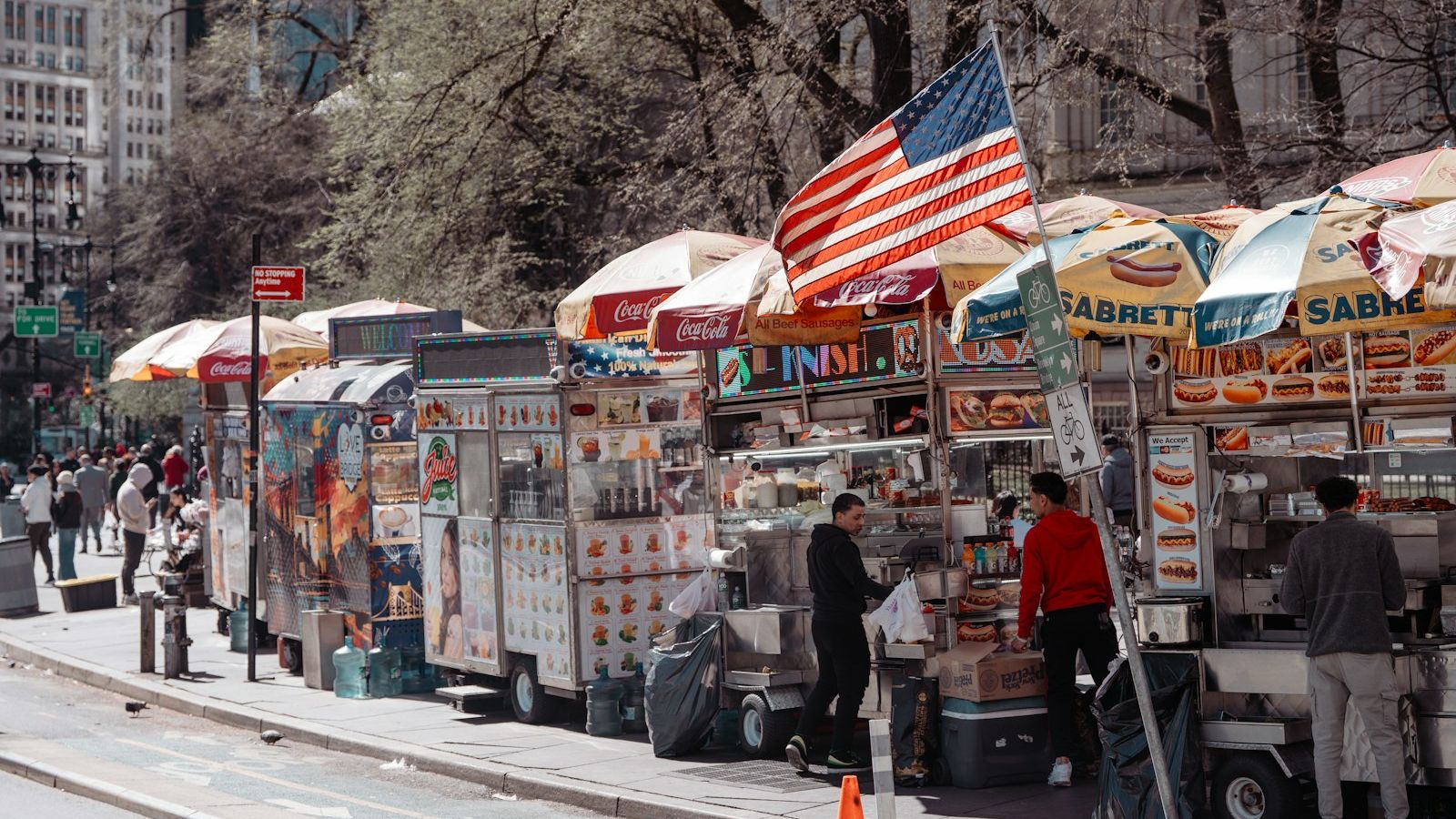
That cart serves a few hundred hot dogs a day. The math doesn’t work — unless you understand what a spot like that actually means in New York City.
Where It All Started
The New York hot dog has one clear origin point: a Bavarian immigrant named Charles Feltman. In 1867, he began selling frankfurters in buns from a pie wagon on Coney Island.
He wanted to give beachgoers something they could eat without a plate or a fork. It worked almost immediately.
By the 1890s, Feltman was running one of the largest restaurants on Coney Island. A young employee named Nathan Handwerker eventually left and opened a competing stand nearby — Nathan’s Famous, the name still printed on billions of hot dogs sold across America today.
But Coney Island was just the beginning. The cart was always meant for Manhattan.
How the Carts Conquered the Streets
By the early 1900s, hot dog carts were pushing through every corner of the city. Immigrants — German, Polish, Jewish — brought their sausage-making traditions and turned them into mobile street food empires.
The golden era came after World War II. Every major intersection in Midtown had its cart. Every lunch rush had its line. Office workers, construction crews, tourists, and locals all ate standing up on the same sidewalk corners.
Today, there are roughly 3,000 licensed food carts in New York City. The classic hot dog cart remains one of the most recognizable sights anywhere in the five boroughs — a piece of living urban history that’s been feeding the city for over 150 years. The New York food scene has expanded in every direction imaginable, but the hot dog cart never left.
The Permit That Costs a Fortune
Here’s where the story turns genuinely strange.
The City of New York controls how many food vendor permits exist. For decades, the cap hovered around 3,000 citywide — and the waiting list at times stretched beyond 20 years. Many vendors spend their entire careers on the list and never reach the top.
Because permits can be leased from their holders, a secondary market operates on completely different economics. A permit for a high-traffic spot near a park entrance or a tourist corridor can lease for $15,000 to $30,000 a year. The very best locations — a handful of corners near Central Park’s busiest entrances — have traded for far more.
That $289,500 bid for the Fifth Avenue spot near Central Park wasn’t an outlier. It was a calculated investment by someone who understood the volume that corner produces every single day of the year.
For context: a one-bedroom apartment two blocks away lists for around $3,000 a month. The permit costs more.
Enjoying this? Join New York lovers getting stories like this every week. Subscribe free →
Who Actually Runs the Carts
The face of New York’s hot dog cart industry has shifted completely since Feltman’s era. Today’s vendors are predominantly immigrants from Bangladesh, Senegal, Egypt, and throughout Latin America and the Caribbean.
Many work brutal hours — 10 to 16 hours on their feet, six or seven days a week, through July heat and February wind. Most do not own their permits. They lease them from operators who have held licenses for years, sometimes decades.
The vendor behind the cart is often paying thousands of dollars a month before they sell a single frankfurter. It’s a grueling business model that New Yorkers rarely think about when they hand over three dollars for lunch.
The cart looks like a permanent fixture of the city. The economics behind it are anything but simple. In that way, it reflects the same immigrant hustle that built the corner bodega — and almost everything else New Yorkers take for granted.
What a Real New York Hot Dog Actually Tastes Like
The hot dog served from a New York street cart is almost always a Sabrett frankfurter — a natural-casing beef frank made in the Bronx since the 1920s. The snap when you bite through the casing is deliberate and distinctive. It’s nothing like a supermarket frank.
The condiment order matters. Yellow mustard goes on first, followed by a slow ladleful of onions in reddish tomato-onion sauce. In some parts of the city, sauerkraut is offered. Ketchup is not — and New Yorkers have very strong opinions about this.
The bun is kept in a warm water tray beside the dog. It comes out soft and slightly steamed, which most first-timers don’t notice but immediately miss when they eat a hot dog anywhere else.
Where to Find the Real Thing
The best hot dog in New York is not at the most famous corner.
The carts near Times Square cater almost entirely to tourists. The prices are higher and the experience is self-conscious. The carts that earn real loyalty are the ones in neighborhoods: lower Fifth Avenue at lunch, the edges of Midtown where office workers eat standing up, side streets in Astoria, Jackson Heights, or Washington Heights.
The most loyal customers are the ones who’ve been going to the same cart for years. The vendor knows their order before they open their mouth. That kind of regularity is the actual measure of a great cart — not the permit price, not the corner.
The next time you’re in the city and see a cart with a short line of locals, join it. That’s the one.
There’s something quietly New York about this whole story. A city that makes everything absurdly expensive attracts people who figure out how to make it work anyway — and keeps inventing culture from a position of barely-survivable economics.
The cart has been here for 150 years. It’ll still be here when the rent goes up again.
You Might Also Enjoy
- New York Food Guide: The Essential Eats Every Visitor Needs to Know
- Why Every Real New Yorker Has a Bodega They Would Never Trade for a Whole Foods
- New York Was Once the Oyster Capital of the World — and Nobody Remembers
Plan Your New York Trip
Wondering when to visit? Our season-by-season guide to New York City covers everything from weather and crowds to the best times to catch the city at its most alive.
Join New York Lovers
Every weekday morning, get New York’s hidden gems, neighbourhood stories, food origins, and city secrets — straight to your inbox.
Subscribe free — enter your email:
Love more? Join 65,000 Ireland lovers → · Join 43,000 Scotland lovers →
Free forever · Unsubscribe anytime

Subscribe Free