
The smell hits you first. Fried dough, sausage on the grill, the sweet cloud of powdered sugar drifting off a fresh zeppola. Then you turn the corner onto Mulberry Street and the crowd wraps around you — shoulder to shoulder, string lights blazing overhead, accordion music threading through the noise.
It happens every September. Eleven blocks of lower Manhattan become something they haven’t been all year: fully, loudly Italian.
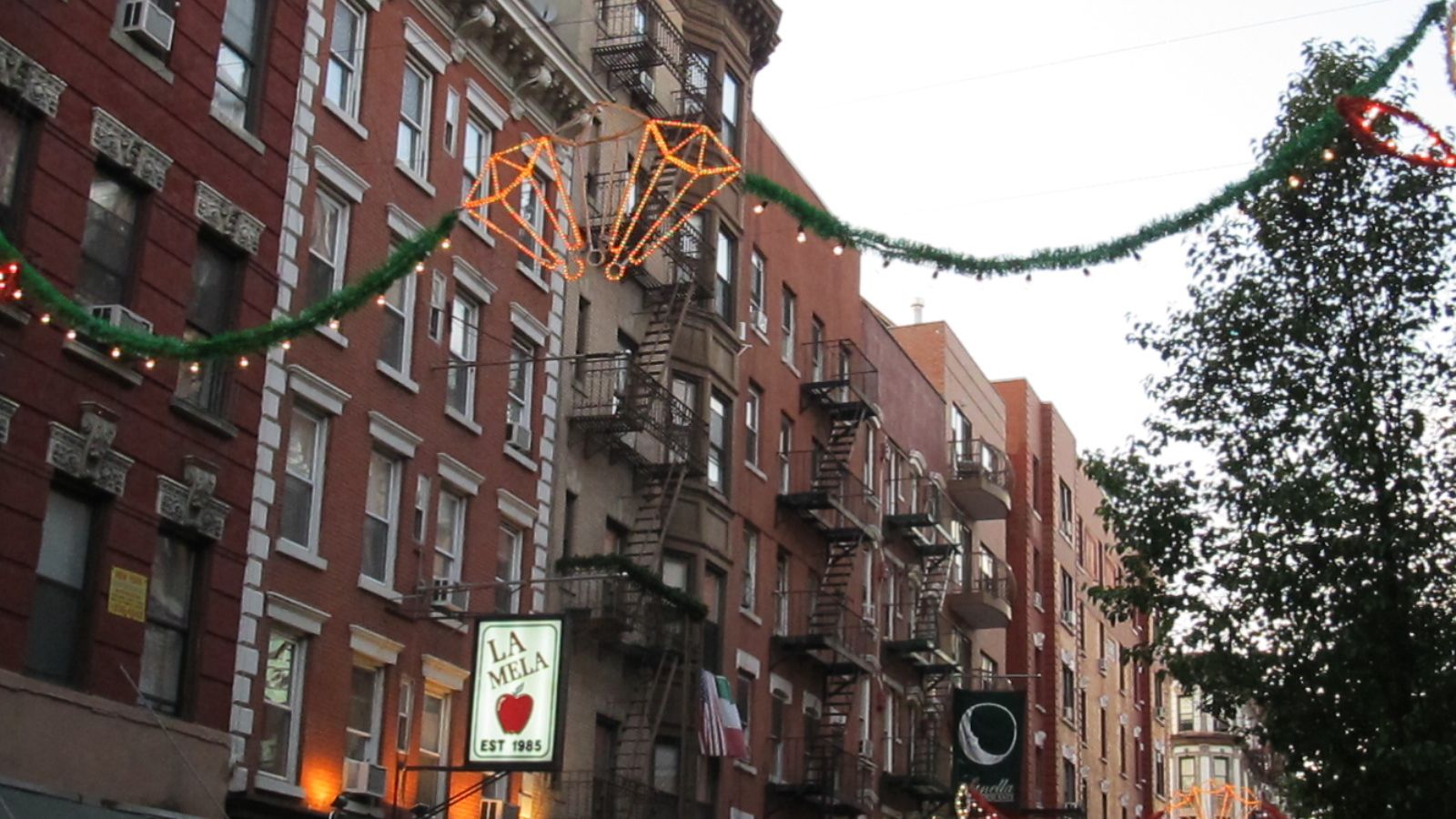
The Feast of San Gennaro is the oldest Italian-American street festival in the country. It has been running since 1926. And every year, the crowd coming through is bigger than the neighborhood that hosts it.
The Saint Behind the Celebration
San Gennaro — Saint Januarius in English — was a bishop in third-century southern Italy. He was executed by Emperor Diocletian around 305 AD, becoming a martyr and, in time, the patron saint of Naples.
His legacy is bound to one of Italy’s most famous mysteries. A small vial believed to contain his dried blood is held in Naples Cathedral. Twice a year, the blood supposedly turns liquid. When it fails to liquefy, Neapolitans call it a bad omen — and history has given them a few reasons to take that seriously.
When millions of southern Italians immigrated to New York in the early 1900s, they brought the saint with them. The faith, the food, and the feast day all made the crossing.
How a Street in Manhattan Became Holy Ground
Little Italy once covered dozens of blocks in lower Manhattan. Tenement buildings packed with families from Naples, Sicily, and Calabria. Pushcarts lined the streets. The whole neighborhood smelled like what was cooking.
The Neapolitan community held the first Feast of San Gennaro in 1926 — a single outdoor Mass on Mulberry Street, followed by food and celebration. It was small, entirely local, and not obviously destined to last a century.
As Italian families moved out — to the Bronx and beyond — Little Italy shrank around them. But the feast didn’t shrink. If anything, it grew more important as the neighborhood it honored got smaller.
What Eleven Days on Mulberry Street Actually Looks Like
From Canal Street to Houston, the road closes to traffic. Vendors line both sides of the block. Zeppole — pillowy fried dough dusted with powdered sugar — come out of sizzling oil. Sausage and peppers fill the air with smoke. Cannoli are filled to order.
The Cannoli Eating Contest draws a crowd every year, and for good reason. It is precisely what it sounds like, and somehow more entertaining than it has any right to be.
The religious procession is the emotional peak. A statue of San Gennaro moves through the streets as the crowd presses in on both sides. Older men remove their hats. Children reach forward to pin dollar bills to the saint’s vestments. For a few minutes, the festival stops being a party and becomes something older.
Enjoying this? Join New York lovers getting stories like this every week. Subscribe free →
The Food Is Only Part of the Story
The Feast of San Gennaro is where you taste what New York food really is. Italian immigrants didn’t bring their recipes to this city and leave them untouched. They adapted, improvised, and created something new — and that new thing became what the whole world now calls New York food.
Mozzarella. Espresso. The folded slice. The pastry case. These feel native to New York now. They weren’t. They arrived in the early 1900s on ships from Palermo and Naples, carried by people who had almost nothing except what they knew how to cook.
At the festival, that history isn’t academic. It’s edible. Every zeppola and every filled cannoli is a direct line back to the kitchens of southern Italy.
A Neighborhood That Refuses to Let Go
Walk through Little Italy outside of festival season and you’ll feel how much has changed. Chinatown has absorbed most of what was once Italian ground. The tenements are boutique hotels now. A neighborhood that once held tens of thousands of people now fits on a handful of blocks along Mulberry Street.
But come back in September and something shifts. Tables spill into the street. String lights go up between the buildings. The restaurants throw open their facades and pull in the crowd. For eleven days, the streets belong to the people they were built for.
Families who grew up here and moved decades ago come back for this. From Staten Island, from the Bronx, from New Jersey — back to the same block their grandparents stood on, eating the same food, watching the same procession. Some traditions outlast the neighborhoods that started them.
Frequently Asked Questions
When is the Feast of San Gennaro in New York?
The festival runs for 11 days in mid-to-late September, typically starting the Thursday closest to September 19 — the feast day of San Gennaro in the Catholic calendar. Check the official Figli di San Gennaro organization for exact dates each year.
Where does the Feast of San Gennaro take place?
The festival is held on Mulberry Street in Little Italy, lower Manhattan, running from Canal Street to Houston Street. The nearest subway stations are Canal Street (6, J, Z, N, Q, R, W lines) and Spring Street (6 line), both within a short walk.
Is the Feast of San Gennaro free to attend?
Entry to the street festival is completely free. You pay for food, games, and any ticketed events, but walking through the festival and watching the procession costs nothing. Budget around $10–20 if you want to sample a few dishes.
What is the best food to eat at the Feast of San Gennaro?
Zeppole are the classic choice — fried dough with powdered sugar that people have been eating here since 1926. Sausage and peppers, arancini, and cannoli filled to order are all worth lining up for. The Cannoli Eating Contest is worth watching even if you’re not competing.
This is what a city does when it wants to remember. Not a museum, not a documentary — just a street, some lights, and food that’s been made the same way for nearly a hundred years. New York changes faster than almost any other place on earth. But once a year, for eleven days, Mulberry Street holds still.
You Might Also Enjoy
- The Bronx Neighborhood That Kept Italian New York Alive When Manhattan Couldn’t
- The Real Reason New York Pizza Tastes Different From Every Slice on Earth
- Forty Percent of All Americans Have a Relative Who Stood on This Island
Plan Your New York Trip
Timing your visit around the Feast of San Gennaro? Our complete guide to free things to do in NYC covers everything you need to know about making the most of the city before and after the festival.
Join 1,100+ New York Lovers
Every weekday morning, get New York’s hidden gems, neighbourhood stories, food origins, and city secrets — straight to your inbox.
Subscribe free — enter your email:
Love more? Join 65,000 Ireland lovers → · Join 43,000 Scotland lovers →
Free forever · Unsubscribe anytime

Subscribe Free