
On a single summer Sunday in 1906, one million people crammed onto a strip of Brooklyn beach barely three miles long. They came by ferry, by train, and on foot — escaping the heat and noise of Manhattan’s tenements for something that didn’t exist anywhere else on earth.
They came to Coney Island.
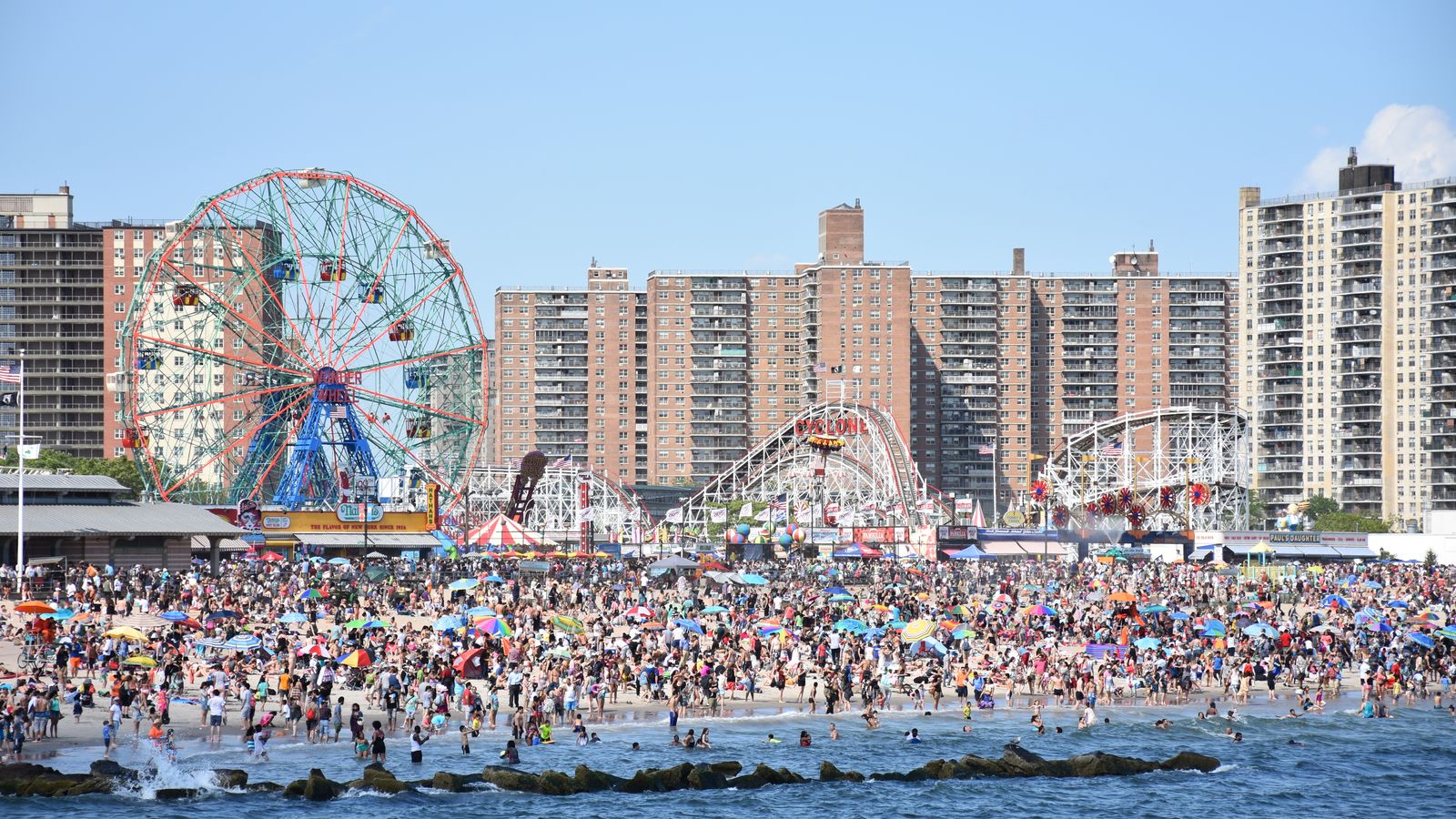
The Beach That Fed an Entire City’s Soul
Coney Island didn’t start as an amusement park. For decades it was a resort for the wealthy — grand hotels, horse racing tracks, and private bathing clubs lined the shore. Manhattan’s elite came in carriages while ordinary New Yorkers sweltered through summers eight to a room.
That changed in 1875, when the Iron Steamboat Company launched regular service from Manhattan for a nickel. Suddenly the beach belonged to everyone. Factory workers, seamstresses, new immigrants who had never seen an ocean — all of them tumbled off the boats and into the surf for the first time.
For a generation of New Yorkers living in suffocating tenements with no running water, it was nothing short of paradise. By the 1890s, Coney Island was drawing more weekend visitors than any other spot in America.
Three Parks, Three Visions of the Impossible
By the turn of the century, something extraordinary was happening at the western end of the island. Three rival amusement parks opened within eight years of each other, each more ambitious than the last.
Steeplechase Park opened in 1897, built by the irrepressible George Tilyou. Its signature attraction had mechanical horses racing along steel tracks above the crowd. The goal wasn’t just thrills — it was laughter. Steeplechase was built around the radical idea that adults deserved to play.
Luna Park arrived in 1903 and made everything before it look modest. Fred Thompson and Elmer Dundy constructed 1,221 towers and strung 250,000 electric light bulbs across them. For millions of visitors who had never seen electric light, stepping into Luna Park at night was like entering the future itself. Venetian canals wound through the grounds. Elephants gave rides. A simulated rocket ship offered a “trip to the moon.”
Dreamland opened in 1904 and went further still. Its most remarkable attraction was one that modern visitors would find hard to believe: a medical exhibit where real premature babies were cared for in state-of-the-art incubators while paying visitors watched through glass. Dr. Martin Couney used Coney Island’s vast foot traffic to fund his work — because hospitals of the era had refused to adopt incubator technology. By the time his exhibit closed, it had saved more than 6,500 lives.
The Fire That Ended the Golden Age
At 2:30 a.m. on May 27, 1911, a fire broke out in the Hell Gate water ride at Dreamland.
Within minutes, the park was engulfed. Animals from the wild animal show broke free and fled into the darkened streets of Coney Island. Firefighters worked through the night. By morning, Dreamland — worth $3.5 million and barely seven years old — was ash and twisted steel.
It was never rebuilt. The fire didn’t just destroy a park. It marked the end of an era when American cities believed they could build anything they could imagine.
Enjoying this? Join New York lovers getting stories like this every week. Subscribe free →
The Long Unraveling
Dreamland’s fire didn’t kill Coney Island on its own. The crowds kept coming through the 1920s and into the Depression. But the forces that had made Coney Island possible — dense urban populations, no cars, no air conditioning, nowhere else to go — were slowly reversing.
Through the mid-century decades, roads opened access to beaches farther from the city, and the middle-class families who had been Coney Island’s core audience began leaving New York for the suburbs. By the time Steeplechase Park — the last of the three great parks — closed in 1964, the island was entering a long, quiet twilight.
By the 1970s, entire blocks stood empty. The boardwalk grew quieter every year. What had once been America’s greatest playground became a symbol of urban abandonment. The rest of Brooklyn was struggling too — but Coney Island felt it harder than almost anywhere.
The Two Things That Never Stopped
Through every year of decline, two things kept running.
The Cyclone — the classic wooden roller coaster that opened in 1927 — never missed a season. It was declared a New York City landmark in 1988 and a National Historic Landmark in 1991. You can still ride it today for under fifteen dollars. The screams sound exactly as they did a century ago.
The Wonder Wheel — the eccentric Ferris wheel with both fixed and swinging cars, built in 1920 — became a New York City landmark in 1989. On a clear day from the top, you can see the Manhattan skyline hovering above the water.
Those two rides carried the entire weight of Coney Island’s identity through fifty years of hard times. They’re the reason the place survived long enough to be saved.
The Return
New Luna Park opened on the site of the old parks in 2010. The boardwalk was restored and extended to 2.7 miles. Nathan’s Famous — which had been serving hot dogs at Surf Avenue since 1916 — kept drawing its faithful summer crowds, and the July 4 eating contest became a nationally televised event.
Today, Coney Island draws around four million visitors a year. The beach is still free. The Cyclone still climbs its first hill and drops straight down, and the people on it scream exactly the way people screamed in 1927.
For those who grew up here, and for those arriving for the first time, Coney Island still does the one thing it was always built to do. It makes New Yorkers forget — just for a few hours — everything waiting for them back home.
What is the best time to visit Coney Island?
The peak season runs from Memorial Day weekend through Labor Day, with the boardwalk and rides at full capacity. For the classic Coney Island experience without the biggest crowds, visit on a weekday in June or early September — the weather is warm, everything is open, and you can actually find a spot on the beach.
Is the original Coney Island roller coaster still running?
Yes. The Cyclone wooden roller coaster, built in 1927, still operates every season and is both a New York City landmark and a National Historic Landmark. It’s one of the oldest continually operating roller coasters in the United States and a piece of American history you can actually ride.
How do you get from Manhattan to Coney Island?
The D, F, N, or Q subway trains all run directly to Coney Island–Stillwell Avenue station. The journey takes around 45 to 60 minutes from Midtown Manhattan. The subway ride is part of the experience — New Yorkers have been making this trip for well over a century.
What happened to the original Luna Park and Dreamland?
Dreamland burned down in 1911 and was never rebuilt. The original Luna Park survived until 1944, when it too was destroyed by fire. Steeplechase Park closed in 1964. A new Luna Park opened on the same grounds in 2010, continuing Coney Island’s long tradition as New York’s most democratic escape.
You Might Also Enjoy
- The Brooklyn Cemetery That Once Drew More Visitors Than Almost Anywhere in America
- The Brooklyn Park Its Own Designer Said He Liked Better Than Central Park
- The Hot Dog Cart Permit That Costs More Than a New York Apartment
Plan Your New York Trip
Ready to visit Coney Island and explore more of Brooklyn? Our complete guide to free things to do in New York City covers the best no-cost experiences across every borough — including the Coney Island boardwalk and beach, which have always been free to everyone.
Join 1,100+ New York Lovers
Every weekday morning, get New York’s hidden gems, neighbourhood stories, food origins, and city secrets — straight to your inbox.
Subscribe free — enter your email:
Love more? Join 65,000 Ireland lovers → · Join 43,000 Scotland lovers →
Free forever · Unsubscribe anytime

Subscribe Free