
In the 1860s, half a million people a year came to a cemetery in Brooklyn.
Not to mourn. They came for the rolling hills, the sweeping views, the fresh air, and the Gothic arches that felt nothing like the cramped tenements and cobblestone streets below. Green-Wood Cemetery wasn’t just the most beautiful place in New York. For most of its first century, it was the only beautiful place in New York.
And then the city built Central Park, and everyone forgot.
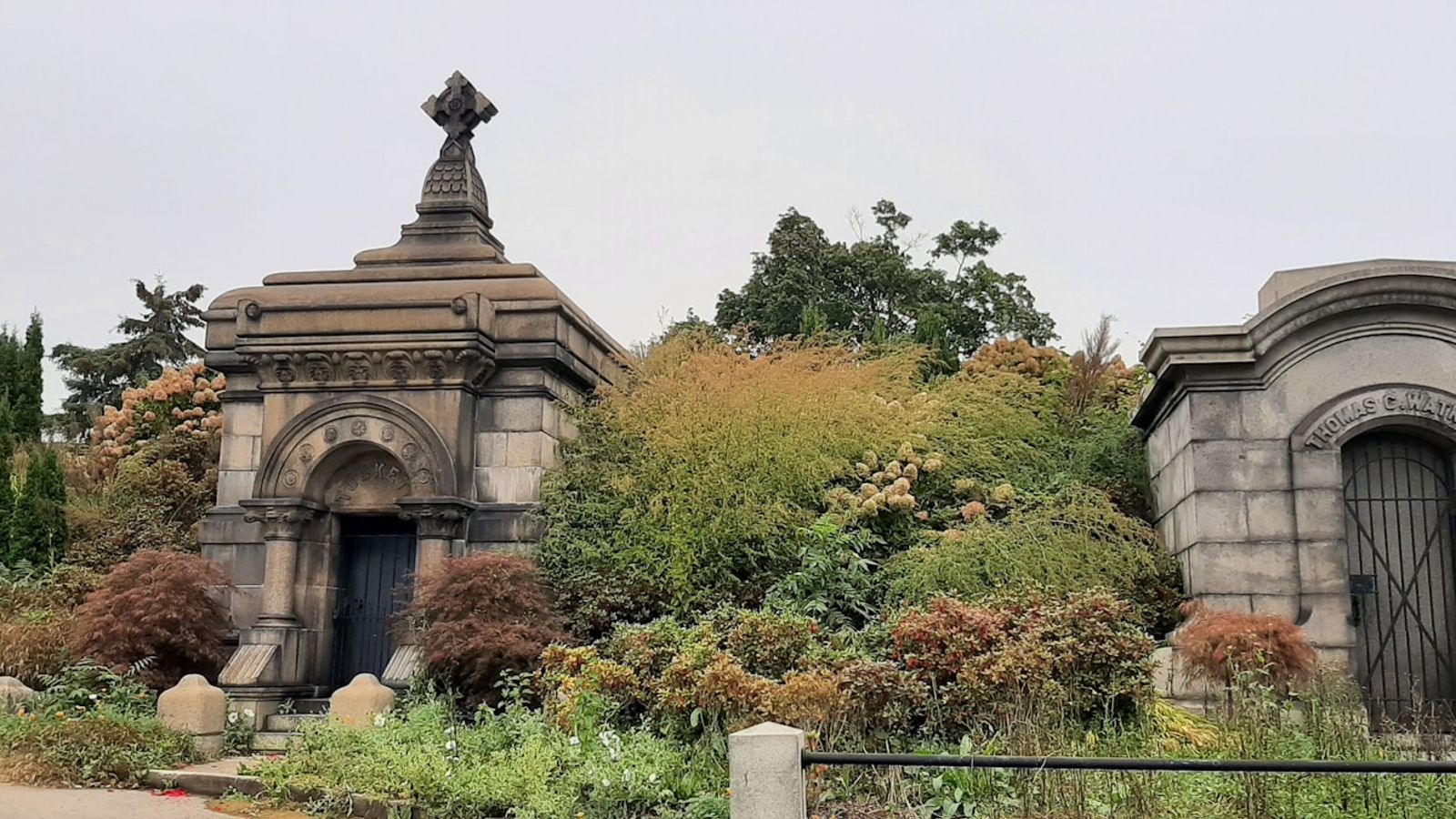
Before Parks, There Was Green-Wood
Green-Wood Cemetery opened in 1838, twenty years before Central Park. There was nowhere in New York City to walk among trees, watch birds, or simply breathe without crowds pressing in from every side. The streets were loud, dirty, and relentless.
Green-Wood gave the city something it desperately needed: beauty without purpose.
The cemetery was designed not as a grid of graves but as a landscape — winding paths, glacial ponds, hills that rose and dipped like the countryside. Families brought picnic baskets. Couples courted under elm canopies. Schoolteachers led field trips. By the 1860s, it was reportedly the second-most visited destination in America, after Niagara Falls.
When Frederick Law Olmsted and Calvert Vaux won the commission to design Central Park in 1858, they had studied Green-Wood closely. The flowing paths, the naturalistic plantings, the sense of escape from the city — they were all there first, in a cemetery in Brooklyn.
The Gothic Gates That Stop You in Your Tracks
The main entrance on Fifth Avenue at 25th Street in Brooklyn is so beautiful that people stop and stare before they even enter.
The brownstone gates were designed by Richard Upjohn — the same architect who built Trinity Church in Lower Manhattan — and completed in 1861. Four Gothic arches rise above the road, carved with owls, monks, angels, and scenes from the resurrection. The gatehouse flanking each side looks like something from a medieval English cathedral town.
Once inside, the city disappears. You’re on a rise of land 216 feet above sea level — the highest natural point in Brooklyn — looking out over 478 acres of winding paths, glacial ponds, weeping willows, and monuments that range from simple marble headstones to full-scale mausoleums with stained-glass windows.
The Hill Where America’s First Major Battle Was Fought
Green-Wood sits on Battle Hill, and the name is not decorative.
On August 27, 1776, this ground was the site of the Battle of Brooklyn — the first major engagement of the Revolutionary War after the Declaration of Independence. George Washington’s army was heavily outnumbered and outflanked by British forces. The Americans suffered their worst defeat of the entire war.
A monument near the highest point of the cemetery marks the spot where 256 Maryland soldiers held back the British advance long enough for Washington to evacuate his army across the East River. Without them, the revolution might have ended there.
The views from Battle Hill are among the best in all of New York. On a clear day, you can see the Statue of Liberty, the Manhattan skyline, and on a truly exceptional morning, the hills of New Jersey rising beyond the harbor.
Enjoying this? Join New York lovers getting stories like this every week. Subscribe free →
The People Buried Here — and Why They Matter
Green-Wood holds more than 600,000 burials. Some arrived as ordinary New Yorkers. Others shaped the modern world.
Leonard Bernstein, who gave New York West Side Story and the world the New York Philharmonic, is here. So is Jean-Michel Basquiat, who painted in squats and abandoned buildings in the East Village before his work sold for millions. Samuel F.B. Morse, who changed human communication forever with the telegraph, is buried on a gentle slope near the Dell Water. Louis Comfort Tiffany, who transformed stained glass into art, rests beneath a monument near the old stone chapel.
And then there’s Boss Tweed, the most corrupt politician in New York history, buried a short walk from DeWitt Clinton, the governor who built the Erie Canal and helped create the New York we know today. Death, it turns out, is indifferent to legacy.
If you’ve spent time in New York’s history — reading about the Brooklyn Bridge or the city’s immigrant past — Green-Wood is where some of those stories end, and where the city keeps quiet faith with the people who built it.
Green-Wood Today: Still Beautiful, Still Surprising
The cemetery is still active — around 5,000 new burials each year — but it is also a fully functioning cultural destination.
The Historic Chapel, a scaled-down version of the Norman Gothic gatehouse, hosts concerts, film screenings, and lectures. In late spring, the entire grounds bloom with cherry blossoms, wisteria, and dogwood. More than 300 bird species pass through on migration, and the cemetery has become one of the most reliable birdwatching spots in the entire Northeast.
Entry is free for walking the grounds. Weekend tours run from the gatehouse and cover everything from the architecture to the famous residents to the cemetery’s role in Brooklyn’s social history. The gift shop — yes, there is a gift shop — is genuinely good.
And if you go on a quiet Tuesday morning, when the tour buses haven’t arrived and the birders are still setting up their scopes, you’ll understand exactly what those 500,000 Victorian New Yorkers came here looking for. A city of millions, and suddenly not a single sound of it.
Frequently Asked Questions
Is Green-Wood Cemetery open to the public?
Yes. Green-Wood Cemetery is open to visitors daily, typically from 7:00 a.m. to 5:00 p.m. (hours vary seasonally). Walking the grounds is free. Guided walking tours and trolley tours are offered on weekends for a small fee. The Historic Chapel also hosts public events throughout the year.
What is the best time to visit Green-Wood Cemetery in Brooklyn?
Late April and early May are stunning, when the cherry blossoms and wisteria are in bloom across the grounds. Fall foliage (mid-October) is equally beautiful, with the rolling hills turning gold and red. Early mornings on weekdays are the quietest — ideal for birdwatching or peaceful exploration before tour groups arrive.
How do I get to Green-Wood Cemetery from Manhattan?
Take the R or W subway train to 25th Street station in Brooklyn — the main entrance gates are directly at street level, less than a minute from the exit. From Midtown Manhattan, the ride takes around 30 to 40 minutes. No car or taxi is needed.
Who are the most famous people buried at Green-Wood Cemetery?
Notable burials include Leonard Bernstein (composer), Jean-Michel Basquiat (artist), Samuel F.B. Morse (telegraph inventor), Louis Comfort Tiffany (glass artist), Horace Greeley (newspaper founder), and DeWitt Clinton (governor and Erie Canal champion). A full map of notable graves is available at the gatehouse or the cemetery’s website.
New York has always been better understood from its edges than its center. The secrets of Central Park and the history of Brooklyn are all richer for knowing what came before. Green-Wood came before almost everything.
You Might Also Enjoy
- Why the First Person to Cross the Brooklyn Bridge Was Carrying a Rooster — the strange and wonderful story behind New York’s most iconic crossing
- The Secrets of Central Park That Two Million Visitors Walk Past Every Day — hidden statues, forgotten history, and the park’s untold stories
- The Island Eight Minutes from Manhattan That New York Forgot for 200 Years — Governors Island and the city’s most overlooked escape
Plan Your New York Trip
New York rewards those who look beyond the obvious. Green-Wood Cemetery is free to enter, easy to reach by subway, and genuinely one of the most beautiful places in the five boroughs — the kind of hidden gem that makes a New York visit feel like something more than a checklist. Build it into a Brooklyn day alongside the Brooklyn Bridge, a walk through Park Slope, or a late lunch in Carroll Gardens, and you’ll understand why Brooklynites are so quietly convinced they live in the better half of the city.
Join 1,100+ New York Lovers
Every weekday morning, get New York’s hidden gems, neighbourhood stories, food origins, and city secrets — straight to your inbox.
Subscribe free — enter your email:
Love more? Join 65,000 Ireland lovers → · Join 43,000 Scotland lovers →
Free forever · Unsubscribe anytime

Subscribe Free