
The NYC subway is the fastest and cheapest way to cross New York City, and you can ride it with a tap of your phone or contactless card. You pay at an OMNY reader, pick the right train by its letter or number, and check the direction sign before you go down the stairs. This guide covers each step in plain terms so you can ride with confidence on day one.
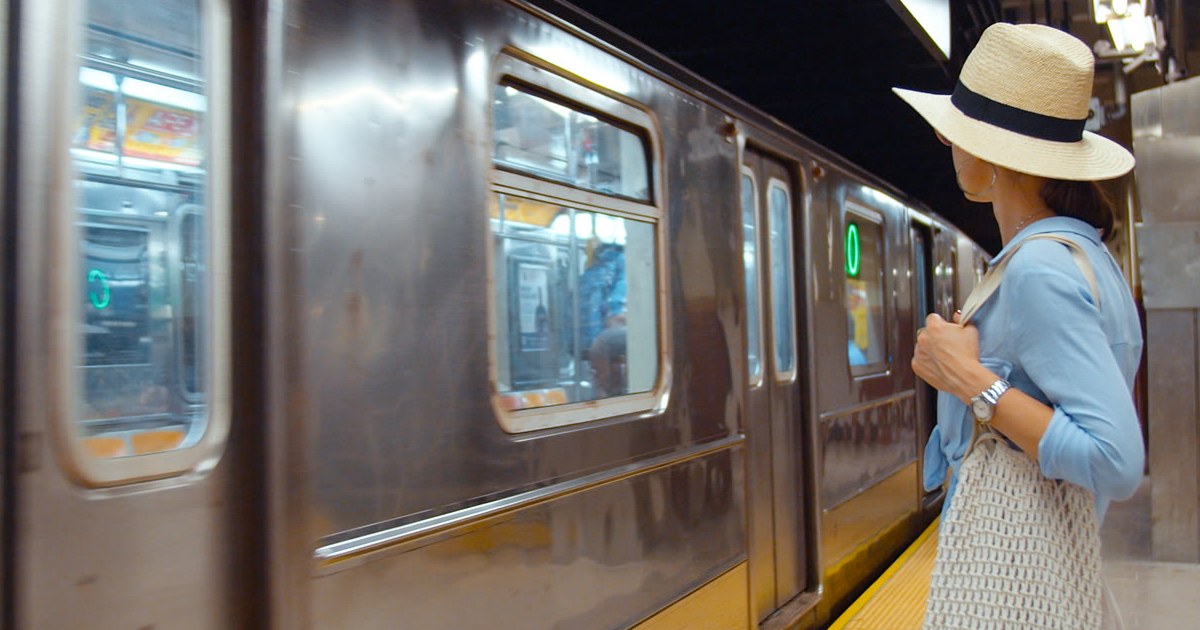
Many visitors worry about the subway before they arrive. The map looks like a plate of colored spaghetti, and locals move fast. Relax. Once you know four ideas, the system makes sense: how to pay, how to read a line, how to tell local from express, and how to pick your direction.
How to Pay for the NYC Subway
You can tap and go. The official OMNY site lists three ways to pay, and none of them needs a ticket machine (checked November 2026):
- Contactless card. If your credit, debit or prepaid card shows the contactless symbol, tap it at the reader.
- Phone or smart device. Add a payment card to your mobile wallet, then tap your device at the reader.
- OMNY card. If you prefer to pay with cash, buy and load an OMNY card, then tap that.
Use the same card or device for every tap. The system tracks your trips by that one payment method, so switching cards mid-week can cost you the weekly benefit below. Families should note that each rider needs a way to tap, so plan one card or device per person.
The Weekly Fare Cap
The OMNY site explains a handy perk. When you tap the same card or device for 12 individual trips within 7 days, you get unlimited free rides for the rest of that week. A visitor who stays a week and rides often can reach that cap. Check the OMNY site for the current fare and the exact cap rules before you travel, because the MTA sets both.
Which Gate Do You Use?
Look for the reader at the turnstile, tap once, and wait for the screen to say it accepted your fare. Then push through. If the reader shows an error, step aside and try again at a different turnstile. Station booths and help points can assist if the problem repeats.
How to Read the NYC Subway Map
Every subway service has a letter or a number. The trains of one color usually share a track through Manhattan, so the color tells you which trunk line you are on, while the letter or number tells you which train it is. You will see this on the map, on the platform signs, and on the front of each train.
Do not try to memorize the map. Instead, start with your destination and work backward. Search for your stop in a maps app, note the train letters it suggests, then confirm them on the station map. The MTA publishes its own maps and service notices on mta.info, and station walls carry up-to-date versions.
Local Trains vs. Express Trains
Local trains stop at every station on their line. Express trains skip many stops and save time on long trips. On the map, local stops show as small black dots and express stops show as white dots. If you want to go a few stops, ride the local. If you want to go from Midtown to far uptown or deep into Brooklyn, an express can save a lot of minutes.
If you board the wrong type, nothing terrible happens. Get off at the next express stop, cross the platform, and wait for the other train. Many stations let you change between local and express without leaving the platform.
Uptown, Downtown and Other Directions
New York uses simple direction words. In Manhattan, uptown means north and downtown means south. Outside Manhattan, signs often name the borough or the last stop instead, such as Brooklyn-bound or Queens-bound. Read the sign at the top of the stairs before you walk down, because many stations have separate entrances for each direction.
Some stations let you cross between directions underground, and others do not. If you realize you chose the wrong side, check for a free passage before you exit. If the station has no passage, you may need to leave and pay again, so it pays to read the sign first.
Check the Train Before You Board
Trains show their letter or number on the front and on the side. They also post the final stop. Confirm both before you step on. Station announcements can be hard to hear, so rely on the signs, the digital countdown clocks, and the MTA notices on mta.info.
Love New York, weekly
Join My Free Weekly New York Letter →Planning Your Route Around Service Changes
The subway rarely stands still. Crews repair track and signals, and that work changes service at night and on weekends. A line that runs one way on Tuesday may run a different route on Saturday. Always check mta.info for planned work on the day you travel, and look for posters at the station entrance.
Build in a little extra time on days when you have a fixed deadline, such as a show, a timed-entry ticket, or a flight. Trains can run late like any transit system. If a delay hits, you can switch to a bus, a taxi, or a different train line that serves the same area.
Getting to and from the Airport
The subway is one option for airport trips, but it is not always the easiest with big bags. Read our guide on getting from JFK to Manhattan to compare your choices before you land.
Subway Safety and Comfort Tips
Riders fill the subway every day, and most trips pass without trouble. Use the same common sense you use in any big city. Keep your phone and wallet in a front pocket or zipped bag. Stay alert, and avoid wearing earbuds in both ears at once, so you can hear announcements.
- Wait for riders to exit before you step onto the train.
- Move to the center of the car and hold a pole when the train is busy.
- Take your backpack off in a crowded car and hold it by your feet.
- Give your seat to anyone who needs it, including older riders and pregnant riders.
- Stay behind the yellow line while you wait on the platform.
Our local etiquette notes in The Love New York Guide No. 004: Subway Etiquette go deeper on the unwritten rules that make rides smoother for everyone.
If You Feel Unsure
Pick a car near the middle of the train, where other riders usually sit. If a car is empty while others are full, there may be a reason, so move to a busier car. Station staff and uniformed MTA workers can answer route questions, and you can always ask a fellow rider for help. New Yorkers give directions more often than visitors expect.
Where the Subway Takes You
The subway links almost every area on our visitor lists. Use it to move between the districts in our best neighborhoods for tourists guide, or to string together the stops in our 3-day New York City itinerary. If you want a break from the tunnels, ride the Staten Island Ferry for harbor views or rent a bike with help from our biking guide.
A good rule is to ride the subway for long hops and walk for short ones. Walking between nearby stops lets you see the street life that makes the city special, and it often takes about as long as waiting for a train.
Frequently Asked Questions About the NYC Subway
How do I pay for the NYC subway as a tourist?
Tap a contactless card, a phone or smart device, or an OMNY card at the reader on the turnstile. Check the official OMNY site for the current fare and the weekly fare cap before your trip.
Is the NYC subway easy for first-time visitors?
Yes, once you learn the letter and number system and the uptown and downtown signs. Check your route in a maps app, then confirm the train and direction on the station signs.
What is the difference between a local and an express train?
A local train stops at every station on its line, while an express train skips many stops. Local stops show as black dots on the map and express stops show as white dots.
How do I find out about service changes on the NYC subway?
Check mta.info on the day you travel and read the posters at the station entrance. Planned work often changes routes at night and on weekends.
Ride a few short trips first, and your confidence will grow fast. By the end of your first day, you will likely feel like a local. For more ways to plan your trip, browse our New York City guides, then subscribe below for weekly stories.
Join 1,000+ New York Lovers
Every week, get New York’s lesser-known corners, neighborhood stories and local secrets, straight to your inbox.
Subscribe free — enter your email:
Free forever · One email per week · Unsubscribe anytime
