
Your family may have a Harlem chapter. Maybe a grandmother stepped off a train from Georgia or the Carolinas with one suitcase. Maybe a great-uncle found factory work and rented a room above a store. Millions of Black families made moves like these. Harlem became one of the best-known places where they landed.
This guide tells that story. It shows you where the history still stands. It also shows you how to start tracing your own family’s route north.
If you love New York’s hidden stories, you’ll love our free weekly newsletter. Subscribe to Love New York →
What Was the Great Migration?
The National Archives calls the Great Migration one of the largest movements of people in United States history. Approximately six million Black people left the American South. They moved to Northern, Midwestern and Western states between the 1910s and the 1970s.
The Archives gives the main reasons. Families wanted to escape racial violence. They wanted better jobs and schools. They wanted freedom from Jim Crow rules.
Historians split the story into two waves. The First Great Migration ran from 1910 to 1940. In that wave, Black southerners moved to cities such as New York, Chicago, Detroit and Pittsburgh. Labor shortages during World War I pulled many of them toward factory jobs.
New York was only one stop on the map. But it drew people from many Southern states. Each family had its own reasons, its own train line and its own first address.
Why Harlem Became a Landing Place
Harlem is a Manhattan neighborhood north of Central Park. By the early 1900s it had a growing Black community. Newcomers followed relatives and church friends there. They found rooms, churches and shops run by people who understood where they came from.
You can see this shift in the story of one famous theater. The Apollo Theater says that its owners reopened the building in 1934 as the 125th Street Apollo Theatre. They changed the shows from burlesque to variety revues. They also aimed their marketing at the growing African American community in Harlem.
That choice tells you something. A whole neighborhood’s audience had grown. Businesses noticed and followed.
Harlem was also a place of music, writing and art. We cover that cultural boom in our guide to New York in the 1920s, from jazz to the Harlem Renaissance. Here, we focus on the families who lived there and on the places you can visit.
The Schomburg Center: Start Your Research Here
If you want to trace a Harlem family, begin at the Schomburg Center for Research in Black Culture. It sits at 515 Malcolm X Boulevard, at 135th Street. It is one of The New York Public Library’s research libraries.
The library describes itself as a cultural institution devoted to research, preservation and exhibition. Its focus is African American, African Diasporic and African experiences. Staff and collections can help you place a family story in a wider context.
Check the Schomburg’s official page before you go. Hours and holiday closings change. We checked the page in November 2026 and it listed the center as open.
Bring what you have. Names, towns, old photos and addresses all help. Write down every place name you hear from older relatives, even if you cannot spell it.
The Apollo Theater on West 125th Street
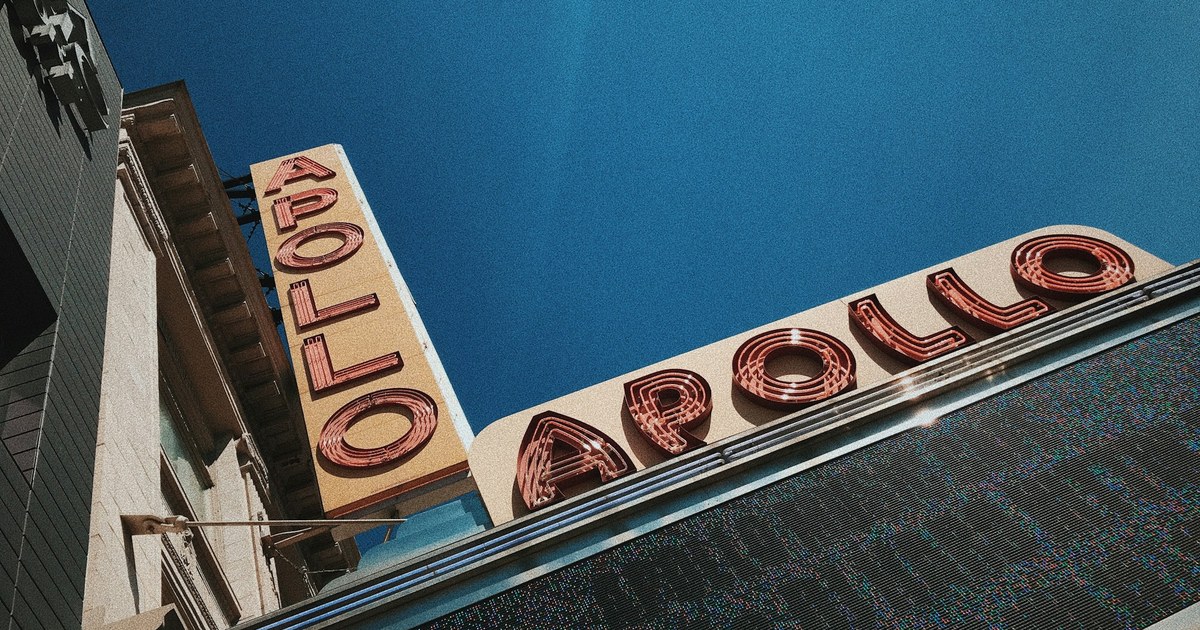
The Apollo sits on West 125th Street, Harlem’s main shopping and entertainment street. The theater says it opened its doors in 1914. It added its first Amateur Night contests in 1934.
Its own history page says the Apollo played a major role in the rise of jazz, swing, bebop, R&B, gospel, blues and soul. Ella Fitzgerald, Sarah Vaughan, Billie Holiday and James Brown all appear on its list of artists.
Even if you skip a show, stand under the sign for a minute. Your grandparents may have walked this same block. Read the Apollo’s official site for tours, shows and Amateur Night dates.
Want more stories like this? Our weekly newsletter goes deeper into New York’s heritage every week. It’s free. Subscribe here →
Abyssinian Baptist Church: Faith at the Center of Family Life
For many arrivals, the first friendly door in a new city was a church. Churches offered worship, advice and news from home. They also helped people find rooms and work.
The Abyssinian Baptist Church stands at 132 Odell Clark Place. The church describes itself as a historic African American Baptist church that has served worshippers since 1808. It remains an active congregation.
Treat it as a place of worship first. Look at the church’s website before you plan a visit. Ask politely about service times and respect the congregation’s schedule.
Many families hold their own church records. Baptism, marriage and funeral records can name relatives, hometowns and godparents. Ask older relatives which church the family attended.
The Studio Museum in Harlem: Art From the Neighborhood
The Studio Museum in Harlem shows work by artists of African descent. Its website lists a new building, current exhibitions and an artists-in-residence program. The museum showed an “open” status on the day we checked.
Art gives you another way into family history. A painting or photograph can show a street, a stoop or a Sunday outfit. Those details help you picture the lives behind the names on a census page.
How to Trace a Harlem Family Story
Family research follows the same basic steps for most New Yorkers. You can read our full walkthrough in How to Trace Your New York City Ancestry. These tips add to it for families with Great Migration roots.
First, talk to your oldest relatives. Ask where they were born. Ask who came north first. Ask which train, bus or car they took. Record the answers on your phone.
Second, gather papers at home. Look for birth certificates, church programs, funeral cards, letters and rent receipts. Any address is a clue.
Third, use national records. The National Archives runs an African American Heritage research hub. It points to guides on records for Black family research. It also links to material on the Great Migration.
Fourth, work backward from Harlem to the South. Once you find a New York address, look for the same family in earlier records. Match names, ages and birthplaces. Expect spelling changes and missing records. Those gaps are normal.
Finally, share what you find. Print a photo, write a page of stories and give a copy to a cousin. Family memory fades fast when nobody writes it down.
Plan Your Harlem Heritage Visit
Harlem rewards a slow day. Allow time at each stop and walk between them. The Schomburg and the Apollo are on the Malcolm X Boulevard and West 125th Street side of the neighborhood. Check a map and the subway before you set out.
A simple plan works well. Start at the Schomburg in the morning to look at records. Walk to West 125th Street for the Apollo and the Studio Museum. Finish with a meal at a local restaurant. Ask the staff about the neighborhood’s history.
Pair this trip with other heritage stops. Our story on Seneca Village beneath Central Park covers an earlier Black community in Manhattan. Our article on the East Harlem that Puerto Rican immigrants built covers the neighborhood just to the east.
Remember that Harlem is a living home, not a museum. Ask before you photograph people. Support local businesses. Visit with curiosity and respect.
Frequently Asked Questions
What was the Great Migration in New York?
The Great Migration was the movement of about six million Black people out of the South between the 1910s and the 1970s. New York was one of the Northern cities that drew many of them, and Harlem became a major community.
Where can I research my Harlem family history?
Start with the Schomburg Center for Research in Black Culture at 515 Malcolm X Boulevard. Then explore the National Archives’ African American Heritage pages, and read our guide to tracing New York City ancestry.
What can visitors see in Harlem today?
Visitors can see the Apollo Theater on West 125th Street, the Studio Museum in Harlem and the Schomburg Center. They can also visit the Abyssinian Baptist Church at 132 Odell Clark Place, while respecting its worship schedule.
When did the Apollo Theater start Amateur Night?
The Apollo says it introduced its first Amateur Night contests in 1934. That same year the building reopened as the 125th Street Apollo Theatre.
Ready to explore the New York your ancestors knew? Subscribe to Love New York — free weekly stories, heritage guides, and hidden history. Join us →
