
Ridgewood, Queens looks like a Brooklyn neighborhood that crossed the county line. Block after block of brick row houses line its streets. German families built most of them. Between 1906 and the First World War, German immigrants and German-Americans raised the homes that still define the neighborhood.
If you love New York’s hidden stories, you’ll love our free weekly newsletter. Subscribe to Love New York →
Why German Families Left Brooklyn for Ridgewood
Germans formed one of New York’s largest immigrant groups. The city’s German population reached a peak of more than 700,000 in 1900, according to the Landmarks Preservation Commission’s Central Ridgewood designation report. Many lived in crowded neighborhoods in Manhattan and Brooklyn. If you want the earlier chapter, read our story of Little Germany and Kleindeutschland.
Families wanted more space. They also wanted to own a home. Ridgewood offered both. It sat just across the Brooklyn border, next to Bushwick, Williamsburg and Greenpoint. In the 1800s it had been open farmland and a few amusement parks.
The Landmarks Commission describes Ridgewood as an ideal spot for upwardly mobile German-Americans. They could leave the crowding of Bushwick, Williamsburg and the Lower East Side behind. A 1913 real estate journal, quoted in the report, noted that German families were moving to Ridgewood in large numbers from Manhattan, the Bronx and Brooklyn.
How the Trolley and the El Opened Ridgewood
Transit made the move possible. An electric trolley reached Ridgewood in 1894. New York consolidated its five boroughs in 1898. After that, the city pushed steadily east. The elevated line on Myrtle Avenue, today’s M train route, reached Fresh Pond Road and 67th Avenue in 1915.
Builders followed the tracks. Bushwick builders had already put up tenements and small row houses for German workers. After 1900 they bought Ridgewood’s farms, parks and racetracks. They then built the same kind of homes there.
Local business owners also organized. Many were of German descent. They formed the Ridgewood Board of Trade in 1902. The group planned parks, sidewalks, sewers, paved roads and street lamps.
Want more stories like this? Our weekly newsletter goes deeper into New York’s heritage every week. It’s free. Subscribe here →
The Builders Who Shaped the Neighborhood
Two names stand out in the Landmarks report. Louis Berger was born in 1875 in the Rheinpfalz region of Germany. He studied architecture at Pratt Institute in Brooklyn. He opened his own firm in Bushwick in 1895. His company served as architect of record for more than 5,000 buildings in the Ridgewood and Bushwick area between 1895 and 1930.
Paul Stier, Ridgewood’s biggest builder, put up more than 2,000 houses in the area. About half of the houses in the Central Ridgewood district came from his crews. Local builders, many of German descent, built much of the rest.
Even the bricks had a story. The report says most of them came from the Kreischer Brick Manufacturing Company of Staten Island. Builders mixed red, buff, amber and brown brick from row to row. That mix gives the streets their warm, varied color. You can read more about another German-rooted neighborhood in Yorkville.
What the Row Houses Look Like Today
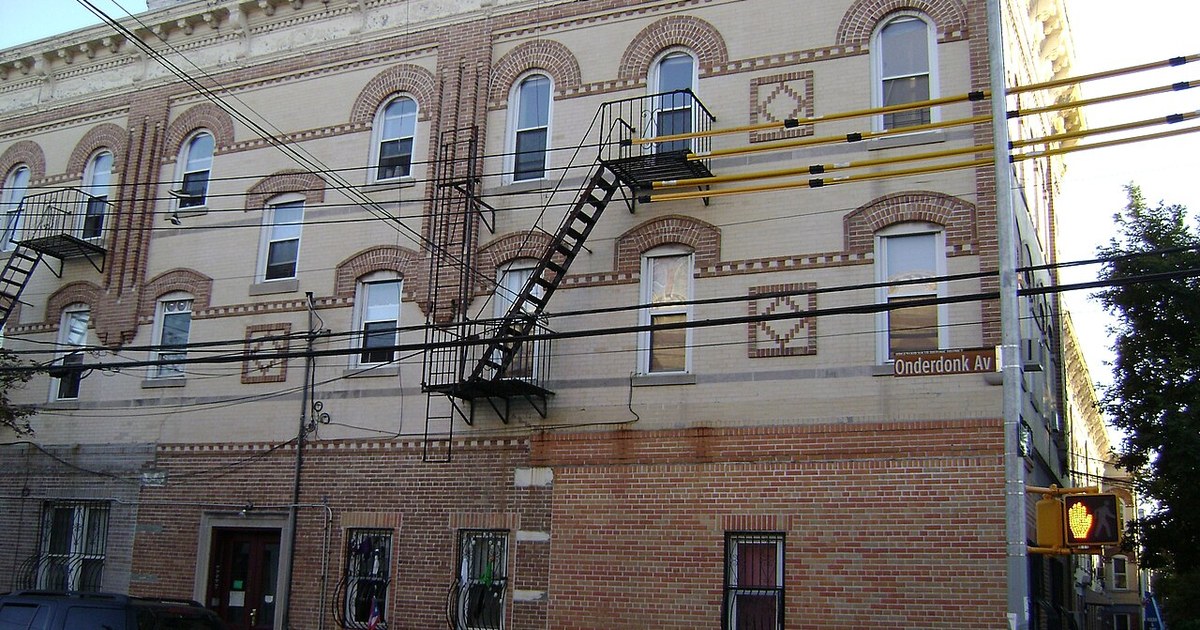
Fire codes shaped the look. After 1905, the rules required masonry for attached rows in Ridgewood. Builders turned to load-bearing brick walls. They added cast-stone lintels, door surrounds and pediments. Pressed-metal cornices topped many fronts, with brackets, dentils and swags.
The style is mostly Renaissance Revival. Some houses mix in Romanesque Revival or neo-Grec touches. Many fronts have projecting bays. Brownstone stoops, wood and cut-glass doors, and iron fences survive on many blocks.
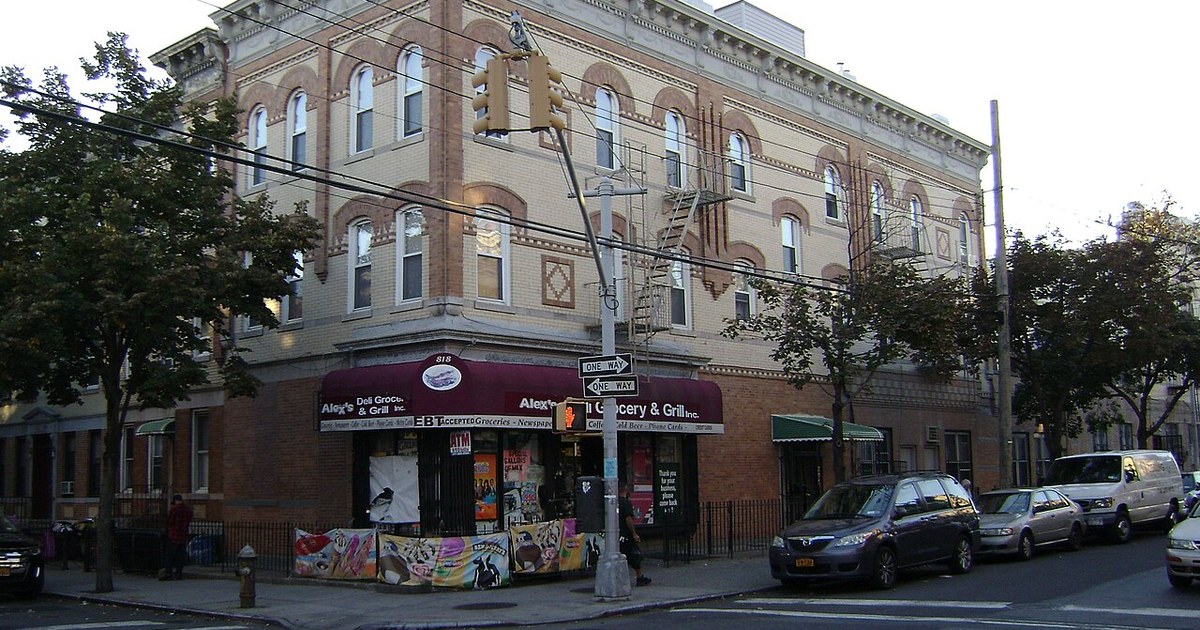
Look at the corners. Builders often put shops on the ground floor of corner buildings. Families lived upstairs and ran a business below. Most of those storefronts look different now, the report notes. The brick above them still shows the original design.
Beer, Work and Community: The World Ridgewood Families Knew
Many Ridgewood families came from Brooklyn’s Eastern District. After the political upheavals of 1848 in central Europe, large numbers of Germans settled in Williamsburg and Bushwick. They built up the area’s biggest industry, brewing. German immigrants owned most of the breweries and filled the jobs. By 1880, Brooklyn had 35 breweries, and at least 11 stood in a 14-block area known as brewer’s row.
German life revolved around shared institutions. The Landmarks report lists German-speaking churches and synagogues, German newspapers, singing societies, Turnvereins and beer gardens. Germans also started their own banks and savings and loan companies. Those habits traveled with families to Ridgewood.
Some Bushwick brewers put profit into real estate. The report notes that builders there, mainly of German descent, put up houses on speculation. That same network of builders later reshaped Ridgewood.
Landmarked Blocks to Walk
The Landmarks Preservation Commission designated the Central Ridgewood Historic District on December 9, 2014. It covers about 990 buildings and sites, and most are brick row houses. The Commission calls it one of the most harmonious enclaves of working-class housing built in New York in the early 1900s. Read the full designation report for the history of each block.
A smaller district sits nearby. Stockholm Street is a single landmarked block of brick row houses. The Commission designated it in 2000. Its designation report tells the story of that one block. Ridgewood also has historic districts called Ridgewood North and Ridgewood South. They hold mainly small apartment houses.
The photos in this story show the Cypress Avenue West Historic District. It sits between Linden and Stockholm Streets, near St. Nicholas and Seneca Avenues.
Bring a camera and look up. The pressed-metal cornices sit above eye level, so many visitors miss them. Walk a full block and compare the brick colors from house to house. Then check the corners for old storefront outlines. Each detail comes from the same few builders and the same Staten Island brickyard. A short walk teaches you more than a long guidebook chapter.
Trace Your Own Ridgewood Roots
Did your family come from Germany and settle near Myrtle Avenue? Start at home. Gather names, dates and addresses from old letters, church papers and photographs. Then search public records. The NYC Department of Records and Information Services is a good place to begin. Our guide to tracing your New York City ancestry walks through each step.
Old addresses matter most here. A family address can lead you to a specific block and a specific house. Many of those houses still stand.
Frequently Asked Questions
Why did German immigrants settle in Ridgewood?
Germans wanted more space and a chance to own a home. Trolley and elevated train lines made Ridgewood easy to reach from Brooklyn and Manhattan. Builders from nearby Bushwick put up affordable brick row houses there after 1900.
When did people build Ridgewood’s row houses?
Most houses in the Central Ridgewood Historic District date from 1906 to the First World War, according to the Landmarks Preservation Commission. German-Americans and German immigrants built most of them.
Is Ridgewood part of Brooklyn or Queens?
Ridgewood is in Queens. It sits right along the Brooklyn border, next to Bushwick. That is why many people mistake its streets for Brooklyn.
Can visitors see these historic row houses today?
Yes. You can walk the landmarked blocks any time, because they are ordinary residential streets. Please stay on the sidewalk and respect residents. Read the Landmarks Commission report first to know what to look for.
Ready to explore the New York your ancestors knew? Subscribe to Love New York — free weekly stories, heritage guides, and hidden history. Join us →
