
Look up in Manhattan. Above the fire escapes, past the AC units and pigeon clusters, above the last rooftop terrace, you'll see them: dark wooden cylinders, squat and barrel-shaped, balanced on spindly iron legs against the open sky. They look ancient because most of them are. And almost nobody who lives beneath them can explain why they're there.
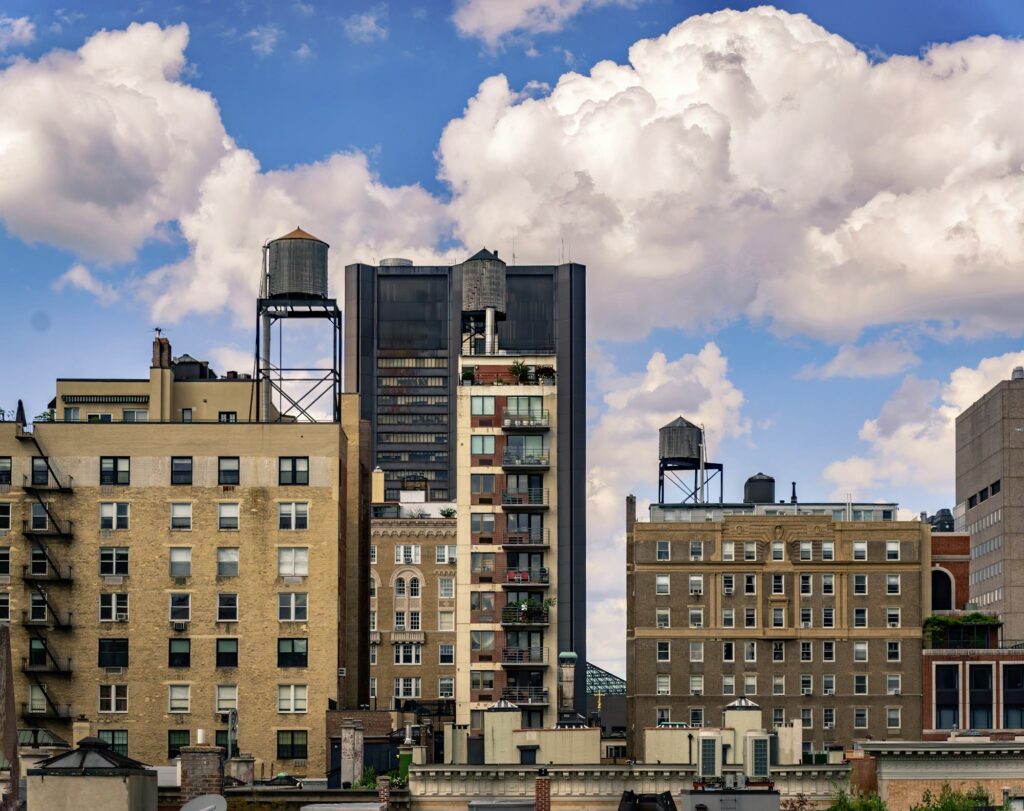
The Problem That Built a City
In the 1880s, New York was growing faster than its infrastructure could follow. Buildings were climbing past six stories — the height beyond which water pressure from street mains could no longer push water upward. Apartments above the sixth floor simply had no running water.
The solution turned out to be elegant in its simplicity: put a tank on the roof, pump it full from the basement overnight, and let gravity deliver the water from there. No complex machinery. No dependency on street pressure at peak hours. Just physics, working quietly around the clock, in a city that never slept.
Why Wood Instead of Metal
Early experiments with metal tanks gave water a metallic, chemical taste that New Yorkers rejected almost immediately. Concrete was difficult to inspect and clean. Wood — specifically cedar, redwood, and Pacific fir — turned out to be the ideal material for reasons that surprised even the engineers.
The natural tannins in the timber suppress bacteria. The staves swell when wet, creating a watertight seal within hours of filling. A properly maintained wooden tank lasts 30 to 35 years. The technique comes directly from cooperage — the ancient craft of barrel-making — and it has barely changed in 150 years.
The Two Families Who Built Almost All of Them
Here is where the story takes a remarkable turn. Almost every water tower on every rooftop in New York City was built by one of two companies: Rosenwach Tank Company, founded in 1866, and Isseks Brothers, established in the 1880s. Two family firms have held a near-monopoly on this market for well over a century.
Enjoying this? Join New York lovers getting stories like this every week. Subscribe free →
They build by hand. Workers carry raw lumber up through the building, piece by piece, and construct each tank on the rooftop itself — stave by stave, hoop by hoop. There is no factory. The Rosenwach family is now in its fifth generation of tank builders. When you spot one of those wooden cylinders from the street, you're looking at a handcraft tradition that predates the subway, the Brooklyn Bridge, and residential electricity.
How They Work Every Single Day
A pump in the building's basement fills the tank overnight, when city water pressure runs highest. The tank holds between 5,000 and 10,000 gallons — roughly a full day's supply for a mid-size apartment building.
As residents draw water during the day, gravity pulls it down through the building's pipes. The tank acts as a buffer, smoothing out demand spikes during morning showers and evening cooking. Residents on upper floors get consistent pressure without depending on the city's fluctuating street mains. It's a completely analog system, still doing exactly what it was designed to do in 1886.
New York's built landscape is layered with engineering like this — the hidden systems inside Grand Central Terminal tell a similar story of solutions so effective the city never bothered to replace them.
Why They're Still There in 2026
There are an estimated 15,000 to 17,000 wooden water towers above New York City's buildings today. Most cap buildings between six and twelve stories — tall enough that street pressure doesn't reach, small enough that full pressurized system upgrades don't pencil out.
Replacing all of them would cost billions and disrupt water service to hundreds of thousands of apartments across the housing stock. So the tanks stay. New ones go up every year. Rosenwach builds dozens of brand-new tanks annually and replaces hundreds of aging ones across the boroughs.
The Chrysler Building gets the photographs. The water towers keep the city running. Most New Yorkers never notice the difference.
Frequently Asked Questions
How many water towers are there in New York City?
Estimates put the total between 15,000 and 17,000 active wooden water towers across the five boroughs, with the highest concentration in Manhattan. New towers are still being installed each year as older ones reach the end of their 30- to 35-year lifespan.
Are New York City water towers safe to drink from?
Yes. NYC water towers are inspected and cleaned on a regular schedule under city health regulations. Cedar, redwood, and Pacific fir all contain natural tannins that suppress bacteria, making wooden tanks inherently safe for storing potable water.
Where is the best place to see NYC water towers up close?
The High Line in Chelsea provides elevated views across rooftops densely packed with water towers. Midtown Manhattan, Brooklyn Heights, and the Upper West Side all have high concentrations. Almost any walk through a mid-density neighborhood will bring you within a block of one.
Why are NYC water towers made of wood and not metal or plastic?
Wood was found to be superior early on: metal imparted a chemical taste, concrete was hard to clean, and modern plastics weren't available. Cedar and redwood staves swell when wet to form a natural waterproof seal, resist bacteria without chemical treatment, and last decades with minimal upkeep. No better material has been found for the job.
They're not a picturesque relic kept around for charm. They're working infrastructure, filling up every night, quietly supplying one of the world's great cities with the water it needs to wake up each morning.
Next time you look up in New York, you'll see them differently. Not as odd remnants of another era — but as the reason the city above the sixth floor still runs at all.
You Might Also Enjoy
- Grand Central Terminal Is Full of Secrets and Most People Walk Right Past Them
- How the Chrysler Building Secretly Became the World's Tallest for 11 Months
- Walk Down This One Street in Manhattan and You're Suddenly in 1658
Plan Your New York Trip
Ready to explore New York's architectural layers in person? Our New York City 5-day itinerary covers the neighbourhoods where you can spot water towers on every rooftop and discover the city's hidden engineering up close.
Join 1,100+ New York Lovers
Every weekday morning, get New York's lesser-known corners, neighborhood stories, food origins, and city secrets — straight to your inbox.
Subscribe free — enter your email:
📲 Know someone who'd love this? Share on WhatsApp →
Free forever · · Unsubscribe anytime

Subscribe Free