
She arrived at Ellis Island with one bag.
Inside were a few pieces of clothing, a small photograph, and the name of a cousin living in lower Manhattan. The city she walked into was nothing like what she had imagined.
If you love New York’s hidden stories, you’ll love our free weekly newsletter. Subscribe to Love New York →
This was 1900. New York had 3.4 million people. Over 275,000 were Irish-born. Another 400,000 had at least one Irish parent. The streets she walked were loud, crowded, and often dangerous. But they were also full of people who understood exactly what she had left behind.
What did her daily life actually look like? Here is the story that most guidebooks never tell.
The Tenement She Came Home To
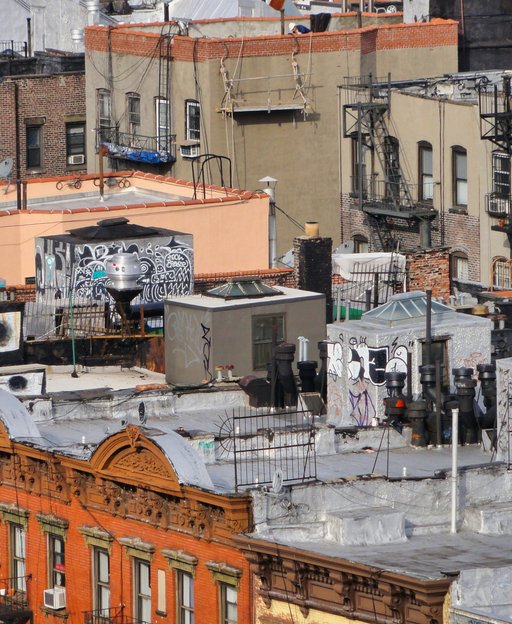
Most Irish immigrants in 1900 lived in lower Manhattan. The Lower East Side, Five Points, and the West Side docks were the main Irish neighbourhoods. A typical apartment was called a railroad flat. It had no natural light in the middle rooms. The toilet — a shared privy — was in the courtyard below.
Rent was between $3.50 and $5 per month for a two-room flat. That sounds cheap. But an unskilled Irish labourer earned just $1.50 to $2 per day. She needed every cent.
The Irish who settled Five Points came decades earlier. By 1900, that first wave had moved uptown. The newcomers filled the spaces they left behind and created communities that replicated the ones back home in Clare, Cork, and Mayo.
The rooms smelled of coal smoke, boiled cabbage, and laundry hanging in the shaft between buildings. In summer, the heat was nearly unbearable. In winter, a small coal stove in the kitchen was the only warmth. Forty or fifty people often shared a building designed for far fewer.
She slept in a room with two or three others. Her children shared a single mattress on the floor.
What She Earned — and How Far It Went
If she was unmarried and young, she likely worked in a garment factory. The district on the Lower East Side employed thousands of Irish and Jewish women. A 12-hour day earned between 80 cents and $1.10. That was considered good work.
Many Irish women chose domestic service instead. It meant working in the homes of wealthy Manhattan families. You earned less — sometimes only $2 to $3 per week. But you had a bed, regular meals, and shelter.
The hours were long. You started at 6 a.m. and worked until the last dishes were washed. Sunday was sometimes your own. Sometimes it was not.
The Lower East Side in this period was the most densely populated neighbourhood on Earth. Over 300,000 people lived in one square mile. Irish, Jewish, Italian, and Eastern European families lived in the same buildings. They shopped at the same street markets and sent their children to the same schools.
Food costs in 1900 were roughly as follows:
- A pound of beef: 8 cents
- A loaf of bread: 4 cents
- A quart of milk: 4 cents
- A pound of potatoes: 1 cent
She could feed a family of four on $2.50 a week if she was careful. Most women were very careful.
The street markets on Orchard Street and Delancey Street were her grocery shop. Pushcart vendors sold everything from pickled herring to second-hand coats. The bargaining was fierce and expected.
The Community That Kept Her Going
She was not alone. That is the part the old photographs miss.
The neighbourhood was built around the parish church. St Patrick’s Old Cathedral on Mulberry Street. St Peter’s in lower Manhattan. These were not just places of worship. They were the centre of immigrant life.
The parish ran the school, the sick fund, and the burial society. The Ancient Order of Hibernians held dances and regular meetings. The local ward boss — often himself an Irish immigrant — found you work and settled disputes. He organised charity when the rent was overdue.
She knew her neighbours by name. All of them. The woman across the hall from County Cork. The man downstairs who worked the docks. The widow two floors up who took in washing.
The shared experience of displacement created a kind of closeness. Irish women in this period had some of the highest rates of mutual aid participation of any immigrant group. They looked after each other’s children. They sat with each other’s sick. They pooled pennies for funerals.
The Journey Uptown
She sent money home. Almost every Irish immigrant did. The remittance to a family back in County Mayo or County Kerry was often the reason she went without new shoes for another winter.
She also dreamed of moving uptown. For many, this was the arc of immigrant ambition. The Lower East Side was the starting point. The Bronx — expanding rapidly after 1900 — was where the next generation moved.
The South Bronx had Irish communities that replicated everything she had built downtown. By 1910, many children of 1900 arrivals lived in better apartments further north. A few had bought small shops. The transformation happened within a single generation.
The Irish communities in Washington Heights also grew rapidly. German Jewish families had arrived first. Irish families followed. Each group carved out its own streets, churches, and social clubs.
Want more stories like this? Our weekly newsletter goes deeper into New York’s heritage every week. It’s free. Subscribe here →
Where You Can Find Her Story Today
The physical New York of 1900 is mostly gone. But some of it survives.
The Tenement Museum at 97 Orchard Street is the most important site. They have preserved actual apartments from the period. You can walk through a room where a family of seven lived, cooked, and slept. You can see the walls they painted and the stove they cooked on. It is unlike any other museum experience in New York.
The Ellis Island Immigration Museum holds passenger records for over 51 million arrivals. You can search by name, birth country, and year of arrival. Many Irish families have found their great-grandparents in the records. The search is free at libertyellisfoundation.org.
The New York Public Library has digitised thousands of records from the period. City directories, church records, and census data are all searchable online. The genealogy collection is one of the best in the world.
Old St Patrick’s Cathedral on Mulberry Street still stands. Step inside and you are in the same building that Irish immigrants filled every Sunday morning in 1900. The neighbourhood around it has changed completely. The church has not.
The Irish presence is written into the street names, the political structure, and the pub culture of New York. It did not happen by accident. It happened because hundreds of thousands of women like your great-grandmother worked 12-hour days, sent money home, and refused to disappear.
A Life Worth Remembering
She did not leave a diary. She was too tired in the evenings to write one.
What she left instead was you. Or the person who came before you. The choices she made — to cross the Atlantic with one bag, to take the factory job, to send money home every month — set in motion a chain of events that ended with your life as it is now.
The New York of 1900 shaped millions of families. It shaped the way the city sounds and tastes and argues. Its fingerprints are everywhere, if you know where to look.
Ready to explore the New York your ancestors knew? Subscribe to Love New York — free weekly stories, heritage guides, and hidden history. Join us →
Frequently Asked Questions
What was daily life like for Irish immigrants in New York in 1900?
Most Irish immigrants lived in tenement buildings in lower Manhattan. A typical day involved long factory or domestic service shifts, returning to cramped two-room flats shared with several others. Forty or fifty people often shared one building.
How much did Irish immigrants earn in New York around 1900?
An unskilled Irish labourer earned between $1.50 and $2 per day in 1900. Women working in garment factories earned between 80 cents and $1.10 for a 12-hour day. Domestic servants earned $2 to $3 per week, but with room and board included.
Where can I find records of my Irish ancestors who came to New York around 1900?
The Ellis Island database at libertyellisfoundation.org holds passenger records for over 51 million arrivals. The New York Public Library’s genealogy collection and the Tenement Museum’s research resources are also excellent starting points for tracing New York City Irish ancestry.
What did the Irish tenement neighbourhoods in New York look like in 1900?
Tenement buildings were five to seven storeys tall, with multiple families on each floor. Apartments had two or three rooms with no natural light in the inner rooms. Shared privies were in the courtyard. The streets were dense with market stalls, children, and noise from morning to night.
Can I visit the Irish immigrant neighbourhoods of 1900 today?
The Tenement Museum at 97 Orchard Street preserves actual apartments from the period. Old St Patrick’s Cathedral on Mulberry Street is still open for visits. Ellis Island Immigration Museum holds the records of millions of arrivals and is accessible by ferry from lower Manhattan.
