
New York City is not short on things to do. But among the museums, the skyline views, and the food markets, there are places that ask something different of you. They ask you to slow down and pay attention. The city’s memorials do exactly that. Whether you have half an hour or a full afternoon, visiting one of these sites tends to stay with you long after you’ve left.
This guide covers the most significant memorials in New York, what you’ll find at each one, and the practical details you need to plan a visit.
Want more guides to New York’s history and culture? Subscribe to our free newsletter and we’ll send the best of New York straight to your inbox.
The 9/11 Memorial and Museum
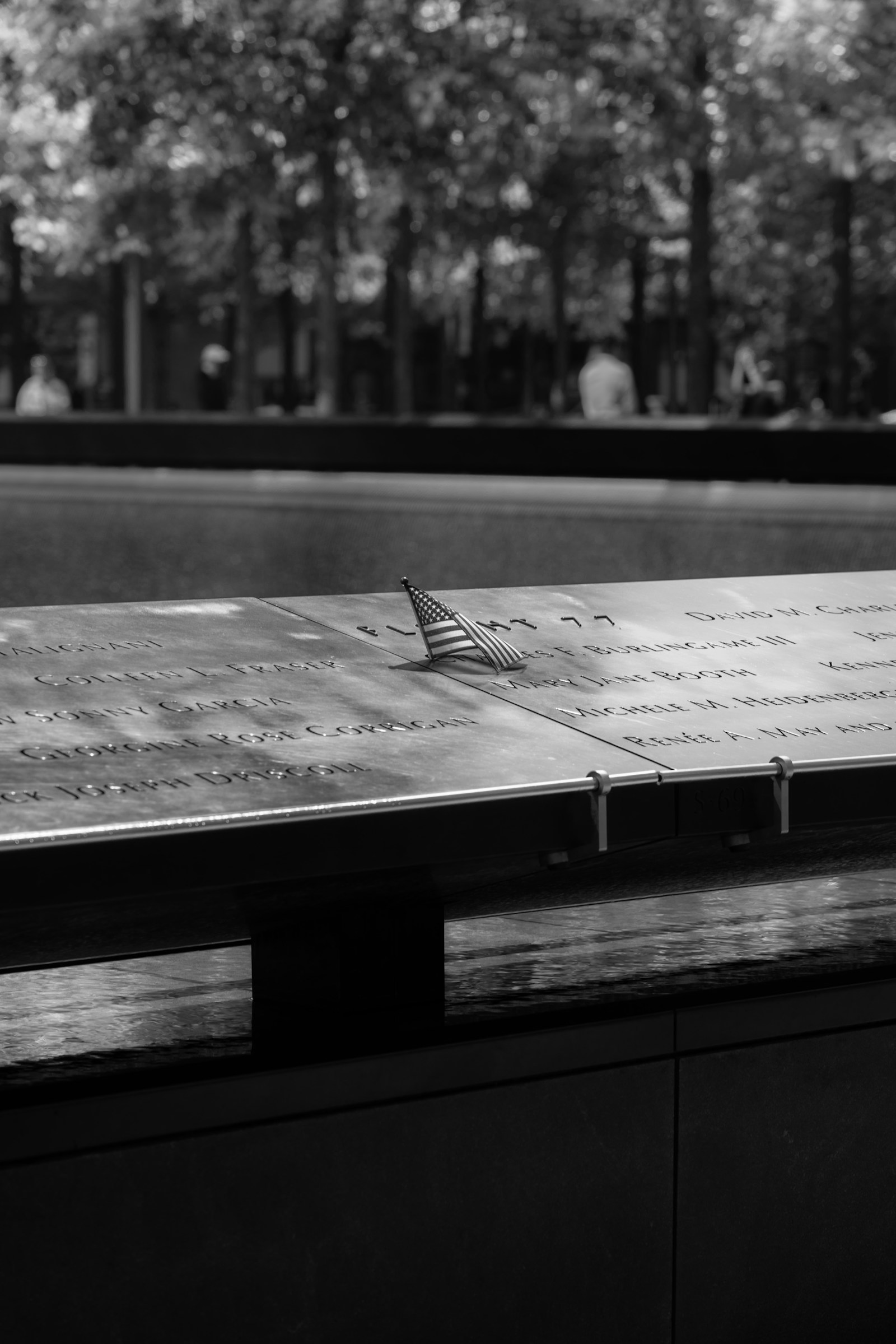
The 9/11 Memorial sits where the Twin Towers once stood in Lower Manhattan. It opened in 2011, on the tenth anniversary of the attacks. Two large reflecting pools — each nearly an acre in size — occupy the footprints of the original towers. Water falls down the sides into the pools and then disappears into a square void at the centre. The names of the 2,977 people killed on 11 September 2001, and in the 1993 World Trade Centre bombing, are engraved around the bronze parapets of both pools.
The memorial plaza is free to visit and open every day. You can walk around both pools, read the names, and spend as long as you like. Many visitors bring pencil and paper to do a rubbing of a name, which staff will help you locate if you ask.
The 9/11 Memorial Museum is a separate, ticketed experience below the plaza. It takes you through the events of that day using artefacts, testimonies, and original footage. Tickets cost around $33 for adults. The museum is thoughtful and thorough, but it is a heavy experience. Allow at least two hours. Audio guides are available in multiple languages.
Getting there: Take the subway to Fulton Street (A, C, J, Z, 2, 3 lines) or Cortlandt Street (R, W). It is a short walk from both. The nearest car parks charge around $30–50 for a few hours, so public transport is the better option.
The Vietnam Veterans Memorial
This memorial in Lower Manhattan is quieter than you might expect. It opened in 1985 and stands at Vietnam Veterans Plaza, near the waterfront on Broad Street. A 14-foot-high wall of green glass is etched with excerpts from letters written by soldiers and their families during the Vietnam War. The passages are personal and direct — love letters, requests for care packages, final farewells.
It is free to visit at any time. The surrounding plaza is pleasant and rarely crowded even at peak tourist hours. This is one of the more overlooked memorials in the city, which is partly what makes it worth seeking out.
Getting there: Take the subway to Whitehall Street (R, W) or Bowling Green (4, 5). From either stop it is a three-minute walk.
The African Burial Ground National Monument
In 1991, construction workers in Lower Manhattan uncovered a burial ground containing the remains of more than 400 Africans who lived and died in colonial New York. The site dates from the late 1600s to the late 1700s and is the oldest and largest known African American burial ground in the country. It was designated a National Monument in 2006.
The outdoor memorial is a striking circular space with a large granite mound and inscriptions drawing on African and African American traditions. There is also a small visitor centre inside the federal building at 290 Broadway, which tells the broader story of enslaved Africans in New York — a history that is rarely given this kind of dedicated public space. The visitor centre is free and open Monday to Saturday.
Getting there: Take the subway to Chambers Street (A, C) or City Hall (R, W). Both are within a five-minute walk.
New York has more hidden history than most people realise. Join our newsletter for curated guides like this one, delivered weekly.
The Soldiers’ and Sailors’ Monument
On Riverside Drive at 89th Street, overlooking the Hudson River, stands a marble monument to the Union soldiers and sailors who died in the American Civil War. It was completed in 1902 and modelled after the Choragic Monument of Lysicrates in Athens. Twelve Corinthian columns surround the central structure, and the names of major Civil War battles are carved into the stone.
The monument is rarely on tourist itineraries, but it sits in a lovely stretch of Riverside Park and makes a worthwhile stop if you are on the Upper West Side. The park benches nearby face the river. It is a good spot to sit for a while. Access is free at all times.
Getting there: Take the subway to 86th Street (1 train) and walk four blocks west to Riverside Drive.
The Korean War Veterans Memorial
New York’s Korean War Veterans Memorial is in the Battery, at the southern tip of Manhattan. It was unveiled in 1991 and consists of a circular granite structure with the names of the 1,799 New Yorkers who died in the Korean War. There are also panels listing those who are missing in action.
The Battery itself is worth visiting for its views of New York Harbour and the Statue of Liberty. Combining the Korean War Veterans Memorial with a walk around the Battery makes for a good half-day in Lower Manhattan. Entry is free.
Getting there: Take the subway to Bowling Green (4, 5) or South Ferry (1). The Battery is a five-minute walk from either.
The Memorial to Enslaved Laborers (Columbia University)
Opened in 2023 on the Columbia University campus in Manhattanville, this is one of the newest and most unusual memorials in the city. It takes the form of a cracked elliptical granite structure, designed to represent both rupture and resilience. It honours the people who were enslaved and whose labour helped build Columbia University and the institutions connected to it.
The memorial is part of a broader effort by Columbia to reckon with its historical ties to slavery, and accompanying panels give context to that history. It is open to the public and free to visit. The Manhattanville campus is newer and quieter than the main Morningside Heights campus, and the memorial is a thoughtful addition to it.
Getting there: Take the subway to 125th Street (1 train). The Manhattanville campus entrance is on Broadway.
Tips for Visiting New York Memorials
A few things worth knowing before you go:
- Book the 9/11 Museum in advance. Queues can be long on weekends and during school holidays. Online booking is straightforward and saves time at the entrance.
- Weekday mornings are quieter. Most of these sites are visited by school groups and tour parties during the day. Arriving early on a weekday gives you more space and a quieter atmosphere.
- Photography is allowed at all of the outdoor memorials. Inside the 9/11 Museum there are some restricted areas, and the rules are clearly marked.
- Children are welcome at all these sites, though the 9/11 Museum in particular covers difficult material. Many families choose to visit the outdoor memorial only and skip the museum for younger children.
- Combine sites with a walk. The African Burial Ground, the Vietnam Veterans Memorial, and the 9/11 Memorial are all within a 15-minute walk of each other in Lower Manhattan. A morning spent moving between them gives a layered sense of the city’s history.
New York’s memorials are not tourist attractions in the usual sense. They are places where real history is held, where names are kept, and where the city takes a moment to remember what it has been through. Each one is worth your time.
Planning a trip to New York? Subscribe to our free weekly newsletter for honest, practical guides to the city’s history, food, and neighbourhoods.
