
Central Park covers 843 acres in the middle of Manhattan. That is a lot of ground, and most visitors see only a fraction of it. But if you are looking for a quiet spot to sit, watch people go by, and let your thoughts settle, you do not need to cover every inch. You just need to know where to go.
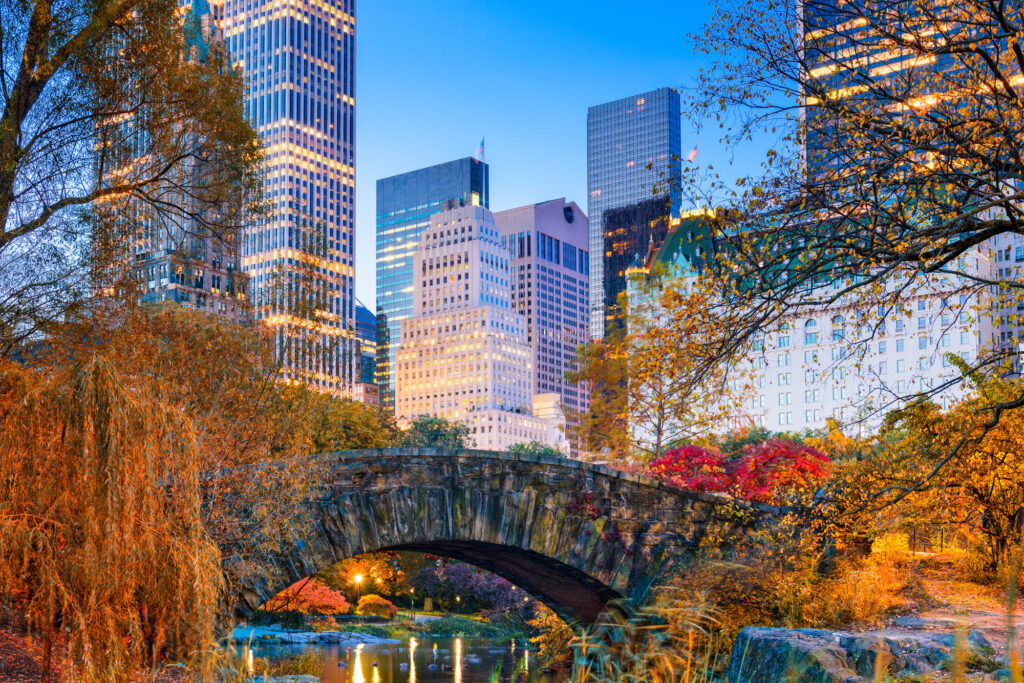
This guide covers our seven favorite spots in Central Park for doing exactly that: sitting still, watching the city breathe around you, and taking a moment that is yours.
Love New York? Get our free weekly guide — local stories, hidden corners, and things worth knowing. Subscribe here →
Bethesda Terrace and Fountain
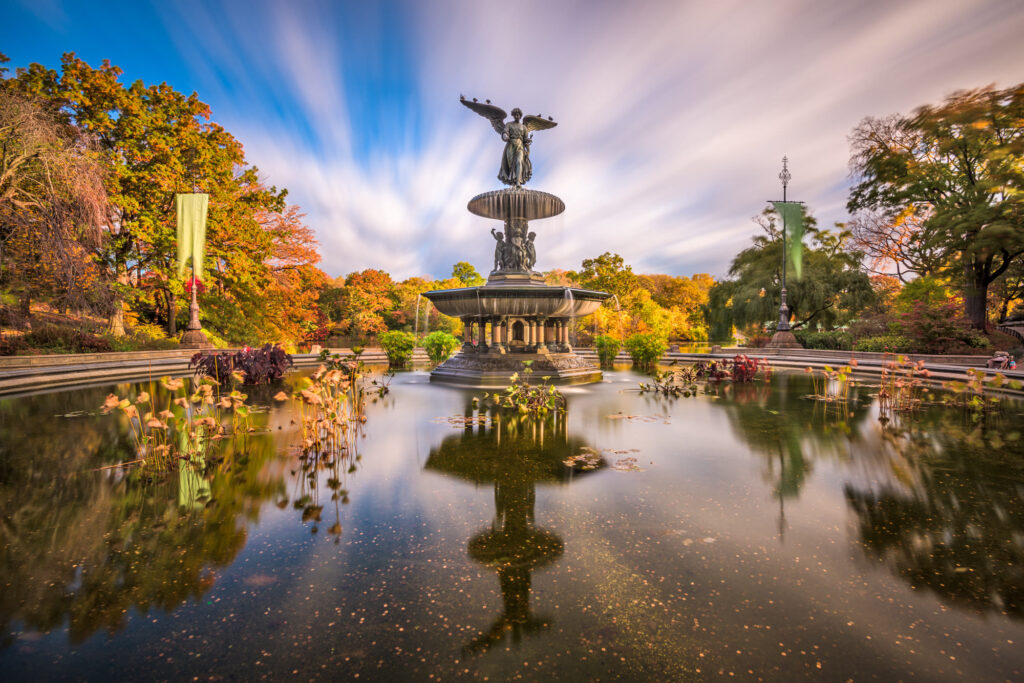
Bethesda Terrace sits at the heart of the park, just north of the 72nd Street transverse road. The statue on the fountain here, the Angel of the Waters, was unveiled in 1873 and is one of the most recognizable landmarks in New York City.
What makes it good for sitting and thinking is the design of the terrace itself. The stone steps arc around the lower plaza in a wide semicircle, giving you a clear sightline to the lake and the woodland beyond. On warm days, the sound of the fountain carries easily. On cooler ones, the terrace stays relatively quiet.
The best seats are the stone benches along the upper arcade — shaded, elevated just enough to give you a sense of looking out over the scene rather than being swallowed by it. Morning visits, before 10am, are when the terrace is at its calmest. By midday in summer it fills up fast.
Bow Bridge
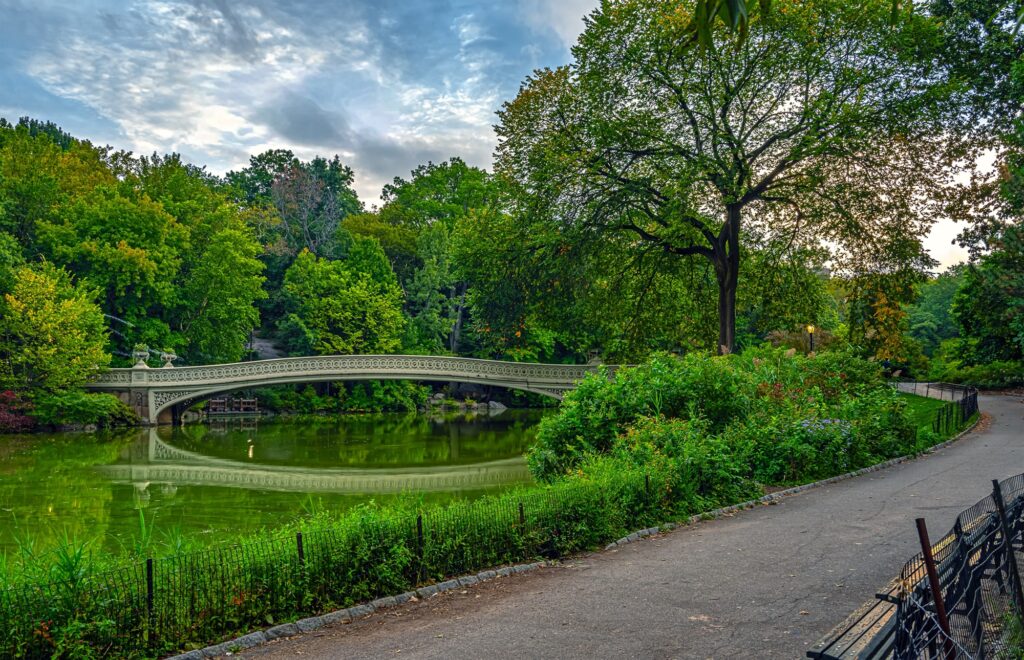
Bow Bridge is a cast-iron structure completed in 1862. It spans the Lake at a point where the water widens, giving clear views in both directions — south towards the terrace and skyline reflection, north towards the wooded ramble.
The bridge itself is not a sitting spot, but the paths on either side are. At the eastern end, a small curved embankment slopes gently to the water. Locals tend to sit here on the grass or on the low rocky ledge, watching rowing boats drift past. At the western end, a path leads into the Ramble, and there are several flat rocks just off the path where people settle in for an hour at a time.
This is one of the better spots to simply watch. The bridge attracts a steady flow of people — couples, tourists with cameras, joggers — but the pace is slow. Nobody is rushing. If you want to watch New York move without the noise of a street, this is a reliable option.
The Great Lawn
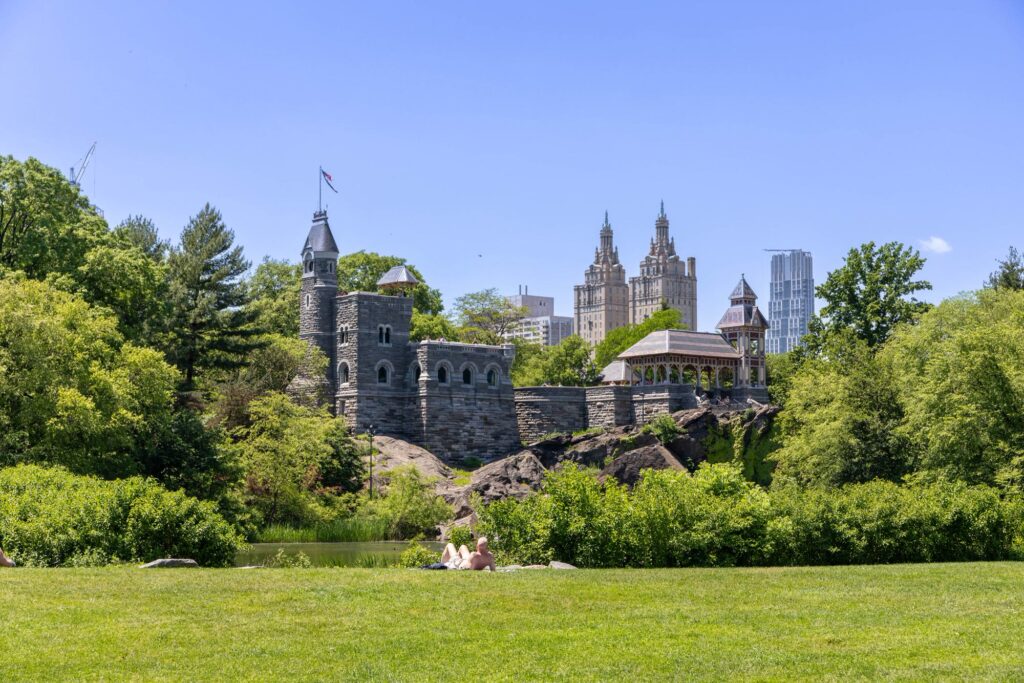
The Great Lawn is an open oval of grass stretching between 79th and 85th Streets. It covers about 55 acres and is one of the largest open spaces in the park. During summer, it hosts concerts and events, but on ordinary weekdays it is largely empty by mid-morning.
The appeal here is the sky. Sit at the center of the Great Lawn and you get an unusually wide view upward — rare in a city defined by vertical lines. The buildings around the perimeter of the park are visible, but they feel distant. The grass is well maintained and comfortable to sit on directly.
For people-watching, the benches around the outer path are better positioned. You can watch the whole scene — dogs, kites, families, frisbees — from a fixed vantage point. If you want space and quiet rather than a view of activity, go to the north end of the lawn, which sees less foot traffic.
We write about places like this every week. If you enjoy reading about New York’s quieter corners, join our free newsletter — no spam, just good writing about a city worth knowing.
The Reservoir
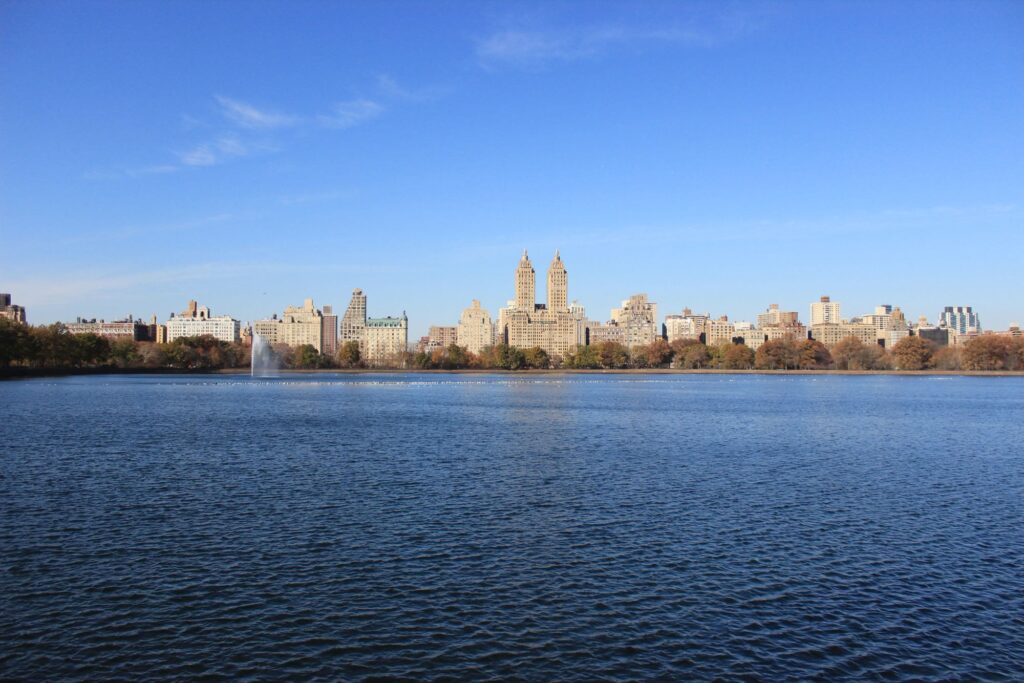
The Jacqueline Kennedy Onassis Reservoir sits between 86th and 96th Streets and holds about a billion gallons of water. A running path circles the full 1.58-mile perimeter, but the benches along the southern end, near the 86th Street entrances, are among the best sitting spots in the whole park.
From here, you can see the Manhattan skyline reflected in the water, with the buildings along Central Park West and Fifth Avenue framing either side. The view is particularly good in late afternoon when the light catches the water at an angle.
This is also a practical spot to reach. The 86th Street stop on the 4, 5 and 6 lines (at Lexington Avenue) is about a ten-minute walk west to the southern benches; from the West Side, the B and C stop at 86th Street and Central Park West is closer. If you have limited time and want a guaranteed clear, open view, the reservoir path is a dependable choice.
Conservatory Garden
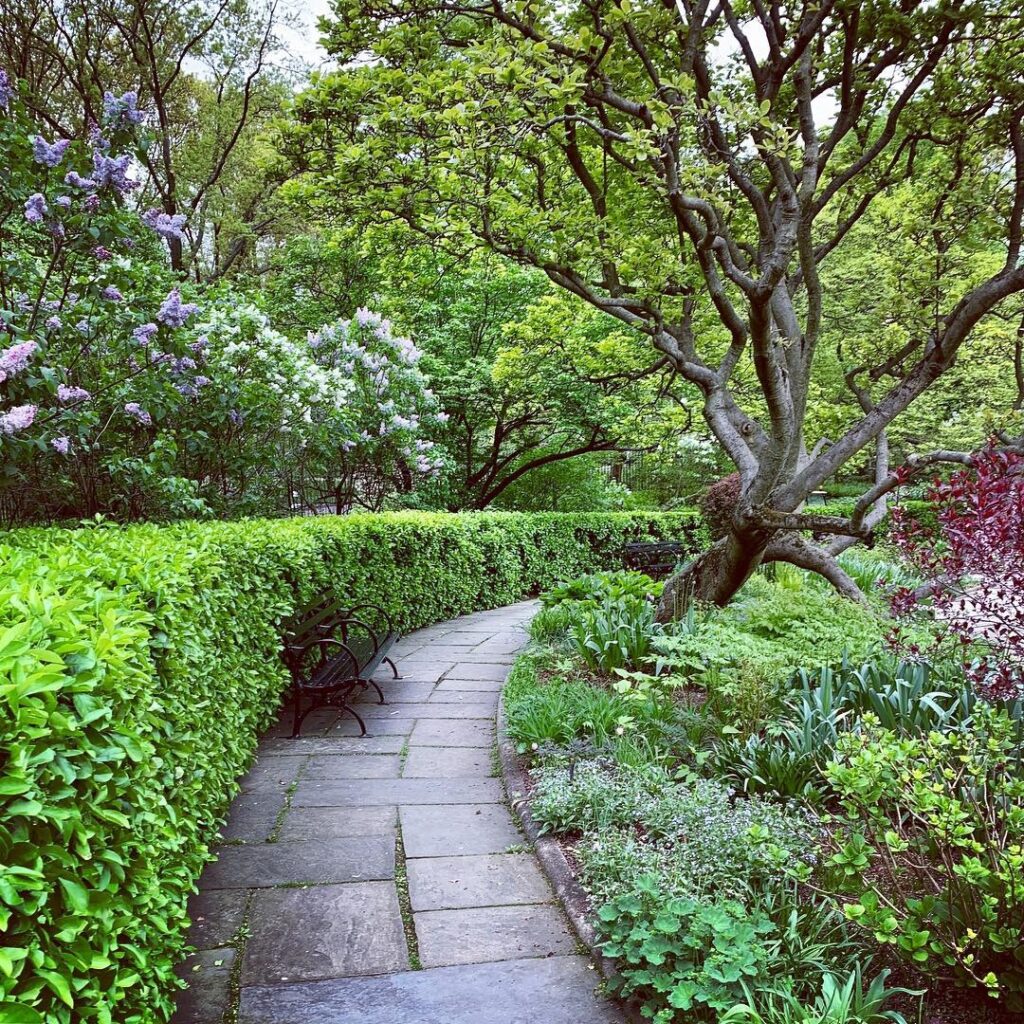
The Conservatory Garden is the only formal garden in Central Park. It sits at the Fifth Avenue entrance at 105th Street, through the Vanderbilt Gate, and covers six acres divided into three gardens: Italian in the center, French to the north and English to the south.
It is also one of the quietest spots in the park. Unlike most of Central Park, the Conservatory Garden is enclosed by a wrought iron fence, which muffles street noise. Dogs are not permitted, which keeps the mood noticeably calmer. There are benches throughout, shaded by crab apple allées and overlooking seasonal flower beds.
The Untermyer Fountain, with its three dancing maidens, sits at the heart of the French-style North Garden, and its gentle background sound makes the space feel removed from the city in a way that few open areas manage. Visits in spring (late April through May) and fall (September through October) offer the best planting. Summer is also fine, though it can draw more visitors.
Entry is free. The garden keeps shorter hours than the rest of the park, so see the Central Park Conservancy page for current opening times.
The Ramble
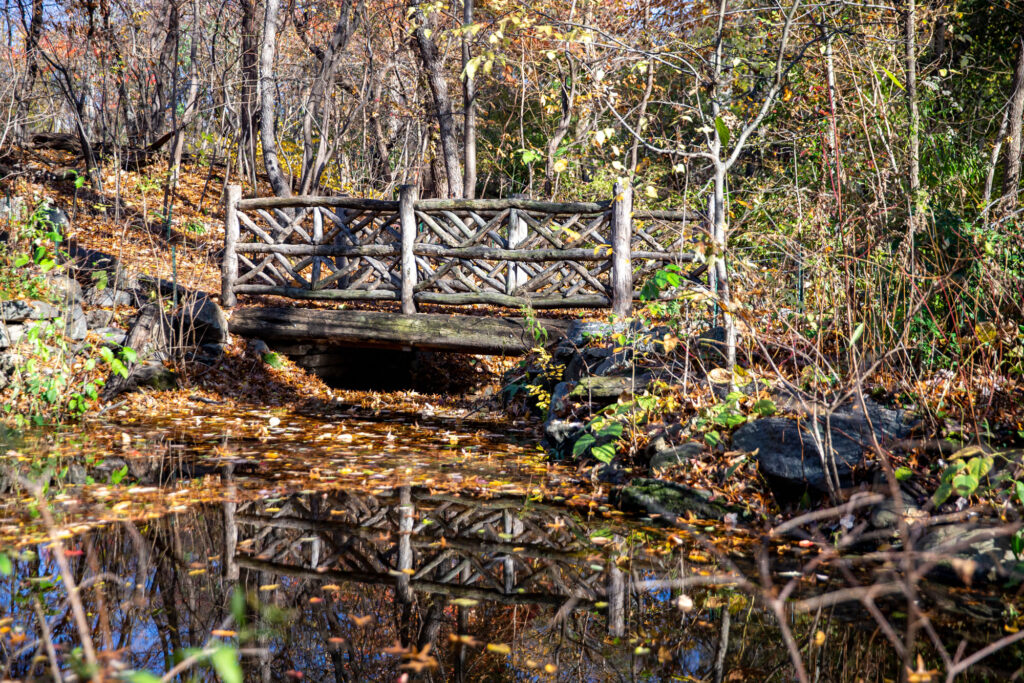
The Ramble is a 36-acre woodland in the middle of the park, roughly between 73rd and 79th Streets. It was designed in the 1850s to feel deliberately wild — winding paths, dense planting, rocky outcrops — and it still does. People come here mainly to birdwatch. More than 200 bird species have been recorded in Central Park, and the Ramble is the heart of that activity.
But it is also one of the most peaceful places to simply sit. The paths are narrow and unpaved in places, and much of the woodland feels genuinely enclosed. There are several flat rocks and log benches off the main paths where you can stop and hear almost nothing except birds and the occasional rustling.
It takes a few visits to feel comfortable navigating the Ramble — the paths are not signposted in the way that the main park routes are. But that is also part of its appeal. It is one of the few places in Central Park where you can reliably get a bit lost.
Shakespeare Garden
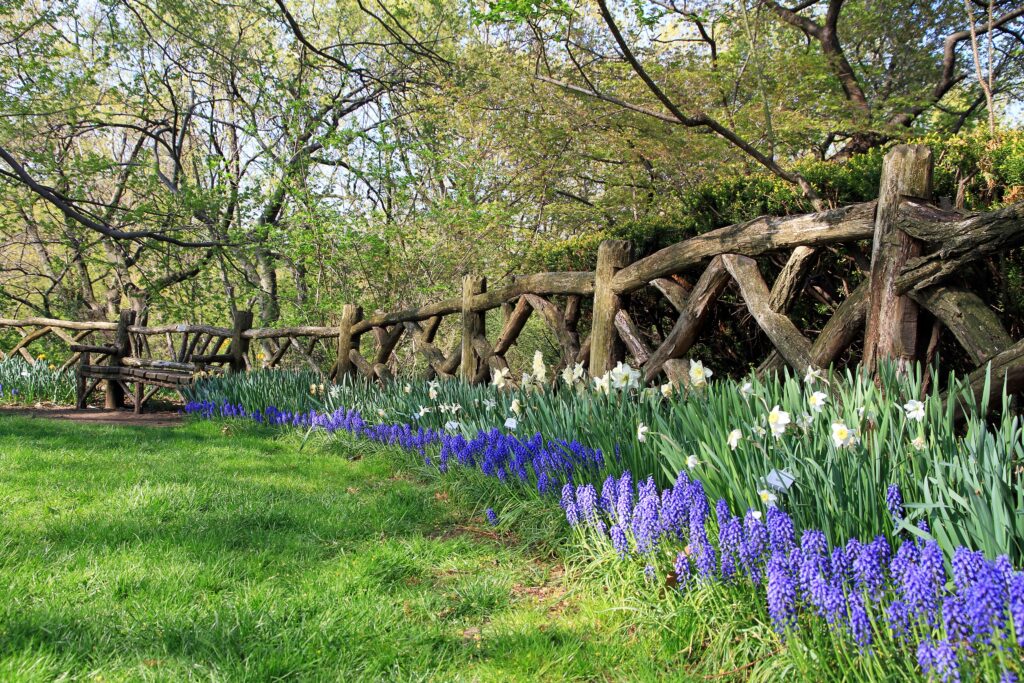
Shakespeare Garden sits on the western side of the park near 79th Street, just below Belvedere Castle. It was established in 1916 and plants only species mentioned in Shakespeare’s works. That makes it an unusual garden — one with a clear curatorial logic rather than just aesthetic appeal.
The garden is small and terraced on a slight slope. Benches are positioned throughout, and the paths are quiet even on busy days. Because it sits uphill from the main park paths, it does not get much passing foot traffic. People come here on purpose, not by accident.
It is a good spot for those who want a contained, clearly defined space rather than the openness of the Great Lawn or the reservoir. The views down towards Turtle Pond and Belvedere Castle are pleasant from the upper benches.
Practical Notes
A few things worth knowing before you go:
- Opening hours: Central Park is open 6am to 1am daily. The Conservatory Garden keeps shorter, daytime hours; see the Central Park Conservancy for current times.
- Quietest times: Weekday mornings before 10am. Sunday evenings after 5pm are also unusually calm for much of the park.
- Best access points: For Bethesda Terrace and Bow Bridge, use the 72nd Street entrance on either the east or west side. For the Conservatory Garden, use the Fifth Avenue entrance at 105th Street. For the Reservoir, use 86th Street.
- Food and drink: There are food carts throughout the park during warmer months. Pack a flask of coffee and a sandwich and any of these benches becomes a picnic spot. Alcohol is not allowed in the park’s open areas.
Central Park is not difficult to enjoy. But it rewards visitors who slow down and stay in one place. The spots listed here are all good for that — sitting, watching, and thinking without needing to be anywhere else.
We send a free weekly newsletter about New York — the kind of writing that helps you see the city differently. Sign up here and join thousands of readers who love this city.
