
This is the New York we love. Watch →

The Love New York Guide № 004: Subway Etiquette

Sharing is caring!

Subway Etiquette — New York
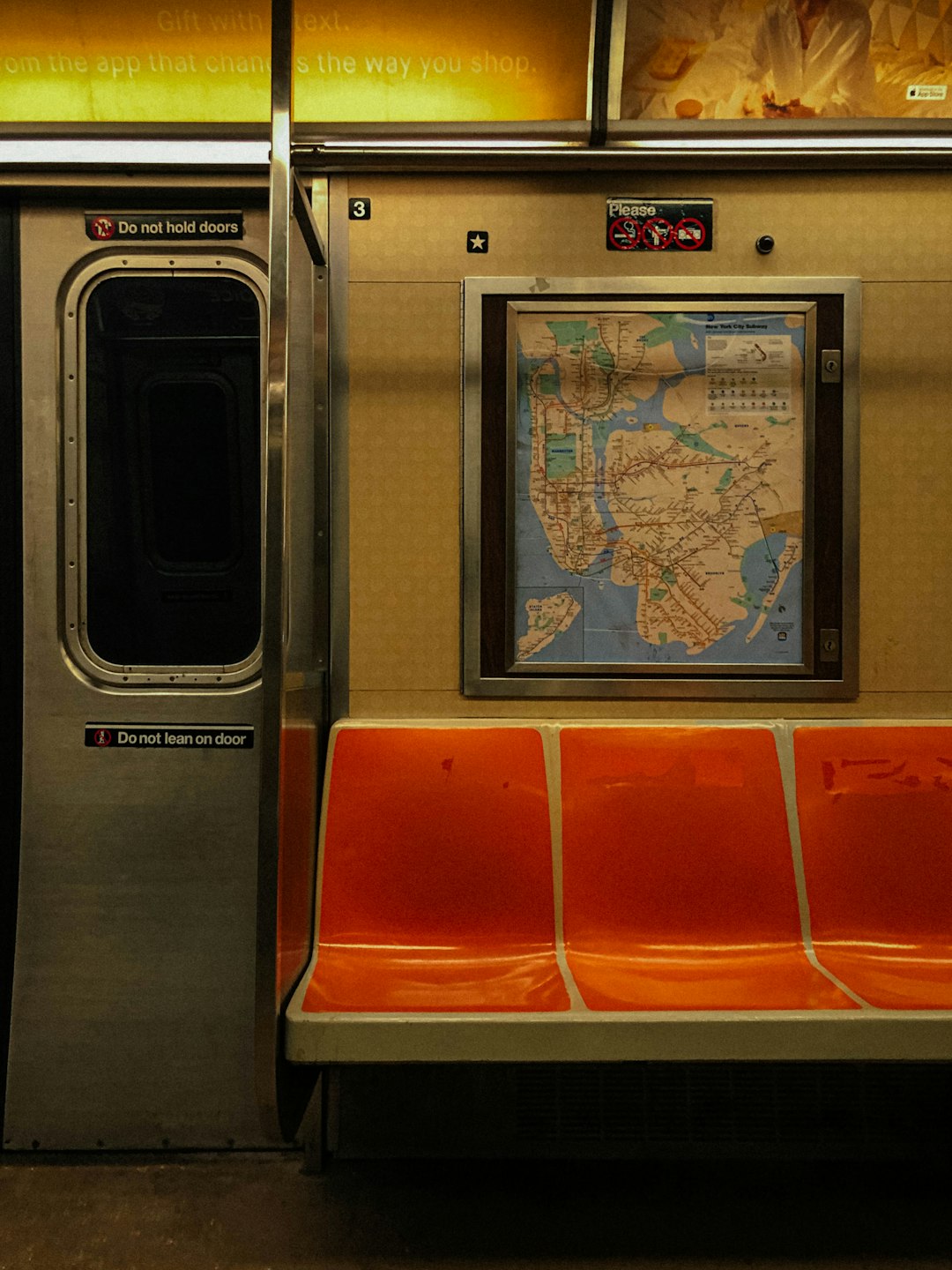
Photo by Louis Colbee on Unsplash

The unwritten rule that governs the New York City subway is deceptively simple: let people off before you get on. Stand near the doors during rush hour and you will watch it enforced by nothing more than collective glare, muttered commentary, and the occasional loud “excuse me” that carries the weight of a citation. The Metropolitan Transportation Authority runs the largest rapid transit system in the world by number of stations, and its social code has been shaped by more than a century of strangers sharing very tight quarters. This is Guide № 004 in The Love New York Guide series.

Get the Full Collectible Guide (Free PDF)

Subway Etiquette — in a beautifully designed, printable booklet. The Love New York Guide № 004.

Let Them Off First

The single most important rule of subway conduct is to step aside and let exiting passengers off before you board. Riders who crowd the doorway and push forward the instant the doors open are the ones most likely to draw open annoyance from a car full of New Yorkers. The efficient move is to stand to the side of the doors, let the outbound flow clear, and then step in.

Once inside, the expectation is to move toward the center of the car rather than clustering by the doors. The middle of a train car is frequently roomier than the crush at the entrances, and conductors have long made a habit of asking people over the loudspeaker to “step all the way in.” Blocking the doorway when there is space behind you is one of the fastest ways to be marked as a tourist.

The Backpack and the Seat

On a crowded train, wearing a backpack on your back is considered inconsiderate because it occupies the space of roughly another passenger and tends to knock into people you cannot see. The customary courtesy is to take it off and hold it at your feet or between your legs. The MTA has run public messaging campaigns encouraging exactly this, alongside reminders about manspreading and other space-hogging habits.

Seating carries its own etiquette. Priority seating near the doors is meant for elderly riders, pregnant passengers, and people with disabilities, and giving up your seat for someone who needs it more is a widely honored courtesy. Placing a bag on an empty seat during a crowded ride, or spreading your knees across two spaces, both reliably invite a pointed request to move over.

Swipe, Tap, and Keep Moving

For decades the ritual was the MetroCard swipe, and getting the speed wrong at the turnstile — too fast, too slow, “please swipe again” — was a small daily humiliation. Since 2019 the MTA has rolled out OMNY, a contactless system that lets riders tap a credit card, phone, or smartwatch at the reader. The MetroCard was scheduled to be phased out, with the agency having announced plans to retire it, so many regular riders now simply tap and walk through.

Whatever the method, the etiquette is the same: have your card or phone ready before you reach the turnstile, and step clear of the fare gate once you are through. Fumbling for a wallet in front of the reader during a morning rush creates a backup behind you, and the line forming at your back will let you know.

Noise, Space, and Showtime

Playing music or video without headphones is broadly frowned upon, and the shared understanding is that your entertainment stays in your ears. Loud phone calls draw the same quiet disapproval. The train is a public space where most riders default to a kind of practiced anonymity, and keeping your own bubble contained is part of the deal.

Then there is the exception that proves the rule. “Showtime” — the acrobatic dancers who swing from the poles and handrails between stations — is a genuine part of subway culture, though a divisive one. The performances are technically prohibited, and the NYPD has periodically cracked down on them, precisely because flipping through a moving, crowded car is both a spectacle and a safety concern. Many riders love them; many press themselves against the wall and hope the pole stays free.

Running Trains and Held Doors

Holding the doors to let a friend catch the train feels generous, but it delays everyone on board and can trip the mechanism that keeps the train from moving. On busy lines another train is usually only a few minutes behind, and the practiced New York response to a closing door is to let it go rather than lunge. Forcing doors open is against MTA rules and can jam the whole train in the station.

Myths Worth Retiring

Myth: New Yorkers are rude to strangers on the train. What reads as coldness is usually just the local etiquette of giving each other space and privacy in extremely close quarters. Ask for directions and most riders will help without hesitation.

Myth: The subway shuts down at night. Unlike many transit systems around the world, the New York City subway is designed to run 24 hours a day, seven days a week, though individual lines run far less frequently overnight and service patterns change.

Myth: You should tip or pay the Showtime dancers to keep them going. The performances are actually prohibited by the MTA, and there is no obligation whatsoever — many longtime riders would rather the pole stay clear.

Frequently Asked Questions

Which side of the escalator do I stand on?

Stand on the right and walk on the left. Blocking the left side of a station escalator during rush hour, when commuters are trying to climb past, is one of the quickest ways to hear about it.

Is eating on the subway allowed?

Eating is not banned outright, and you will certainly see people do it, but strong-smelling food is considered poor form in a packed car. A proposed ban on eating has been floated over the years without becoming a system-wide rule, so the real constraint is courtesy rather than law.

How do I know which end of the platform to wait on?

Check the station signs and maps for exit locations, and note whether you want the front, middle, or back of the train relative to your destination’s stairs. Regular commuters position themselves for the exit they will use, but there is no need to crowd the platform edge — stand behind the tactile warning strip until the train has fully stopped.

More The Love New York Guides

The Love New York Guide is a numbered series — one tightly focused subject at a time, each with its own downloadable collectible edition. Guide № 001 is The New York Bagel, Guide № 002 is The Fourth of July in New York, Guide № 003 is The Statue of Liberty, This is Guide № 004. More editions are on the way.

🗽 Join 1,100+ New York Lovers

Every week, get hidden stories, local secrets, and travel inspiration from people who live and love it.

Subscribe free — enter your email:

Loved this? Share it 🗽

Other newsletters you might like

Local Edinburgh

Local Edinburgh is a website that is dedicated to the promotion of Edinburgh as a travel destination. Edinburgh is Scotland’s capital city renowned for its heritage culture and festivals.

Subscribe

Scottish Rugby Fans

The best Scottish rugby updates, straight to your inbox — Six Nations, the Nations Championship, Glasgow and Edinburgh. Only when there's something worth reading.

Subscribe

Love Germany

Love Germany — in your inbox Castles, hidden gems and the best places to visit in Germany. One short email, every day.

Subscribe

Love France

Your guide to travelling in France — itineraries, regional guides, food, wine, and everything you need to plan your trip.

Subscribe

Newsletters via the One Two Three Send network.  ·  Want your newsletter featured here? Click here

Leave a Comment

Your email address will not be published. Required fields are marked *

🎁 Free Guide

The New York City Most Tourists Walk Past

Get Hidden Gems of New York sent straight to your inbox

↓ Enter your email to get it free ↓

Trusted by 1,100+ New York fans • Every Thursday

Scroll to Top