
Every New Yorker does it without thinking. The slice comes out of the oven. They fold it in half lengthwise. They walk out the door. In a city where everything is loud, rushed, and nonnegotiable, the pizza fold is the quietest agreement there is — a reflex that says: I’ve been here before. I know how this works.
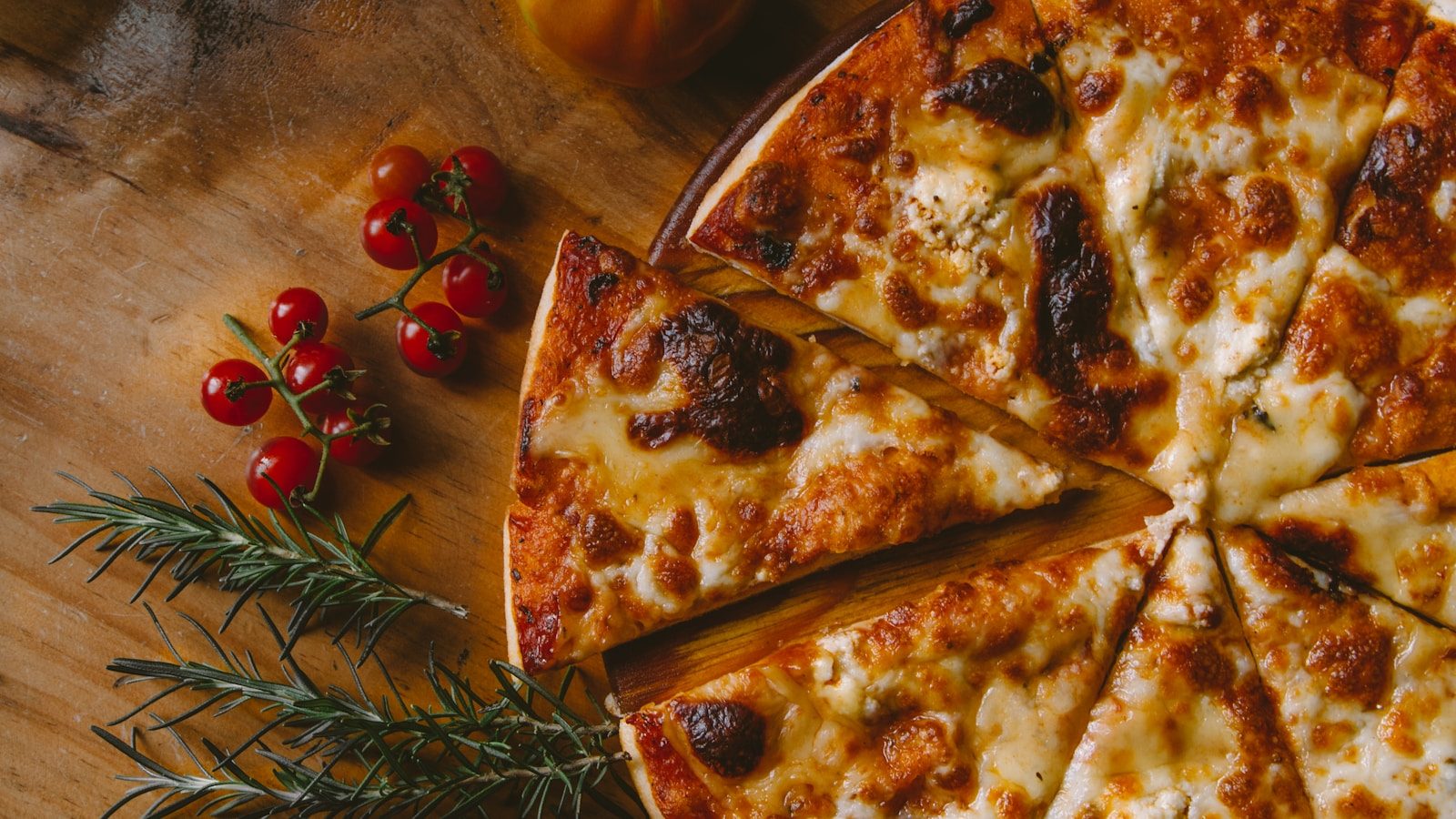
But where did this style come from? And why does New York pizza taste so different from everywhere else? The answer starts on a single street in Lower Manhattan — and it hasn’t stopped evolving since.
The First Pizzeria in America
In 1905, a Neapolitan immigrant named Gennaro Lombardi opened a small grocery on Spring Street in Little Italy. He started selling tomato pies — baked in a coal-fired oven, served wrapped in paper. There were no tables. No menus. You pointed, you paid, you left.
This was Lombardi’s — now recognized as the first pizzeria in the United States. The shop is still there. The coal oven is still there. The line outside most weekends is still there too.
What Lombardi started wasn’t just a restaurant. It was a template. The thin crust. The minimal toppings. The sauce-forward simplicity. Every pizza window, every corner slice joint, every late-night dollar slice in New York traces something back to that little grocery on Spring Street.
Why the Fold Is Everything
New York-style pizza is big. A standard slice from a 18-inch pie hangs off a paper plate. It’s designed to flop — the crust thin enough to be crisp on the outside, soft and airy underneath. The cheese stretches. The grease pools toward the tip.
The fold solves everything. By pressing the two sides of the crust together, you redirect the grease upward, stiffen the slice, and create a delivery mechanism that works while walking, standing on a subway platform, or leaning against a bodega counter.
It isn’t a preference. It’s physics. And in a city that doesn’t slow down for lunch, it’s the only way a slice has ever made sense.
The Water Myth — And What’s Actually True
Ask any New York pizza maker why their crust is different from Chicago, or Los Angeles, or anywhere else, and there’s a good chance they’ll mention the water. New York City’s tap water, they’ll tell you, has a specific mineral profile — low in calcium and magnesium — that affects how gluten develops in the dough.
Food scientists have tested this. Their conclusion: the water probably matters a little. But the flour, the fermentation time, the temperature of the oven, and the skill of the pizza maker matter far more. The water story has taken on a life of its own — repeated in cookbooks, debated on food forums, and used to explain why pizza joints in other states sometimes ship New York water in by the barrel.
Whether or not you believe it, there’s something true underneath: New York pizza tastes like New York. Not because of one secret ingredient. Because of a hundred small decisions made the same way, over and over, for more than a century.
Enjoying this? Join New York lovers getting stories like this every week. Subscribe free →
The Dollar Slice and the Slice Joint Culture
Somewhere in the 1970s and 80s, the slice became democratic. Pizza parlors figured out that selling individual slices — kept warm on a rack near the window, reheated in a gas oven for two minutes — could feed a city that was always in motion.
The dollar slice became a New York institution. For decades, the price of a subway ride and the price of a slice moved in tandem — a coincidence that New Yorkers noticed, argued about, and eventually turned into folklore. When the subway went to $2.75, pizza resisted for years. Then inflation arrived, and the truce broke.
You’ve probably noticed the signs: “Ray’s Original,” “Famous Original Ray’s,” “Ray’s Famous Original.” There are more than 30 places in New York that have used some version of that name. There is no original Ray. There was a Ralph who started the chain, and somewhere along the way the name morphed, split, was copied and disputed in court. Nobody won. Everyone kept the sign.
Borough by Borough, Crust by Crust
New York pizza isn’t one thing. It’s five boroughs of arguments.
In Brooklyn, the Sicilian square has its own religion — thick, focaccia-like dough, sauce on top, cheese baked underneath so it doesn’t burn. It’s cut in rectangles. You don’t fold it. You savor it.
In Staten Island, the slices are bigger, the portions more generous, and the Italian-American family restaurant tradition is still intact in ways Manhattan lost decades ago. In Queens, you’ll find pizza that reflects every immigrant wave — coal-fired Neapolitan alongside Ecuadorian-owned corner pizza joints that do something entirely their own. The Bronx has old-school slice joints that haven’t changed their recipes since the 1960s and don’t plan to.
Manhattan gets the tourists and the press. The outer boroughs have the soul.
The fold travels with you across all of them. It’s the one constant in a city that can’t agree on anything else.
You Might Also Enjoy
- The Meat That Arrived in a Barrel and Changed New York Forever — the immigrant food history that shaped the city’s deli culture
- The Fish Market That Fed New York Before the City Even Woke Up — how the Fulton Fish Market kept New York running for 200 years
- The New York Roll That Arrived Before the Bagel — And Is Still Fighting to Survive — another overlooked piece of New York food history
Plan Your New York Trip
Ready to taste it yourself? Start with our guide to free things to do in New York City — packed with neighborhood walks, hidden spots, and local experiences that don’t cost a dime. A great slice is usually nearby.
Join New York Lovers
Every weekday morning, get New York’s hidden gems, neighbourhood stories, food origins, and city secrets — straight to your inbox.
Subscribe free — enter your email:
Love more? Join 65,000 Ireland lovers → · Join 43,000 Scotland lovers →
Free forever · Unsubscribe anytime
