
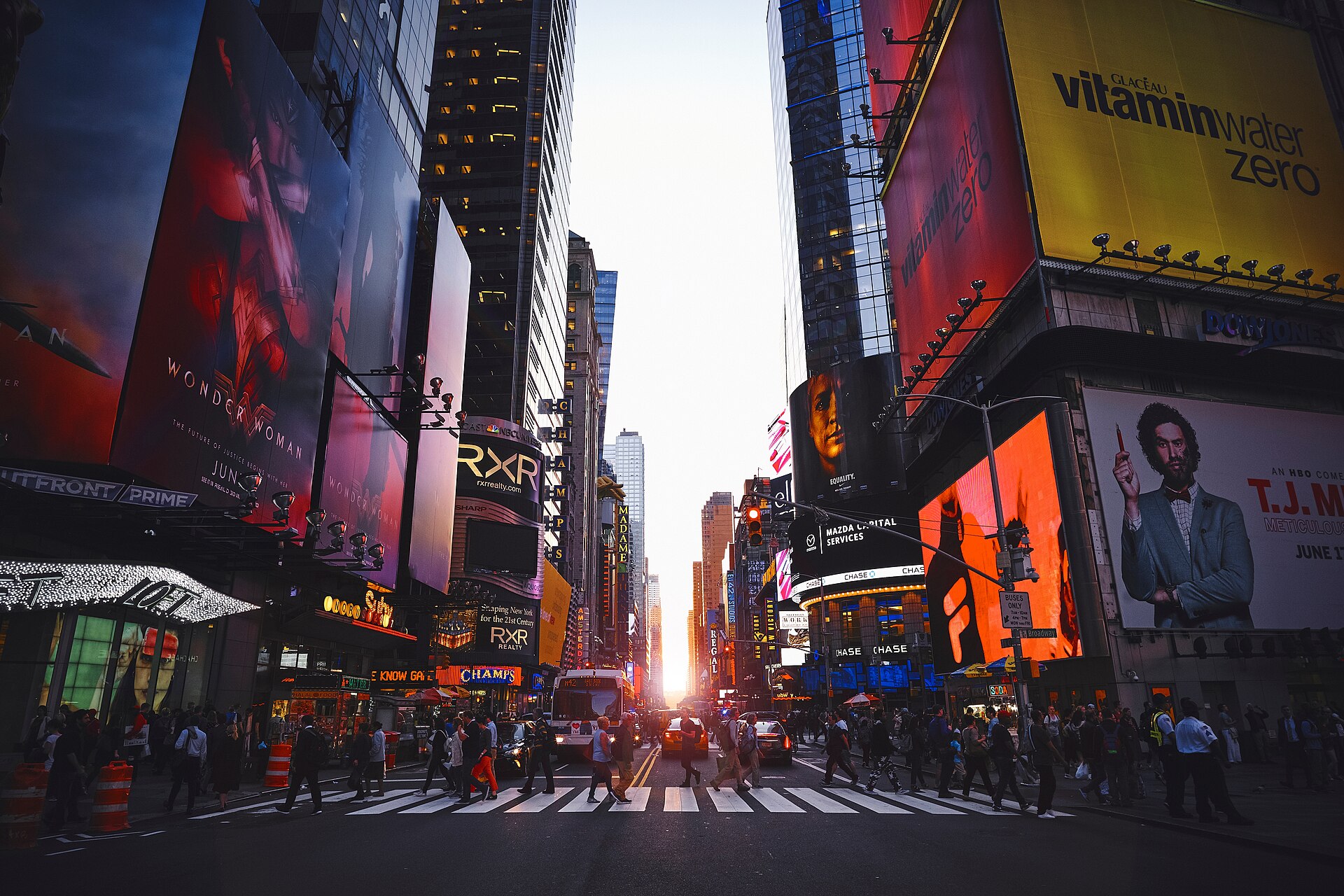
Times Square gets a lot of attention at night. The neon, the noise, the sheer density of people — it is what most visitors picture when they think of New York. But there is a specific hour in the early evening, when the sun drops low over the Hudson River and cuts across Midtown Manhattan at a shallow angle, that turns Times Square into something genuinely worth stopping for. The billboards go warm. The glass buildings catch the light. The usual chaos does not go away, but it sits inside something softer for a few minutes.
This article covers what actually happens at Times Square as the sun sets, when to arrive, where to stand, and what else is worth knowing before you go.
Why the Sunset Hour is Different at Times Square
Times Square runs roughly north to south along Broadway, between 42nd Street and 47th Street. The cross streets — 42nd, 44th, 45th, 46th, 47th — run east to west, and it is through these corridors that the low evening sun travels in from New Jersey across the Hudson.
The result is a phenomenon New Yorkers call Manhattanhenge — named by astrophysicist Neil deGrasse Tyson — when the setting sun aligns perfectly with the Manhattan street grid and illuminates both sides of the street simultaneously. This happens twice a year, usually around 28–29 May and 11–13 July. On those evenings, Times Square is flooded with horizontal golden light unlike anything you will see at other times of year.
But even outside of Manhattanhenge, the sunset window in Times Square is worth timing your visit around. The digital billboards, which pump out millions of lumens in the dark, look different against a deep orange or purple sky. They compete with the light rather than dominating it, and the whole square takes on a layered, almost painterly quality.
Love New York? Get our free newsletter.
Tips, guides and stories from across the city, delivered to your inbox each week.
Subscribe freeWhen to Arrive and Where to Stand
The practical answer depends on the time of year. In summer, sunset over Manhattan falls somewhere between 8:00 pm and 8:30 pm. In winter it can be as early as 4:28 pm. The golden hour — the 45 minutes or so before the sun actually sets — is generally the most photogenic period, so plan to arrive at Times Square roughly an hour before sunset.
You can check the exact sunset time for New York on any weather app or site. The US Naval Observatory also publishes precise data if you want to plan around Manhattanhenge specifically.
As for where to stand:
- The red steps (TKTS Booth, 47th Street): These elevated bleacher-style steps give you a clear view south down the square. They are almost always crowded but the elevation helps you see over heads.
- The pedestrian plazas: Since Broadway between 42nd and 47th was pedestrianised in 2009, there is a long open strip through the middle of Times Square with chairs and tables. Standing near the 45th Street crossing gives a good view in both directions.
- Looking west along 44th or 45th Street: If you want to see the sun itself rather than its reflection, step off the main square and look west along one of the cross streets. This is the classic Manhattanhenge shot, and it works on any evening with a clear western sky.
- From above: Several rooftop bars nearby — including those in the Renaissance New York Times Square Hotel and the Marriott Marquis — offer elevated views if you want to look down on the lit-up square from above.
The History Behind the Square
Times Square takes its name from the New York Times newspaper, which moved its headquarters to the area in 1904. Before that, the intersection was called Longacre Square and was the centre of New York’s carriage trade — horses, harnesses, blacksmiths and livery stables.
The Times marked the opening of its new tower on 31 December 1904 with a fireworks display from the roof. The tradition of marking New Year’s Eve in Times Square has continued ever since, though the famous ball drop did not begin until 1907.
The first illuminated signs began appearing in the early 1900s. By the 1920s, the area had enough electric signage to earn it the nickname the Crossroads of the World. At its peak, Times Square was the entertainment capital of American theatre — dozens of Broadway theatres operated within walking distance of the square, and the area buzzed with audiences, actors and stagehands until late into the night.
The 1970s and early 1980s saw a steep decline. Disinvestment, crime and the departure of major tenants left the area run-down. The revival began seriously in the 1990s, driven by a combination of city-led policing changes, private investment, and the renovation of the major theatres on 42nd Street. Today Times Square draws around 50 million visitors per year, making it one of the most visited tourist destinations in the world.
What the Light Does to the Billboards
There are around 20,000 square metres of LED and digital advertising in Times Square. During the day, many of these displays look washed out — they are designed for night viewing and daytime sun bleaches them. At the moment of sunset, something shifts.
The direct sunlight starts to soften and go amber. The digital screens, still at full brightness, begin to look vivid again. There is a brief period — usually 15 to 20 minutes before and after the actual sunset — where the warm natural light and the cool artificial light of the billboards are roughly balanced. Photographers talk about this as the sweet spot: the square does not look overexposed, and the signs do not look like they are fighting a losing battle against daylight.
After the sun drops fully, the square transitions to its night-time mode within about 20 minutes. The neon takes over completely and the sky goes dark blue, then black. That version of Times Square is what most visitors photograph. The sunset window is shorter and less predictable, which is part of what makes it worth seeing.
Never miss a New York story.
Our free newsletter covers the city’s best spots, hidden gems and practical travel tips.
Join the newsletterPractical Information for Visitors
Times Square is free to visit and open all day, every day. There is no ticket or reservation required to stand in the square itself. Here is what you need to know before you go:
- Getting there: The 42nd Street–Port Authority Bus Terminal station (A, C, E lines) and the Times Square–42nd Street station (1, 2, 3, 7, N, Q, R, W, S lines) both put you directly at the square. It is one of the most connected transit points in the city.
- Crowds: Times Square is busy at almost any hour. Weekend afternoons and evenings in summer are the most congested. If you want more space, weekday mornings before 9 am and the period between about 10 pm and midnight are noticeably quieter — though still far from empty.
- Street performers and characters: There are numerous costumed characters and street performers in Times Square who ask for tips after photographs. This is a normal part of the area’s culture, but be aware that a photo will typically be followed by a request for payment. You can decline politely.
- Nearby food and drink: The restaurants and fast food options directly on Times Square are almost universally overpriced. Walk one or two blocks east or west for substantially better value. Hell’s Kitchen (to the west) has a good range of independent restaurants on 9th and 10th Avenues.
- TKTS discount tickets: If you are planning to see a Broadway show, the TKTS booth at the base of the red steps sells same-day and next-day discount theatre tickets. Discounts range from 20% to 50% off the standard price.
- Photography: Standard cameras and smartphones are fine anywhere in the public spaces. Tripods without a permit can attract attention from the police during peak hours, though enforcement is inconsistent.
Times Square After Dark
Once the sun is down, Times Square settles into what most people associate with the name. The signage reaches its full intensity. The theatre crowds begin to move through — pre-show from around 7 pm, interval crowds spilling out around 9 pm, and the post-show rush from 10:30 pm onwards.
The square itself is generally safe at all hours. The concentration of tourists, police presence and security cameras makes it one of the more actively monitored parts of the city. That said, standard city common sense applies: keep an eye on your belongings, be alert in crowded conditions, and avoid prolonged engagement with anyone who approaches you aggressively.
If you are visiting in winter, the Christmas lighting and decorations in Times Square run from late November through early January. The square is already covered in light for most of the year, but the seasonal additions — particularly on the surrounding blocks — make the evening walk noticeably more atmospheric in December.
The New Year’s Eve Ball Drop
The ball drop on 31 December is the event most associated with Times Square worldwide. Roughly 58,000 people pack into the square for the midnight countdown, with hundreds of thousands more watching from surrounding streets. If you plan to attend in person, you need to understand what is involved:
- Crowds begin gathering from early afternoon — some people secure a spot as early as 3 pm or 4 pm.
- Once the pens fill up, the police close off access. You cannot simply walk up at 11:30 pm and join the crowd.
- There are no toilets inside the viewing pens. You will be standing in one spot for several hours.
- The ball itself is made up of 2,688 Waterford Crystal triangles and 32,256 LED lights. It has been redesigned several times since the original 1907 version and now weighs around 5,386 kilograms.
Most New Yorkers watch the ball drop on television. Attending in person is genuinely an experience, but it is also genuinely uncomfortable. If the energy of the crowd matters more to you than the comfort of a bar or apartment, it is worth doing once.
Planning Your Visit
Times Square is the kind of place that works best when you have a specific purpose for being there — a show to see, a sunset to catch, a particular photograph you want to take. Walking through with no plan tends to result in being jostled, overcharged for food and wondering what all the fuss is about.
With a plan, it is different. Know your sunset time. Pick your spot. If you are seeing a show, book in advance or use TKTS. If you want a rooftop view, check which venues are open to non-hotel guests and book a table rather than showing up cold.
New York rewards preparation. Times Square, perhaps more than anywhere else in the city, is a place where a bit of thought in advance translates directly into a better experience on the day.
Planning a trip to New York?
Subscribe to our free weekly newsletter for guides, tips and stories from across the city.
Get the newsletter