
Stand on the bank of the East River early enough in the morning and you’ll see a version of New York that most visitors never notice. Before the pedestrian paths fill with joggers and the tourist boats start their circuits, the river is already busy. Barges, tugs, ferries, and patrol craft move through the water in patterns that look almost random until you understand what each one is doing there.
The East River is not just a backdrop. It is a working waterway that connects the city to its supply chains, its emergency services, and its history of maritime trade. Here is what is actually happening out there.
The Working Boats: Tugs and Barges
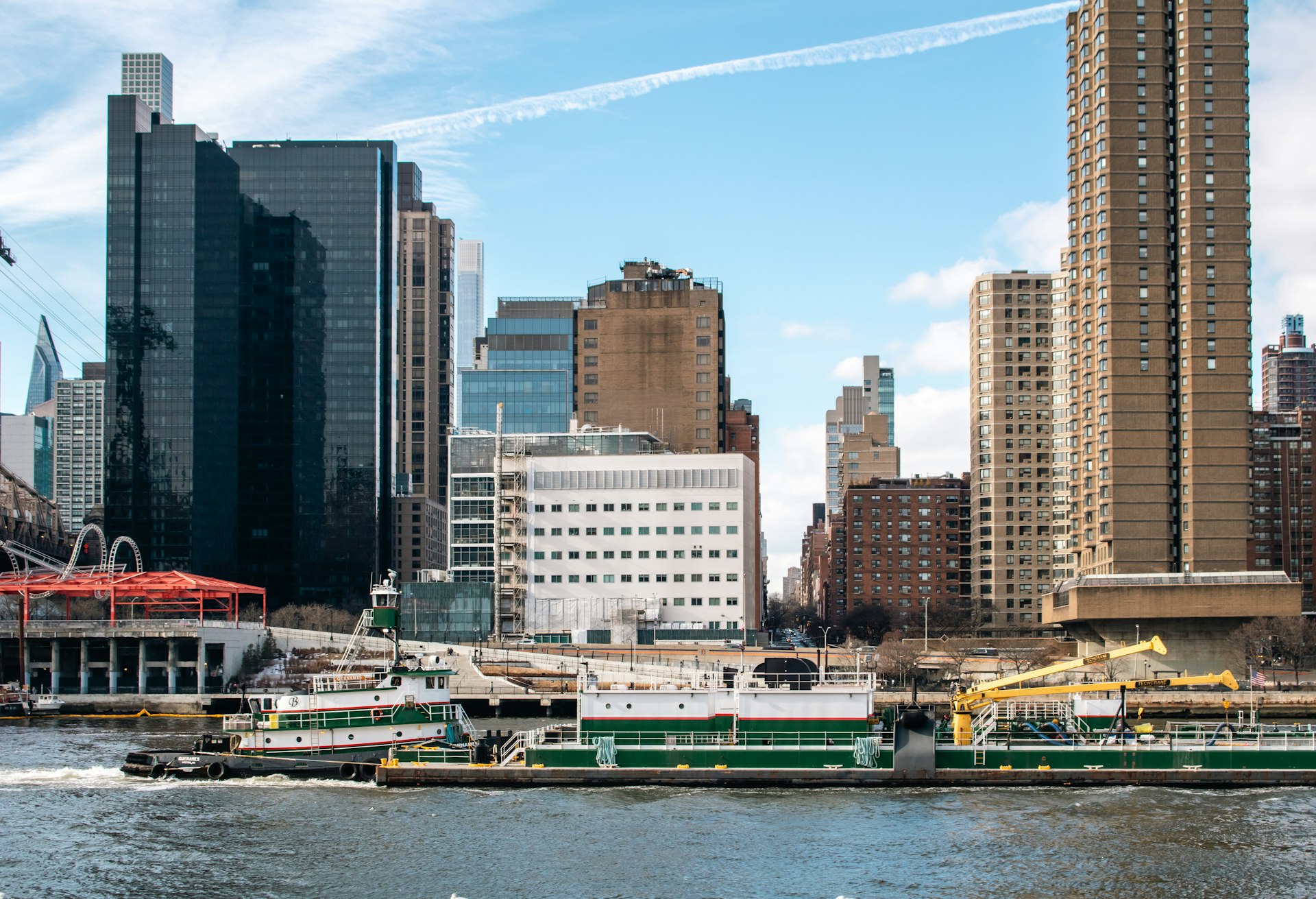
The most common large vessels on the East River are tugboats pushing or pulling barges. These barges carry construction materials, sand, gravel, and debris. New York City is perpetually under construction, and a significant portion of the heavy material that goes into that work arrives by water.
The city does not have the truck capacity to move all this material efficiently through its streets. So it moves by barge instead. A single barge can carry the equivalent of 15 to 20 lorry loads. That is why, when you see a slow-moving rectangular vessel being nudged along by a small but powerful tug, it is almost always carrying aggregate materials headed for a construction project in Manhattan, Brooklyn, or Queens.
Some barges carry waste. New York City processes enormous quantities of solid waste and a portion of that has historically moved by water. The city’s marine transfer stations — at 91st Street in Manhattan, Hamilton Avenue in Brooklyn, and elsewhere — are the points where rubbish collected by lorries gets transferred onto barges for transport to landfill sites or processing facilities outside the city.
Fuel is another major cargo. Heating oil and petrol move up and down the river in tanker barges throughout the year. Buildings in Manhattan rely heavily on fuel oil for heating, and the logistics of supplying those buildings involves a constant flow of small tankers navigating the waterway.
The NYC Ferry System
Since its launch in 2017, NYC Ferry has grown into a proper transit network operating across the East River and beyond. The routes you are most likely to see from the riverbank include the East River Route, which runs from Lower Manhattan up through Williamsburg, Greenpoint, and Long Island City, and the South Brooklyn Route, which connects Manhattan to Red Hook and other waterfront communities.
The ferries are operated by Hornblower on behalf of the city and carry over ten million passengers per year. A single fare costs $4, the same as a bus or train journey on the MTA. The vessels are purpose-built for the route, with a shallow draft suitable for the river’s variable conditions.
During peak commuting hours, you will see ferries running at 30-minute intervals on busy routes. Early morning and late evening services are less frequent. If you are watching from a riverside park, the white ferries with their red NYC Ferry branding are hard to miss.
Law Enforcement and Emergency Vessels
The NYPD maintains a full marine unit operating out of bases on both the East River and Hudson River. Its fleet includes patrol vessels, aviation support boats, and specialised dive and rescue craft. The unit responds to water emergencies, conducts security patrols around sensitive infrastructure, and monitors the river during large public events.
The US Coast Guard also operates on the East River, particularly around the harbour and in the stretch approaching Hell Gate, the narrow and historically turbulent channel where the East River meets the Harlem River and Long Island Sound. Coast Guard vessels conduct safety inspections of commercial craft, respond to incidents, and enforce federal maritime regulations.
You may also occasionally see Fire Department of New York (FDNY) marine units. The FDNY’s fireboat fleet, which includes the historic John J. Harvey and modern vessels like the Three Forty Three, can respond to waterfront fires and maritime emergencies. Spotting a fireboat at speed on the East River is unusual enough that it tends to draw attention from anyone nearby.
Circle Line and Tourist Vessels
The Circle Line operates sightseeing cruises around Manhattan that pass through the East River. These are among the most popular tourist activities in the city, and for good reason — seeing the skyline from the water gives you a perspective that no street-level vantage point can match.
Beyond Circle Line, various private companies operate dinner cruises, charter vessels, and specialty tours on the East River. During summer, some of these boats carry live music or film screenings. You can often identify them by their size, lighting, and the fact that they move at a leisurely pace compared to working craft.
The East River Ferry (separate from NYC Ferry) also operates a water taxi service connecting Midtown with Brooklyn Bridge Park and other destinations. These smaller, faster vessels are easily recognisable and run on tight schedules.
The Hell Gate: Why Boats Slow Down
If you watch boats in the upper reaches of the East River, particularly around Randalls Island and Astoria, you will notice that traffic tends to slow and that smaller craft sometimes wait before proceeding. This is because of Hell Gate, a stretch of water that was historically one of the most dangerous sections of navigable waterway on the American eastern seaboard.
Hell Gate is a tidal strait, which means the current through it reverses direction with the tide. When the tidal currents from the Long Island Sound and the Upper Bay meet and oppose each other, the water in this section becomes difficult to navigate. Historically, hundreds of ships were wrecked here. The Army Corps of Engineers spent decades blasting away submerged rocks and reefs throughout the 19th and early 20th centuries, and the channel is now significantly safer than it once was. But tidal conditions still make it a navigational consideration, and experienced boat operators pay close attention to the timing of their transits.
The Best Spots to Watch the River
If you want to see the East River’s working life up close, these are the spots that offer the clearest views and the most activity.
Brooklyn Bridge Park gives you a long stretch of waterfront with unobstructed views of the river between Brooklyn and Lower Manhattan. Piers 1 through 6 each offer a slightly different angle. Pier 1 is best for watching ferry traffic and the mouth of the river near the harbour.
Roosevelt Island, reached by the Roosevelt Island Tramway or the F train, sits in the middle of the East River between Manhattan and Queens. The southern tip of the island, now home to Four Freedoms Park, puts you directly in the river with traffic passing on both sides. It is an unusual and genuinely impressive vantage point.
Long Island City waterfront in Queens, particularly Gantry Plaza State Park, offers west-facing views across to Midtown Manhattan. The river here is active with ferry traffic and the occasional barge. The light in the late afternoon, when the sun is behind you and illuminating the Manhattan skyline, is exceptional.
John Jay Park in the Upper East Side, roughly at 77th Street, is a neighbourhood park that most tourists overlook entirely. It sits directly on the riverbank and offers views of the Queensboro Bridge and the river traffic that passes beneath it. The light here at sunset in summer hits the bridge cables in a way that is genuinely worth seeing.
Transmitter Park in Greenpoint, Brooklyn is a small waterfront green space that faces the East River between Greenpoint and Long Island City. It is quieter than the more central riverfront parks and gives a clear view of the industrial water traffic that uses the upper river.
Sunset on the East River
The East River runs roughly north-south, which means sunset views depend on which bank you are standing on. From the Queens or Brooklyn side, the sun sets behind the Manhattan skyline, creating silhouette effects that make for strong photographs and a genuinely impressive end to the day.
From the Manhattan side, the late afternoon light tends to fall on the buildings of Queens and the bridges, which gives a warmer, more textured view. The Queensboro Bridge catches the evening light in a particularly photogenic way from the East Side Greenway path that runs along the Manhattan waterfront.
One reliable but underused option is the walkway on the Williamsburg Bridge. You can walk or cycle across the bridge and watch the river from its central span, with views north and south along the waterway. The light on a clear evening from this height is difficult to match anywhere else on the river.
The River as Infrastructure
It is easy to look at the East River and see scenery. The bridges are iconic, the skyline behind them is unmistakable, and the play of light on the water is the kind of thing people stop to photograph. But the river’s value to the city has always been practical before it has been aesthetic.
New York was built on its waterways. Before the railways, everything that the city needed arrived by ship. The warehouses of Brooklyn and the piers of Lower Manhattan processed goods from around the world. The tug operators, barge crews, and ferry workers who still move through the East River today are part of a continuous line of maritime labour stretching back to the city’s earliest years.
Next time you are on the Brooklyn Bridge or standing at the railing of a riverside park, look past the tourist boats and the ferries. The barge being pushed by a tug at 6am is doing something that matters. The city needs it to be there, even if most people never think to wonder why.
