
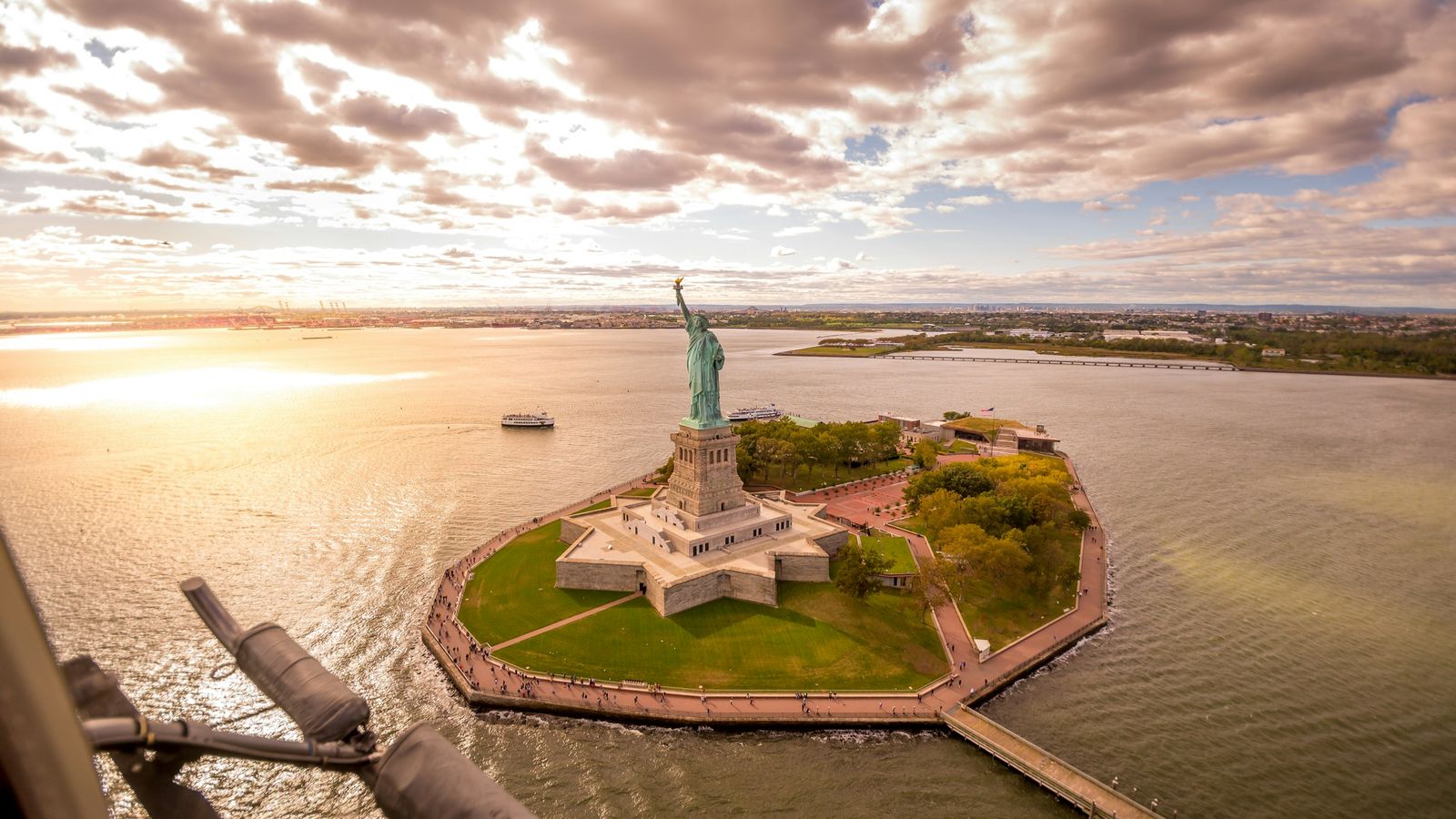
The ships arrived in the early morning. After weeks at sea, passengers crowded the decks to catch their first glimpse of the New York skyline — and the Statue of Liberty rising from the harbor. After everything they had endured to get here, it felt like a promise kept.
What they didn’t know was that the real test hadn’t started yet. It was waiting for them on a small island in the harbour, inside a great hall with vaulted ceilings and iron railings, where government doctors stood at the top of a long staircase, watching every single person who walked through the door.
The Journey That Ended Here
Between 1892 and 1954, more than twelve million people passed through Ellis Island. They came from Italy, Poland, Russia, Hungary, Greece, Ireland — from nearly every country on earth. Most had sold everything they owned to afford a steerage ticket. Many had never left their village before.
The journey took weeks. Conditions below deck were brutal — overcrowded, poorly ventilated, often without clean water. Illness spread quickly. Some passengers arrived weakened, frightened, and unsure of what came next.
What came next was Ellis Island. And for most of them, it was unlike anything they could have prepared for.
The Six-Second Watch at the Top of the Stairs
The Registry Room on the second floor of the main building held thousands of people at a time. The ceiling soared above them. The noise — dozens of languages, crying children, shouted instructions from interpreters — filled the vast space.
At the top of the stairs, doctors watched. They had roughly six seconds to observe each arriving passenger as they climbed. What they were looking for wasn’t obvious illness — it was the way a person moved.
A limp. A shortness of breath climbing the stairs. A hesitation that suggested a heart problem. Doctors had developed a language of silent visual diagnosis that they read in seconds. If something caught their attention, they marked the immigrant’s coat with a piece of chalk. Different letters meant different concerns. “L” for lameness. “E” for eyes. “H” for heart. “X” for possible mental illness.
The Buttonhook Test That Everyone Dreaded
For those flagged for further examination, the most feared moment was the eye test.
Doctors used a small metal hook — the same instrument women used to fasten their high-button shoes — to turn back the eyelid and check the inner surface for signs of trachoma. The procedure lasted seconds but left people trembling. For someone who had never seen a doctor before, it could feel terrifying.
Trachoma was a contagious eye disease that caused blindness and spread rapidly in crowded conditions. It was the most common single reason immigrants were turned back at Ellis Island. Health officials in the early 1900s had few tools to treat it, and the fear of a trachoma epidemic in American cities drove strict enforcement.
Enjoying this? Join New York lovers getting stories like this every week. Subscribe free →
What a Chalk Mark Actually Meant
A chalk mark didn’t mean deportation. Not immediately. It meant a second examination — a longer conversation with a doctor who worked through an interpreter, a more careful look at what the initial observation had flagged.
Some people were held in the island’s hospital while being treated for treatable conditions. At its peak, Ellis Island had a 750-bed hospital that handled thousands of patients a year — births, surgeries, recoveries from the crossing. For some immigrants, it was the first medical care they had ever received in their lives.
Those who were turned away — roughly 2 percent of all arrivals — faced a devastating outcome. Some were separated from family members who had already passed through. A husband might be admitted while a wife was sent back. Children who had travelled alone might be returned without their parents ever learning the reason.
The 98 Percent Who Made It Through
The story most people never hear about Ellis Island is how many people got through.
Ninety-eight percent of arriving immigrants were eventually processed and released. They walked out of the Registry Hall, boarded a ferry to the Battery, and stepped into the streets of New York. By nightfall, they were somewhere in the Lower East Side, or Brooklyn, or the Bronx — finding their footing in a city that spoke dozens of languages at once and welcomed nobody and took in everyone.
The average processing time for someone with no health concerns was three to five hours. Then they were free. Free to begin again, in the most chaotic, exhausting, promising city on earth.
Walking Through Ellis Island Today
The Registry Hall has been carefully restored. The vaulted Guastavino tile ceiling — designed to absorb sound so that the enormous space doesn’t echo — soars above visitors much as it did when millions of people stood beneath it waiting for their names to be called. The iron railings are still there. So are the interpreters’ booths along the walls.
The museum’s collection includes original ship manifests, medical examination records, and arrival cards. You can search for ancestors who came through these doors using the American Family Immigration History Centre on the island. For many visitors, finding a family name in those records is the most powerful moment of any trip to New York.
The Ellis Island and Statue of Liberty ferry departs from Battery Park in Lower Manhattan. The same view those arriving passengers saw from their ship decks — the harbour, the skyline, the statue on her island — hasn’t changed. It still stops people in their tracks.
Frequently Asked Questions
When is the best time to visit Ellis Island?
Spring (April to early June) and fall (September to October) offer the most comfortable conditions with shorter ferry lines. Summer brings the largest crowds, and wait times at Battery Park can exceed an hour on peak days. Arriving early in the morning gives you the best chance of a quieter visit.
How long should I plan to spend at Ellis Island?
Most visitors spend two to three hours on the island. The main immigration museum takes at least ninety minutes to explore thoroughly — longer if you use the audio guide or visit the Family History Center. Add the ferry journey from Battery Park (about fifteen minutes each way) and plan for half a day.
Can I search for my ancestors who came through Ellis Island?
Yes. The Ellis Island Foundation’s online database holds records of more than 65 million arrivals from 1892 to 1957. You can search by name, country of origin, and year of arrival. The American Family Immigration History Centre on the island provides hands-on help with more detailed ancestor searches — many visitors call it the most moving part of the trip.
Were immigrants really turned away at Ellis Island, and why?
About 2 percent of arriving passengers were denied entry. The most common reason was trachoma, a contagious eye disease. Other grounds included signs of serious contagious illness, evidence of a criminal record, or inability to demonstrate financial self-sufficiency. For the small percentage turned back, it was a life-altering outcome that sometimes separated families permanently.
Standing in the Registry Hall today, it’s hard not to think about those early mornings — the noise, the uncertainty, the smell of the harbour coming through high windows. Twelve million people stood in this room, looked around at a country they had never seen, and waited to learn if they would be allowed to stay.
Most of them stayed. Their stories became New York.
You Might Also Enjoy
- The Island That Processed 12 Million Immigrants — Your Complete Ellis Island Guide
- The Lower East Side That Jewish Immigrants Built — A Story of Survival and Pride
- The Irish Quarter That Shaped Lower Manhattan’s History
Plan Your New York Trip
Planning your first visit to New York? Our 3-day New York City itinerary covers the essential experiences across Manhattan and Brooklyn, with time built in for a half-day trip to Ellis Island and the Statue of Liberty from Battery Park.
Join 1,100+ New York Lovers
Every weekday morning, get New York’s hidden gems, neighbourhood stories, food origins, and city secrets — straight to your inbox.
Subscribe free — enter your email:
📲 Know someone who’d love this? Share on WhatsApp →
Love more? Join 65,000 Ireland lovers → · Join 43,000 Scotland lovers →
Free forever · Unsubscribe anytime

Subscribe Free