
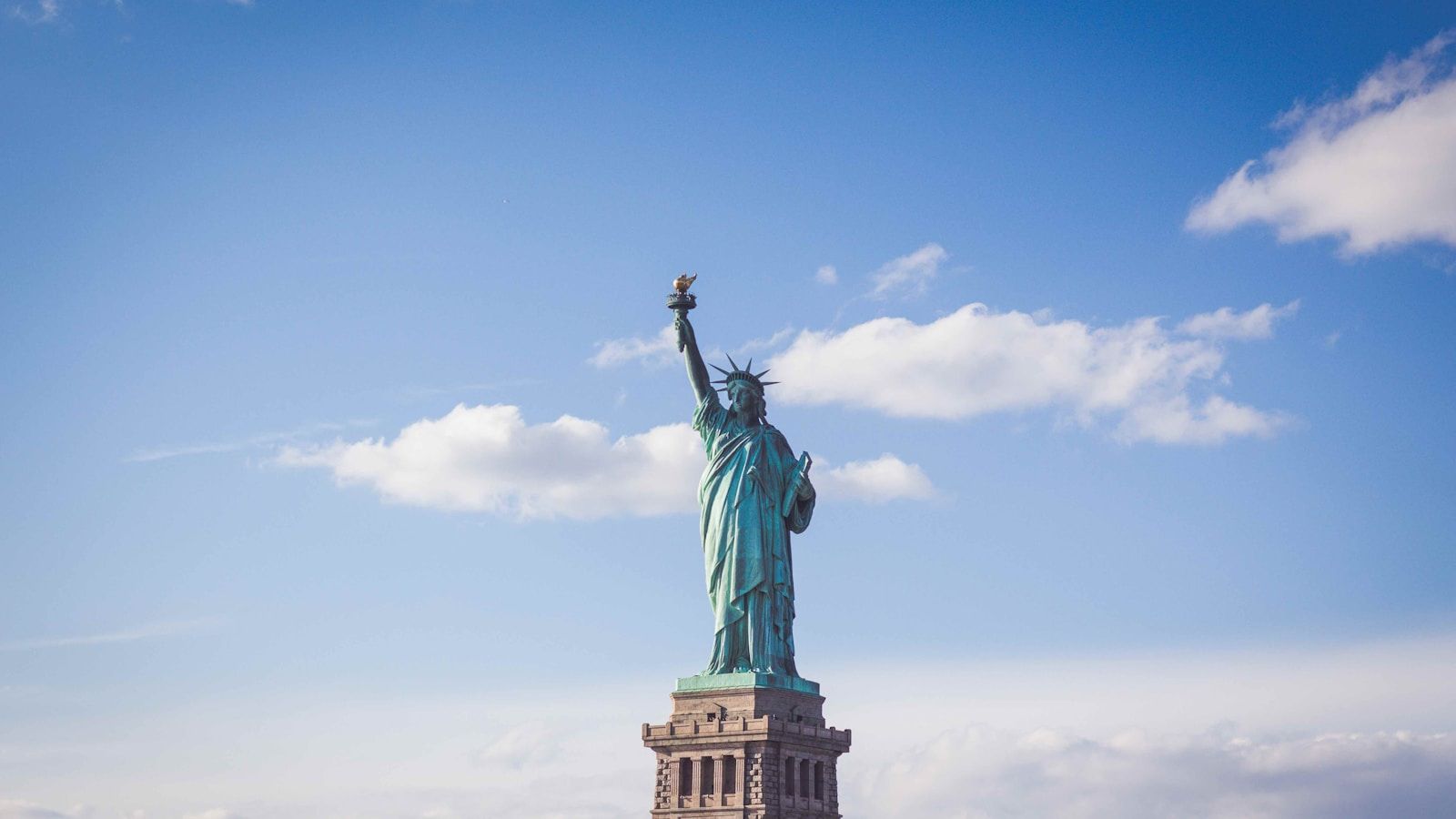
They came with everything they owned in a single bag. After weeks at sea — often in steerage, packed below deck without windows or fresh air — the first thing most of them saw was her: the Statue of Liberty rising from the harbor. And then came the island.
Between 1892 and 1954, more than 12 million people passed through Ellis Island. For nearly 40 percent of Americans today, someone in their family tree walked through that Great Hall. This is the story of what it was really like — and why the place still moves visitors to silence.
America’s Front Door
Before Ellis Island opened in 1892, immigrants arriving in New York were processed at Castle Garden, a former concert hall at the southern tip of Manhattan. The federal government took over immigration control in 1890 and built a proper facility on a small island in New York Harbor.
The original wooden buildings burned down in 1897. The main building that stands today — the red-brick, Beaux-Arts immigration station with its four copper towers — opened in 1900 and processed arrivals for over five decades.
At its peak in 1907, Ellis Island processed 1.25 million immigrants in a single year. On April 17 of that year alone, 11,747 people passed through its doors — roughly one every seven seconds.
What Actually Happened Inside the Great Hall
Most people’s image of Ellis Island is the Registry Room — the enormous, vaulted hall where thousands would wait to be called. But the process started before immigrants ever reached that room.
Arriving by ferry, immigrants climbed a staircase to the Registry Room while doctors stood above, watching. In the 60 seconds it took to walk up those stairs, doctors silently assessed each person’s gait, breathing, and appearance. Anyone who drew attention received a chalk mark — E for eyes, L for lameness, X for possible mental illness.
Those without marks moved through quickly. Inspectors asked each immigrant 29 questions from a manifest list: name, age, occupation, who they were joining in America, how much money they carried. The average inspection lasted three to five minutes.
Most were approved and walked out through the main doors to ferries bound for Manhattan or New Jersey. Some had family waiting. Others stepped off the ferry into a city where they knew no one, spoke no English, and had never seen streets so crowded.
The Stories That History Almost Lost
The names recorded at Ellis Island are the first piece of American paperwork for millions of families. And the stories attached to those names are extraordinary.
A teenage girl from Hungary arrived alone, planning to join a brother in Cleveland. He never appeared. She waited three days before a charity worker helped locate him — he had moved to Pittsburgh without telling anyone. She stayed in New York instead and never left.
A tailor from Poland arrived with $14. He was held for two days because inspectors suspected he was arriving to work under a pre-arranged labor contract, which was illegal. He was cleared and went on to open a shop in the Lower East Side.
New York’s immigrant neighborhoods today — the East Village street that has been Ukrainian for 150 years, the Queens neighborhood that became the most linguistically diverse place on earth — all trace their origin stories back through this island.
Enjoying this? Join New York lovers getting stories like this every week. Subscribe free →
The People Who Were Turned Away
Ellis Island was not the open door that most people imagine. Roughly 2 percent of arrivals were denied entry — about 250,000 people over the island’s six decades of operation.
Reasons for rejection included disease, criminal history, being deemed likely to become a public charge, or simply having no money and no contact waiting for them. For those turned away, the island meant going back to wherever they had come from.
The island also operated a detention center for those whose cases were under review. Some waited weeks. Children old enough to travel unaccompanied were processed separately from their parents. The anxiety inside those halls was not occasional. It was constant and overwhelming.
What It’s Like to Visit Ellis Island Today
The ferry from lower Manhattan takes about 20 minutes, stopping first at the Statue of Liberty and then at Ellis Island. The Great Hall — the Registry Room — has been restored and is open to walk through. Standing beneath its barrel-vaulted ceiling, it is easy to imagine the noise and the crowd and the waiting.
The American Immigrant Wall of Honor outside lists more than 700,000 names. The museum includes artifacts left behind by arrivals: a child’s coat, a prayer book, a wedding photograph. These objects do most of the talking.
The island’s south side remains unrestored — abandoned hospital buildings and administrative blocks in a state of controlled decay. It is a striking counterpoint to the polished main building and accessible via a separate boat tour.
What is the best time to visit Ellis Island in New York?
Early morning on weekdays avoids the longest lines. Ferries from Battery Park begin at 9 a.m. Arriving before 10 a.m. gives you the Great Hall largely to yourself before tour groups fill the space.
How do you get to Ellis Island from Manhattan?
The only public access is via the Statue of Liberty–Ellis Island ferry, departing from Battery Park in lower Manhattan. Tickets include both the Statue of Liberty and Ellis Island stops. Book timed entry to the Statue of Liberty in advance — the ferry itself does not require advance booking.
Can you search for ancestor records from Ellis Island?
Yes. The Ellis Island Foundation maintains a free searchable database with over 65 million records of immigrants who arrived through the port of New York between 1892 and 1957. You can search by name, country of origin, and year of arrival at libertyellisfoundation.org.
Is Ellis Island worth visiting on a New York trip?
It tends to be more moving than most visitors expect. The restored Registry Room, the personal artifacts, and the Wall of Honor make this one of the most emotionally resonant stops in the city. Allow at least half a day and combine it with the Statue of Liberty on the same ticket.
You Might Also Enjoy
- The East Village Street That Has Been Ukrainian for 150 Years — and Still Is
- The Queens Neighborhood Built to Keep Immigrants Out — and What It Became Instead
- Why New York Bagels Taste Different From Every Other Bagel in the World
Plan Your New York Trip
Combining Ellis Island with the Statue of Liberty makes for a memorable half-day on the water. For everything else the city has to offer, our 5-day New York City itinerary covers the best of Manhattan, Brooklyn, and beyond — neighborhoods, food, and the stories that make this city unlike anywhere else.
Join 1,100+ New York Lovers
Every weekday morning, get New York’s hidden gems, neighbourhood stories, food origins, and city secrets — straight to your inbox.
Subscribe free — enter your email:
📲 Know someone who’d love this? Share on WhatsApp →
Love more? Join 65,000 Ireland lovers → · Join 43,000 Scotland lovers →
Free forever · Unsubscribe anytime

Subscribe Free