
If you’re looking for the real New York City — the one that buzzes with creative energy, overflows with extraordinary food, and carries the spirit of generations of immigrants and artists — the East Village is where you’ll find it. Sandwiched between the Lower East Side and Greenwich Village, this Lower Manhattan neighbourhood has been the beating heart of New York’s counterculture for decades, and today it remains one of the most thrilling places to spend a day in the entire city.
I’ve walked these streets more times than I can count, and the East Village never fails to deliver something unexpected: a hidden ramen shop down an unmarked staircase, a Ukrainian diner that’s been serving borscht since the 1950s, or a tiny bookshop with a cat asleep in the window. This guide covers everything you need to know to make the most of the neighbourhood — from its fascinating history to its best restaurants, bars, and things to do.
Why Visit the East Village?
The East Village isn’t just another Manhattan neighbourhood — it’s a living archive of New York’s most restless and creative impulses. In the late 19th and early 20th centuries, it was home to waves of Eastern European immigrants, particularly Jewish, Ukrainian, and Polish communities who left an indelible stamp on the area. Walk along Second Avenue today and you’ll still find Ukrainian restaurants, Jewish delis, and Eastern European bakeries operating exactly as they have for generations.
By the 1960s and 1970s, the East Village had transformed into the epicentre of New York’s counterculture. Allen Ginsberg lived here. The punk scene exploded at CBGB on the Bowery. Tompkins Square Park became a gathering place for artists, activists, and the homeless alike. Today, the neighbourhood wears all of these identities simultaneously — part gritty history, part creative present, part tourist hotspot that somehow never feels inauthentic.
For visitors, the East Village sits in a sweet spot: it’s compact enough to explore on foot, diverse enough to reward an entire day, and packed with enough excellent food and drink to keep you happy from morning until late at night. It also connects naturally to Greenwich Village to the west and the Lower East Side to the south, making it an ideal anchor for a full day of neighbourhood exploration.
Getting to the East Village
The East Village is easy to reach from most parts of Manhattan. The closest subway lines are the L train (at 14th Street/Union Square and 1st Avenue), the 4, 5, 6 trains (at 14th Street/Union Square and Astor Place), and the N, Q, R, W trains (at 14th Street/Union Square). The F train stops at 2nd Avenue and 14th Street on the east side.
From Midtown, the simplest approach is to take the 6 train to Astor Place and walk south into the neighbourhood. From the East Side of Midtown, the L train to 1st Avenue drops you right in the heart of things. The East Village is also very walkable from Union Square, which is a major hub for multiple subway lines.
Exploring the East Village on Foot
St. Mark’s Place
No visit to the East Village is complete without a walk along St. Mark’s Place — the neighbourhood’s most iconic street, running east from Third Avenue between East 7th and East 8th Streets. In its 1970s heyday, St. Mark’s was the centre of the punk and New Wave scene, home to record shops, vintage clothing stores, and the original CBGB crowd. Today it retains an energetic mix of Japanese restaurants, tattoo parlours, vintage shops, and late-night bars that draws a colourful crowd at any hour.
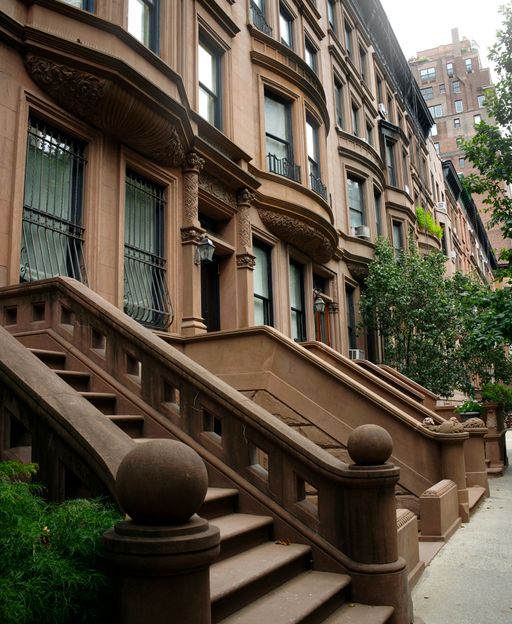
Look out for the beautiful pre-war brownstones lining the street — many date from the 1840s and 1850s, and the ornate iron railings and carved stone facades remain remarkably intact. W.H. Auden once lived at number 77, and the area around St. Mark’s Church at 131 East 10th Street has been a gathering place for poets and artists since the 19th century.
Tompkins Square Park
Tompkins Square Park is the green heart of the East Village — a 10-acre park between Avenues A and B, East 7th and East 10th Streets. The park has witnessed some of the most turbulent moments in New York City history: the draft riots of 1874, the unemployed marches of the 1930s, and the famous Tompkins Square Park riot of 1988, when police clashed violently with protestors fighting to keep the park accessible to the homeless.
Today, the park is a peaceful, welcoming space. Dog walkers, chess players, musicians, and children on the playground share the grounds throughout the day. The park also hosts a popular farmers’ market on Sundays and an excellent Halloween Dog Parade every October that draws thousands of spectators. On warm evenings, the Bandshell area fills with informal music and skateboarding, lending the park a community-centre quality that’s rare in Manhattan.
Alphabet City
East of Avenue A lies Alphabet City — named for its Avenues A, B, C, and D — one of the most distinctive sub-neighbourhoods in all of New York City. For much of the 20th century, Alphabet City was one of the most dangerous parts of Manhattan, a reputation cemented by the musical Rent, which was set in the area during the crack epidemic of the 1980s and 1990s. The transformation since then has been remarkable: today it’s home to some of the most vibrant bars and restaurants in the East Village, alongside community gardens and beautifully maintained brownstones.
The community gardens of Alphabet City are a particular highlight. La Plaza Cultural on Avenue C and East 9th Street is one of the oldest and largest, with murals, sculptures, and a performance space. Avenue B between East 9th and East 10th Streets is particularly lovely, lined with trees and colourful apartment buildings. If you enjoy street art and urban gardening, Alphabet City rewards a slow, exploratory walk.
Eating in the East Village
The East Village is one of the best neighbourhoods in New York City for eating — full stop. It offers extraordinary variety at every price point, from legendary old-school Jewish delis to Michelin-starred ramen shops, and the concentration of quality restaurants per square block is exceptional. For a full guide to eating across the city, our New York City Food Guide covers all the essential dishes and where to find them.
Ukrainian and Eastern European Food
The East Village’s Ukrainian community has left its most delicious mark on the dining scene. Veselka, at 144 Second Avenue, has been serving borscht, pierogies, and blintzes since 1954 — and it’s open 24 hours a day, seven days a week. It’s one of those rare restaurants that feels authentically New York regardless of when you visit: at 3am it’s full of late-night revellers; at 9am it’s packed with old men reading Ukrainian newspapers over coffee. Don’t leave without trying the beet borscht and a plate of crispy potato pierogies.
B&H Dairy at 127 Second Avenue is another neighbourhood institution — a tiny, no-frills dairy restaurant that’s been operating since the 1930s. The challah French toast and matzo ball soup are extraordinary, and the place seats about 12 people, which means you’ll almost certainly end up sharing a table with strangers and having a wonderful conversation.
Asian Food
The East Village has become one of Manhattan’s best destinations for Japanese food. Ippudo on East 4th Street helped introduce genuine Japanese ramen to New York City and still draws queues; Momofuku Noodle Bar nearby remains a landmark of the city’s contemporary dining scene. The stretch of East 6th Street between First and Second Avenues is known informally as “Little India” or “Curry Row” — it’s lined with inexpensive Indian and Bangladeshi restaurants that have served the neighbourhood for decades.
For dim sum and Taiwanese cuisine, the area east of Second Avenue has several excellent options, and the proximity to Chinatown means you can easily extend your eating adventure southward if the mood takes you.
Pizza and Classic New York Eats
No East Village visit is complete without stopping at Artichoke Basille’s Pizza on East 14th Street — a New York pizza institution that serves extraordinary thick-cut slices topped with artichoke cream and spinach that people travel across the city to eat. It’s cash-friendly, almost always has a queue, and is worth every minute of the wait. For a more classic New York thin-crust slice, Stromboli Pizza on First Avenue has been a neighbourhood staple for generations.
Drinking in the East Village
The East Village’s bar scene is one of the liveliest in New York — diverse, unpretentious, and active from late afternoon until well past midnight. The neighbourhood is particularly well suited to a proper pub crawl, with bars ranging from classic dive bars to craft cocktail spots clustered along First Avenue, Avenue A, and the cross-streets between them.
Classic Bars and Dive Bars
Manitoba’s at 99 Avenue A is the East Village’s quintessential rock and roll bar — named after Handsome Dick Manitoba of punk band The Dictators, it’s covered floor to ceiling with rock memorabilia and serves cold beers to a neighbourhood crowd that’s been coming through the doors for decades. Doc Holliday’s on Avenue A is another beloved local dive, with pool tables, cheap drinks, and an absence of pretension that makes it very easy to settle in for the evening.
The Scratcher at 209 East 5th Street is a neighbourhood institution — a warm, Irish-inflected bar with excellent cocktails, a fireplace, and a back garden that fills up with a creative local crowd. It’s the kind of bar that turns a quick drink into a long, unexpected evening, which is exactly the right spirit for the East Village.
Craft Cocktail Spots
Death & Co at 433 East 6th Street is one of the most celebrated cocktail bars in the world — a small, candlelit space where extraordinarily skilled bartenders create original cocktails using ingredients you’ve probably never encountered before. Reservations are recommended but walk-ins can often find a spot at the bar. Attaboy, on Eldridge Street just south of the East Village boundary, operates on a similar principle: no menu, just describe what you’re in the mood for and let the bartenders work.
Shopping in the East Village
The East Village rewards browsers and wanderers. Its independent shops — selling vintage clothing, vinyl records, handmade jewellery, and secondhand books — represent a New York shopping culture that feels increasingly rare as chains and boutique hotels continue their march through Manhattan.
Screaming Mimi’s on East 20th Street is one of the city’s great vintage clothing stores, with meticulously curated pieces organised by decade. St. Mark’s Bookshop, now relocated to nearby Cooper Square, remains an important independent bookseller with a superb range of poetry, cultural theory, and art books. The stretch of Avenue A north of Tompkins Square Park has several excellent independent shops worth exploring on a rainy afternoon.
The East Village also connects seamlessly with the rest of Lower Manhattan’s free attractions — many of the neighbourhood’s best pleasures cost nothing at all: the community gardens, the street art in Alphabet City, the buskers on St. Mark’s Place, and the views over Tompkins Square Park.
History You Can See
The Bowery and CBGB
The Bowery runs along the western edge of the East Village and was once the most notorious street in New York City — a mile of flophouses, saloons, and pawn shops that gave the word “bowery” its association with urban destitution. Today it’s home to upscale hotels and restaurants, but its punk history lives on at the site of CBGB — the legendary club at 315 Bowery where Blondie, the Ramones, Television, and Patti Smith all played in the 1970s. The club closed in 2006, but the building is now a John Varvatos clothing boutique that has preserved the original stage and much of the club’s original graffiti-covered walls. It’s worth stepping inside.
St. Mark’s Church in-the-Bowery
St. Mark’s Church in-the-Bowery at 131 East 10th Street is the second-oldest site of continuous Christian worship in New York City — Peter Stuyvesant, the Dutch governor who founded New Amsterdam (the settlement that became New York), is buried here beneath the church. The church has been a centre of progressive arts and activism since the 1960s, hosting the Poetry Project (which published Allen Ginsberg, Anne Waldman, and Ted Berrigan, among many others) and Danspace, a pioneering dance performance space.
The Tenement Museum Area
While the Tenement Museum itself is located in the Lower East Side (a short walk south), the East Village’s own tenement history is inscribed into its architecture. The six-storey walk-up apartment buildings that line most of the neighbourhood’s streets were built in the late 19th century to house the enormous influx of immigrants then arriving in New York. Many retain their original cast-iron fire escapes, wooden stoops, and decorative brickwork — you’re essentially walking through a remarkably intact Victorian working-class neighbourhood.
The Best Neighbourhoods in New York City guide covers how the East Village fits into Manhattan’s broader geographic story, and helps you plan which other areas to combine with your visit.
Tips for Visiting the East Village
Best time to visit: The East Village is fantastic year-round, but it’s particularly lively in the warmer months when tables spill onto pavements, Tompkins Square Park fills with activity, and the neighbourhood’s outdoor festivals and street fairs take over several blocks at once. The Halloween parade along 6th Avenue (which passes nearby) makes late October another excellent time to visit.
Getting around: The neighbourhood is entirely walkable — most of what you’d want to see sits within a 15-minute walk of the Astor Place subway stop. Wear comfortable shoes. The cross-streets can be uneven and the best discoveries are often the ones you stumble across while wandering.
Timing your meals: Many East Village restaurants don’t take reservations and get busy quickly after 7pm. Either arrive early (before 6.30pm) or come prepared to wait — a beer at a nearby bar while you queue is perfectly acceptable East Village behaviour.
Cash and cards: Most East Village restaurants and bars now accept cards, but a few of the older institutions — particularly the Ukrainian delis and old-school pizza spots — still prefer cash. It’s worth having a small amount available.
Join 1,000+ New York Lovers
Every week, get New York’s lesser-known corners, local secrets, and travel inspiration.
Subscribe free — enter your email:
Free forever · One email per week · Unsubscribe anytime
Frequently Asked Questions About the East Village
Where exactly is the East Village in New York City?
The East Village sits in Lower Manhattan, roughly bounded by 14th Street to the north, Houston Street to the south, Fourth Avenue/the Bowery to the west, and Avenue D to the east. It sits directly east of Greenwich Village and north of the Lower East Side. The Astor Place subway stop (6 train) is the most convenient entry point for most visitors.
Is the East Village safe for tourists?
The East Village is very safe for tourists and is one of the most visited neighbourhoods in Manhattan. Like any urban area, normal awareness is sensible, particularly late at night in the Alphabet City section east of Avenue B — but the neighbourhood has changed dramatically since the 1980s and 1990s and is now considered a desirable residential area. You’ll see families, dog walkers, and restaurant-goers on the streets at all hours.
How long should I spend in the East Village?
A focused half-day visit can take in the main highlights — St. Mark’s Place, Tompkins Square Park, the Bowery, and a meal or two. But if you love food, drink, and wandering, the East Village easily fills a full day: breakfast at Veselka, a morning exploring Alphabet City’s community gardens and street art, lunch on St. Mark’s Place, an afternoon in independent shops, and an evening of dinner and cocktails on Avenue A. Most visitors find themselves wishing they’d planned a return trip.
What is the East Village known for?
The East Village is known for its counterculture history (punk music, the 1960s bohemian scene, CBGB), its diverse food scene (particularly Ukrainian, Japanese, and South Asian cuisine), its vibrant bar culture, and its beautifully preserved 19th-century architecture. It’s also known as one of the few Manhattan neighbourhoods that has retained a strong sense of community identity despite decades of gentrification.
