
If your family came through Ellis Island, there is a good chance they ended up here. The Lower East Side was the beating heart of Jewish immigrant New York. At its peak, it was one of the most crowded places on Earth.
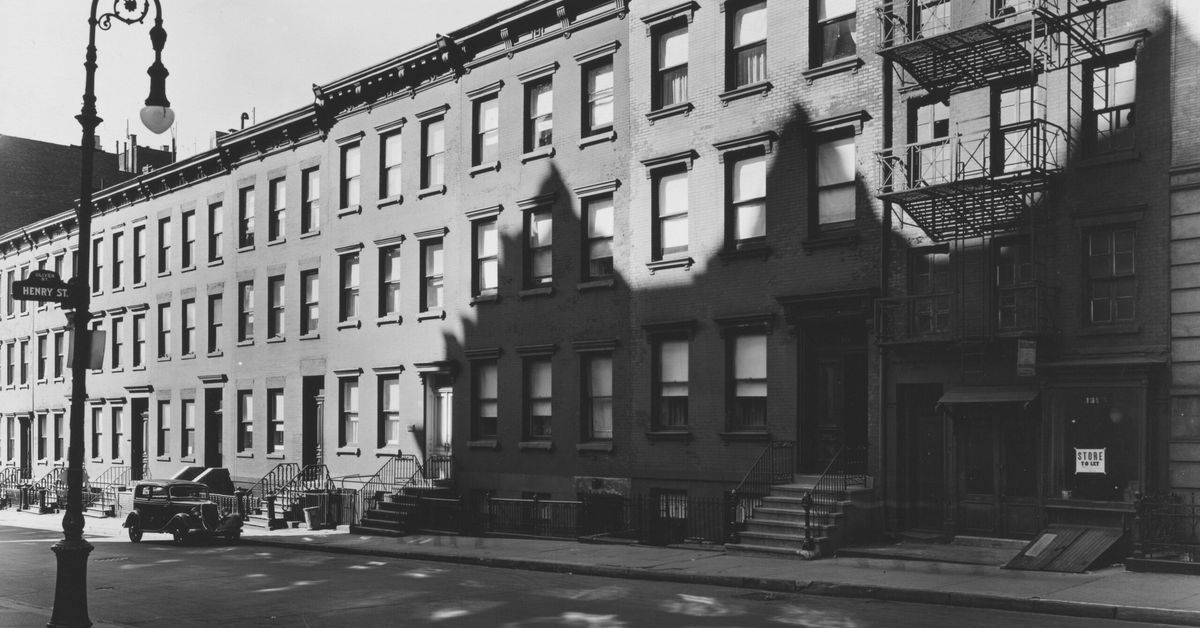
Today, you can still walk those same streets. You can stand where the pushcarts once blocked traffic. You can visit apartments where eight people shared two rooms. The Lower East Side holds all of it — if you know where to look.
If you love New York’s hidden stories, you’ll love our free weekly newsletter. Subscribe to Love New York →
Why They Came Here
Between 1880 and 1924, around two million Eastern European Jews arrived in New York. Most came from Russia, Poland, and Romania. They were fleeing pogroms. They were fleeing poverty. They were fleeing a world that did not want them.
When they stepped off the ferry from Ellis Island, they asked for directions. Almost everyone pointed them south. The Lower East Side.
The neighbourhood made sense. It was cheap. It was close to factory work. And it was already home to thousands who had come before them. A familiar language. A familiar prayer. A familiar smell rising from the bakeries on Hester Street.
By 1910, over 500,000 Jewish immigrants lived in the blocks south of 14th Street. On some blocks, 330,000 people were packed into every square mile. Nothing like it had ever existed in America before. If you are tracing your New York City ancestry, this neighbourhood is almost certainly part of the story.
Life in the Tenements
The building at 97 Orchard Street looks ordinary from the outside. Inside, it is anything but.
This is the Tenement Museum. It is one of the most powerful places in New York. It preserves the real apartments where immigrant families lived from the 1860s through the 1930s.
A typical apartment was three rooms. The middle room had no windows. One toilet sat in the hallway, shared by all four families on the floor. Rent was around $9 a month — a serious sum when wages were $6 to $8 a week.
Families took in boarders to help cover that rent. A two-room flat might hold a husband, wife, four children, and two boarders. Eight people in a space smaller than a modern hotel room.
In summer, the heat was unbearable. In winter, a single coal stove was all that stood between a family and the cold. Children slept in shifts. Fresh air was a luxury.
And yet people survived. They did more than survive.
The Pushcart Streets
Walk down Orchard Street on a Sunday morning. You can still feel the ghost of the old market.
Hester Street was the centre of it all. Every morning, hundreds of pushcart vendors set up their stalls. They sold pickles from wooden barrels. Herring wrapped in newspaper. Secondhand clothes and buttons. Bread so fresh it steamed in the winter air.
The market was not just commerce. It was community. Neighbours argued prices in Yiddish. News passed from cart to cart. Jobs were found. Marriages were arranged.
Hester Street was famous enough that an 1896 film — one of the very first street films ever made in America — captured the pushcart market in motion. The world was already watching.
By 1940, the city cleared the pushcarts from the streets. Mayor Fiorello La Guardia moved the vendors indoors to the Essex Street Market. The market still exists today, relocated to a new building in 2019, keeping the spirit of the old economy alive.
Want more stories like this? Our weekly newsletter goes deeper into New York’s heritage every week. It’s free. Subscribe here →
The Garment Industry
Most immigrants on the Lower East Side worked in the garment trade. The factories were just a short walk from the tenements. That was the point.
“Sweated labour” was the phrase they used then. Women and girls worked twelve-hour days. They sewed coats, skirts, and shirtwaists — the blouses worn by office workers all over America. Pay was around $6 a week, less for the youngest workers.
The factories were cramped and dark. Candles sat dangerously close to fabric. Exits were sometimes locked to prevent theft. Supervision was constant and punishing.
Out of this world came the American labour movement. Jewish immigrant workers formed unions. They organised strikes. They fought for better wages, shorter hours, and safe conditions. The International Ladies’ Garment Workers’ Union was founded in New York in 1900. Its members were mostly women from the Lower East Side.
The Five Points neighbourhood a few blocks away had bred an earlier generation of Irish labour organisers decades before. Now the Jewish immigrants carried that tradition forward into the new century.
The Triangle Shirtwaist Fire
On 25 March 1911, a fire broke out at the Triangle Shirtwaist Factory. The building stood at the corner of Greene Street and Washington Place, just north of the Lower East Side.
146 workers died. Most were young Jewish and Italian women. Many had no way out — stairwell doors were locked. Some jumped from the upper floors.
The fire shocked the city. It led directly to new laws on factory safety, working hours, and workers’ rights. Laws that are still with us today.
A plaque now marks the site. When you read the names on that plaque, you are reading the names of real women. Many were teenagers. Almost all had come through Ellis Island to build a better life.
The Voices That Rose From This Neighbourhood
The Lower East Side produced some of the most recognisable voices in American culture.
Irving Berlin was born in Russia in 1888. His family arrived on the Lower East Side when he was five years old. He sold newspapers on Hester Street as a boy. He would go on to write “White Christmas,” “God Bless America,” and “There’s No Business Like Show Business.”
George Burns grew up on Rivington Street. So did Eddie Cantor. Emma Goldman, the great labour organiser and writer, lived and worked in the neighbourhood. George Gershwin spent part of his childhood on the Lower East Side.
The streets of East Harlem would later produce their own cultural giants. But the template — the immigrant child who arrives with nothing and becomes an American icon — was first forged here, on these streets.
What Survived — The Lower East Side Today
Much of the original tenement district has changed beyond recognition. The pushcart markets were cleared in 1940. Many of the great synagogues closed as Jewish families moved to the Bronx, Brooklyn, and eventually the suburbs.
But enough remains to feel the full weight of the history.
The Tenement Museum at 97 Orchard Street is the essential starting point. Guided tours take you through preserved apartments from different eras of immigrant life. You walk into real families’ stories. Book in advance — tours sell out, especially at weekends.
The Eldridge Street Synagogue opened in 1887. It was one of the grandest synagogues built by Eastern European Jewish immigrants in America. Today it is fully restored and operates as the Museum at Eldridge Street. The restored stained glass rose window is extraordinary.
Katz’s Delicatessen opened in 1888. It is still there on East Houston Street, still serving the pastrami and corned beef that fuelled the neighbourhood for over a century. Order at the counter. Keep your ticket.
The Essex Street Market, in its new 2019 building, carries forward the spirit of the old pushcart economy. Local vendors, immigrant food traditions, the hum of commerce — the Lower East Side still trades.
Plan Your Heritage Visit
The main heritage sites sit within easy walking distance of each other. You can cover them all in half a day.
Start at the Tenement Museum (103 Orchard Street). Book a guided tour in advance. Allow 90 minutes for the tour itself.
Walk south on Orchard Street to Hester Street. The old pushcart blocks are now a mix of restaurants and shops, but the street grid is unchanged. Turn east onto Eldridge Street for the restored synagogue. Allow an hour.
Head north to Katz’s Delicatessen (205 East Houston Street) for a late lunch. It is one of the last great Jewish delis in the city.
To trace your own family, the New York Public Library’s genealogy resources and the Ellis Island database are the starting points. Many tenement addresses survive in old census records and ship manifests. You may be able to stand on the exact block where your great-grandparents lived.
For a deeper sense of what daily life looked like in 1910, the photographs and newspaper archives from the period paint a picture no guidebook can match.
Frequently Asked Questions
When did Jewish immigrants arrive on the Lower East Side?
The main wave of Eastern European Jewish immigration lasted from roughly 1880 to 1924, when new US quota laws dramatically reduced numbers. By 1910, over 500,000 Jewish immigrants lived in the neighbourhood, making it one of the most densely populated places on Earth at that time.
What is the best way to visit the Lower East Side’s Jewish heritage sites today?
Start with the Tenement Museum at 97 Orchard Street (book tours in advance), then walk to the Eldridge Street Synagogue and the Essex Street Market. All three main sites are within 10 minutes’ walk of each other, and the full heritage loop takes around three hours.
What was life really like for Jewish immigrants in the tenements?
Most families lived in three-room apartments with no bathroom, shared a single hallway toilet with three other families, and paid around $9 a month in rent. It was common for eight or more people — parents, children, and boarders — to share a flat. Despite the conditions, the community was extraordinarily tight-knit and culturally vibrant.
Who are some famous people who grew up on the Lower East Side?
Irving Berlin, songwriter of “White Christmas” and “God Bless America,” grew up on the Lower East Side after arriving from Russia as a child. George Burns, Eddie Cantor, and the labour activist Emma Goldman all came from the neighbourhood. The area produced a remarkable number of people who shaped American popular culture in the twentieth century.
Ready to explore the New York your ancestors knew? Subscribe to Love New York — free weekly stories, heritage guides, and hidden history. Join us →

Subscribe Free