
Walk out of the Roosevelt Avenue subway station in Jackson Heights and your senses take over. Bhangra music drifts from a sari shop. The smell of fresh empanadas fills the air. A woman in a shalwar kameez haggles over cardamom. Across the street, a Colombian bakery sells pan de bono next to a Nepali café. Over 160 languages float through this part of Queens on any given day.
Jackson Heights is the most diverse urban area on earth.
If your family came through New York from South Asia or Latin America — or from the old Irish and Jewish world of Queens — this neighbourhood holds pieces of their story.
If you love New York’s hidden stories, you’ll love our free weekly newsletter. Subscribe to Love New York →
A Planned Community Built for New Arrivals
The Queensboro Corporation built Jackson Heights in the 1910s and 1920s. They created something rare for New York: planned blocks with private garden courts. Workers could escape the heat and noise of Manhattan for somewhere green and calm.
At first, Jewish and Irish families moved in. They came from the crowded streets of the Lower East Side and Midtown. The wide pavements and shared garden flats felt like a step up. Many families saved for years to get here.
The grid held firm through the Great Depression. The buildings lasted. When the world changed in 1965, Jackson Heights was ready.
The Law That Changed Everything
The Immigration and Nationality Act of 1965 removed national-origin limits from US immigration law. Before that law, most people came from Europe. After it, the door opened to Asia and Latin America.
Jackson Heights caught this wave first in Queens.
Indian doctors, Bangladeshi textile workers, Nepali students, and Pakistani engineers arrived all through the 1970s and 1980s. Many chose Jackson Heights because rents were low. The E, F, M, and R subway lines gave fast access to Manhattan jobs. And the area already had a few South Asian shops. One group drew another.
By the 1980s, 74th Street had become the heart of Little India. Sari shops, gold stores, and sweet shops lined the pavement. Jackson Diner opened in 1990 and became the most famous Indian restaurant in the borough. It still draws families from across New York.
Today Jackson Heights holds the largest Bangladeshi group in the United States outside of Detroit. The Nepali group here is one of the largest outside South Asia itself.
The Latin American Wave
The South Asian world was not the only one shaping Jackson Heights. At almost the same time, Ecuadorian families began arriving along Roosevelt Avenue.
Many came from Azuay Province in southern Ecuador, near the city of Cuenca. They worked in restaurants, factories, and on building sites. They sent money home. They built a tight-knit world that outlasted every economic crisis New York threw at them.
Colombian families came next. Then Mexicans, Bolivians, Peruvians, and Uruguayans. Roosevelt Avenue became the busiest Latin American street in New York City outside the Bronx.
Today you can eat caldo de patas — Ecuadorian cow-foot soup — at a small lunch spot below the elevated train. You can buy fresh chicha morada three steps away. A Colombian café sits next to a Bangladeshi biryani house. Nobody here finds that unusual. This is just Tuesday in Jackson Heights.
As of the 2020 census, over 55% of residents were born outside the United States. Fewer than 10% of people here are non-Hispanic White. This is one of the clearest cases of what post-1965 immigration built in New York.
Queens drew many groups at once. Just a few miles north, Greek immigrants built their own world in Astoria a generation earlier — a parallel story of arrival, grit, and roots put down.
What the Neighbourhood Looks Like Today
Jackson Heights breaks into two main zones, though they blur at the edges.
The South Asian strip runs along 74th Street between Roosevelt Avenue and 37th Avenue. Here you find the sari shops, gold stores, sweet shops selling gulab jamun and barfi, and curry houses that have served the area for forty years. Patel Brothers grocery has a large store here. The smell of incense drifts from temple supply shops.
Diversity Plaza sits at the corner of 74th Street and 37th Road. The city made this square a formal public space for the community. On weekends, families fill the benches. Street vendors sell mango slices with chilli and lime. You hear Hindi, Nepali, Urdu, and Bangla all within a few feet of each other.
The Latin American strip runs along Roosevelt Avenue from 74th Street west toward 82nd Street. The elevated 7 train thunders overhead every few minutes. Below it, the street never stops. Taco trucks set up at midnight. Clubs stay open until dawn. Weekend mornings bring families out for tamales and Mexican hot chocolate.
The two worlds live side by side with ease. The shared life of immigration — the cost it demands, the home it gives — creates a bond that crosses language and culture.
The Old Buildings Still Standing
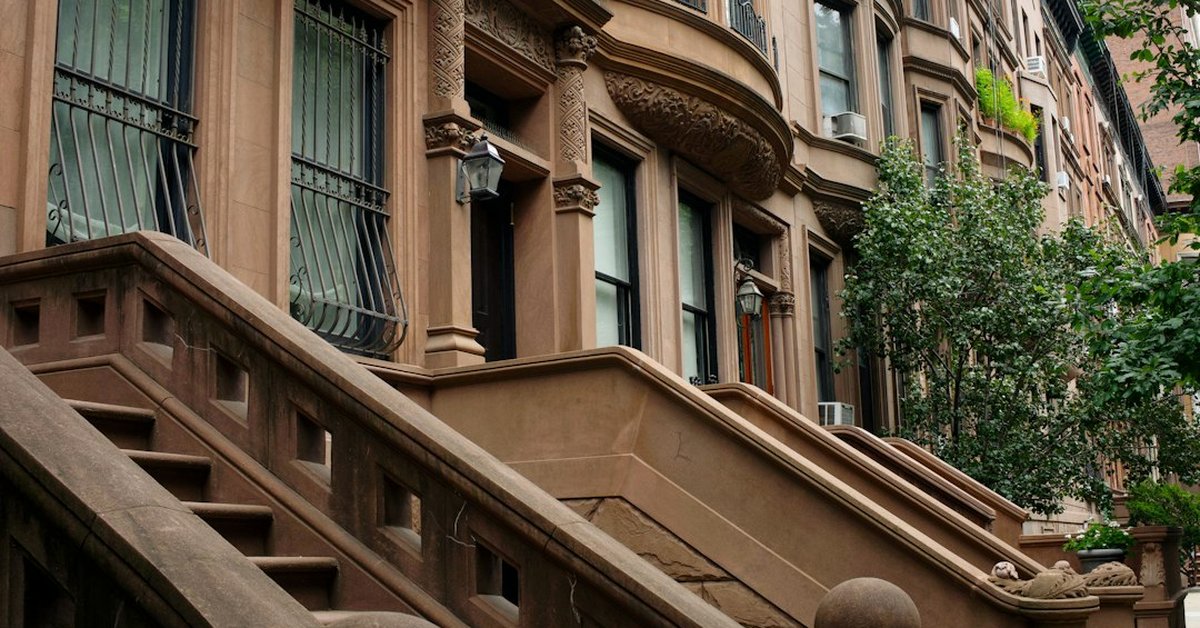
Jackson Heights holds one of the finest sets of 1920s garden flat buildings in New York City. The Jackson Heights Historic District covers dozens of blocks. The National Register of Historic Places listed it in 1993.
The Chateau, on the corner of 80th Street and 34th Avenue, is the most striking. Its Tudor-revival front and inner garden look almost English. The Towers at 34th Avenue and 82nd Street have the same bold style.
These buildings matter for family history visitors. Many of the first South Asian and Latin American families rented here in the 1970s. The streets of that founding era still stand.
If your family arrived in Jackson Heights in those early years, their building very likely still exists. The New York City Department of Records holds tenant records and building permits going back to the 1920s. The Queens Public Library at 89-11 Merrick Boulevard holds local history files, including records from community groups.
Where to Trace Your Jackson Heights Roots
The records for tracing family roots in Jackson Heights are stronger than most people think.
Start with the Queens Public Library’s Long Island Division. They hold borough family records, local newspapers in many languages, and address books going back decades. Staff there know the local story well.
The New York City Municipal Archives holds birth, marriage, and death records for all five boroughs. If your family registered events in Queens, those records are open via the archives or through Ancestry.com.
The YIVO Institute for Jewish Research covers the earlier Jewish world that lived here before the South Asian and Latin American arrivals. If your family had roots in the old Jackson Heights, YIVO’s files may hold synagogue papers and neighbourhood news.
For South Asian community records, the Queens Museum has mounted shows on the area’s change. The Queens Memory Project holds oral history interviews with long-term residents from all backgrounds.
Our full guide to tracing New York City ancestry covers every major archive and database, with sections on Queens-specific resources.
Want more stories like this? Our weekly newsletter goes deeper into New York’s heritage every week. It’s free. Subscribe here →
Planning a Heritage Visit
A visit to Jackson Heights works best as a self-guided walk.
Take the E, F, M, or R train to the Roosevelt Avenue – Jackson Heights stop. The 7 train stops at 74th Street – Broadway. Both stops put you at the heart of the South Asian strip on 74th Street.
Give yourself two to three hours. Eat at Diversity Plaza — the street food vendors there offer one of the best cheap meals in all of Queens. Walk north on 74th Street through the main shopping area. Then swing back toward Roosevelt Avenue for the Latin American stretch.
The neighbourhood runs seven days a week. Weekend afternoons are the most lively. Sunday mornings bring churchgoers from the many Christian churches that now fill old shop fronts.
If your family has roots here, bring any old address or family name. Show them to shopkeepers. Many long-running businesses have been in the same hands for thirty years. They remember faces and names. New York gets called an impersonal city. Jackson Heights never believed that.
The same story — of groups arriving with little and building something lasting — played out across New York. Caribbean immigrants did it in Crown Heights, Brooklyn. And before them all, German immigrants built a world of their own in Manhattan before tragedy swept it away.
Frequently Asked Questions
What immigrant communities live in Jackson Heights, Queens?
Jackson Heights is home to large South Asian communities from India, Bangladesh, Nepal, and Pakistan. It also has a large Latin American community, mainly from Ecuador and Colombia. Over 160 languages are spoken in the area.
When did South Asian immigrants first arrive in Jackson Heights?
South Asian immigration grew quickly after the 1965 Immigration Act removed national-origin limits. By the late 1970s, Indian, Bangladeshi, Nepali, and Pakistani families had built a thriving strip along 74th Street.
What is Diversity Plaza in Jackson Heights?
Diversity Plaza is a public square at the corner of 74th Street and 37th Road in Jackson Heights. The city made it a formal public space for the community. On weekends it fills with families, food vendors, and cultural events that show how many groups share this small part of Queens.
How do I get to Jackson Heights by subway?
Take the E, F, M, or R train to Roosevelt Avenue – Jackson Heights, or the 7 train to 74th Street – Broadway. Both stops put you right at the heart of the South Asian market strip on 74th Street.
Are there heritage buildings in Jackson Heights worth visiting?
Yes. The Jackson Heights Historic District contains some of the finest 1920s garden flat buildings in New York City. Listed on the National Register of Historic Places, many of these buildings housed the first South Asian and Latin American families who arrived in the 1970s. Most still stand in excellent shape today.
Subscribe to Love New York
Ready to explore the New York your ancestors knew? Subscribe to Love New York — free weekly stories, heritage guides, and hidden history. Join us →
