
The 1930s changed New York City forever. The stock market crash of October 1929 hit hardest in the neighbourhoods where immigrants had finally begun to find their footing. A decade of struggle followed. Yet the city’s immigrant communities survived — and many came out stronger on the other side.
Your grandparents or great-grandparents may have lived through this decade. Millions of New Yorkers with Italian, Jewish, Irish, and Eastern European roots carry these stories: the breadlines, the shared apartments, the children selling newspapers at dawn. This is the story of that decade.
If you love New York’s hidden stories, you’ll love our free weekly newsletter. Subscribe to Love New York →
The Crash That Changed Everything
On 29 October 1929 — Black Tuesday — the New York stock exchange collapsed. Banks failed within weeks. Companies halted hiring. By 1932, roughly one in four working Americans had lost their jobs.
Immigrant communities felt the impact first. Most immigrant workers held manual jobs — construction, garment manufacturing, dock work, and street vending. Those industries collapsed almost overnight.
On the Lower East Side, factory owners shut down without warning. The garment workers who had fought for better conditions in the years after the Triangle Shirtwaist fire found themselves with no work at all. In Hell’s Kitchen and the South Bronx, Irish-American dockworkers watched the ships stop coming. Italian labourers in Brooklyn and the Bronx lost their building contracts as construction ground to a halt.
How Immigrant Communities Survived
Immigrant communities had one great advantage. They already knew how to survive hard times together.
Jewish mutual aid societies — known as landsmanshaftn — had operated in New York since the 1880s. Members from the same hometown in Eastern Europe paid small weekly dues. During the Depression, these networks paid out benefits to the unemployed. They kept families from losing their apartments.
Italian families used community networks differently. Small business owners and respected local figures became informal lenders. They knew the families personally. Loans came through when banks refused. The rates were steep, but families ate that week.
Irish-American political clubs distributed food, coal, and small amounts of cash to families who stayed loyal at election time. The system was imperfect and sometimes corrupt. But during the worst years, those clubs kept families fed.
The International Ladies’ Garment Workers’ Union — whose members were overwhelmingly Jewish and Italian women — ran its own unemployment fund. By 1931 it was paying out thousands of dollars each week to members who had lost work.
Breadlines and Soup Kitchens
By 1931, breadlines stretched around the blocks of midtown Manhattan and through immigrant neighbourhoods. Private charities ran most of them. Churches, synagogues, and settlement houses set up soup kitchens and distributed food parcels.
The Hebrew Immigrant Aid Society — better known as HIAS — fed thousands of people each week in the Lower East Side. The Catholic Worker Movement opened a shelter on Mott Street that served free meals every morning.
Mayor Jimmy Walker, under investigation for corruption, resigned in 1932. The city government had failed its people. That changed in 1933.
Fiorello La Guardia and the New Deal
Fiorello La Guardia was born in Greenwich Village in 1882. His father came from Foggia in southern Italy. His mother came from a Sephardic Jewish family in Trieste. He grew up speaking Italian, Yiddish, German, French, Croatian, and English.
He understood what the Depression meant to immigrant families. He had grown up among them.
La Guardia won the mayoral race in November 1933. He immediately partnered with President Roosevelt’s New Deal programmes. Federal money came into the city. The Works Progress Administration — the WPA — hired tens of thousands of unemployed New Yorkers.
WPA workers built and repaired schools, parks, hospitals, and public buildings across the five boroughs. Artists painted murals in post offices and public spaces — many depicting the working lives of immigrants. Photographers documented tenement life. Those photographs survive today in the Library of Congress archive.
La Guardia also launched the city’s first public housing programme. The first New York City Housing Authority projects opened in 1935 in the Lower East Side — built with federal money, intended for the working poor who could no longer afford private tenements.
What Daily Life Actually Looked Like
For immigrant families in 1930s New York, survival required specific, concrete adjustments.
Taking in boarders became standard practice. A family with a two-bedroom tenement apartment rented a sleeping space to a single man or a young couple. The extra income covered the rent. Three generations often shared two rooms.
Children left school earlier. Boys aged 12 or 13 sold newspapers, shined shoes, or ran errands for local businesses. Girls helped with piecework — sewing and finishing garments at home for the few factories still operating. Every dollar went into the family pot.
Food changed. Families ate cheaper cuts — organ meats, day-old fish, dried beans, and lentils. Jewish families made do with kasha and potatoes. Italian families stretched pasta much further. Irish families returned to the dishes their parents had eaten in Ireland: potato cakes, colcannon, and boiled bacon.
The neighbourhood markets on Orchard Street, Arthur Avenue, and Ninth Avenue became more important than ever. Pushcart vendors sold bruised fruit, day-old bread, and irregular cuts of meat at prices the uptown stores could not match.
Want more stories like this? Our weekly newsletter goes deeper into New York’s heritage every week. It’s free. Subscribe here →
The Second Generation’s Difficult Decade
The 1930s proved especially hard for the second generation — the sons and daughters of immigrants born in America.
They had grown up trying to be American. They spoke English without an accent. They dressed like their classmates. Many had half-distanced themselves from the old-world customs of their parents.
The Depression stripped that distance away. Jobs vanished. Factory bosses who had once favoured American-born workers stopped caring. A hungry man did not argue about heritage.
Many second-generation New Yorkers found themselves returning to the community networks their parents had built. The landsmanshaft, the Italian mutual aid society, the Irish political club — these institutions, which the second generation had half-dismissed as old-fashioned, kept families alive. And in surviving the Depression together, immigrant communities became more deeply rooted in New York than they had ever been before.
What Changed by 1940
By the late 1930s, the worst was over. New Deal jobs had put money back into working-class communities. The garment unions had won significant improvements in pay and conditions. War production brought full employment back to American factories.
The immigrant New York of the 1930s changed in a deeper way too. The communities that survived the Depression had proved their resilience. They built institutions — mutual aid societies, credit unions, community centres — that served their children and grandchildren for decades.
The children who grew up hungry in Depression-era tenements went on to define mid-century American culture. Many of the writers, musicians, scientists, and business leaders who shaped America from the 1940s onwards spent their childhoods in those cramped apartments, sharing beds, eating cheaper cuts, watching their parents hold everything together.
To understand what New York looked like in the decade before the Depression, read our account of immigrant life in 1910. And for the roaring decade that came just before the crash, explore New York in the 1920s.
Where to See Depression-Era New York Today
Several places bring the 1930s city back to life today.
The Tenement Museum at 97 Orchard Street recreates a Depression-era apartment in remarkable detail. Their tour called “Hard Times” follows the Baldizzi family — Sicilian immigrants — through the years when the city nearly broke. Book at tenement.org.
The New York Public Library’s Milstein Division holds thousands of WPA photographs of Depression-era New York. Federal Writers’ Project oral history transcripts from the same era are also available. Many are digitised at nypl.org.
The Museum of the City of New York at Fifth Avenue and 103rd Street has permanent galleries on the twentieth-century city. Their photographic archives contain thousands of Depression-era images of immigrant neighbourhoods.
The General Post Office at Eighth Avenue and 31st Street contains WPA murals still on display. Entry is free. The building itself is a monument to New Deal construction.
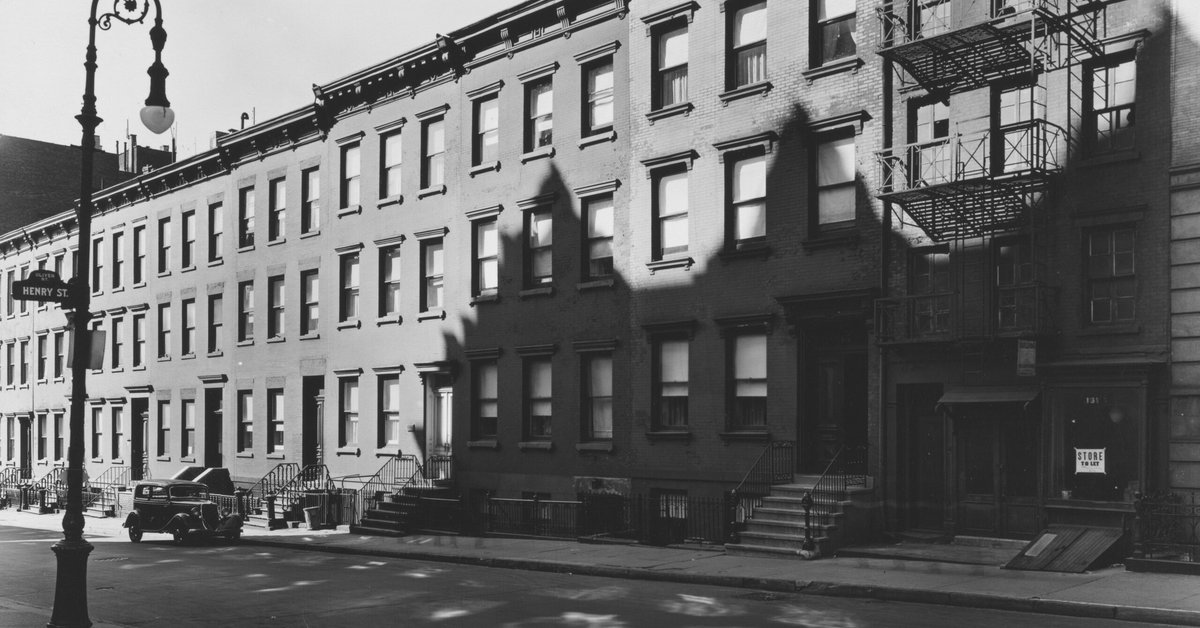
The streets of the old Irish immigrant neighbourhoods in Lower Manhattan still carry traces of the 1930s in their building fabric — the same tenement blocks, the same fire escapes, the same corner grocery layouts.
Frequently Asked Questions
How did New York’s immigrant communities cope during the Great Depression?
Mutual aid societies, community organisations, and political clubs formed the main safety net. Jewish landsmanshaftn, Italian community groups, and Irish political clubs all distributed food, money, and support to members who had lost work. These networks kept thousands of families in their homes during the worst years.
What did Fiorello La Guardia do for immigrant families in the 1930s?
La Guardia, elected mayor in 1933, partnered with Roosevelt’s New Deal to bring federal funding into the city. WPA workers repaired public buildings, built parks and schools, and put tens of thousands of unemployed New Yorkers back to work. La Guardia also launched New York City’s first public housing programme in 1935.
Where can I find records about my family’s life in 1930s New York?
Start with the 1940 federal census, free at familysearch.org. It records every household member by name, age, occupation, and address. The New York Public Library holds WPA oral histories and photographs from the period. The Tenement Museum at 97 Orchard Street can help trace specific tenement addresses and family histories.
What was daily life like for children in immigrant families during the Depression?
Many children left school early to contribute to family income. Boys sold newspapers, shined shoes, or ran errands. Girls often helped with piecework sewing at home. Families also took in boarders to cover rent. Despite the hardship, neighbourhood life remained close-knit — immigrant communities looked after their own.
Which immigrant groups had the hardest time during the Great Depression in New York?
All immigrant communities suffered, but those concentrated in manual industries felt it earliest and most severely. Garment workers — mostly Jewish and Italian women — lost work when factories closed. Construction labourers — largely Italian and Eastern European — found no new projects. Dock workers — many of them Irish — watched shipping volumes collapse. By 1932, unemployment in some immigrant neighbourhoods ran above 40 per cent.
Ready to explore the New York your ancestors knew? Subscribe to Love New York — free weekly stories, heritage guides, and hidden history. Join us →
