
In 1910, New York City held 4.7 million people. More than a million of them lived on Manhattan’s Lower East Side.
The streets were loud. They were crowded. They smelled of pickles, coal smoke, and horse dung. This was the New York your ancestors stepped into. They came from Ireland, Italy, Eastern Europe, and beyond. They arrived with almost nothing. And they built lives here anyway.
This article takes you into that world. It shows you what a typical day looked like. Not the guidebook version. The real one.
If you love New York’s hidden stories, you’ll love our free weekly newsletter. Subscribe to Love New York →
The Neighbourhood
Most immigrant families in 1910 lived on the Lower East Side. This small slice of Manhattan was one of the most densely populated places on Earth. Roughly 500 people lived on every acre of land.
The streets were narrow. Buildings rose five or six storeys high. Between them, the sun barely reached the ground.
Different immigrant groups settled in different pockets of the neighbourhood. Irish families had come first, clustering near the waterfront. By 1910, many had moved uptown. But the streets still remembered them. Jewish families from Eastern Europe filled Orchard and Hester Streets. Italian immigrants settled to the south and east. The Lower East Side had become the most famous immigrant neighbourhood in the world.
Pushcarts lined every block. Vendors sold everything from herring to suspenders. The air was filled with the sound of half a dozen languages at once.
The Tenement
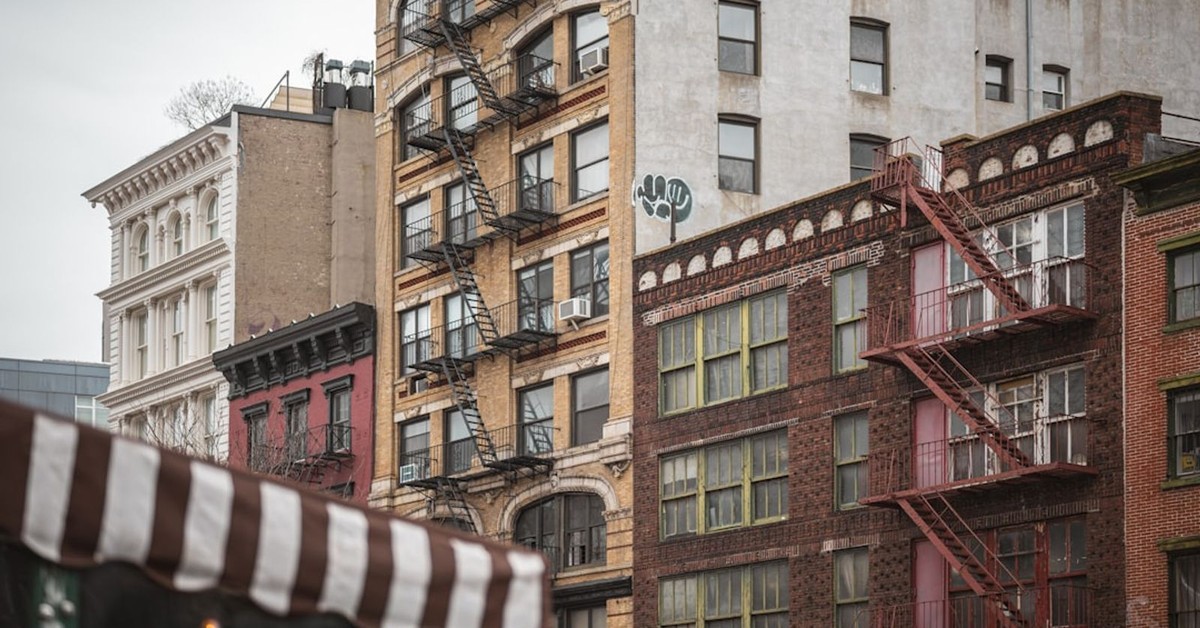
Your great-great-grandparents almost certainly lived in a tenement building. These were narrow, multi-storey structures built to house as many families as possible.
A typical flat had two or three rooms. The front room faced the street. The back room faced a courtyard — or another building just a few feet away. The walls were thin. Every sound carried.
The 1901 Tenement House Act had improved things slightly. New buildings had to have a window in every room. They had to include indoor toilets — one per floor, shared among several families. But many old buildings still stood. Some families still shared a single outdoor privy in the courtyard below.
Rent ran to about ten or twelve dollars a month. That was roughly a week’s wages for most workers. To cover the cost, many families took in boarders. A stranger sleeping on the kitchen floor was not unusual.
A Day in the Life
Waking came early. The factory whistle sounded before six in the morning.
Men and older boys walked to work. The garment factories of the Lower East Side ran from early morning until dusk. A typical shift lasted ten hours. Six days a week. Wages for a man ran to roughly six or eight dollars a week. Women earned less — perhaps four or five. Children who worked earned even less still.
Women kept the household running. They washed clothes in tubs filled with water hauled up from below. They cooked on small coal stoves. They queued at the pushcart markets on Orchard Street and Hester Street.
Markets offered herring, bread, potatoes, and seasonal fruit and vegetables. Prices were low. Haggling was expected. A vendor who accepted the first offer was thought a fool.
Children went to public school. This was new for many families. In the old country, schooling had been limited or costly. In New York, it was free and compulsory. Teachers were strict. English was required. Many children arrived speaking Yiddish, Italian, Polish, or Irish. Within a year or two, they were fluent in English.
After school, the streets became playgrounds. Horses still pulled most carts. Children played stickball between them. Sunday was the only full day off. Families walked to Seward Park or the waterfront. In summer, the ferry to Coney Island offered escape. A round trip cost a nickel.
Community and Connection
Each immigrant group built its own world inside the wider city.
The Jewish community established synagogues, mutual aid societies, and Yiddish newspapers. The Daily Forward, founded in 1897, was one of the most-read papers in the city. It published letters from readers struggling with the new world. It offered advice, argument, and community in equal measure.
The Irish built their parishes. Catholic churches anchored entire streets. The parish priest knew every family. Jobs, school places, and funeral arrangements all flowed through the church. The earlier Irish had transformed entire Manhattan neighbourhoods through these community bonds.
Italian families kept close ties to their home regions. Many men planned to save money and return to Italy. Some did. Most stayed. Their children became New Yorkers.
To the south, Chinatown maintained its own institutions entirely. Its residents faced sharper discrimination than other groups. But the community endured and grew. Its story is one of extraordinary resilience against extraordinary odds.
What Everything Cost
Historians have documented the economics of 1910 immigrant life in careful detail. Here is what the numbers looked like.
- Monthly rent (2-3 rooms, Lower East Side): $10–$12
- Weekly wages (male factory worker): $6–$8
- Weekly wages (female factory worker): $4–$5
- Loaf of bread: 5 cents
- Dozen herrings: 10 cents
- Ten pounds of potatoes: 15 cents
- Coal for a winter month: $5–$8
- Coney Island ferry (return): 5 cents
The maths rarely worked out comfortably. Families stretched every dollar. Clothes were handed down and then handed down again. Nothing was wasted. Luxuries were almost unknown.
Health and Hardship
Tuberculosis was common in the tenements. It spread easily in crowded rooms with little ventilation. The city’s health inspectors were aware of the problem. Progress was slow.
Children’s health was fragile. Infant mortality on the Lower East Side was high. The summer heat was brutal and unrelieved. Charitable organisations ran “Fresh Air” programmes that sent city children to the countryside for a few weeks each summer.
And yet families were resilient. Community networks caught those who fell. Neighbours helped neighbours. The mutual aid societies founded by immigrant communities provided loans, funeral benefits, and support to the sick — at a time when no government safety net existed.
What Remains Today
Much of the physical world of 1910 New York is gone. The pushcart markets vanished. Most of the old tenements were torn down or modernised beyond recognition.
But traces remain.
The Tenement Museum on Orchard Street preserves several apartments exactly as they were. Walking through them is like stepping back in time. The small rooms. The shared staircase. The smell of old wood. Guided tours are required and well worth booking in advance.
Seward Park still stands at the corner of Essex Street and East Broadway. It opened in 1903 as the first public park playground in the United States. Children played stickball here in 1910. It still serves the neighbourhood today.
The Eldridge Street Synagogue on Eldridge Street was built in 1887 and is now a museum. It was the first great house of worship built by Eastern European Jewish immigrants in America. The interior is breathtaking.
Want more stories like this? Our weekly newsletter goes deeper into New York’s heritage every week. It’s free. Subscribe here →
How to Trace Your Ancestors’ World
If your family passed through New York in the early 1900s, their footprint is almost certainly traceable. Here is where to look.
- Ellis Island Passenger Records: Searchable at libertyellisfoundation.org. Enter a name and approximate year of arrival. Records show the ship, departure port, and the name of the relative being joined in America.
- US Federal Census 1910: Available at ancestry.com and familysearch.org. Lists every person at every address. Many census records are now free to search.
- New York City Vital Records: Births, marriages, and deaths from 1866 onward are held by the NYC Department of Records. Death certificates often list birthplace and parents’ names.
- YIVO Institute for Jewish Research: The most comprehensive archive for Eastern European Jewish families. Based in Manhattan.
- New York Public Library Milstein Division: City directories, newspaper archives, and genealogical reference collections.
Walking from Ellis Island to Orchard Street traces the physical journey your ancestors made. It takes an afternoon. The ferry from Battery Park is the starting point. Orchard Street is the ending point. Everything in between is history.
Frequently Asked Questions
What was life like in a New York tenement in 1910?
Tenement flats typically had two or three rooms and housed families of five or more. Conditions were cramped, with shared toilets on each floor and limited natural light. The 1901 Tenement House Act required a window in every room, improving conditions in newer buildings but leaving older stock unchanged.
How much did it cost to live in New York City in 1910?
Rents on the Lower East Side ran to around ten to twelve dollars a month. A working man in a garment factory earned roughly six to eight dollars a week. Food was cheap by later standards, but wages were low — and most families lived very close to the financial edge.
Where can I visit to see what tenement life looked like?
The Tenement Museum on Orchard Street, Manhattan, preserves original apartments from this era exactly as they were. Guided tours — which must be booked in advance — take visitors through flats that once housed real immigrant families, with exhibits based on documented historical records.
How do I find records of my ancestors who lived in New York around 1910?
The US Census of 1910 lists every person at every address in the city and is searchable at ancestry.com and familysearch.org. Ellis Island passenger records are free at libertyellisfoundation.org. The New York Public Library’s Milstein Division holds city directories, newspaper archives, and vital records for this period.
What languages did immigrants speak in 1910 New York?
The Lower East Side was a city of many tongues. Yiddish was the most common language in the Jewish neighbourhoods. Italian was widely spoken in Little Italy and the surrounding streets. Irish was heard near the waterfront. Polish, Romanian, Hungarian, and Russian were all present in different pockets of the neighbourhood.
Ready to explore the New York your ancestors knew? Subscribe to Love New York — free weekly stories, heritage guides, and hidden history. Join us →
Image Credit: Shutterstock
