
Harlem stands as the spiritual heart of African American culture in America. Jazz drifts from brownstone stoops on warm summer nights. The Apollo Theatre still echoes with decades of memory. And beneath every block lies a story of extraordinary courage and creativity.
This is where the Great Migration landed — and where it transformed the world.
If you love New York’s hidden stories, you’ll love our free weekly newsletter. Subscribe to Love New York →
Why Millions Left the South
Between 1910 and 1970, roughly six million African Americans moved north. They left the South for cities like New York, Chicago, and Detroit. Historians call this the Great Migration. It stands as the largest internal movement of people in American history.
The economic push was powerful. The agricultural economy in the South had collapsed. Boll weevil beetles destroyed cotton crops across the region after 1915. Wages for Black farm workers fell close to nothing.
Laws across the South restricted Black Americans at every turn. They governed where people could eat, work, travel, and go to school. The North had no such legal system. That difference mattered enormously to families weighing a move.
The pull factors were equally strong. Northern factories needed workers. The Ford plant in Detroit, the stockyards in Chicago, and the garment factories of New York offered wages that seemed impossible by Southern standards. A man could earn three times as much per week.
New York drew more than its share of new arrivals. And most of them came to Harlem.
How Harlem Became the Destination
Harlem was not always a Black neighbourhood. Developers built it in the 1890s as a prosperous white suburb. Overbuilding created a glut of empty apartments by the early 1900s. Landlords faced mounting losses with few tenants in sight.
Philip Payton Jr. seized the moment. He was a young Black real estate agent with a bold strategy. He approached white landlords with empty buildings and offered a solution. He would fill those buildings with Black tenants who paid reliable rent.
Landlords accepted. The first Black families moved in around 1904 and 1905. Word spread quickly through the small Black community of Manhattan. More families followed. Then more still.
By 1914, tens of thousands of Black residents called Harlem home. By 1920, Harlem held the largest Black community in the United States. The neighbourhood had transformed completely within a single generation.
The 369th Infantry Regiment returned from World War One in February 1919. These men — the Harlem Hellfighters — had served 191 days in combat. No other American unit served longer. France awarded the entire regiment the Croix de Guerre. They marched up Fifth Avenue to a Harlem welcome that shook the city. That march announced something. Harlem had arrived.
Harlem’s transformation echoes other immigrant stories across the city. Five Points built Irish New York through the 1820s and 1830s. A generation later, Little Italy took root in Manhattan as Southern Europeans flooded the docks. New York has always been a city where newcomers claimed their ground.
Life in Harlem During the Migration Years
New arrivals came from Georgia, Mississippi, Alabama, and the Carolinas. They carried their church music, their cooking, their stories, and their blues. Harlem absorbed all of it and turned it into something entirely new.
Rent ran high. Many families took in boarders to cover costs. Six or seven people sharing three rooms was common. The evening hours became social by necessity. Everyone gathered on the stoops, the sidewalks, and at the corner shops.
125th Street became the main artery. Barbers, tailors, grocers, restaurants, and pawnshops lined the block. A visiting journalist of the era called it “the Main Street of Black America.”
The churches anchored everything. Abyssinian Baptist Church moved from Lower Manhattan to West 138th Street in 1923. Under Adam Clayton Powell Sr., it grew into one of the largest Protestant congregations in the country. During the hardship years of the 1930s, the church fed thousands of Harlem residents.
Churches ran more than Sunday services. They operated schools, employment agencies, social clubs, and community meetings. For a newly arrived family with no connections in the North, the church was often the first door that opened.
Want more stories like this? Our weekly newsletter goes deeper into New York’s heritage every week. It’s free. Subscribe here →
The Harlem Renaissance: When Harlem Changed Everything
In the 1920s and early 1930s, something remarkable happened. The energy of the Great Migration collided with creative talent from across the country. Writers, poets, musicians, painters, and thinkers gathered in Harlem parlours and produced work that reshaped American culture.
The Harlem Renaissance lasted more than a decade. It was not a single event but a sustained burst of creative achievement with no real equivalent in American history.
Langston Hughes moved to Harlem and wrote poetry that spoke directly to Black American life. His language was direct and rhythmic. “A Dream Deferred” still appears in American schoolbooks a century later.
Zora Neale Hurston studied anthropology at Columbia while writing short stories that later became classics. Her novel Their Eyes Were Watching God drew on the speech, folklore, and lives of her community in ways that no writer had done before.
Duke Ellington played the Cotton Club from 1927 to 1931. Those performances broadcast across America by radio. White Americans who had never visited Harlem heard his music in their living rooms and wanted more.
Louis Armstrong played Harlem clubs and shaped jazz into the form the world now recognises. Aaron Douglas painted murals that merged African visual traditions with New York’s modern energy. His work appeared in magazines, book covers, and on the walls of Harlem buildings.
The Depression hit Harlem hard in the 1930s. Many artists and writers moved on. But the Harlem Renaissance had planted something permanent in American culture — a confidence, a language, and a body of work that never disappeared.
If you want to understand the full sweep of New York’s immigrant heritage, the Lower East Side Jewish heritage guide traces an equally remarkable story from the same era. The New York of the 1930s shows how all these communities weathered the Depression together.
The Apollo Theatre: Harlem’s Most Famous Stage
The Apollo Theatre opened in 1914 as a burlesque house. It excluded Black audiences entirely at first. New owners reopened the theatre in 1934 with an integrated policy. What followed changed American entertainment forever.
Amateur Night launched in 1934. Audience members voted on performers — loudly and without mercy. Ella Fitzgerald won her first Amateur Night at the Apollo in 1934. Billie Holiday performed there. Stevie Wonder walked those boards as a twelve-year-old in 1962.
The Apollo created careers and ended them on the same stage. Nothing prepared a performer for that audience. Nothing proved a talent more completely.
The theatre still stands at 253 West 125th Street. It still hosts concerts and events. Amateur Night continues.
Where to Visit Harlem’s Heritage Today
The Apollo Theatre (253 W 125th St): Tours run year-round. The Amateur Night tradition continues. Check the Apollo’s website for schedules and tickets.
The Schomburg Centre for Research in Black Culture (515 Malcolm X Blvd): Part of the New York Public Library. It holds one of the world’s largest collections on African American and African diaspora history. Entry is free.
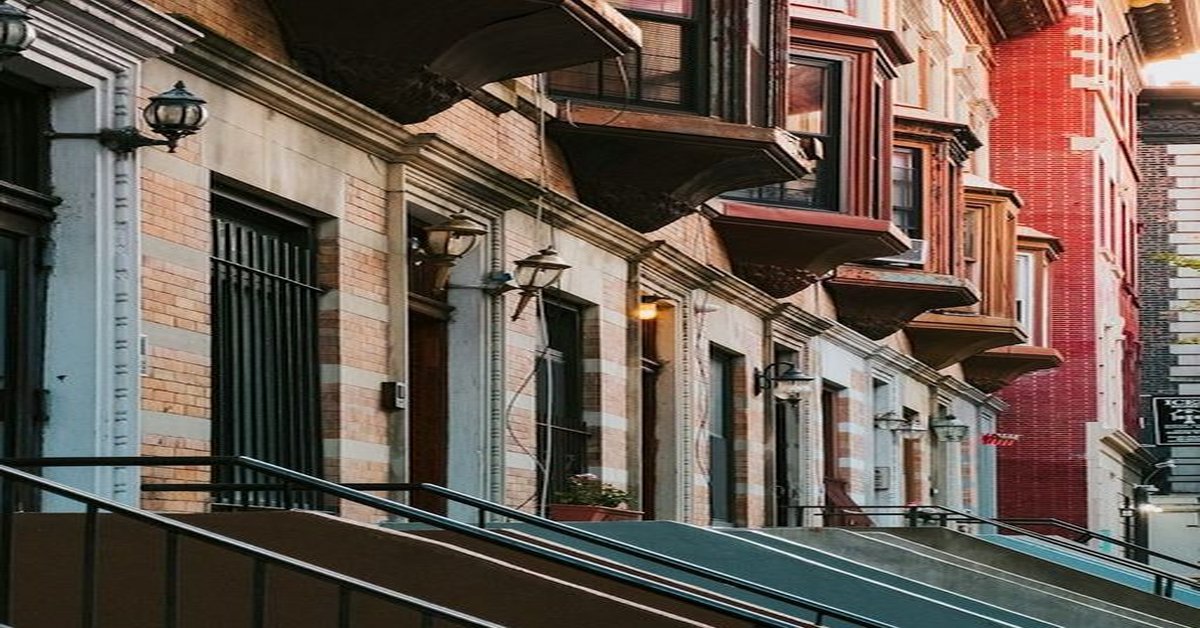
Strivers’ Row (138th and 139th Streets between Adam Clayton Powell Jr. Blvd and Frederick Douglass Blvd): These Romanesque Revival and Renaissance Revival rowhouses date from 1891. Successful Black professionals bought homes here during the migration years. The nickname came from residents who “strived” to make it — and did.
Abyssinian Baptist Church (132 Odell Clark Place): Founded in 1808. The current building dates from 1923. Sunday services welcome visitors.
National Jazz Museum in Harlem (58 West 129th St): Celebrates the music that Harlem gave the world. Regular concerts, educational programmes, and a deep archive of recordings and photographs.
The Studio Museum in Harlem (144 West 125th St): A landmark institution for contemporary Black artists. Free admission on certain days.
Sylvia’s Restaurant (328 Malcolm X Blvd): Sylvia Woods opened this soul food restaurant in 1962. The cooking connects directly to the Southern traditions that migrants carried north.
Tracing Harlem Ancestry
Genealogy research connected to Harlem starts with a few key institutions.
The New York City Municipal Archives holds birth, death, and marriage records from 1866 onward. Many records now appear online through their search portal.
The Schomburg Centre’s research division maintains one of the largest genealogy collections for African American families. Staff members help researchers navigate Southern records, Northern records, and the documentation gaps that many families face.
Ancestry.com carries digitised New York State census records. The 1910, 1920, and 1930 censuses record addresses by street and building. You can often trace a family to a specific apartment block.
The New York Public Library’s Milstein Division holds New York newspaper archives from the migration years. Black-owned newspapers like the New York Age and the Amsterdam News covered Harlem community life in extraordinary detail. These papers can reveal names, addresses, church memberships, and community roles that official records miss.
Ready to explore the New York your ancestors knew? Subscribe to Love New York — free weekly stories, heritage guides, and hidden history. Join us →
Frequently Asked Questions
When did African Americans begin moving to Harlem?
Philip Payton Jr. negotiated the first leases for Black tenants around 1904 and 1905. By 1920, Harlem had become the largest African American community in the United States, swelled by the first wave of the Great Migration from the South.
What was the Harlem Renaissance?
The Harlem Renaissance was a sustained burst of literary, artistic, and musical achievement centred in Harlem during the 1920s and early 1930s. Writers like Langston Hughes and Zora Neale Hurston, musicians like Duke Ellington, and artists like Aaron Douglas all produced landmark work during this period.
How can I trace African American family history connected to Harlem?
Begin with the New York City Municipal Archives for vital records and the Schomburg Centre for Research in Black Culture for its genealogy collections. Ancestry.com holds digitised New York census records that often identify specific streets and buildings where families lived.
What heritage sites are open to visitors in Harlem today?
The Apollo Theatre offers public tours throughout the year. The Schomburg Centre has free admission. Strivers’ Row preserves some of the finest historic brownstones in the city. Abyssinian Baptist Church welcomes visitors to Sunday services.
