
In the 1890s, a single block on Orchard Street held more than 800 people. They came from Russia, Poland, Romania, and Hungary. They crossed an ocean with almost nothing. They changed New York City for ever.
The Lower East Side became the first home of millions of Jewish immigrants from Eastern Europe. Between 1880 and 1924, around two million Ashkenazi Jews arrived in New York. Most of them came straight to this small, densely packed corner of Lower Manhattan. They built a community so extraordinary that its impact still runs through American culture today.
This is their story — and it may be your story too.
If you love New York’s hidden stories, you’ll love our free weekly newsletter. Subscribe to Love New York →
Why Two Million People Left for New York
Jewish communities across Eastern Europe lived in the Pale of Settlement. This was a vast territory in the Russian Empire where the authorities confined the Jewish population. Laws restricted where Jewish people could live, work, and study. Life was exhausting and precarious.
Then the pogroms began.
After the assassination of Tsar Alexander II in 1881, violent mobs attacked Jewish communities across Russia and Ukraine. Hundreds of towns burned. Thousands died. The May Laws of 1882 tightened restrictions further. Families looked west and saw one option clearly: leave.
They came from places with names like Minsk, Odessa, Vilna, Warsaw, Łódź, and Cluj. They carried their languages, their recipes, their prayer books, and their trades. They arrived at Ellis Island, boarded a ferry to Lower Manhattan, and walked straight into the tenements of the Lower East Side.
Many had no money at all. Most spoke no English. All of them planned to stay.
Life Inside the Tenements
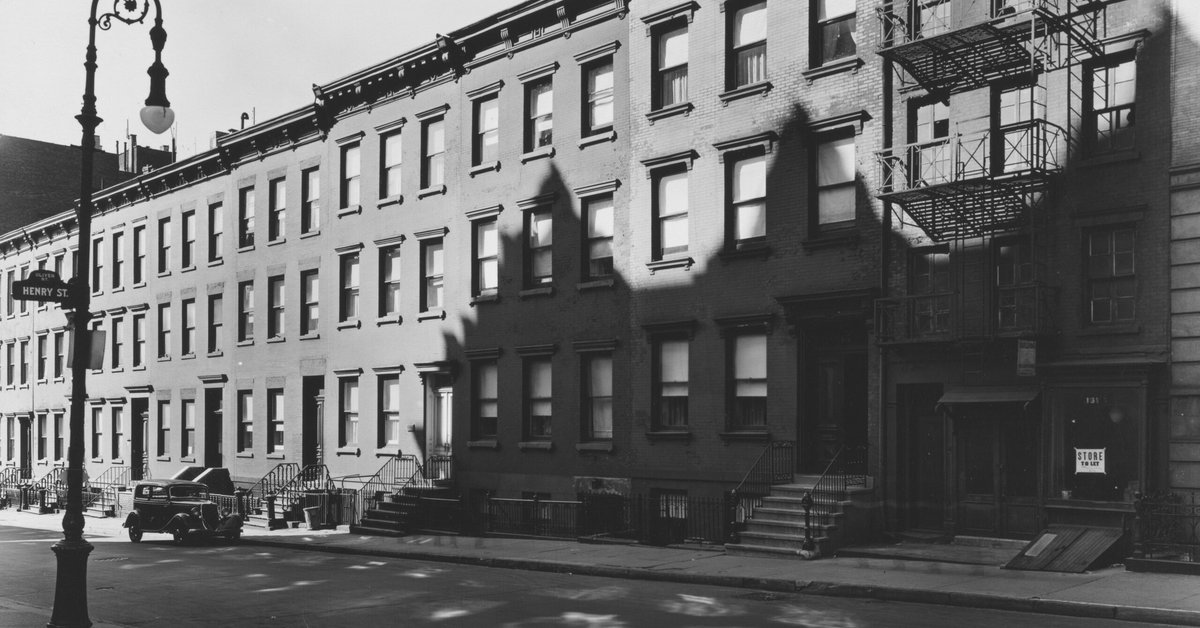
The journalist Jacob Riis walked these streets in the 1880s. His book How the Other Half Lives, published in 1890, showed middle-class Americans what the tenements looked like. The details shocked readers.
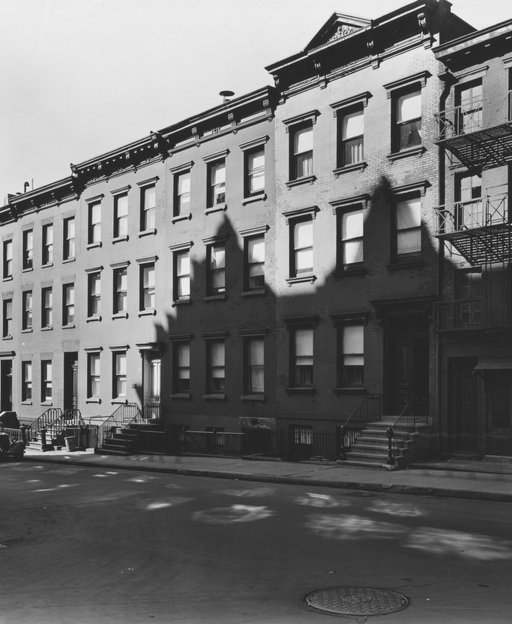
Buildings five and six storeys tall lined Orchard Street, Hester Street, Essex Street, Delancey Street, and Rivington Street. Each building held dozens of apartments. Each apartment held one or two rooms. A family of six or eight lived in those rooms. Another boarder often paid rent for a corner of the space.
Toilets sat in the yard outside. Running water, where it existed, came from a single tap on each floor. Air shafts between buildings provided the only ventilation. In summer, families slept on the rooftops to escape the heat. In winter, the buildings were freezing cold.
This is not ancient history. Many people alive today have grandparents or great-grandparents who grew up on these streets.
The Work That Powered the Neighbourhood
The Lower East Side ran on the garment trade. New York dominated the American clothing industry, and immigrant labour drove the whole operation.
Young women — many of them teenagers — worked long shifts in garment factories. They sewed shirtwaists, blouses, and coats for wages of a few dollars a week. Foremen locked the doors to prevent breaks and theft. The work was relentless.
On 25 March 1911, a fire broke out in the Triangle Shirtwaist Factory on Washington Place. Locked exits trapped the workers inside. One hundred and forty-six people died. Most were Jewish and Italian immigrant women from the Lower East Side.
The tragedy transformed the American labour movement. It powered the rise of the International Ladies’ Garment Workers’ Union. The union brought higher wages, shorter hours, and safer conditions to garment workers across the country.
Outside the factories, the pushcart markets ran all day. Hester Street and Orchard Street drew thousands of vendors and shoppers every morning. Traders sold pickles from wooden barrels, smoked herring, hot corn, fabrics, and second-hand clothing. The noise, the haggling, and the smells were overwhelming to newcomers. Residents called it the market. They called it normal.
Many Lower East Side families moved outward through the 1920s and 1930s. The story of New York in the 1930s shows how they faced the Depression years.
Want more stories like this? Our weekly newsletter goes deeper into New York’s heritage every week. It’s free. Subscribe here →
A Culture That Outlasted the Buildings
The Lower East Side produced one of the great cultural flowerings in American history. It happened in Yiddish — the language that Eastern European Jews carried across the Atlantic.
The Forward (Forverts) newspaper launched in 1897 on East Broadway. It published in Yiddish and eventually reached a circulation of 275,000. Its “Bintel Brief” column published readers’ letters about the struggles of immigrant life: workplace exploitation, family separation, the gap between the old world and the new. It gave a voice to people who had no other.
On Second Avenue and the streets around it, the Yiddish theatre flourished. Playwrights, composers, and performers created a theatrical tradition of real distinction. Many performers who began on the Lower East Side stage later moved to Broadway and to Hollywood.
Irving Berlin grew up on Cherry Street, just blocks from Orchard Street. He performed for coins on the street before he wrote some of the most enduring songs in American history. “God Bless America” and “White Christmas” came from a boy who arrived in New York from Russia at the age of five.
George Burns was born on Pitt Street in 1896. Eddie Cantor grew up on Henry Street. The neighbourhood produced so many entertainers, writers, and thinkers. Historians sometimes call it the most creative square mile in American history.
A parallel story runs on the same streets. The German immigrants arrived before the Jewish waves. The history of Little Germany shows what they built — and what happened next.
Faith, Community, and the Landsmanshaftn
Synagogues rose on almost every block. Some were grand purpose-built buildings. Most met in converted tenement apartments called shtibls. Each group often drew from the same town back in Eastern Europe.
The grandest survivor is the Eldridge Street Synagogue, completed in 1887. The Kahal Adath Jeshurun congregation built it as a statement of permanence and pride. Its Moorish facade and stunning rose window made it one of the most beautiful buildings in the neighbourhood. After decades of decline and near-collapse, a major restoration project brought it back. It reopened as a functioning museum in 2007.
The landsmanshaftn bound communities together beyond the synagogue. These mutual aid groups formed by town of origin. If you came from Białystok, you joined the Białystoker society. It found you work. It helped pay medical bills. It organised funerals. It connected you to others who remembered the same streets and the same customs. These societies gave immigrants something that no institution could replace: the sense that someone already knew where you had come from.
The Move Outward
The 1924 Immigration Act ended mass Jewish immigration from Eastern Europe. By then, many families had begun to prosper. Children who grew up in the tenements became doctors, lawyers, shopkeepers, and teachers. They moved to the Bronx, to Brooklyn’s Brownsville and Flatbush, then further outward to the suburbs.
The neighbourhood changed. Puerto Rican families arrived in large numbers in the 1940s and 1950s. The Chinese community expanded northward from Chinatown. Artists and young professionals arrived in the 1990s and 2000s.
The pushcarts are gone. The sweatshops are gone. Many of the original synagogues have new owners or no owners at all. But the buildings remain. The memories remain. And the descendants of the people who lived here keep coming back.
The story continued in Brooklyn. The Brighton Beach story shows how Soviet Jewish immigrants built a new community there. A different people, a different era — the same enduring spirit.
What You Can Visit Today
The Tenement Museum stands at 97 Orchard Street. Real families lived in this building from the 1860s to the 1930s. The museum has restored several apartments to different historical periods. You walk through the home of the Levines, a family that made garments in their two-room apartment, or the Rogarshevsky family, who moved in from Lithuania in 1905. Tours run daily. Booking in advance is essential, especially for weekends.
The Museum at Eldridge Street at 12 Eldridge Street opens on Sundays and Fridays. The restored interior of the 1887 synagogue is genuinely remarkable. The painted ceilings, the carved ark, and the rebuilt rose window make it one of the most beautiful spaces in Lower Manhattan.
Katz’s Delicatessen at 205 East Houston Street opened in 1888. It served garment workers, theatre crowds, and neighbourhood families then. It still does. The pastrami and corned beef sandwiches follow recipes that have changed very little in more than 130 years.
Russ and Daughters at 179 East Houston Street opened in 1914. Joel Russ arrived from Galicia in Poland and built an appetizing shop that his daughters eventually took over. It still sells smoked fish, pickled herring, and caviar from the same location. It is among the best food shops in the city.
Orchard Street on Sundays still carries echoes of the old market. Some vendors set up stalls. The street itself feels deliberately preserved — a conscious memory of the pushcart era.
How to Trace Your Lower East Side Roots
If your family passed through the Lower East Side, records survive in surprising detail.
The Ellis Island passenger database at The Ellis Island Foundation database holds records for millions of arrivals between 1892 and 1957. Search by surname or by ship name.
JewishGen provides free access to databases covering births, marriages, deaths, and emigration records from hundreds of towns in Eastern Europe. If you know your ancestor’s town of origin, JewishGen often connects you to specific records.
The YIVO Institute for Jewish Research holds the world’s largest collection of material on Eastern European Jewish life. Their archive, at the Centre for Jewish History on West 16th Street, contains passenger lists, community records, and personal papers from hundreds of organisations and individuals.
NYC vital records from 1898 onwards come through the NYC Department of Records and Information Services. You can search digitised indices online and order original documents by post.
The New York Public Library’s Milstein Division holds census records, city directories, and neighbourhood maps. If you know a street name, the directories can often place a family at a specific address.
Frequently Asked Questions
When did Jewish immigrants start arriving in the Lower East Side?
Jewish immigrants had settled in Lower Manhattan since the seventeenth century, but the large-scale Ashkenazi immigration began in the 1880s. The peak years ran from around 1905 to 1914. The 1924 Act sharply cut arrivals from Eastern Europe and ended mass immigration.
What languages did Lower East Side immigrants speak?
Yiddish served as the language of daily life. Most immigrants came from Yiddish-speaking communities in Russia, Poland, Romania, Hungary, and Lithuania. Hebrew served religious purposes. Children learned English in public school, often faster than their parents did.
How can I find records of my Lower East Side ancestors?
Start with the Ellis Island passenger database (libertyellisfoundation.org), JewishGen.org for Eastern European community records, and the YIVO Institute’s archive for organisational and personal papers. NYC vital records from 1898 onwards are available through the NYC Department of Records and Information Services.
Is the Tenement Museum worth visiting?
Yes, without reservation. The restored apartments at 97 Orchard Street reflect documented real families in precise historical detail. Tours run daily, but booking in advance is strongly recommended, particularly for weekend visits.
What food from the Lower East Side tradition can I still find today?
Katz’s Delicatessen (1888) and Russ and Daughters (1914) both operate from their original locations. Both serve food rooted in Ashkenazi Jewish tradition — smoked and cured fish, pickled products, and cured meats that follow recipes largely unchanged for over a century.
Ready to explore the New York your ancestors knew? Subscribe to Love New York — free weekly stories, heritage guides, and hidden history. Join us →
