
Planning 7 days in New York City is one of the best decisions a traveller can make. A full week gives you the freedom to move beyond the tourist trail — to wander into Flushing for exceptional dumplings, walk the Brooklyn Bridge at dawn before the crowds arrive, and end a Tuesday evening with live jazz in a Harlem basement. This guide maps one perfect week, day by day, neighbourhood by neighbourhood.
New York rewards the curious visitor who gives it time. Seven days lets you feel each borough’s rhythm without rushing. You will still want more when you leave — but you will leave knowing you experienced the real city rather than a highlight reel.
Before You Arrive: A Few Planning Notes
New York operates on layers. The version most visitors see — Times Square, the Statue of Liberty, the top of the Empire State Building — is real and worth your time. But the version that keeps people coming back is quieter: a cobblestone lane in SoHo at nine in the morning, the sound of a saxophone drifting across Central Park, a conversation with a stranger at a counter in Astoria.
Plan to use the subway as your main way of getting around. It is fast, cheap, and deeply New York. A seven-day unlimited MetroCard makes financial sense if you plan to travel more than twice a day. Not sure when to go? Our guide to the best time to visit New York City covers every month in detail. For a breakdown of what a week actually costs, our NYC travel budget guide has current figures for accommodation, food, and transport.
Day 1: Classic Manhattan — Central Park, the Met, and Midtown
Morning: Central Park
Start where New York starts its day: Central Park. Enter at 72nd Street, walk the main loop, and stop at the Bethesda Fountain. The park covers 843 acres and took decades to build — but it takes only an hour to feel entirely at home in it.
Walk north towards the Reservoir and the Great Lawn. The skyline you see from here — Manhattan’s towers rising above the treeline — is one of the great views in any city.
Afternoon: The Metropolitan Museum of Art
The Met sits directly on the park’s eastern edge at 82nd Street. Spend two to three hours here and focus on two or three galleries rather than trying to see everything. The Egyptian Wing, the European Paintings galleries, and the rooftop sculpture garden are all exceptional. Admission is suggested but not mandatory — you pay what you choose.
Evening: Midtown Manhattan and a View from the Top
Walk south along Fifth Avenue and take in Rockefeller Center, St Patrick’s Cathedral, and the Theatre District as it comes alive for the evening. Grab a slice of New York pizza from a counter where locals eat. Then head up to Top of the Rock at Rockefeller Center for a view across to the Empire State Building as the city lights up.
Day 2: Downtown Manhattan — History at Every Turn
Morning: The Financial District and the 9/11 Memorial
Take the subway to Wall Street early. The streets are quiet before nine, and the contrast between colonial-era buildings and glass towers hits harder in the morning hush. Walk to the 9/11 Memorial — the twin reflecting pools occupy the footprints of the original towers. It is a profound piece of landscape architecture. Allow at least an hour here.
Nearby, the Oculus transport hub is worth ten minutes even if you do not need to take a train. Santiago Calatrava’s winged white structure is one of the most striking buildings New York built in the 21st century.
Afternoon: Walk the Brooklyn Bridge
Walk the Brooklyn Bridge — one of the great urban experiences anywhere in the world. The crossing takes about thirty minutes at a leisurely pace. Walk from the Manhattan side so you arrive in DUMBO with Brooklyn Heights ahead of you. Stop in the middle, look back at the Manhattan skyline, and take your time.
Evening: DUMBO and Brooklyn Heights
DUMBO — Down Under the Manhattan Bridge Overpass — is one of New York’s most photographed neighbourhoods. The view of the Manhattan Bridge framing the Empire State Building from Washington Street is genuinely arresting. Walk up to Brooklyn Heights for dinner. The Promenade offers a second angle on the Manhattan skyline as the lights come on.
Day 3: Brooklyn — Culture, Coffee, and Character
Morning: Williamsburg
Williamsburg moves at its own pace. Start with a proper coffee at one of the neighbourhood’s independent roasters, then walk Bedford Avenue. The murals, the boutiques, and the extraordinary coexistence of Hasidic Jewish and creative communities make Williamsburg unlike anywhere else on earth. The weekend flea market under the Williamsburg Bridge is one of the city’s best.
Afternoon: Park Slope and Prospect Park
Take the L train south to Park Slope. This is where Brooklyn raises families, and the neighbourhood has the feel of a small city within the city — brownstone-lined streets, excellent bookshops, and farmers’ markets at weekends. Prospect Park is Brooklyn’s answer to Central Park, designed by the same landscape architects, and far quieter.
Our full guide to Brooklyn for tourists covers every neighbourhood worth your time in the borough.
Evening: Dinner in Carroll Gardens
Carroll Gardens holds some of Brooklyn’s finest Italian restaurants — a legacy of the neighbourhood’s Sicilian community. Eat well here and take a slow walk back along the canal paths before heading home.
Day 4: Harlem and Uptown — Music, History, and Soul
Morning: Harlem’s Cultural Landmarks
Take the A or C train to 125th Street. Harlem is where the Harlem Renaissance happened — the extraordinary flowering of African American art, music, and literature that changed New York and the world in the 1920s. Walk past the Apollo Theater, the Studio Museum in Harlem, and the Abyssinian Baptist Church, one of the great Gothic churches in America.
Sylvia’s Restaurant on Lenox Avenue is the neighbourhood’s most famous soul food institution. Sunday brunch with live gospel music is an experience, but any meal here is worth the visit.
Afternoon: The Upper West Side
Walk south along Riverside Drive and into the Upper West Side. This is one of Manhattan’s most liveable neighbourhoods — wide avenues, pre-war apartment buildings, independent bookshops, and the American Museum of Natural History. The Rose Center for Earth and Space inside the museum is extraordinary, and the planetarium shows are worth booking ahead.
Evening: Live Jazz in Harlem
Return to Harlem for the evening. The Shrine World Music Venue on Adam Clayton Powell Jr Boulevard hosts live jazz most nights, and entry prices are modest. Minton’s Playhouse, where bebop took shape in the 1940s, still hosts sessions on weekends. This is not background music — it is the living culture of New York City.
Day 5: Queens — The World on One Island
Morning: Flushing
Take the 7 train to Flushing, the end of the line. You step out into one of the most extraordinary food destinations in North America — a vast Chinese community with food courts under New World Mall and along Main Street serving dishes from Fujian, Sichuan, Shanghai, and Taiwan. Arrive hungry and plan to eat in stages.
Afternoon: Astoria
Take the 7 train back towards Manhattan and change to the N or W train for Astoria. This Greek neighbourhood holds some of the best casual restaurants in New York City. The Museum of the Moving Image occupies a beautifully converted former public school and covers film, television, and digital media with genuine intelligence. The afternoon screenings are rarely crowded.
Evening: Long Island City
Long Island City sits directly across the East River from Midtown Manhattan and offers one of the finest skyline views in the city — and one of the least visited. MoMA PS1, the contemporary art space, stays open late on certain evenings. The view from the outdoor courtyard is exceptional, and entrance is often free with a MoMA membership.
Day 6: The High Line, Chelsea, and the West Village
Morning: The High Line
Enter the High Line at Gansevoort Street in the Meatpacking District and walk the full elevated park north towards Hudson Yards. The High Line runs on a former freight railway above the streets of west Manhattan, and the mix of native gardens, commissioned art installations, and Hudson River views makes it one of the great urban transformations of the past two decades. Go early — it fills up by mid-morning.
Afternoon: Chelsea Market and the Gallery District
Chelsea Market occupies a full city block on Ninth Avenue and houses some of the finest food vendors in the city. Take your time working through it. Afterwards, walk the Chelsea gallery district between 24th and 27th Streets — dozens of international galleries cluster in former industrial buildings here. Entry is always free, and the standard of work is consistently high.
Evening: Greenwich Village and the West Village
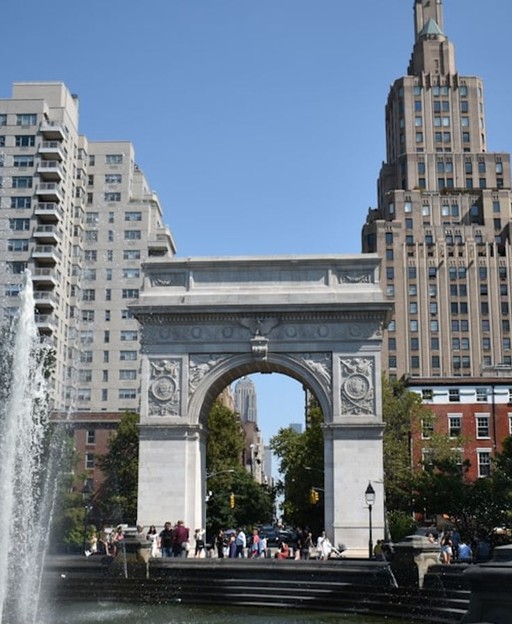
Walk south into Greenwich Village. These are among the most beautiful streets in New York — narrow, winding lanes lined with 19th-century townhouses. Washington Square Park fills up in the afternoon with chess players, street musicians, and dogs. The West Village, north-west of the park, holds some of the neighbourhood’s finest restaurants. Book ahead for a Saturday night table.
Day 7: Your New York — Make It Personal
The seventh day is yours to shape around what moved you most. Perhaps you want to return to a museum you gave only an hour to. Perhaps you spotted a neighbourhood from the subway window and never stopped. Perhaps you want to explore the hidden corners that most visitors never find.
Suggested Options for Your Final Day
The Bronx rarely appears on tourist itineraries, but the New York Botanical Garden is one of the great gardens of the world. The Staten Island Ferry is free and offers a spectacular crossing of New York Harbour with views of the Statue of Liberty and lower Manhattan. Coney Island’s boardwalk, open from spring through autumn, is one of the city’s great pleasures — part amusement park, part local beach, part living piece of New York history.
For a full breakdown of what to do at no cost, our guide to free things to do in New York City has over forty ideas — many of which you will not yet have reached.
A Final New York Evening
End your week with dinner somewhere that matters. The city has thousands of excellent restaurants at every price point. Book somewhere you would not normally try — a counter-service ramen bar in the East Village, an Argentine steakhouse in Jackson Heights, a Yemeni restaurant in Flatbush. New York rewards the willing eater above all others.
Practical Notes for Your 7-Day Trip to New York
Getting Around
The subway is the fastest and cheapest way to cross the city. Taxis and ride-shares work well but move slowly in traffic. Cycling is increasingly practical — Citi Bike has stations across Manhattan and Brooklyn, and the dedicated lanes on the Hudson River Greenway are a genuine pleasure. Walking is always the best option within a single neighbourhood.
What to Book in Advance
Book the 9/11 Memorial Museum, the Statue of Liberty ferry, and any Broadway shows several weeks ahead — not because they sell out instantly, but because prices rise closer to the date. Restaurants worth going to also need advance reservations, especially at weekends. Everything else in this guide you can approach on the day.
Neighbourhoods Worth Knowing
New York has dozens of distinct neighbourhoods, each with its own character and history. Our guide to the best neighbourhoods in New York City for tourists gives you the full picture — including where to stay depending on your priorities.
Frequently Asked Questions About 7 Days in New York City
Is 7 days enough time to see New York City?
Seven days gives you enough time to explore Manhattan’s main sights alongside at least two outer boroughs — Brooklyn and Queens — and to experience Harlem, the High Line, and several of the city’s great museums. You will not see everything New York holds in a week, but you will experience enough of the real city to understand why so many visitors come back.
What is the best way to get around New York City for a week?
The subway is the best way to move across New York City. A seven-day unlimited MetroCard covers all subway lines and local buses for a fixed price. For trips within a single neighbourhood — the West Village, Chelsea, the Upper West Side — walking is almost always faster than any transport. Cycling is a good option along waterfront routes like the Hudson River Greenway.
How much does a week in New York City cost?
A week in New York City can range dramatically depending on your accommodation choice and eating habits. Budget travellers staying in hostels and eating at food markets or pizza counters can manage on far less than those staying in Midtown hotels and dining at restaurants. The city’s best experiences — Central Park, the Brooklyn Bridge, the High Line, the free museum entry days, the Chelsea galleries — cost nothing at all.
What should I not miss on a first visit to New York City?
On a first visit, do not miss the Brooklyn Bridge walk, Central Park, the 9/11 Memorial, the High Line, and at least one outer borough — Brooklyn or Queens. The best New York experiences are often the simplest: eating a proper bagel in the morning, riding the subway through rush hour, sitting in a neighbourhood park and watching the city go by around you.
Join 1,000+ New York Lovers
Every week, get New York’s hidden gems, local secrets, and travel inspiration — the kind you won’t find in any guidebook.
Subscribe free — enter your email:
Love more? Join 64,000 Ireland lovers → · Join 43,000 Scotland lovers → · Join 30,000 Italy lovers →
Free forever · One email per week · Unsubscribe anytime
