
Central Park sits in the middle of Manhattan, covering 843 acres between the Upper East Side and Upper West Side. It stretches from 59th Street in the south to 110th Street in the north, and from Fifth Avenue on the east to Central Park West on the west. More than 42 million people visit every year, making it one of the most visited parks on the planet. Whether you have an afternoon or a full day, it rewards careful planning.
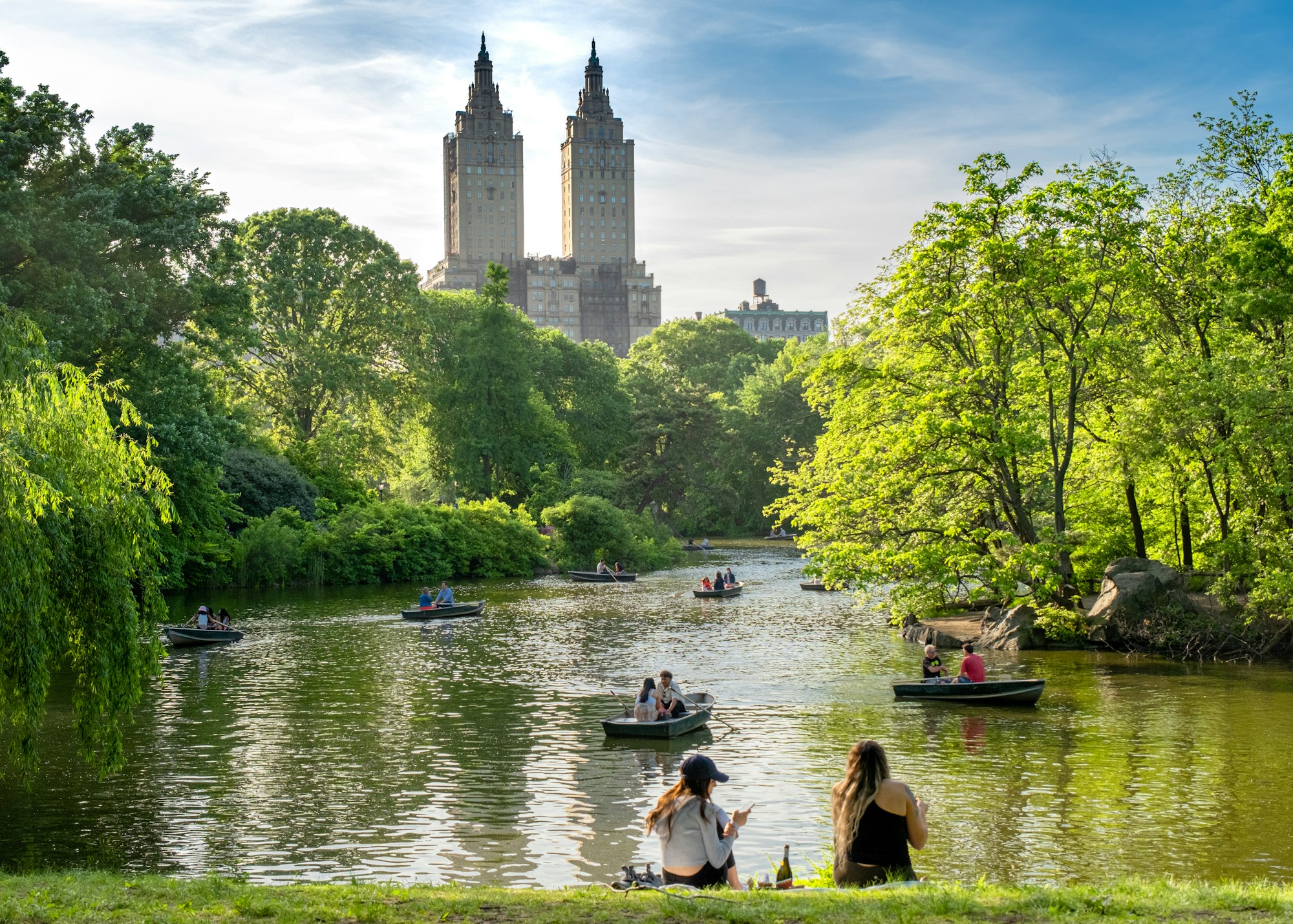
The park was designed by Frederick Law Olmsted and Calvert Vaux in the 1850s. Construction began in 1858, and it took more than 20 years to complete. Around 20,000 workers moved roughly 10 million cartloads of material to transform what was rocky, swampy ground into the landscape you see today. It is now a National Historic Landmark.
How to Get to Central Park
Central Park has multiple entry points and is well-served by the New York City subway. The most convenient stations depend on which part of the park you plan to visit.
For the southern end of the park, take the N, R, or W train to Fifth Avenue/59th Street, or the A, B, C, D, or 1 train to Columbus Circle. For the middle sections, the B and C lines run along the western edge of the park, with stops at 72nd Street, 81st Street, 86th Street, 96th Street, 100th Street, and 103rd Street. The 6 train stops along Lexington Avenue on the east side of Manhattan, with the 77th Street and 86th Street stations placing you a short walk from the park’s eastern entrances.
If you are staying in Midtown, the park is walkable from most hotels. Head north on any avenue west of Lexington and you will reach the southern boundary within 15 to 20 minutes on foot. Taxis and ride-share services can drop you at any of the park’s 18 entrances. Cycling into the park is also an option — several Citi Bike docking stations sit just outside the perimeter.
What to See and Do in Central Park
The park contains 36 bridges, 21 playgrounds, two ice-skating rinks, a reservoir, a zoo, multiple museums, and over 9,000 benches. Below are the landmarks that are worth your time.
The Lake and Loeb Boathouse
The 22-acre Lake sits near the middle of the park and is one of its most recognisable features. Row boats are available for hire from the Loeb Boathouse, usually from April through November, weather permitting. The cost is around $20 for the first hour, with a cash deposit required. Gondola rides are also available if you prefer to let someone else do the paddling. The boathouse has a lakeside restaurant and a casual café, both popular at weekends.
Bethesda Terrace and Fountain
Bethesda Terrace sits at the centre of the park and is one of the most photographed spots in New York. The Bethesda Fountain, completed in 1873, is topped by the Angel of the Waters statue — the only sculpture commissioned as part of the park’s original design. The terrace itself features elaborate sandstone carvings and an underground arcade decorated with Minton tile. It is busy most days but especially crowded at weekends. Go early in the morning for the best photos and a quieter experience.
Strawberry Fields
Located on the western side of the park near 72nd Street, Strawberry Fields is a 2.5-acre memorial to John Lennon, who lived and died nearby at the Dakota building. The focal point is a black and white mosaic on the ground that reads “Imagine.” There are usually flowers placed here, and street musicians often perform in the area. It is a quiet, contemplative spot despite the steady stream of visitors.
The Great Lawn
The Great Lawn is an eight-acre oval in the middle of the park, between 79th and 85th Streets. It has eight baseball diamonds and is used for large public events, including concerts and outdoor film screenings in summer. The Metropolitan Museum of Art sits just east of the park at 82nd Street — well worth combining with a morning or afternoon here. The Delacorte Theater, which hosts free Shakespeare in the Park performances each summer, is just north of the Great Lawn near 80th Street. Tickets are free but in very high demand; queue early or use the online lottery.
Central Park Zoo
The Central Park Zoo occupies a small footprint near the southeastern corner of the park at 64th Street and Fifth Avenue. It houses around 130 species across three climate zones: the Tropic Zone, the Polar Circle, and the Temperate Territory. It is compact by zoo standards — you can see it fully in two to three hours. There is an admission fee; children under three enter free. An adjoining Tisch Children’s Zoo lets younger visitors meet domestic animals up close.
When to Visit Central Park
Central Park is open every day of the year, from 6am to 1am. The best seasons to visit are spring and autumn, when temperatures are comfortable and the park looks its best. Cherry blossoms bloom across the park in April and early May, particularly along the paths near the Reservoir and in the area called the Conservatory Garden. Autumn brings strong foliage colour from late October through mid-November.
Summer is the busiest season. Weekends between June and August see very large crowds, particularly around Bethesda Terrace, the Boathouse, and the zoo. If you visit in summer, aim for early mornings on weekdays. The heat and humidity in July and August can be significant, so carry water and plan rest breaks.
Winter has its own appeal. The Wollman Rink (in the southern part of the park) and the Lasker Rink (near 106th Street) both open for ice skating from roughly October through April. Snow transforms the park dramatically — if a snowfall is forecast, it is worth getting out early the next morning before the paths fill up.
Practical Tips for Your Visit
Entry and Cost
There is no charge to enter Central Park itself. The zoo, ice rinks, carousel, and Conservatory Garden are free, though the zoo and rinks charge admission. The carousel costs $3 per ride. Shakespeare in the Park performances are free, but tickets must be obtained in advance through the Public Theater’s lottery system.
Getting Around Inside the Park
The park is large. Walking from the southern end at 59th Street to the northern end at 110th Street is roughly 2.5 miles. If you plan to cover a lot of ground, hire a bike — several rental outlets operate just outside the park entrances, and Citi Bike docking stations are available inside the park as well. The main loop road through the park is closed to motor vehicles most of the time and is popular with cyclists, runners, and inline skaters. Pedicabs (bicycle rickshaws) also operate within the park and can be a convenient way to cover distances, though agree a price before setting off.
Food and Drink
There are several options for food within the park. The Loeb Boathouse restaurant is the most formal and sits in a scenic spot by the lake; reservations are advisable for dinner. Le Pain Quotidien operates a casual café near the Mineral Springs Pavilion. A number of food carts and kiosks are spread throughout the park, selling hot dogs, pretzels, and snacks. Prices at in-park vendors are higher than outside the park. If you are on a budget, buying food from a deli or grocery store on the surrounding streets before entering is a sensible option.
Safety and Rules
Central Park is generally safe during daylight hours and into the early evening. The park is patrolled by the New York City Police Department and the Central Park Conservancy. Avoid secluded areas after dark. Cycling on pedestrian paths is prohibited; use the designated loop road. Dogs must be kept on leads between 9am and 9pm; there are designated off-lead areas in the early mornings and evenings. Drones are not permitted without a special permit.
The Central Park Conservancy, a non-profit organisation, maintains the park and has done so since 1980. If you enjoy your visit, their website has information on how to support the park’s upkeep.
Photo: Harry Gillen / Unsplash
