
Walk down to the southern tip of Manhattan, and you will find a lawn, a harbor and a lot of glass towers. You will not find a sign saying that a whole Arab neighborhood once stood here. Yet for around sixty years, Washington Street was the heart of Arab America. Newspapers, churches, bakeries and families filled its blocks. Almost none of it stands today.
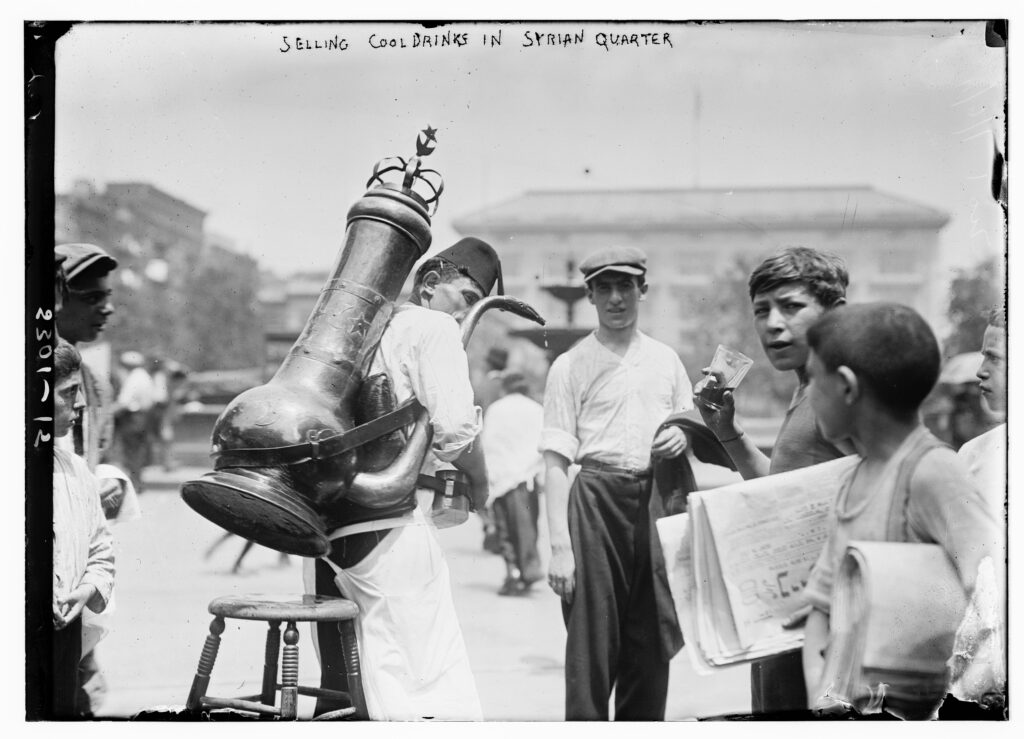
This is the story of Little Syria. It is also a practical guide. If your family came from Mount Lebanon, Syria or the wider Ottoman world, one of your ancestors may have lived here. We will show you where to look.
If you love New York’s hidden stories, you’ll love our free weekly newsletter. Subscribe to Love New York →
Where Little Syria Stood
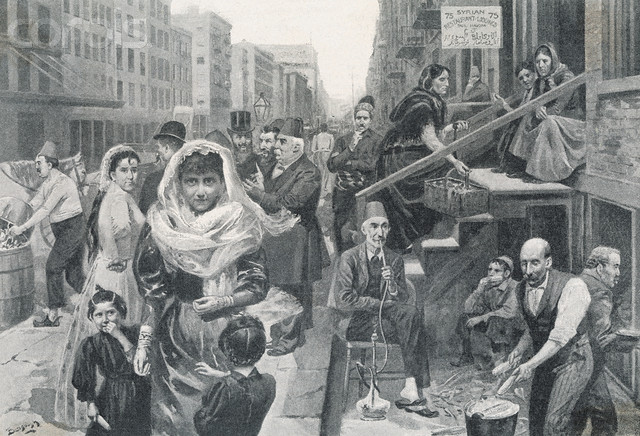
Little Syria sat on Manhattan’s Lower West Side, and the New York Public Library’s feature Remembering Manhattan’s Little Syria is a good first stop for its history. It ran along Washington Street from Battery Place up past Rector Street. Sources draw the borders a little differently, so treat the edges as fuzzy. The core was a few short blocks near the Hudson River docks.
Newspapers of the time called it the Syrian Quarter or the Syrian Colony. The word “Syrian” then meant something wider than today’s country. It covered the Ottoman province of Greater Syria, including Mount Lebanon. Most early arrivals were Christian merchants and craftspeople from that region.
The neighborhood was never only Arab. Irish, German, Slavic and Scandinavian families lived on the same streets. Their tenements stood next door to Syrian shops. That mix is typical of old Lower Manhattan. You can read the same story in our guide to Five Points and the Irish immigrants who lived a short walk away.
How the First Syrian New Yorkers Arrived
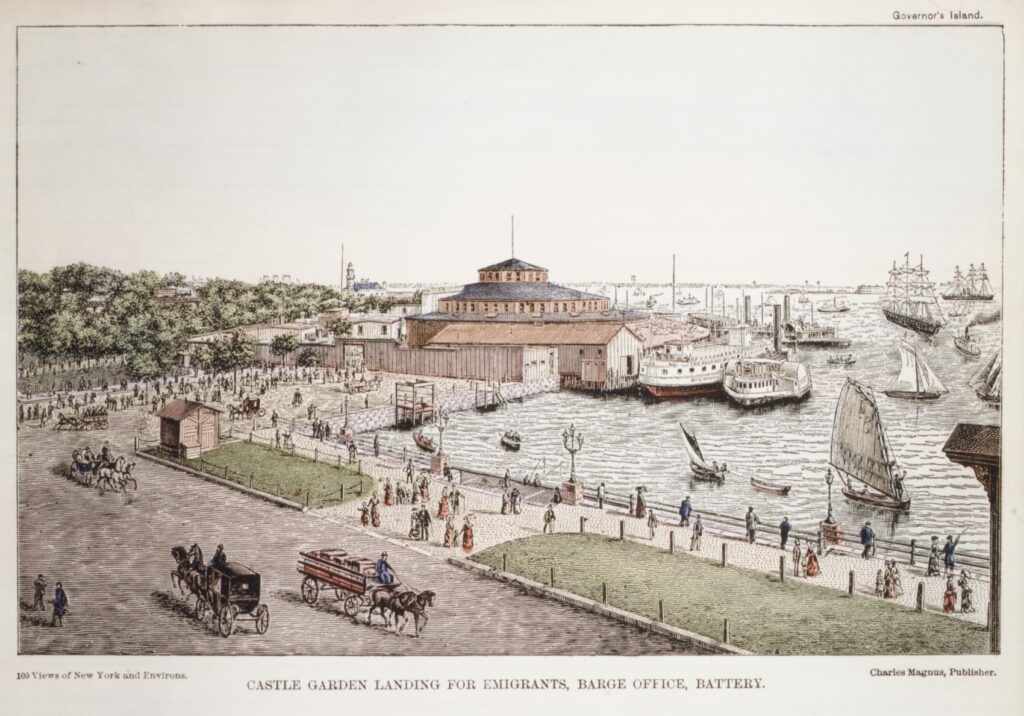
The first permanent Syrian settlers reached New York by the early 1880s. They landed at Castle Garden, the immigrant depot at the Battery, which the National Park Service now looks after as Castle Clinton National Monument. Ellis Island did not open until 1892. A report from 1882 counted fewer than 1,000 Syrians in Manhattan. By 1899 a New York Times article described around 3,000 residents in the quarter.
They came for work, and many left homes in Mount Lebanon. Few spoke English on arrival. Most settled near the docks because that is where the boats came in.
If your family arrived through the port, our Statue of Liberty and Ellis Island visitor guide explains how the later inspection system worked.
Peddlers, Seamstresses and Shopkeepers
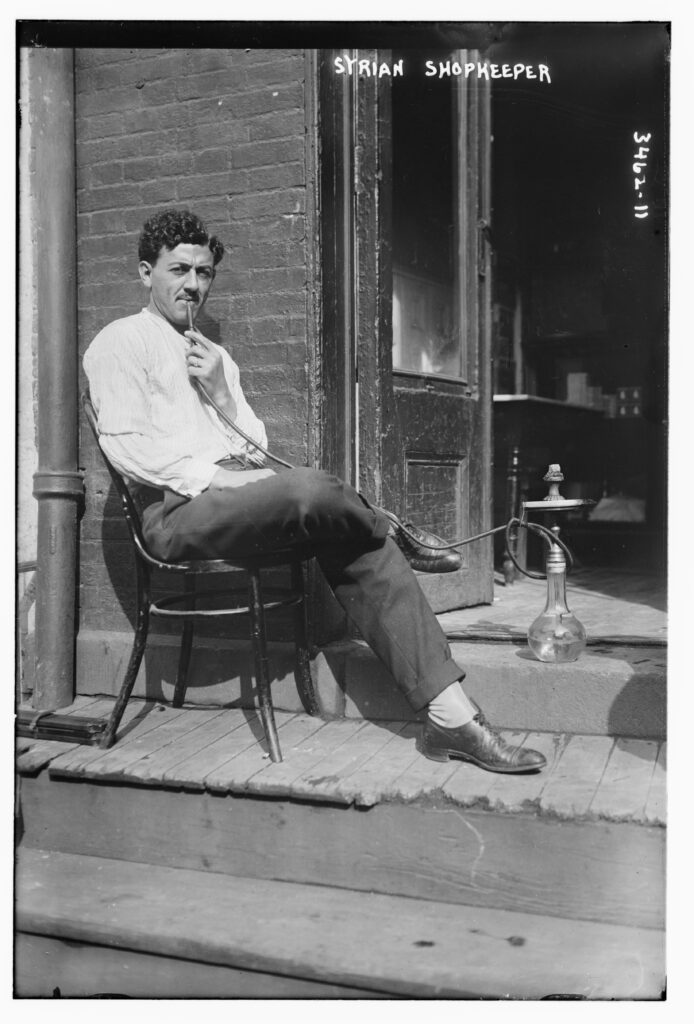
Many Syrian men started as pack peddlers, a story the Arab American National Museum in Dearborn, Michigan, records as part of Arab American history from the first arrivals of the late 1800s. They carried loads of small goods, often between 40 and 80 pounds. They sold in Manhattan during the week. In summer many walked the roads of upstate New York and beyond.
Peddlers sold embroideries, damask cloth, and olive-wood rosaries and crosses. Importers on Washington Street supplied their stock. A peddler who saved enough could open a shop. Some opened an import business of their own.
Women worked too. They sewed, they ran shops, and some worked in mills and factories. Others built businesses. The neighborhood needed every pair of hands it could get.
Want more stories like this? Our weekly newsletter goes deeper into New York’s heritage every week. It is free. Subscribe here →
The Streets That Printed Arabic
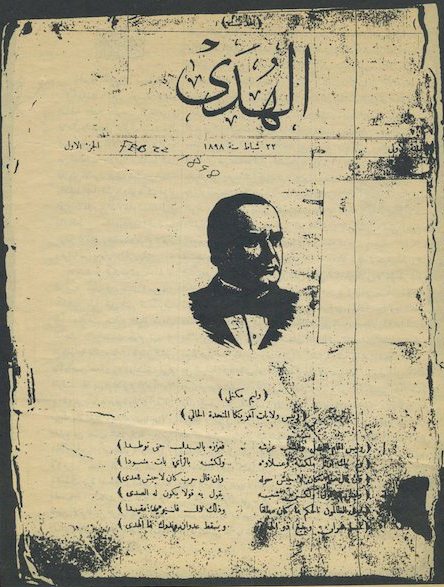
Little Syria became a publishing center for the Arabic-speaking world in America, and NC State University’s Khayrallah Center for Lebanese Diaspora Studies collects and digitizes material from these early communities. More than 50 Arabic-language newspapers and magazines came out of the neighborhood. That is a remarkable number for a few blocks.
Kawkab America began in 1892. The Arbeely brothers founded it, and its readers were mostly Orthodox Christians. Naoum Mokarzel founded Al-Hoda in Philadelphia in 1898, his brother Salloum joined him a year later, and the paper moved to New York in 1902 (NC State University Libraries, Al-Hoda collection). Printers there adapted Linotype machines to set Arabic type. The paper became one of the best-known Arabic papers in the country.
An English-language magazine followed. The Syrian World spoke to American-born children who no longer read Arabic well. It closed in 1932. The first Syrian-owned bank in the neighborhood, D. J. Faour and Bros., folded by 1935.
Kahlil Gibran, the author of The Prophet, belongs to this wider story. He was a Lebanese-born New Yorker who wrote in both Arabic and English. He and other Arab American writers built a literary world in the city. Their audience included the readers of these Washington Street papers.
Churches, Cafés and the Food That Stayed
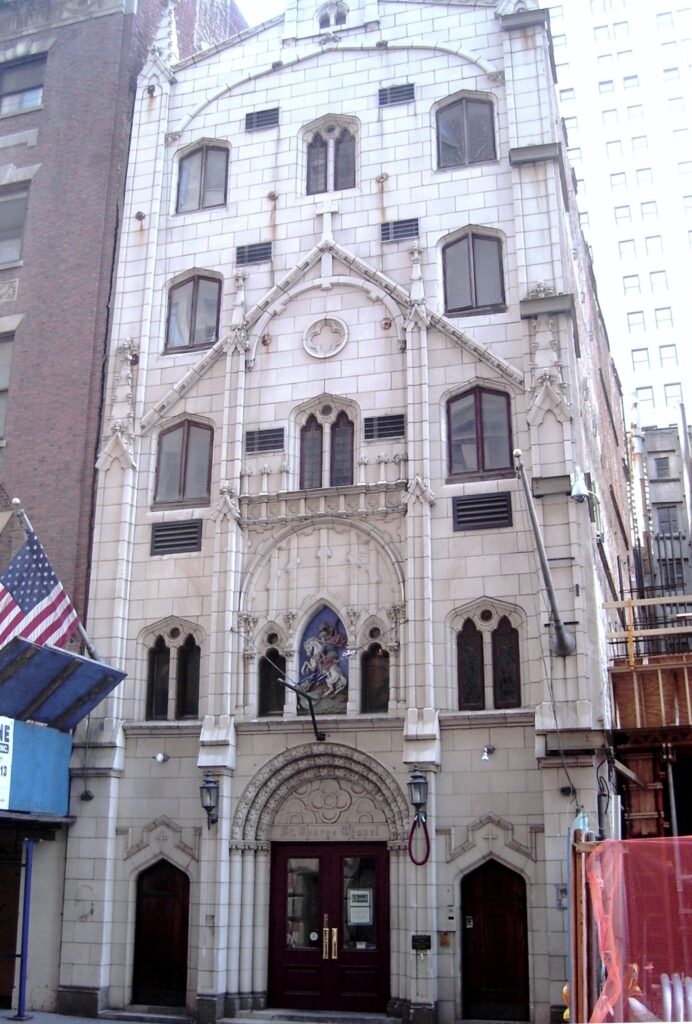
Faith held the community together. Three churches stood on Washington Street. They included an Orthodox congregation named for St. Nicholas and a Melkite church, St. George’s. A Maronite congregation, St. Joseph’s, also served the area.
Food held it together too. Bakeries sold flatbread and sweets. Cafés served strong coffee. Sahadi’s, the family grocery, opened on Washington Street in the 1890s. It later moved to Atlantic Avenue in Brooklyn. Its own website tells the rest of the story.
That move tells the larger story. When the old streets disappeared, the shops followed their customers across the river.
Why Little Syria Disappeared
In the 1940s the city planned the Brooklyn-Battery Tunnel. Its entrance ramps needed the land. By August 1946, residents and businesses on lower Washington Street had received condemnation notices. Crews knocked down the blocks. The tunnel opened in 1950.
The last remnants fell about twenty years later. The World Trade Center site needed more room. Few buildings survived either wave of clearance.
Families moved in several directions. Many chose Brooklyn Heights, Sunset Park and Bay Ridge. Brooklyn’s Atlantic Avenue became the new commercial strip. Other families settled in New Jersey. You can read about a neighboring Brooklyn community in our guide to Sunset Park’s immigrant history.
What You Can Still See Today
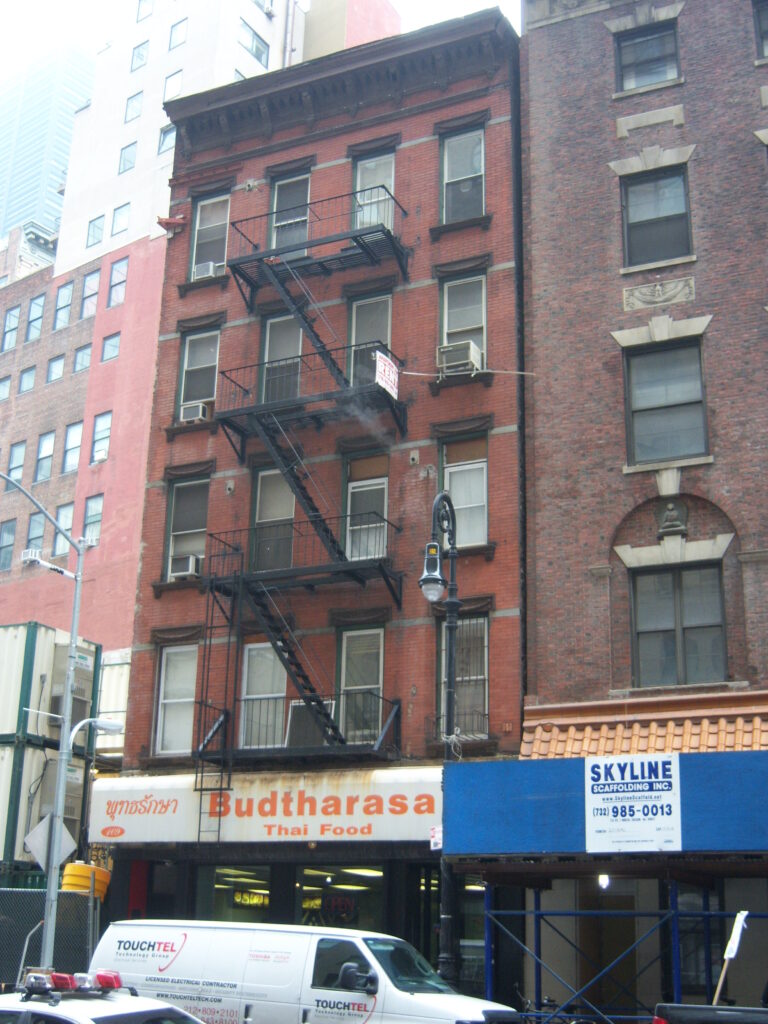
A small set of places keeps the memory alive, and one of them is a city landmark protected by the New York City Landmarks Preservation Commission. Plan an hour for this short walk.
- 103 Washington Street. This is the former St. George’s Syrian Catholic Church. The congregation formed in 1889 and bought the building in 1925. It became a New York City landmark in 2009. The building has since housed a pub.
- 109 Washington Street. This surviving tenement is a rare piece of the old streetscape. Preservation groups have campaigned to protect it and the neighboring Downtown Community House.
- Elizabeth H. Berger Plaza. This small plaza stands at Trinity Place, Greenwich Street and Edgar Street. Plaques there explain the neighborhood’s history.
- The Battery. Finish on the waterfront lawn where many families first stepped ashore, beside Castle Clinton.
Before you go, read the New York Public Library’s short feature, Remembering Manhattan’s Little Syria. It points to archive material for researchers. Check every site’s own page for current access before you travel.
How to Trace a Little Syria Ancestor
Start with what your family knows. Ask about a village name, a church or a shop. Spelling changed often, so search for several versions of each name. Arabic names reached American clerks in many forms.
Next, look for the port record and the census entry. Both often list a street address. A Washington Street address near the Battery is a strong clue. Then check the Arabic-language papers of the time for notices of births, weddings and funerals. Our full guide, How to Trace Your New York City Ancestry, walks through each record step by step.
You can also compare your story with other immigrant groups in Lower Manhattan. Our feature on Little Germany and the German immigrants of Kleindeutschland shows how another community rose and faded in the same city.
Frequently Asked Questions
Where was Little Syria in New York City?
Little Syria stood on Lower Manhattan’s Washington Street, close to the Battery. It ran from about Battery Place up past Rector Street. Today the area holds the tunnel approach, office towers and the World Trade Center site.
When did Syrian immigrants settle in Manhattan?
The first permanent settlers arrived by the early 1880s. The community grew through the 1890s and thrived into the early twentieth century. It lasted until the 1940s clearances.
Why did Little Syria disappear?
The city cleared the blocks to build the Brooklyn-Battery Tunnel entrance, which opened in 1950. Later work for the World Trade Center removed most of what remained. Families moved to Brooklyn and New Jersey.
What can visitors see of Little Syria today?
You can see the former St. George’s Church at 103 Washington Street and the tenement at 109 Washington Street. You can also read the plaques at Elizabeth H. Berger Plaza. Sahadi’s, the grocery that began on Washington Street, moved to Atlantic Avenue in Brooklyn.
Ready to explore the New York your ancestors knew? Subscribe to Love New York — free weekly stories, heritage guides, and hidden history. Join us →
