
The Statue of Liberty and Ellis Island sit about a ten-minute ferry ride apart in New York Harbour, and one ticket covers both. This guide shows you how to book, what to see on each island and how to fit the whole trip into a single day from Manhattan.
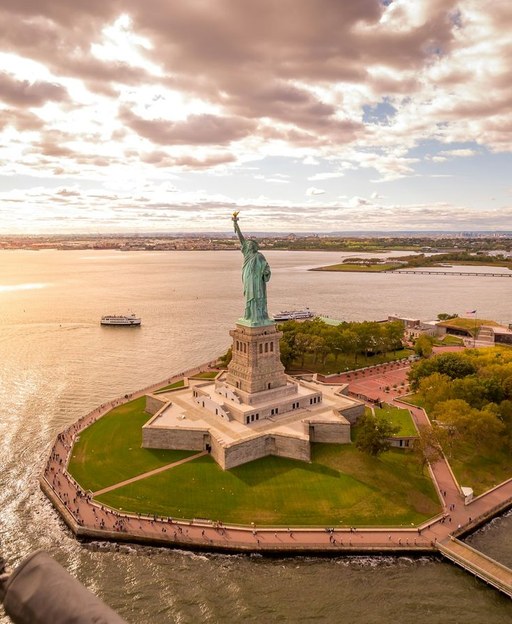
Visiting both islands takes most of a day. Plan on four to five hours once you add the security queue and the ferry rides. Start early, and you will beat the crowds and catch the best light on the harbour.
How to Get to the Statue of Liberty and Ellis Island
Statue City Cruises runs the only ferries that land on Liberty Island and Ellis Island. Boats leave from Battery Park in Lower Manhattan and from Liberty State Park in New Jersey. Book through the official operator, and ignore anyone selling tickets on the street.
A standard ticket includes the round-trip ferry, the grounds on both islands and the Ellis Island Immigration Museum. Every visitor goes through airport-style security before boarding, so allow extra time. The first boat of the day usually has the shortest queue.
- Subway: Take the 1 to South Ferry, or the 4 or 5 to Bowling Green. Both stops sit a short walk from Battery Park.
- Book ahead: Reserve your ticket online before you travel, especially from spring to early autumn.
- Order of stops: The ferry calls at Liberty Island first, then Ellis Island, then returns to the mainland. You can get off at both.
- Check before you go: Fares, timetables and reservation rules change. Confirm them on the official operator and National Park Service sites.
For current opening details, see the National Park Service Statue of Liberty page and the National Park Service Ellis Island page.
Visiting the Statue of Liberty
The Statue of Liberty was a gift to the United States from its oldest ally across the Atlantic, and it was dedicated on 28 October 1886. Frédéric Auguste Bartholdi designed the statue. Gustave Eiffel engineered the iron framework inside it. The statue stands 151 feet tall from base to torch, and the pedestal lifts it to about 305 feet above the ground.
🗽 Free Guide: How to Trace Your New York & American Roots
Step-by-step: Ellis Island records, NYC Municipal Archives, New York State census, naturalization papers, ethnic community resources, DNA testing, and planning a heritage trip. Completely free.
Get the Free Guide → Subscribe free at the guide page to receive weekly New York storiesGrounds, Pedestal and Crown
Every ticket lets you walk the grounds of Liberty Island. The paths circle the statue and give you clear views of the Manhattan skyline. The pedestal and the crown need a ticket type that you must reserve in advance. The torch has been closed to visitors since 1916.
Climbing to the crown means a narrow spiral staircase with no lift. It suits visitors who are comfortable with heights and tight spaces. If you prefer a gentler visit, the pedestal still gives a superb view over the harbour.
The Statue of Liberty Museum
The Statue of Liberty Museum opened on Liberty Island in May 2019. It houses the original torch, which the statue replaced in the 1980s. Allow at least 45 minutes to see the exhibits. The galleries explain how workers built the statue and how it became a symbol of welcome.
You will find a plaque inside the pedestal area that carries Emma Lazarus’s sonnet “The New Colossus”. She wrote the poem in 1883, and the plaque went up in 1903. Many visitors pause here, because the lines capture why millions of families sailed past this spot.
Visiting Ellis Island
From 1892 to 1954, Ellis Island served as the main immigration station for the United States. More than 12 million people passed through its halls. The first person processed was Annie Moore, a teenager who had sailed from Cork, on 1 January 1892.
Today the main building holds the Ellis Island National Museum of Immigration. It first opened as a museum in 1990. Visitors enter through the baggage room and climb to the Registry Room, also called the Great Hall. Stand in the middle of that vast space and picture the queues of newly arrived families.
What to See Inside
- The Registry Room: The tiled hall where inspectors questioned arrivals. Its high vaulted ceiling still amplifies every footstep.
- Exhibits on the journey: Suitcases, clothing, photographs and documents show what people carried and what they left behind.
- The American Immigrant Wall of Honor: Names of immigrants line the walls outside, and the wall faces the Manhattan skyline.
- Audio tour: An audio guide is available on the island. It uses recorded voices of people who passed through.
Tracing a Family Story
Many visitors come here to find an ancestor. The Statue of Liberty-Ellis Island Foundation hosts passenger records on the Foundation’s heritage site, where you can search by name. Bring any family details you have, such as the arrival year and the ship’s name. That spot on the island feels very different once you know a name was recorded there.
Heritage visitors often pair this trip with the neighbourhoods where new arrivals settled. Read about the Jewish families of the Lower East Side and the German families of Kleindeutschland. For daily life after arrival, see our guide to New York tenement life in 1910.
A Sample Day Plan
Use this timeline as a starting point. Adjust it to your ferry time and your energy.
- 8:30 am: Arrive at Battery Park and clear security.
- 9:15 am: Board the first ferry to Liberty Island.
- 9:30 am to 12:00 pm: Walk the grounds, visit the museum and take photos from the water’s edge.
- 12:00 pm: Eat lunch. Both islands have cafés, and you can also pack your own food.
- 12:30 pm to 3:30 pm: Explore Ellis Island and the Registry Room.
- 4:00 pm: Return to Battery Park and explore the Financial District.
Practical Tips for Your Visit
- Wear comfortable shoes. You will walk a lot, and the grounds have little shade in summer.
- Bring layers. The wind on the harbour can feel cold, even in late spring and early autumn.
- Pack light. Security restricts large bags, so travel with a small daypack.
- Sit on the right side. Choose a seat with a clear view of the statue as the ferry approaches.
- Check accessibility. Both islands offer step-free routes for most areas. The National Park Service pages list the details.
If you would rather see Lady Liberty without leaving Manhattan, the free Staten Island ferry gives a distant view. Our Staten Island visitor guide explains that crossing. For more vantage points, browse our best photo spots in New York City.
Best Time to Visit
Early morning on a weekday is the quietest window. Spring and autumn bring mild weather and softer light. Summer brings the biggest crowds and the longest queues. Our month-by-month guide to visiting New York City helps you choose your dates. If you have a full week in the city, our one-week New York itinerary shows where this trip fits.
Frequently Asked Questions
How long does it take to visit the Statue of Liberty and Ellis Island?
Allow four to five hours for both islands, including security and the ferry rides. Visiting only Liberty Island takes about two to three hours.
Where do you buy tickets for the Statue of Liberty and Ellis Island?
Buy tickets from Statue City Cruises, the official ferry operator. The National Park Service website links to the correct booking page.
Can you go inside the Statue of Liberty?
Yes, but only with a reserved pedestal or crown ticket. The torch has stayed closed since 1916, so the crown is the highest point you can reach.
Is Ellis Island worth visiting?
Yes, especially if your family came through New York. The museum tells the immigrant story through objects and photographs, and the Registry Room is one of the most moving places in the city.
Join 1,000+ New York Lovers
Every week, get New York’s hidden gems, local secrets, and travel inspiration — the kind you won’t find in any guidebook.
Subscribe free — enter your email:
Love more? Join 64,000 Ireland lovers → · Join 43,000 Scotland lovers → · Join 30,000 Italy lovers →
Free forever · One email per week · Unsubscribe anytime
