
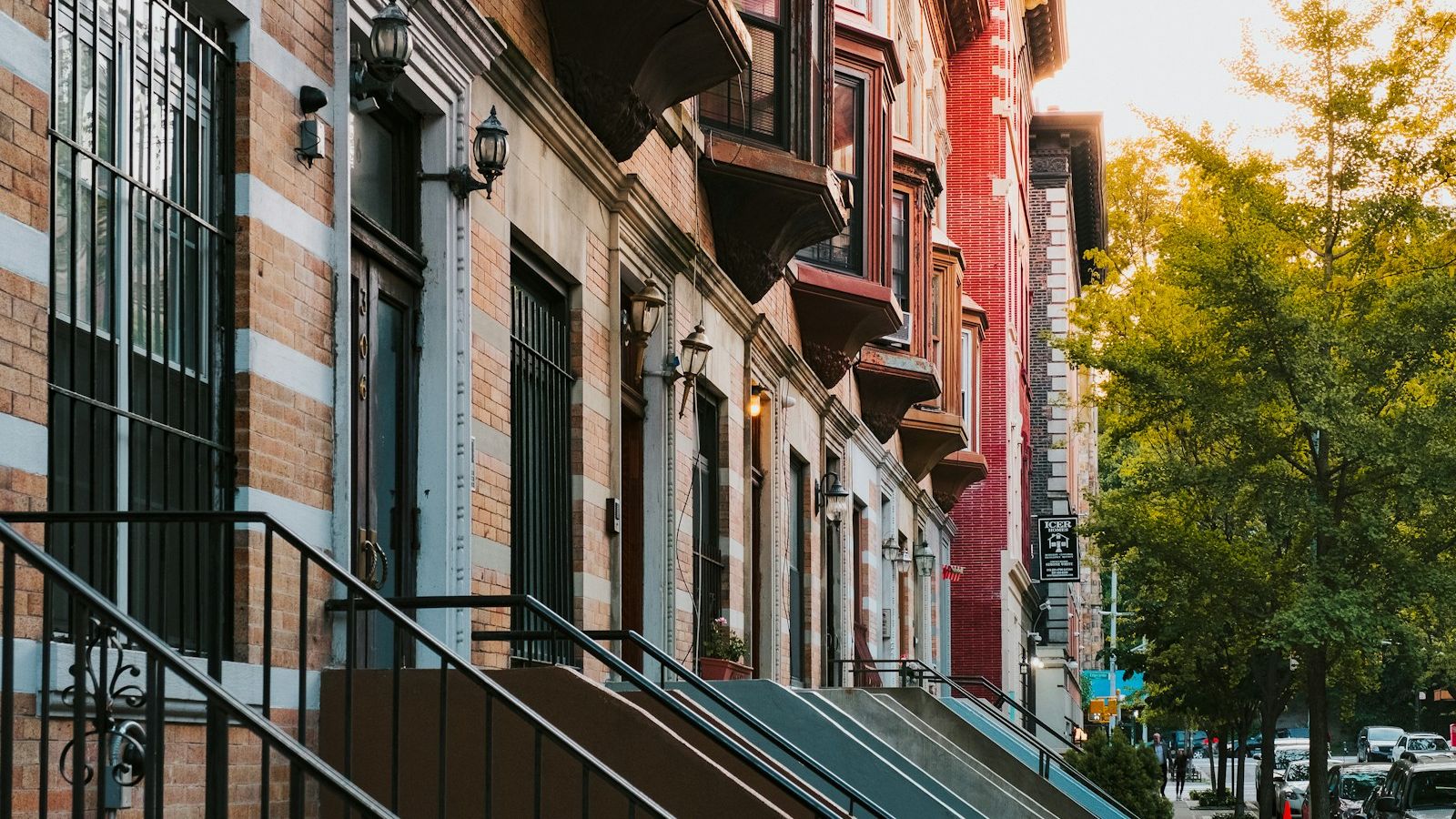
On a Saturday night in Harlem in 1927, music leaked through the walls of a brownstone on West 133rd Street. Inside, Fats Waller pressed the keys until the neighbors felt it in their teeth. Nobody was there by accident. They had each paid a quarter at the door — and the landlord would be paid come Monday morning.
When the Landlord Came Calling
In the 1920s and 1930s, Harlem was the beating heart of Black America. Writers, musicians, painters, and philosophers crowded into its brownstones and jazz clubs. The Harlem Renaissance was in full bloom.
But the rents were steep, jobs were often scarce, and eviction was never far away.
The solution that emerged was simple and brilliant. A family behind on rent would throw a party. They’d print a small flyer — called a rent party card — and slide it under doors across the block, pass it at church, or hand it out at the barbershop. The cards promised music, food, and a good time. They delivered all three.
Twenty-Five Cents at the Door
Guests paid a modest admission at the door — usually between fifteen cents and a dollar, depending on how tight things were.
Food was generous: pig’s feet, potato salad, chitlins, fried chicken. The drinks flowed. And the music ran past midnight, sometimes until four or five in the morning. Neighbors danced between pieces of furniture pushed against the walls.
By the end of the night, the host had collected enough cash to hand to the landlord on Monday. On a good Saturday, sometimes enough to cover two or three months at once.
A Training Ground for Legends
Here’s what nobody planned: the rent party accidentally became one of the most important proving grounds in American musical history.
Fats Waller played dozens of them. So did James P. Johnson, Willie “The Lion” Smith, and a young Count Basie — not yet famous, but learning fast. Musicians competed in impromptu cutting contests, each trying to outlast and outplay the others. The audience decided who won by staying on their feet.
This is where stride piano — that rolling, rhythmically complex Harlem style — was refined under real pressure. The music that would eventually fill concert halls and recording studios was first tested in someone’s crowded front room, while people danced around the furniture and the windows ran with steam.
Enjoying this? Join New York lovers getting stories like this every week. Subscribe free →
The Flyer That Wrote Itself
The rent party flyer was an art form in its own right.
Printed on brightly colored cardstock in joyful, irreverent language, the flyers blended street humor with genuine need. One celebrated example read: “There’ll be plenty of pig feet / And lots of gin / Just ring the bell / And come on in.” Others promised “the best piano players in Harlem” or included cheerful warnings that “the wolf is at the door and the landlord won’t wait.”
People kept them. Historians later collected them. They are some of the most vivid snapshots of ordinary Harlem life from that era — small printed things that carried an entire world inside them.
How the Tradition Traveled
By the late 1930s, the rent party had begun to fade. Economic conditions shifted. The informal economy that had sustained it changed. Formal venues and radio gave musicians other paths.
But the spirit didn’t disappear — it mutated. The rent party seeded a long tradition of community music-making across New York. Decades later, in the Bronx, a different generation threw block parties under open skies — and those parties produced hip-hop. The connection between making rent and making music has run through New York life for a century.
Every time someone opens their apartment to a crowd and lets the music run late, a thread runs back to those Saturday nights on 133rd Street.
What Harlem Still Carries
Walk through Central Harlem today and you’re walking past history that most of the city has forgotten.
The brownstones where those parties happened are still standing. The stoops are still there. The block associations still gather. Sunday morning gospel still spills from open church windows on 125th Street, just as it always has.
If you want to feel the rest of New York’s musical DNA, the jazz tradition lives on in some unexpected corners of the city. And the neighborhood energy that shaped Harlem’s sound connects directly to the music that erupted from East Harlem a generation later.
The rent party itself is mostly gone. But Harlem hasn’t let go of what was behind it: the conviction that when things get hard, you don’t close the door. You open it. You make some food. You let the music run late. You stay together.
That’s not just a Harlem story. That’s what New York has always done — turned necessity into something worth remembering.
You Might Also Enjoy
- The Tiny Basement on Seventh Avenue Where Jazz History Is Still Being Made
- The Bronx Block Party That Gave the World Its Most Copied Sound
- The Neighborhood New Yorkers Call El Barrio — and the Sound That Came Out of It
Plan Your New York Trip
Heading to New York and want to explore Harlem and beyond? Our complete New York City travel guide covers neighborhoods, transport, timing, and the hidden gems that most visitors miss.
Join New York Lovers
Every weekday morning, get New York’s hidden gems, neighbourhood stories, food origins, and city secrets — straight to your inbox.
Subscribe free — enter your email:
Love more? Join 65,000 Ireland lovers → · Join 43,000 Scotland lovers →
Free forever · Unsubscribe anytime
