
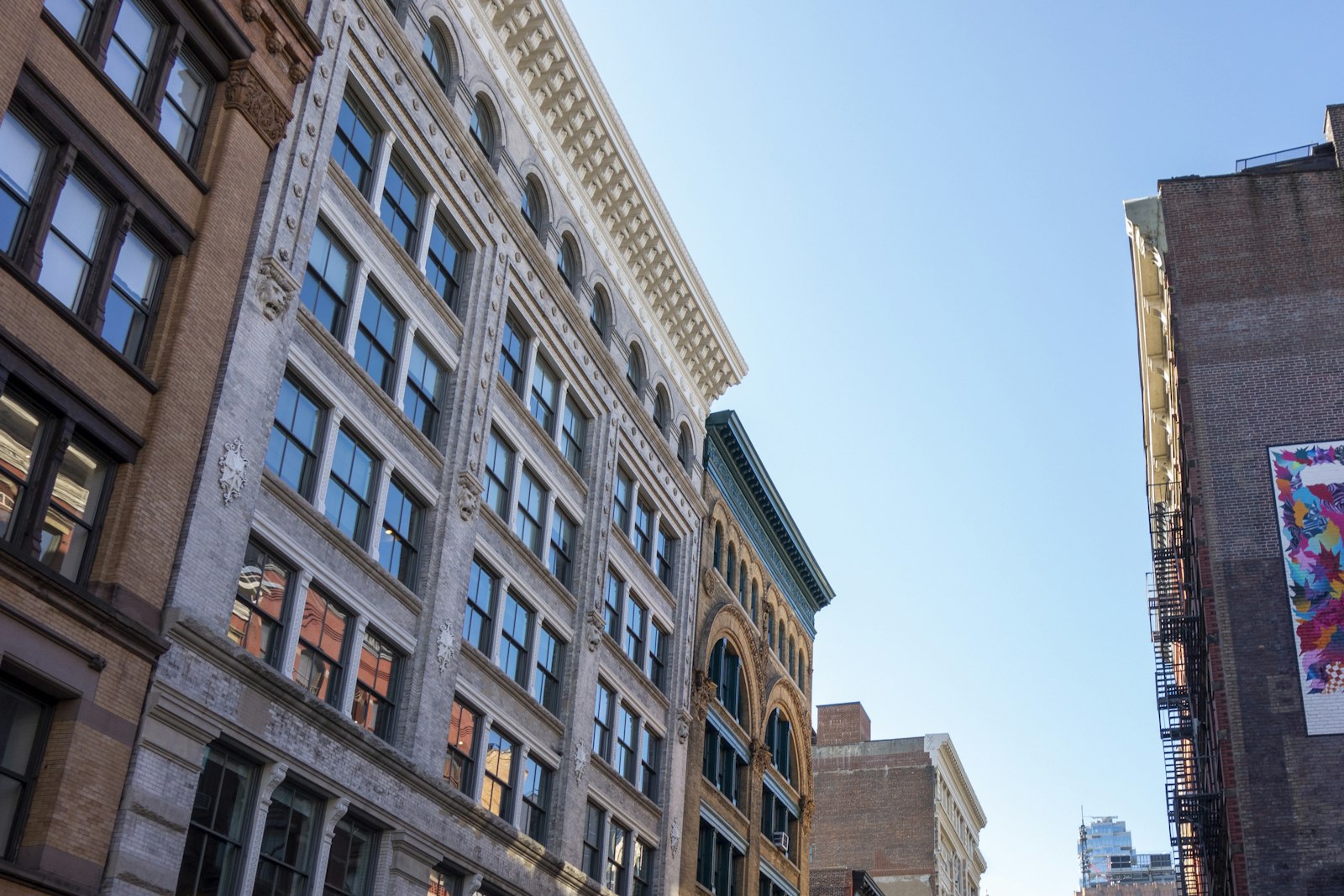
Most people walk through SoHo with their eyes on the shop windows. That is fair enough, because the shops are good. But the best part of the neighbourhood is above them. Look up, and you will see arches, slim columns and deep cornices, all made of iron.
SoHo has one of the largest collections of cast-iron buildings in the world. This guide explains what they are, why they were built, and how to spend a slow, enjoyable hour or two looking at them.
What Is a Cast-Iron Building?
A cast-iron building has a front made of iron parts that were cast in a foundry, then bolted together on site. The iron fronts did not hold up the whole building. Inside, most still rely on brick walls and timber or iron frames. The iron front was the decorative face.
The idea was cheap and quick. A builder could order columns, arches and window frames from a catalogue, and the foundry delivered them in pieces. Workers then put them up in weeks rather than months. The metal was often painted in cream, grey or stone colours so that it looked like carved marble or limestone, but at a far lower cost.
James Bogardus is the name you will hear most often. He was an inventor and builder who championed iron fronts in New York in the 1840s and 1850s. Other foundries and architects soon followed, and by the 1870s the style was everywhere in lower Manhattan.
Why SoHo Has So Many
The name SoHo means “South of Houston Street” (pronounced HOW-ston). In the mid-1800s, this area was a busy business district. Wholesalers, dry-goods merchants and small factories needed big, bright floors for stock and workers. Cast iron suited them well. Slender columns left open floor space, and large windows let in plenty of daylight before electric lighting was common.
Later, the textile and warehouse trade moved away, and many buildings sat empty or half-used. In the 1960s, artists moved in. The large, cheap loft spaces made good studios, and many of them lived in the buildings illegally at first.
At the same time, there was a plan to run a highway, the Lower Manhattan Expressway, across the area. It would have meant demolishing many of these buildings. Local campaigners, including the writer Jane Jacobs, fought it, and the plan was dropped. In 1973 the city created the SoHo-Cast Iron Historic District, which protects the buildings from demolition and from changes to their fronts. The district covers roughly 26 blocks and several hundred buildings.
What to Look For
You do not need to be an architecture expert to enjoy these buildings. Here are five details that are easy to spot.
- Arched windows. Rows of arches, sometimes two or three floors high, are the classic SoHo look.
- Slim columns. Compare them with stone columns on older buildings. Iron could be much thinner and still carry the load, so the windows are bigger.
- Cornices. The decorative ledge at the top of the building often has brackets, leaf patterns and small mouldings.
- Fire escapes. The black iron stairs and platforms are part of the SoHo picture. They were added later, as safety rules changed.
- Pavement lights. Look down too. Some sidewalks have small round glass discs set into metal panels. They once let daylight into the basements below.
Look closely at the colours. Most fronts have been repainted many times. Some are a soft cream, others a deeper grey or green, and a few have been picked out in two or three shades to highlight the detail.
Buildings Worth Stopping For
You can enjoy SoHo without a list. Still, a few addresses are worth seeking out.
The Haughwout Building
At 488 Broadway, on the corner of Broome Street, the Haughwout Building dates from 1857. It was built for a store selling china and glassware. It is often named as an early example of the style at its best, with repeating arches along both street fronts. It is also linked with one of the first passenger elevators installed by Otis, which helped make tall commercial buildings practical.
Greene Street
Greene Street, between Houston and Canal Streets, has one of the most complete runs of cast-iron fronts in the district. It is also quieter than Broadway or Prince Street, so you can stand back and look without being pushed along. If you only have time for one street, many visitors choose this one.
101 Spring Street
This five-storey cast-iron building from 1870 was the home and studio of the artist Donald Judd. It is now run by the Judd Foundation, and the interior has been kept much as he left it. Visits are usually by advance booking, so check the foundation’s website before you go.
Broome Street
Broome Street has a good mix of fronts, from plain to richly decorated. Walk its length and compare the styles. It is a simple way to see how different builders used the same basic materials.
A Simple Walking Route
This loop takes about 60 to 90 minutes at an easy pace, longer if you stop for coffee. It covers a small area, so you will not need to walk far.
- Start at the Spring Street subway station (6 train) or Prince Street (N, R, W).
- Walk to Greene Street and head south, looking up at each block.
- Turn onto Broome Street and walk east to Broadway to see the Haughwout Building.
- Head north on Broadway for the busier shopping stretch, then cut west on Spring Street.
- Finish at 101 Spring Street, or loop back to Prince Street for a coffee stop.
Want more walking ideas like this one? Subscribe to our free newsletter for practical New York tips, delivered to your inbox.
Tips for a Better Visit
- Go early. Weekday mornings are the calmest. Saturday afternoons are very busy, especially around Broadway and Prince Street.
- Wear flat, comfortable shoes. Some streets still have cobblestones, known as Belgian blocks, which are uneven.
- Look up often, but check your step. Pause at the kerb when you want a long look rather than walking and gazing at the same time.
- Bring a small camera or phone. Late morning and early afternoon often give good light on the fronts, depending on which way the street runs.
- Mind the shops. Many occupy the ground floors of these buildings. Going inside is a good way to see the tall ceilings and the iron columns from within.
Eating and Resting
SoHo is full of cafés, bakeries and restaurants, though prices lean towards the high side. For a cheaper stop, look for a bakery or coffee counter and eat on a bench or a step nearby. The streets around Prince and Mercer Streets have plenty of choice. Check opening hours before you go, as smaller places change them often.
When to Visit
SoHo works in any season. Spring and autumn are comfortable for walking, and the light in October is especially kind to the iron fronts. In winter, the buildings look striking against a pale sky, and the shop windows are decorated for the holidays. Summer can be hot and crowded, so go early or late in the day.
Planning a longer stay? Join our newsletter and we will send you more neighbourhood guides, seasonal ideas and local advice.
Where to Go Next
SoHo sits next to several other neighbourhoods that are easy to add to your day. Little Italy and Chinatown are a short walk east and south. NoLita lies just to the east, with smaller boutiques and a quieter feel. Greenwich Village is a short stroll to the north-west, and its tree-lined streets make a nice contrast with SoHo’s hard iron and stone.
Your Turn
The next time you are in SoHo, slow down and lift your eyes above the shop signs. The arches, columns and cornices have been there for more than 150 years, and they reward a second look. Which street in SoHo is your favourite for a slow wander? Tell us in the comments.
And if you would like more ideas like this, sign up for the Love Visit New York newsletter and get our best walks and tips every week.
