
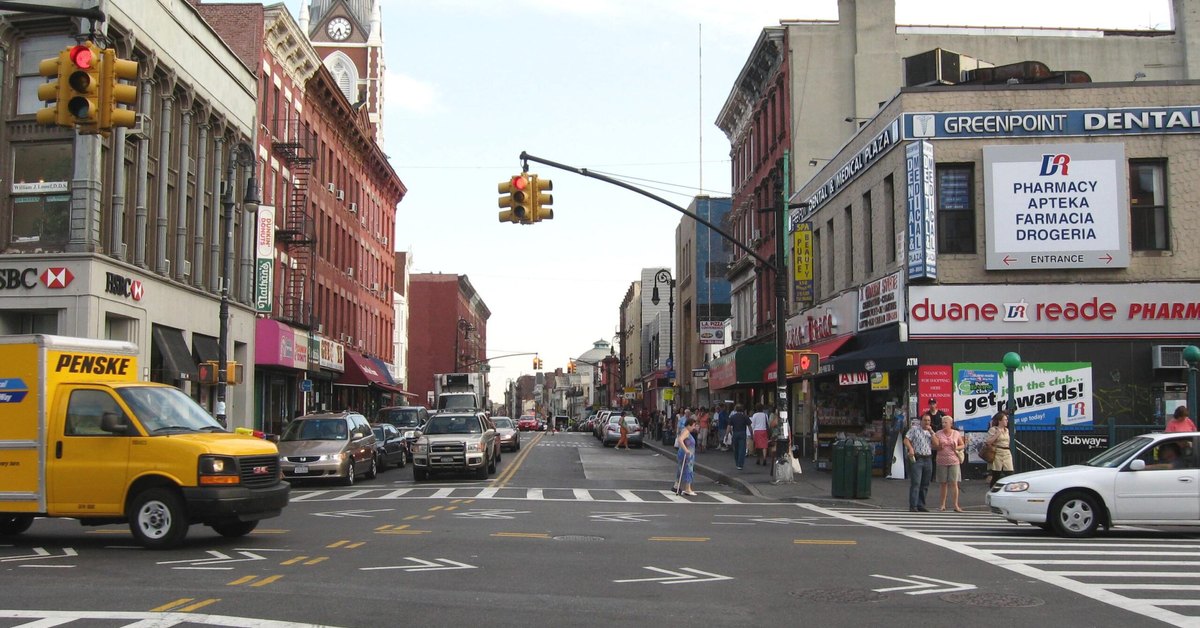
Walk down Manhattan Avenue in Greenpoint and you hear Polish before you hear English. Bakeries sell fresh bread and babka. Butchers hang strings of kielbasa. Families have lived here for generations. This is Little Poland, and it holds one of the largest Polish communities in the United States.
If you love New York’s hidden stories, you’ll love our free weekly newsletter. Subscribe to Love New York →
Why Did Polish Immigrants Settle in Greenpoint?
Greenpoint sits at the northern tip of Brooklyn, along the East River and Newtown Creek. Shipyards and factories lined the waterfront. Those jobs drew newcomers from across Europe. This neighborhood history says large numbers of Poles began arriving before 1900.
The shipyards had a famous product. Greenpoint’s dockyards built the USS Monitor, the Union’s first ironclad in the Civil War. Workers kept the district busy long after that. Later waves of Polish immigrants followed the same path to the same waterfront.
Greenpoint earned its nickname, Little Poland, for good reason. The same source reports it as the second-largest Polish concentration in the country, after Chicago.
Where Poles Prayed: St. Stanislaus Kostka
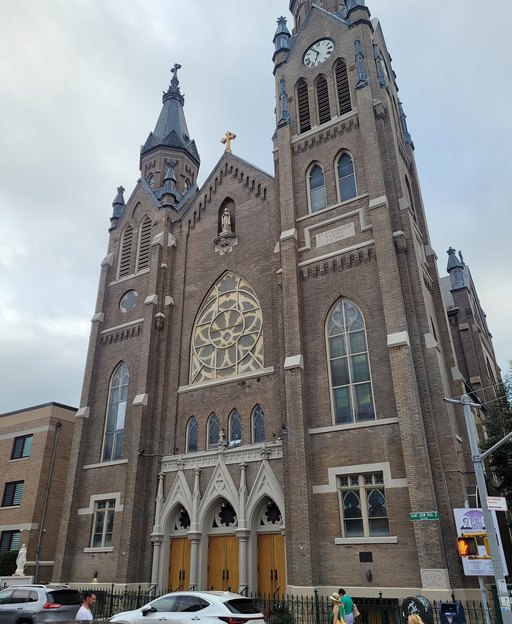
Faith anchored the new community. Greenpointers reports that St. Stanislaus Kostka parish began in 1896. Before then, Brooklyn had just one Polish parish, St. Casimir’s, far to the south. Greenpoint families had to travel a long way for a Mass in their own language.
The church stands at 607 Humboldt Street, at the corner of Driggs Avenue. The same history notes that Pope John Paul II visited in 1979. Many Polish families still call it their parish. Stand outside and look up at the spire. Your great-grandparents may have done the same.
What Life Looked Like on Manhattan Avenue
Think of Manhattan Avenue as the community’s living room. Shops, churches and clubs gave newcomers a place to speak Polish. A butcher knew your name. A baker knew your holiday order. A neighbor knew which village your family left.
Many families worked in the factories and on the docks. They rented rooms in wood-frame houses and row houses nearby. They saved, sent money home, and brought relatives over one by one. That chain of letters and tickets built the neighborhood block by block.
The Cold War brought another surge. New arrivals found a neighborhood that already spoke their language. They also found help. That help had a name: the Polish & Slavic Center.
Want more stories like this? Our weekly newsletter goes deeper into New York’s heritage every week. It’s free. Subscribe here →
The Polish & Slavic Center and the Credit Union
According to its entry, Polish immigrants founded the Polish & Slavic Center in 1972. It helps newcomers with social services, senior programs, English classes and cultural events. It added immigration legal aid in 1994. The headquarters sits at 177 Kent Street. Check the official Polish & Slavic Center site for current programs and visiting details (checked November 2026).
The center also started the Polish & Slavic Federal Credit Union in 1976. It began in the center’s own offices and later became a separate organization. Immigrants who could not easily get a bank loan found a lender who spoke their language. Learn more on the credit union’s official site (checked November 2026).
A Greenpoint Heritage Walk
You can cover the main sights in about two hours. Wear comfortable shoes and bring a notebook. Here is a simple route:
Stop 1: Manhattan Avenue. Start here and read the shop signs. Notice the Polish names above the doors. Ask a shopkeeper how long the family has worked on the block.
Stop 2: St. Stanislaus Kostka Church. Walk to Humboldt Street and Driggs Avenue. Look at the façade and the surrounding rowhouses.
Stop 3: The Polish & Slavic Center. Head to Kent Street. This is the institution immigrants built for themselves.
Stop 4: McGolrick Park. The park’s Shelter Pavilion dates to 1910. A 1938 monument honors the USS Monitor, the ironclad Greenpoint built. Sit on a bench and picture the dockyard workers.
Stop 5: Newtown Creek. Finish at the northern edge of the neighborhood. This waterway marks the border with Queens and shows the industrial side of Greenpoint’s past.
Best for: family history trips and first-time visitors. Take the G train to Greenpoint Avenue or Nassau Avenue to start. Check the MTA site for current service before you go.
If your family came through here, pair the walk with some research. Our guide to tracing your New York City ancestry shows you where to start.
What Makes Little Poland Feel Different
Many neighborhoods in New York changed fast. Greenpoint changed too, and its Polish character shifted over the years. Still, you can feel the old layers if you slow down. Listen for Polish on the sidewalk. Smell fresh bread near a bakery door. Watch families walk to church on a Sunday morning.
Heritage lives in small habits. A grandmother shops for pickles. A grandson learns the old songs. A priest greets people by name. These ordinary moments keep a neighborhood’s story alive, long after the first immigrants have gone.
How to Trace Your Polish Family Through Greenpoint
Start at home. Ask relatives for old letters, prayer cards and photographs. Look for a village name, a ship name or a parish name. Even one clue can open a whole line of research.
Next, search the records. Passenger lists, census pages and naturalization papers often name a hometown. Church records can show baptisms, marriages and funerals. If your family belonged to St. Stanislaus Kostka, the parish may hold useful entries. Contact the church office and ask politely how it handles genealogy requests.
Community groups help too. Staff at the Polish & Slavic Center work with Polish families every day. They may point you toward local resources or translators. Spelling matters in this research. Clerks often changed Polish names, so try several versions of each surname.
Finally, plan your trip with a goal. Pick one address, one church and one shop to see. A focused visit feels richer than a rushed one. Bring a printed photo of your ancestors and hold it up on the street where they lived.
Other Immigrant Neighborhoods to Explore
Greenpoint is one chapter in a bigger story. Compare it with the Greek heritage of Astoria across the river. Walk the Italian streets of Belmont in the Bronx. Or trace the Irish waterfront at Vinegar Hill, not far down the shore. Each neighborhood grew around work, faith and family.
Frequently Asked Questions
Why is Greenpoint called Little Poland?
Polish immigrants began settling there before 1900, and the community grew for generations. Manhattan Avenue became the center of Polish shops, churches and clubs.
How can I trace my Polish family in New York?
Start with family papers, then search immigration and census records. Parish records and community groups can help too. Our ancestry guide lists the main archives.
Where can I see Greenpoint’s Polish heritage today?
Walk Manhattan Avenue, visit the exterior of St. Stanislaus Kostka Church on Humboldt Street, and see the Polish & Slavic Center on Kent Street. Check each official site before you go.
What did Greenpoint’s immigrants do for work?
Many worked in the shipyards, factories and along Newtown Creek. The dockyards even built the USS Monitor during the Civil War.
Ready to explore the New York your ancestors knew? Subscribe to Love New York — free weekly stories, heritage guides, and hidden history. Join us →
