
There is a park in Brooklyn that the man who designed Central Park quietly considered his greatest achievement. Most visitors to New York City never find it. Most New Yorkers from Manhattan act like it barely exists. Brooklynites wouldn’t have it any other way.
The Architect Who Built Both Parks — And Chose a Favorite
Frederick Law Olmsted and his partner Calvert Vaux designed Central Park in the 1850s. It made them famous. It made New York a model for cities around the world.
Then they got another commission: design a park for Brooklyn.
With Central Park, Olmsted had worked within constraints — an already-established grid, existing land, political pressure at every turn. In Prospect Park, begun in 1866, he had more freedom. He could plan from scratch. He could get it right.
Olmsted later wrote that Prospect Park was the work he was most proud of. He believed its design — the way the landscape flows from open meadow to dense forest to still water — was more coherent, more natural, and more fully realized than what he’d managed in Manhattan.
Why This Park Feels Different the Moment You Enter
Cross into Prospect Park and something shifts immediately.
Central Park has roads cutting through it. Cars drive across it. You never fully escape the city’s rhythm.
Prospect Park has no through roads at all. Once you’re inside, the skyline disappears. The noise fades. You are, genuinely, somewhere else.
The Long Meadow stretches for nearly a mile — the longest open meadow in any urban park in the United States. On a clear Saturday morning, it looks like a countryside painting that somehow ended up in Brooklyn.
Further in, the Ravine is the only forested ravine in the entire borough. It has a brook running through it, towering trees, and a quiet so deep it surprises people the first time they find it.
The Hidden Corners That Make This Park a Secret World
Prospect Park rewards the curious.
The Boathouse, built in 1905, sits at the edge of the Lullwater — a peaceful waterway that winds through the park’s southern section. It now serves as the Audubon Center and hosts free nature programs on weekends.
Near the park’s western edge stands the Camperdown Elm, planted in 1872. It’s a weeping elm with gnarled, spiraling branches that look like something out of a fairy tale. It nearly died in the 1960s. Marianne Moore, the poet, wrote a poem to save it. It worked.
The Wollman Rink transforms into an ice skating rink each winter. The Bandshell hosts free concerts all summer. The park even has reservable barbecue pits — something Central Park has never offered.
Enjoying this? Join New York lovers getting stories like this every week. Subscribe free →
Brooklyn’s Living Room
On summer weekends, Prospect Park becomes Brooklyn’s living room.
Families spread blankets across the Long Meadow. Drummers circle up near the Ninth Street entrance every Sunday afternoon. The smell of jerk chicken and charcoal drifts from the barbecue areas near the park’s edge.
Celebrate Brooklyn, one of New York’s longest-running free outdoor concert series, takes place at the Bandshell from June through August. The lineup spans jazz, indie, hip-hop, and world music — and admission is free.
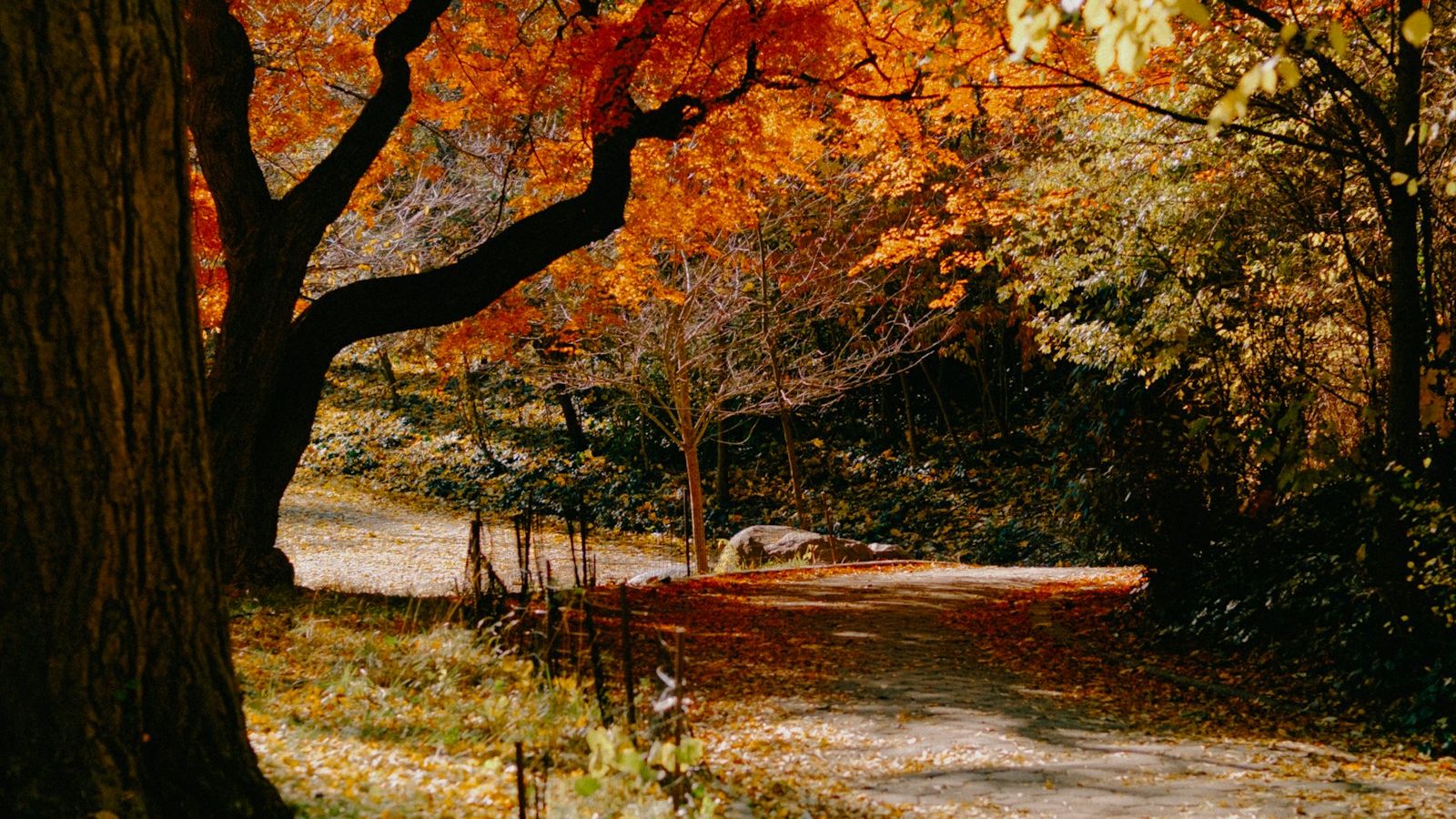
In October, the park turns gold and red and copper. The light through the Long Meadow trees on a clear fall afternoon may be the finest thing Brooklyn has to offer. And Brooklyn has a lot to offer.
The Brooklyn Botanic Garden Next Door
Prospect Park shares its eastern wall with the Brooklyn Botanic Garden — 52 acres that feel like they belong to a much smaller, quieter city.
The Cherry Esplanade blooms in late April. Thousands of people come for the Sakura Matsuri festival. The Japanese Hill-and-Pond Garden, designed in 1915, is one of the oldest Japanese gardens in the United States.
You can spend half a day moving between the park and the garden without retracing a single step.
While you’re in the neighborhood, the brownstones that line the park’s edges tell their own story — a Brooklyn of quiet stoops, century-old architecture, and generations of families who chose to stay.
How to Get There and What to Expect
Prospect Park sits in central Brooklyn. The B and Q trains stop at the Prospect Park station on the park’s eastern edge. The F and G trains stop at 15th Street–Prospect Park, a short walk to the Bartel-Pritchard entrance.
The park covers 585 acres. Bikes are welcome on designated paths. Dogs can run off-leash in designated areas during early mornings and evening hours.
Entry is free. It always has been. That’s the point.
For more on getting around Brooklyn, Williamsburg’s transformation from industrial waterfront to creative hub is worth exploring. And the Brooklyn Bridge has a history that surprises almost everyone who crosses it.
What is the best time to visit Prospect Park in Brooklyn?
October is exceptional — the fall foliage along the Long Meadow rivals anything in New York City. Late April is equally beautiful when cherry blossoms bloom in the adjacent Brooklyn Botanic Garden and free outdoor concerts begin.
How is Prospect Park different from Central Park?
Prospect Park has no through roads, so you never share the space with car traffic — you feel genuinely removed from the city. Its Long Meadow is the longest open meadow in any urban park in the United States, giving it a more open, countryside feel.
Is Prospect Park free to visit?
Yes. Prospect Park is completely free and open to the public year-round. The Prospect Park Zoo charges separate admission, but the park itself — the Boathouse, Bandshell, Lullwater, and all trails — is always free.
Where is Prospect Park and how do I get there by subway?
The park is in central Brooklyn. Take the B or Q train to the Prospect Park station, or the F or G train to 15th Street–Prospect Park. Both stops put you at a park entrance within a two-minute walk.
There is something quietly satisfying about the fact that the man who made Central Park famous saved his best work for Brooklyn. People who know Prospect Park have always known this. Now you do too.
You Might Also Enjoy
- Why New Yorkers Are Still Obsessed With Brooklyn’s Brownstones After 150 Years
- The Brooklyn Bridge: Stories Most People Never Learn About New York’s Most Famous Crossing
- Williamsburg, Brooklyn: From Industrial Waterfront to Creative Capital
Plan Your New York Trip
Deciding where to stay and what to explore? Our complete guide to New York’s best neighborhoods covers every borough with honest advice on what each area offers — and which ones are worth your limited time.
Join 1,100+ New York Lovers
Every weekday morning, get New York’s hidden gems, neighborhood stories, food origins, and city secrets — straight to your inbox.
Subscribe free — enter your email:
📲 Know someone who’d love this? Share on WhatsApp →
Love more? Join 65,000 Ireland lovers → · Join 43,000 Scotland lovers →
Free forever · · Unsubscribe anytime
Frequently Asked Questions
Who designed Prospect Park?
Frederick Law Olmsted and Calvert Vaux designed it, and Olmsted later called it his greatest work.
How does Prospect Park compare to Central Park?
Prospect Park has no through roads, so it fully escapes the city's noise, while Central Park has roads cutting through it with cars driving across it.
What is the Long Meadow?
The Long Meadow is an open meadow stretching nearly a mile—the longest open meadow in any urban park in the United States.
What's in Prospect Park besides the Long Meadow?
The Ravine is the only forested ravine in Brooklyn, with a running brook and towering trees. Its depth of quiet is notably different from the rest of the park and surprises first-time visitors.

Subscribe Free