
Stand on any stoop in Park Slope on a Sunday afternoon and you will feel it — that particular warmth of a Brooklyn block that has been alive for 150 years. The sandstone façade is dark with age, the iron railings are a little worn, and from inside comes the smell of coffee and old wood. This is a brownstone. And New Yorkers have been fighting over them, falling in love with them, and abandoning them ever since someone first decided they didn’t want one.
What Exactly Is a Brownstone?
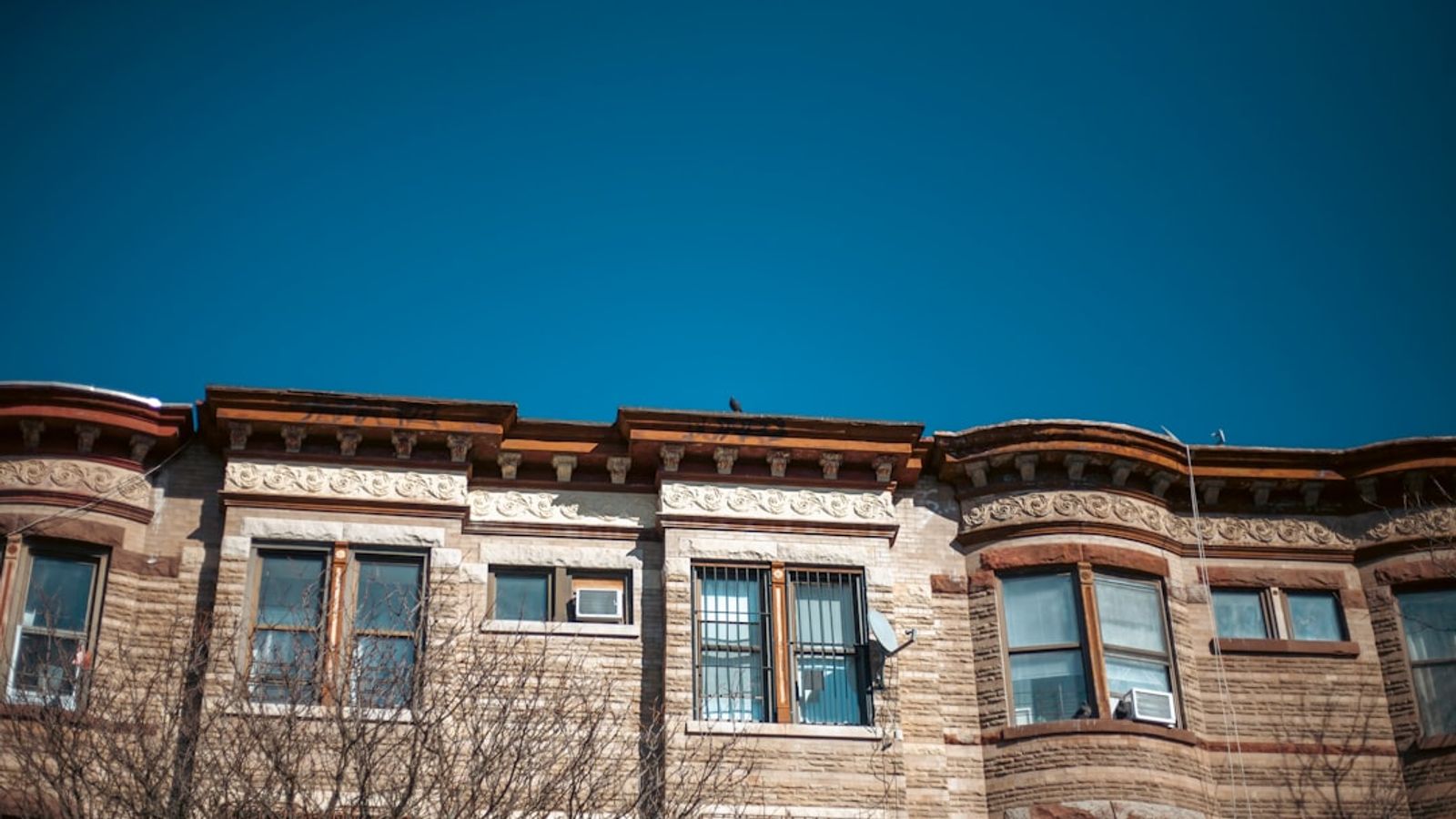
The name refers to the material: a reddish-brown sandstone quarried from the banks of New Jersey’s Passaic River and shipped to Brooklyn by barge. It was cheap, abundant, and easy to carve — perfect for the mid-19th century building boom that turned farmland into neighborhoods almost overnight.
The classic brownstone is a narrow row house, typically 20 feet wide and four stories tall, built flush against its neighbors. The entrance sits up a flight of stone steps — the stoop — leaving the lower floor available as a separate basement apartment. Inside, the rooms are deep and tall, with ornate plasterwork, tin ceilings, and wide-plank wood floors that creak in exactly the right way.
Most Brooklyn brownstones were built between 1860 and 1900, as the borough’s population exploded after the opening of the Brooklyn Bridge and the spread of trolley lines. Developers threw up entire blocks in a matter of months. Working families — German immigrants, Irish dock workers, Italian craftsmen — moved in and never looked back.
The Neighborhoods That Brownstone Built
Brooklyn’s brownstone belt stretches across a chain of neighborhoods that share a distinct identity rooted in these buildings. Fort Greene and Clinton Hill were home to merchants and tradespeople. Carroll Gardens sheltered generations of Italian longshoremen who worked the waterfront. Park Slope attracted the professional class — doctors, lawyers, teachers — who filled the parlor floors with Victorian furniture and gas lamps.
Prospect Heights and Bedford-Stuyvesant told different stories. As the 20th century progressed and the Great Migration brought hundreds of thousands of African Americans to New York, brownstone blocks became the heart of a new Brooklyn culture. The buildings didn’t change. The people who made them home did — and in doing so, created something that couldn’t be replicated.
Each neighborhood developed its own rhythm. The same architectural shell produced radically different communities, block by block. That is the genius of the brownstone: it is a container for whatever a neighborhood decides to become.
Enjoying this? Join New York lovers getting stories like this every week. Subscribe free →
The Years When Nobody Wanted Them
Here is the part that surprises most people: there was a time when you could not give a Brooklyn brownstone away.
In the 1950s and 1960s, suburban expansion and the rise of the car pulled residents out to Long Island and New Jersey. Old row houses were carved into rooming houses, left unmaintained, or simply abandoned. Park Slope brownstones sold for as little as $20,000 in the early 1970s. Boerum Hill was considered both dangerous and hopelessly out of fashion. The neighborhoods had the look of slow surrender.
City planners had largely written off these buildings in favor of high-rise public housing. Brownstones were seen as relics — dark, inefficient, impossibly impractical. The future, everyone agreed, was somewhere else entirely. Nobody asked the buildings what they thought.
The People Who Brought Brooklyn Back
The reversal came slowly, then all at once.
A wave of artists, writers, and young professionals discovered what everyone had missed: brownstones are extraordinary. The proportions are human-scale. The stoops create a civic life. The rooms have ceilings high enough to breathe in. Starting in the late 1960s, buyers began snapping up neglected row houses in Park Slope and Carroll Gardens at prices that are almost comic in retrospect.
They called themselves brownstoners — a term that eventually named a Brooklyn lifestyle blog still running today. They stripped paint from original woodwork, restored plaster ceiling medallions, and formed block associations that fought to landmark their streets against demolition. The movement gave Brooklyn its identity as a place worth fighting for — an identity that neighborhoods like DUMBO and Williamsburg would later inherit.
By the 1990s, the momentum had become a flood. Today, a Park Slope brownstone commands $3 million or more. The buildings that nobody wanted are now the most coveted addresses in the borough.
The Stoop — Brooklyn’s Living Room
No discussion of brownstones is complete without the stoop. These wide stone stairs leading up to the front door are more than architecture — they are a social institution that has no real equivalent anywhere else in American city life.
For generations, Brooklyn stoops were where neighbors gathered in the morning with coffee, watched children play in the street, and held impromptu block conversations that stretched into evening. Before air conditioning, the stoop was the summer living room. Before smartphones, it was the newsfeed. Before community apps, it was how a block held itself together.
You can still find it today on any brownstone street where long-time families remain. The culture persists — a quiet resistance to the anonymity of the modern city, a reminder that a building is not just a structure but a shared agreement about how neighbors treat each other.
Frequently Asked Questions
What is a brownstone in Brooklyn, exactly?
A brownstone is a 19th-century row house built from reddish-brown sandstone quarried in New Jersey. They were constructed in Brooklyn between roughly 1860 and 1900, and are defined by their narrow width, stone stoops, and tall parlor-floor windows. Today the term often refers loosely to any brownish Brooklyn row house, even those built from brick.
Which Brooklyn neighborhoods have the best brownstones to explore?
Park Slope, Brooklyn Heights, Fort Greene, Carroll Gardens, Cobble Hill, Boerum Hill, and Bedford-Stuyvesant are the classic brownstone neighborhoods. Brooklyn Heights has some of the oldest and most intact examples. Park Slope’s Prospect Park West and the side streets off 7th Avenue are particularly stunning for an afternoon walk.
Can visitors go inside a Brooklyn brownstone?
Several brownstones open their doors during the annual Brooklyn Heights House Tour, typically held in spring. The Brooklyn Historical Society also offers occasional architectural tours. Short of that, many boutique hotels and Airbnb rentals occupy converted brownstones — an easy way to experience the interiors firsthand.
What is the best time of year to visit brownstone Brooklyn?
Late spring (May and early June) and fall (September and October) are ideal. The tree-lined blocks are in full canopy, the stoops are occupied, and street fairs bring neighborhoods to life. Summer works too, but the narrow streets can feel hot in July. Winter strips the leaves and reveals the architectural details most clearly.
You Might Also Enjoy
- DUMBO, Brooklyn: A Guide to the Neighborhood Under the Bridge
- Williamsburg, Brooklyn: What to Do, Eat, and See in New York’s Most Talked-About Neighborhood
- Gowanus Canal: Brooklyn’s Most Unlikely Comeback Story
Plan Your New York Trip
Brownstone Brooklyn is best explored on foot — wear comfortable shoes and leave the afternoon free. Start at Brooklyn Heights Promenade for the view, then walk south through Cobble Hill and Carroll Gardens before looping back through Park Slope. Most blocks reward slow, unhurried attention. Check out our New York travel planning guide for transport tips and neighborhood logistics.
Join 1,100+ New York Lovers
Every weekday morning, get New York’s hidden gems, neighbourhood stories, food origins, and city secrets — straight to your inbox.
Subscribe free — enter your email:
📲 Know someone who’d love this? Share on WhatsApp →
Love more? Join 65,000 Ireland lovers → · Join 43,000 Scotland lovers →
Free forever · Unsubscribe anytime

Subscribe Free