
Most people who walk the Brooklyn Bridge take a photo, admire the view, and move on. What almost nobody realizes is that they just walked over one of the most dramatic stories in American history — and above rooms packed with Cold War survival supplies that nobody touched for nearly fifty years.
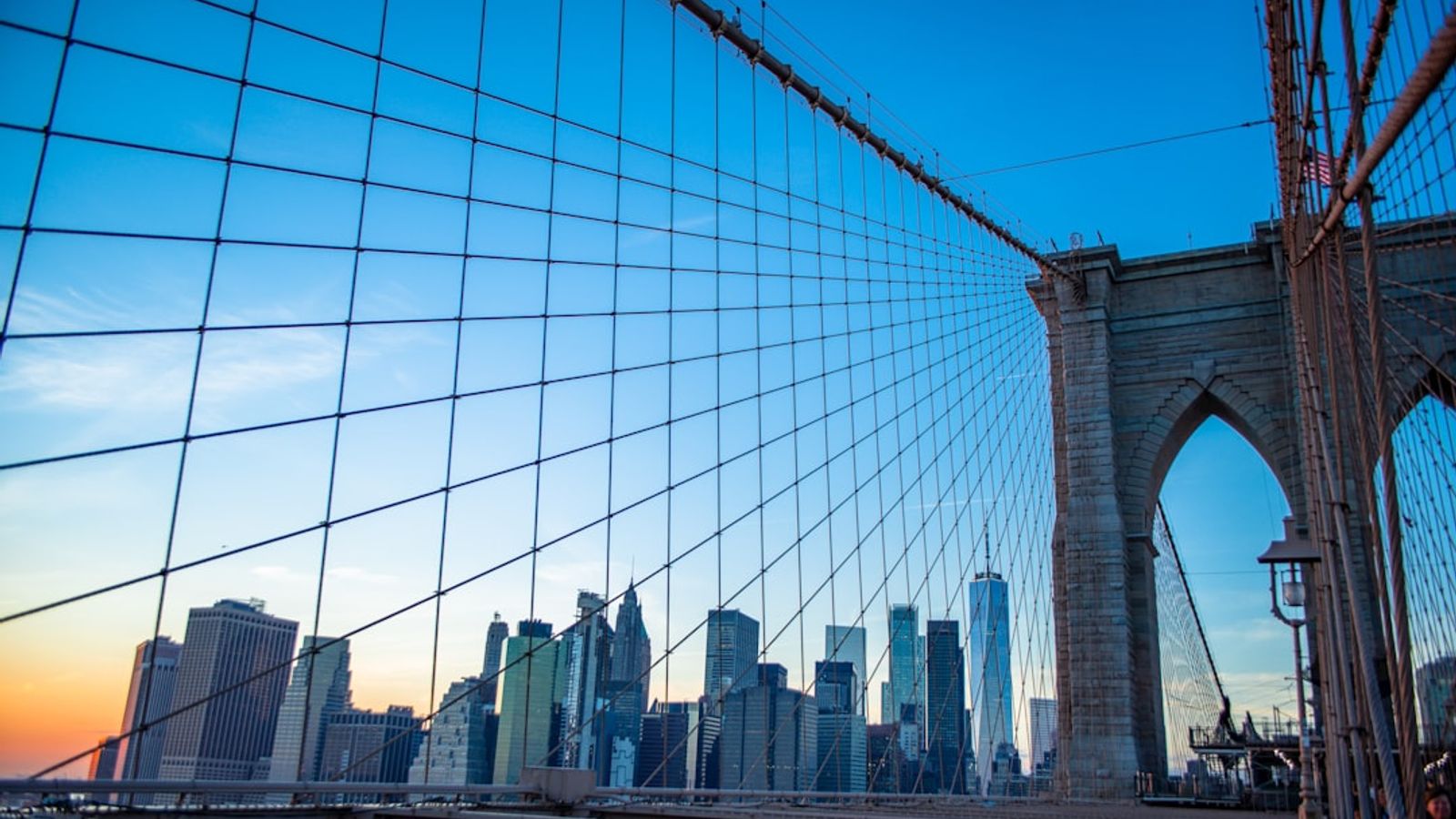
The bridge opened in 1883. It was the longest suspension bridge in the world. And the man who designed it died before a single stone was laid.
The Man Who Never Saw His Bridge Built
John Roebling had been dreaming of the Brooklyn Bridge for years. A German-born engineer who had already built four suspension bridges, he convinced New York City that a crossing of the East River was possible when most experts called it madness.
In the summer of 1869, he was standing on a dock in Brooklyn surveying the exact spot where one of the towers would rise. A ferry nudged the dock and crushed his foot against the pilings.
Roebling refused conventional medical treatment. He believed in hydrotherapy instead. Within weeks, tetanus set in. He died on July 22, 1869 — three weeks after the injury — without laying a single stone of the bridge he had designed.
The Son Who Nearly Died With It
Washington Roebling, John’s son, took over as chief engineer. He was 32 years old, brilliant, and deeply committed to finishing his father’s work.
The foundations required workers to descend into massive wooden caissons beneath the river, breathing compressed air to keep the water out. Washington went down repeatedly to supervise. Nobody fully understood decompression sickness yet.
By 1872, Washington was paralyzed. What we now call “the bends” had left him bedridden, barely able to speak, sensitive to light and sound. He watched the construction through a telescope from his window in Brooklyn Heights — for the next eleven years.
The Woman Who Actually Built It
Emily Warren Roebling, Washington’s wife, stepped in. She had no engineering training. She taught herself everything: cable mathematics, material stress, construction management. She became the bridge’s de facto chief engineer.
For more than a decade, she carried messages between Washington and the construction site. She lobbied politicians, managed contractors, and solved problems that stumped everyone else on the project.
On May 24, 1883, the day the bridge officially opened, Emily was the first civilian to cross it. She carried a rooster — a symbol of victory. When asked later who deserved most credit for the bridge, Washington Roebling named his wife.
Her name appears nowhere on the bridge itself. A plaque was added in 1983 — exactly one hundred years after opening day.
Enjoying this? Join New York lovers getting stories like this every week. Subscribe free →
The Secret Rooms Hidden in the Towers
Each of the two stone towers contains a series of vaulted chambers — nine rooms in the Manhattan anchorage alone. They were built with thick granite walls and naturally cool temperatures. In the late 1800s, the city rented them out as wine and cheese storage.
They sat largely forgotten for decades. Then in 2006, New York City workers made a startling discovery.
The rooms were packed with Cold War survival supplies, placed there in 1957 when city planners designated the bridge as a fallout shelter. Workers found 352,000 survival crackers, metal drums of water, blankets, first aid kits, and medical supplies intended to serve 10,000 people for two weeks. Nobody had opened the rooms in nearly fifty years. Some of the crackers were still in their original packaging.
How the Bridge Transformed Brooklyn Forever
Before the bridge, getting from Brooklyn to Manhattan meant a ferry. The crossing was unreliable, sometimes dangerous, and shut down in bad weather. Hundreds of thousands of people lived in Brooklyn effectively cut off from the city’s economic heart.
The bridge didn’t just connect two places. It turned Brooklyn from a separate city into a borough of New York. Property values surged. Neighborhoods spread. The brownstones that define Brooklyn today were largely built in the decades after the bridge opened, as families suddenly found they could live in Brooklyn and work in Manhattan.
In May 1884, PT Barnum walked 21 elephants across it — partly as a stunt, partly to reassure a nervous public that the bridge was safe. It worked. Around 100,000 people cross it every day now.
What to Know Before You Walk It
The pedestrian walkway runs 1.1 miles from end to end. Most people take 30 to 45 minutes for a leisurely crossing. The walkway is elevated above the car lanes, giving open views in every direction.
Start from the Brooklyn side for the best experience. Take the A or C subway line to High Street/Brooklyn Bridge station. Walk toward Manhattan and the skyline opens up ahead, growing with every step. The DUMBO neighborhood directly below the bridge is worth an hour before or after your walk — cobblestone streets, galleries, and the best ground-level view of the towers.
Sunrise walks are particularly stunning. The morning light comes over Brooklyn to illuminate the Manhattan towers and the river below. If you’re timing your visit to New York, this season-by-season guide covers when crowds thin out and the city is at its most walkable.
Brooklyn Bridge: Your Questions Answered
When is the best time to walk the Brooklyn Bridge?
Early morning on weekdays is ideal — fewer crowds and softer light. Sunrise from the Brooklyn side offers one of the best views in New York City. Summer evenings are beautiful but busy on weekends.
How long does it take to walk the Brooklyn Bridge?
The crossing is 1.1 miles. Most people walk it in 30 to 45 minutes. Allow longer if you plan to stop for photos. A return walk takes about 75 minutes total.
Can you go inside the Brooklyn Bridge towers?
The towers are not regularly open to the public, but NYC periodically offers access tours of the Manhattan anchorage chambers. Check the NYC Parks and Recreation calendar for upcoming tour dates.
Who really built the Brooklyn Bridge?
It was designed by John Roebling, who died before construction began. His son Washington took over but became severely disabled. Washington’s wife Emily Warren Roebling served as the practical chief engineer for most of its 14-year construction and was the first person to cross it on opening day in 1883.
Is it free to walk the Brooklyn Bridge?
Yes, completely free. The pedestrian walkway is open 24 hours a day, every day of the year, with no charge and no reservation needed.
There’s something about crossing the Brooklyn Bridge on foot that no photograph captures. You feel the slight sway, hear the city from above and below, and watch the Manhattan skyline growing with every step. It took a man who died before it started, a woman history nearly forgot, and 14 years of work nobody thought was possible. Every stone, every cable, every footstep is proof that New York has always been built by people who refused to give up.
You Might Also Enjoy
- Why New Yorkers Are Still Obsessed With Brooklyn’s Brownstones After 150 Years
- The Brooklyn Address Designed to Sound Ugly — That Became New York’s Most Photographed
- The Wildest Place America Ever Built — and Why New York Almost Let It Die
Plan Your New York Trip
Ready to walk the bridge for yourself? Our season-by-season guide to visiting New York covers when the bridge crowds thin out, what the weather is like month by month, and the events worth timing your visit around.
Join 1,100+ New York Lovers
Every weekday morning, get New York’s hidden gems, neighbourhood stories, food origins, and city secrets — straight to your inbox.
Subscribe free — enter your email:
📲 Know someone who’d love this? Share on WhatsApp →
Love more? Join 65,000 Ireland lovers → · Join 43,000 Scotland lovers →
Free forever · Unsubscribe anytime
Frequently Asked Questions
Why did John Roebling, the designer of the Brooklyn Bridge, never see it built?
John Roebling died from tetanus in 1869, just three weeks after a ferry accident crushed his foot at the construction site. He refused conventional medical treatment and chose hydrotherapy instead, making him vulnerable to infection before the bridge construction even began.
How did Washington Roebling contribute to building the bridge despite being paralyzed?
Washington Roebling developed decompression sickness from descending into pressurized caissons beneath the river, which left him bedridden—yet he supervised the entire construction from his window in Brooklyn Heights using a telescope for eleven years. His determination to complete his father's design was the project's driving force.
Who was Emily Warren Roebling?
Emily Warren Roebling was Washington's wife who became essential to completing the bridge during his long illness; the article describes her as "the woman who actually built it." Her story highlights the crucial but often-overlooked roles women played in major historical achievements.
What Cold War supplies are underneath the Brooklyn Bridge?
The bridge contains rooms filled with Cold War survival supplies that remained untouched for nearly fifty years, a hidden layer of history most pedestrians never realize exists. These chambers represent another fascinating chapter in the bridge's complex past.

Subscribe Free